


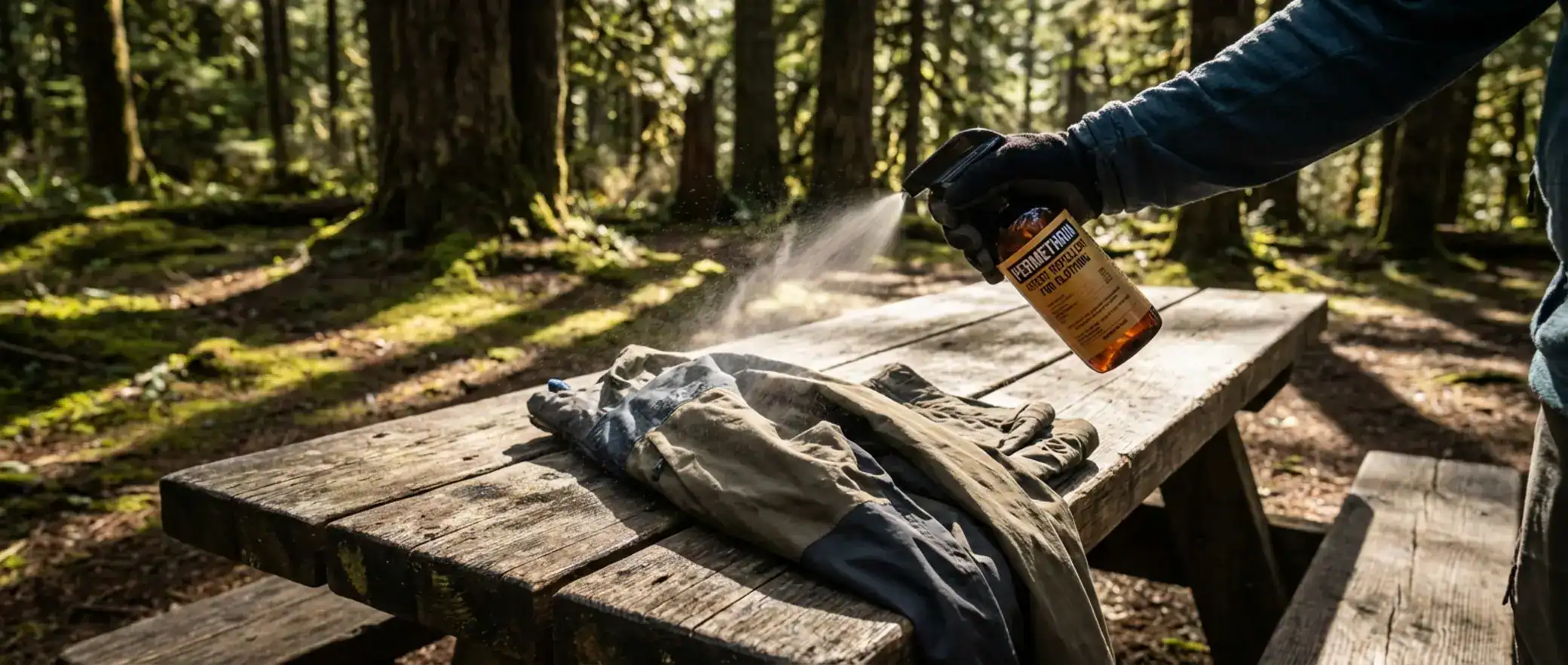
Enjoying the great outdoors shouldn’t come with the constant fear of a tick bite. Yet, with tick-borne illnesses on the rise, that worry is a reality for many hikers, campers, and gardeners. A powerful tool in your defense is a quality permethrin clothing spray, which can transform your gear into a first line of defense against these persistent pests.
What is permethrin clothing spray and how does it work?
Permethrin clothing spray is a fabric-specific insecticide that bonds to clothing fibers to kill or incapacitate ticks, mosquitoes, and other insects on contact. When applied correctly and allowed to dry, it creates an odorless, long-lasting barrier that remains effective through multiple washes, providing passive protection without direct skin application.
What Is Permethrin and Why It’s a Big Deal for Outdoor Safety
Permethrin is a synthetic insecticide that belongs to a class of chemicals called pyrethroids. Its chemical structure is based on natural compounds extracted from chrysanthemum flowers, which have been used for centuries as an insect repellent. Today, permethrin is a key component in everything from agricultural pest control to public health mosquito abatement programs.
However, its most significant application for outdoor enthusiasts is in treating clothing with permethrin. Unlike repellents that you apply to your skin, permethrin is designed to bind tightly to fabric fibers. This creates a powerful, long-lasting effect that makes your clothing actively hostile to ticks.
The data backs this up. A landmark 2020 study published in the Journal of Medical Entomology followed outdoor workers and found that those wearing permethrin-treated clothing experienced up to 65% fewer tick bites in the first year compared to an untreated group. This is not just a minor improvement; it’s a significant reduction in risk.
The Science: How Permethrin Creates a “Kill Zone” on Your Gear
So, how does this actually work? Permethrin acts as a potent neurotoxin to insects like ticks. Think of it as a microscopic minefield embedded in the threads of your shirt, pants, and socks.
When a tick crawls onto a treated surface, its feet and body come into contact with the permethrin molecules. The chemical is absorbed through the tick’s exoskeleton and quickly attacks its central nervous system. This causes nerve impulses to fire uncontrollably, leading to muscle spasms, paralysis, and ultimately, death. This reaction is often called the “hot-foot” effect-the tick becomes agitated and falls off the fabric, typically within seconds.
This mechanism is crucial because it often incapacitates the tick before it has a chance to find your skin and bite. For diseases like Lyme, which require a tick to be attached for a significant period to transmit the pathogen, this immediate action is a powerful preventative measure.
The longevity of permethrin effectiveness on fabrics is another key advantage. According to U.S. Army research and product specifications from leading brands like Sawyer, a single proper DIY treatment can last for up to 6 weeks or through 6 full wash cycles. This durable protection means your gear is ready to go whenever you are, without needing reapplication before every outing.
Step-by-Step Guide: How to Use Permethrin Clothing Spray Correctly
Proper permethrin application on gear is essential for maximizing its effectiveness and ensuring safety. Treating your clothing is a straightforward process, but following the steps precisely makes all the difference. This is your definitive DIY permethrin clothing treatment guide.
Preparation for Application
Before you start spraying, gather your materials and set up in the right environment. Safety first.
- Permethrin Spray: Choose a product specifically formulated for clothing, typically a 0.5% permethrin solution. Popular brands include Sawyer Products and Repel.
- Gloves: Wear nitrile or other non-absorbent gloves to prevent skin contact.
- Your Gear: Collect all the clothing and gear you want to treat-shirts, pants, socks, hats, tents, and backpacks.
- Well-Ventilated Area: Always apply permethrin outdoors. A backyard, patio, or open garage is ideal. Avoid windy conditions to prevent the spray from blowing back at you.
Application Steps: A Precise Method
- Hang Your Items: Use a clothesline or hangers to hang each piece of clothing so you can easily access all surfaces. This ensures even coverage and prevents the items from touching the ground.
- Shake the Bottle: Vigorously shake the permethrin spray bottle for 15-20 seconds to ensure the solution is well-mixed.
- Spray Evenly: Hold the bottle about 6-8 inches away from the fabric. Spray with a slow, sweeping motion, ensuring you lightly moisten the entire outer surface of the garment. Pay special attention to cuffs, collars, and waistbands, as these are common entry points for ticks.
- Flip and Repeat: Once you’ve treated one side, flip the garment over and treat the other side. A standard outfit (shirt, pants, socks) typically requires around 4.5 ounces of spray.
- Let It Dry Completely: This is the most important step. Hang the treated items and let them air dry for at least 2-4 hours, or until completely dry to the touch. The bonding process happens as the liquid evaporates. Never wear damp treated clothing.
- Check for Missed Spots: Once dry, the treatment is odorless and invisible. Do a quick visual check to ensure you didn’t leave any large dry patches.
- Drying Tip: Hanging clothes in a shaded, breezy spot can speed up drying time. Direct sunlight can begin to break down the permethrin before it has fully bonded.
- Treating Gear: You can also use this clothing spray for ticks prevention on non-clothing items like tents, backpacks, and camp chairs. Just follow the same application and drying process.
DIY vs. Commercially Treated Clothing: Which is Better?
You have two main options for getting permethrin-treated gear: doing it yourself with a spray or buying pre-treated clothing from brands like Insect Shield or Orvis. Both have their pros and cons. Here’s a breakdown to help you decide.
| Feature | DIY Permethrin Spray (e.g., Sawyer) | Commercially Treated Clothing (e.g., Insect Shield) |
| Initial Cost | Lower. A $15-$20 bottle can treat 4-5 full outfits. | Higher. Pre-treated items cost more than their non-treated counterparts. |
| Longevity | Effective for 6 weeks or 6 washes per treatment. | Effective for 70+ washes, often the lifetime of the garment. |
| Effectiveness | Highly effective when applied correctly and thoroughly. | Excellent. The factory process ensures deep, even bonding of the permethrin. |
| Convenience | Requires time and effort for application and drying. Must reapply periodically. | Zero effort. The gear is ready to wear and wash without any special considerations. |
| Best For | Budget-conscious users, treating existing gear, or occasional outdoor activity. | Frequent hikers, outdoor professionals, or anyone seeking maximum convenience and durability. |
Top Product Recommendations
When looking for the best permethrin spray for ticks, a few names consistently stand out based on effectiveness and user trust:
- Sawyer Products Premium Permethrin Insect Repellent: This is the market leader for a reason. Its 0.5% permethrin formula is highly effective, comes in various sizes, and is backed by extensive research.
- Repel Permethrin Clothing & Gear Insect Repellent: A strong competitor to Sawyer, Repel offers a similar formula that is widely available and trusted by many outdoor enthusiasts.
- Ben’s Clothing and Gear Insect Repellent: From the makers of the popular DEET-based repellents, this product provides reliable permethrin protection for your gear.
Is Permethrin Safe? A Look at Health and Environmental Factors
The question of permethrin safety is a valid and important one. When used as directed for treating clothing, the consensus from major health and regulatory bodies is clear: it is safe.
Human and Pet Safety
The U.S. Environmental Protection Agency (EPA) has registered permethrin for use on clothing for decades. Here’s the key: permethrin binds very tightly to fabric but is very poorly absorbed by human skin. Once the treated clothing is dry, the amount of permethrin that could transfer to your skin is negligible.
It’s also safe for use on clothing and gear used around dogs. However, permethrin is highly toxic to cats while it is wet. You must keep cats away from the area during application and until the items are completely dry. Once dry, it is safe.
Environmental Impact
The primary environmental impact of permethrin use relates to aquatic life. Permethrin is highly toxic to fish and aquatic invertebrates. Because of this, you should never apply permethrin spray near rivers, lakes, or streams. Always dispose of empty containers according to the label’s instructions, which typically means wrapping them in newspaper and placing them in the trash, not recycling. The goal is to prevent the chemical from ever entering waterways.
Maintaining Your Treated Gear for Maximum Protection
Proper care ensures your investment in time or money pays off. Maintenance care for permethrin-treated clothing is simple but specific.
Washing Instructions
You can wash your treated clothes, but how you do it matters.
- Wash Separately: For the first few washes, launder treated items separately from untreated clothing.
- Standard Settings: Use your normal wash cycle and detergent. Fabric softeners are fine.
- Avoid Dry Cleaning: The chemicals used in dry cleaning can strip the permethrin from the fabric.
Reapplication Guidelines
For DIY treatments, you need to keep track of wash cycles.
- Reapply After 6 Washes: After the sixth wash, the permethrin-treated gear effectiveness will have diminished significantly. It’s time to re-treat the garment by following the original application steps.
- Reapply After 6 Weeks: If you haven’t washed the item 6 times but 6 weeks of use and sun exposure have passed, it’s also time to reapply. Sunlight and air exposure also degrade the treatment over time.
Busting Common Myths About Permethrin
Misinformation can prevent people from using one of the most effective tick prevention tools available. Let’s clear up a few common myths.
Myth 1: Permethrin is dangerously toxic and causes cancer.
Fact: This is one of the most persistent yet unfounded fears. The EPA classifies permethrin as “likely to be carcinogenic to humans” only if ingested orally in large quantities. The amount you could ever be exposed to from properly treated clothing is thousands of times lower than any level associated with health risks. Dr. Thomas Mather, a leading expert from the University of Rhode Island’s Center for Vector-Borne Disease, has repeatedly emphasized its safety for clothing applications.
Myth 2: Natural, eco-friendly insect repellent options are just as effective.
Fact: While repellents like oil of lemon eucalyptus can be effective on skin, they do not provide the long-lasting, kill-on-contact protection for clothing that permethrin does. For creating a protective barrier on your gear, especially against ticks, the effectiveness of permethrin sprays versus other repellents is scientifically proven to be superior. They serve different purposes in a complete protection strategy.
Myth 3: The smell of permethrin is too strong.
Fact: Wet permethrin has a mild chemical odor. However, once the clothing is completely dry, the treatment is entirely odorless. If you can smell it on your gear, it’s not fully dry.
Permethrin vs. DEET and Other Repellents: A Head-to-Head Comparison
It’s not a question of permethrin or DEET; it’s about using both for a layered defense system. They are not interchangeable.
- Permethrin (for Clothing): This is an insecticide. It kills or disables ticks and insects that come into contact with your treated clothing. It is not for skin. Its primary strength is long-lasting, passive protection.
- DEET / Picaridin (for Skin): These are repellents. They work by creating a vapor barrier over your skin that confuses an insect’s sense of smell and direction, making it hard for them to land and bite. They are effective but need to be reapplied every few hours.
A comprehensive strategy for maximum tick prevention involves using both:
- Treat your outer layer of clothing, socks, and shoes with permethrin a day or two before your trip.
- Apply a DEET or Picaridin-based repellent to any exposed skin (like your neck, ankles, and hands) right before you head out.
This dual approach creates two distinct zones of protection, significantly reducing the chances of a tick ever reaching your skin.
Common Questions About Permethrin for Clothing: Treating Gear for Ticks
Does permethrin really work on clothing?
Yes, it is highly effective. Permethrin bonds to fabric fibers, creating a protective zone that kills or repels ticks, mosquitoes, and over 55 other insects on contact. Numerous studies, including one from the Journal of Medical Entomology, confirm that it can reduce tick bites by over 65%.
How long does permethrin last on clothing?
A single DIY application of a 0.5% permethrin clothing spray will last for approximately 6 weeks of exposure or through 6 wash cycles. Commercially pre-treated clothing, which uses a different bonding process, can last for 70 washes or more, often the entire lifespan of the garment.
Is permethrin safe for humans and pets?
When used as directed on clothing and allowed to dry completely, permethrin is considered safe for humans, including children and pregnant women. It binds tightly to fabric and is poorly absorbed by skin. While safe for dogs once dry, it is toxic to cats when wet, so keep them away during application.
Can you use permethrin on shoes and tents?
Absolutely. Treating shoes and socks is one of the most effective strategies, as ticks often latch on at ground level. A University of Rhode Island study found that treated footwear made wearers 74 times less likely to have a tick attach. It is also excellent for treating tents, backpacks, and camp chairs for an added layer of insect protection.
How do you wash permethrin-treated clothing?
You can wash treated clothing in a standard washing machine with your usual detergent. To maximize the treatment’s lifespan, wash the items only when needed and consider washing them separately from untreated clothes. Do not dry clean treated items, as the process can remove the permethrin.
Is permethrin better than DEET for tick control?
They serve different functions and are best used together. Permethrin is an insecticide applied to clothing for long-lasting protection, while DEET is a repellent applied to skin for short-term protection. For a comprehensive tick control clothing strategy, treating gear with permethrin and using DEET on exposed skin is the gold standard.
What is the best permethrin spray for clothing?
Brands like Sawyer Premium Permethrin and Repel Permethrin Clothing & Gear are widely regarded as the top choices. They both offer a 0.5% permethrin formula that is EPA-registered, effective, and specifically designed for treating fabric safely.
References & Expert Sources
- Protective effectiveness of long‑lasting permethrin‑impregnated clothing against tick bites in outdoor workers
- Tick bite protection with permethrin‑treated summer‑weight clothing – Journal of Medical Entomology
- Permethrin treated clothing to protect outdoor workers – open‑access review
- Repellent‑treated clothing – U.S. EPA
- Is Permethrin‑Treated Clothing Safe and Effective? – Consumer Reports
- Preventing tick bites – CDC tick bite prevention
- Tick bite protection with permethrin-treated clothing (PDF used by public health and often attributed to URI/TickEncounter)
Final Thoughts: Take Control of Your Tick Safety
The threat of ticks and the diseases they carry is real, but it shouldn’t keep you from enjoying nature. By incorporating permethrin clothing spray into your gear prep routine, you are taking a proactive, powerful, and scientifically-proven step towards safeguarding your health. Whether you choose a DIY treatment for its flexibility and low cost or opt for the long-lasting convenience of commercially treated apparel, you are fundamentally changing the equation-turning your clothes from a passive surface into an active defense system. Treat your gear, protect your skin, and get back outside with confidence.




3 thoughts on “Permethrin Clothing Spray: Your Shield Against Ticks!”