Finding a surprise visitor slithering through your grass can trigger an immediate, primal sense of anxiety. Many homeowners rush to buy a quick-fix snake repellent yard product, hoping a bag of granules or a vibrating stake will solve the problem. However, the reality is that most commercial “solutions” are little more than expensive illusions that fail to address why the snake is there in the first place.
How do you keep snakes out of your yard effectively?
The only proven method to keep snakes away is habitat modification and physical exclusion. This involves eliminating food sources like rodents and frogs, removing hiding spots such as tall grass and debris, and installing 1/4-inch hardware cloth fencing buried 10-12 inches deep to create a functional barrier that snakes cannot bypass.
The uncomfortable truth is that snakes don’t wander into your property by accident. They are driven by three biological necessities: food, water, and security. If your backyard provides an all-you-can-eat buffet of mice or frogs alongside perfect hiding spots, no amount of chemical spray will keep them away. To truly protect your family and pets, you must transition from “repelling” to “excluding” through a systematic landscaping overhaul.
The Science of Why Traditional Repellents Fail
Before you spend another dollar on a snake repellent for garden use, you need to understand snake anatomy. Snakes possess a specialized sensory tool called the Jacobson’s organ, or vomeronasal organ, located in the roof of their mouth. They “taste” the air by flicking their tongues to gather chemical particles. While some high-concentration essential oils might cause temporary irritation, they rarely provide enough of a deterrent to stop a hungry or heat-stressed snake.
Recent wildlife management data indicates that nearly 90% of traditional chemical repellents have zero efficacy in open-air environments . Many of these products rely on Naphthalene (the active ingredient in mothballs) or sulfur. Not only do snakes often crawl right over these substances, but Naphthalene is a registered toxin with a permissible exposure limit of just 0.001% . Using these off-label is often illegal and creates a significant health risk for your dogs, cats, and children.
Furthermore, those vibrating solar stakes marketed as best snake repellent for outdoors are fundamentally flawed. Most snakes are highly adapted to ground vibrations and quickly habituate to a rhythmic, non-threatening pulse. If a snake identifies a high-value prey item like a nest of mice, a small plastic stake vibrating in the dirt will not stop it.
Understanding Environmental Factors That Attract Snakes to Yards
To keep snakes out of the garden, you must first identify what invited them. Most residential encounters involve non-venomous species like Garter snakes or Rat snakes, but the presence of any snake indicates a thriving local ecosystem. Specifically, snakes are drawn to “edge habitats” where manicured lawns meet wilder brush or woods.
Food is the primary driver. If you have bird feeders, you likely have spilled seed. Spilled seed attracts rodents, and rodents are the ultimate “magnet” for larger snakes like Copperheads or Rattlesnakes. Similarly, properties with poorly drained areas or decorative ponds attract amphibians. Frogs and toads are the main dietary staple for many common yard snakes.
Shelter is the second factor. Snakes are ectothermic, meaning they rely on their environment for thermal regulation. They need “denning sites” or “hibernaculums” where they can escape the midday sun or the winter chill. A pile of old firewood, a stack of flat rocks, or even thick layers of mulch can provide the perfect temperature-controlled basement for a snake.
Essential Habitat Modification for Snake Prevention
The goal of habitat modification is to make your property as “boring” and inhospitable as possible for a reptile. This is the most effective form of natural snake repellent. If there is no food and nowhere to hide, the snake will move to your neighbor’s yard instead.
1. Execute Aggressive Rodent Control
You cannot have a snake-free yard if you have a mouse problem. Snakes can detect the chemical trails left by rodent urine from significant distances. To break this link, you must remove the attractants.
- Move Bird Feeders: Place feeders at least 30 feet away from the house and use catch-trays to prevent seed from hitting the ground.
- Store Pet Food Indoors: Never leave bowls of dog or cat food outside overnight. This is a primary food source for rats and mice.
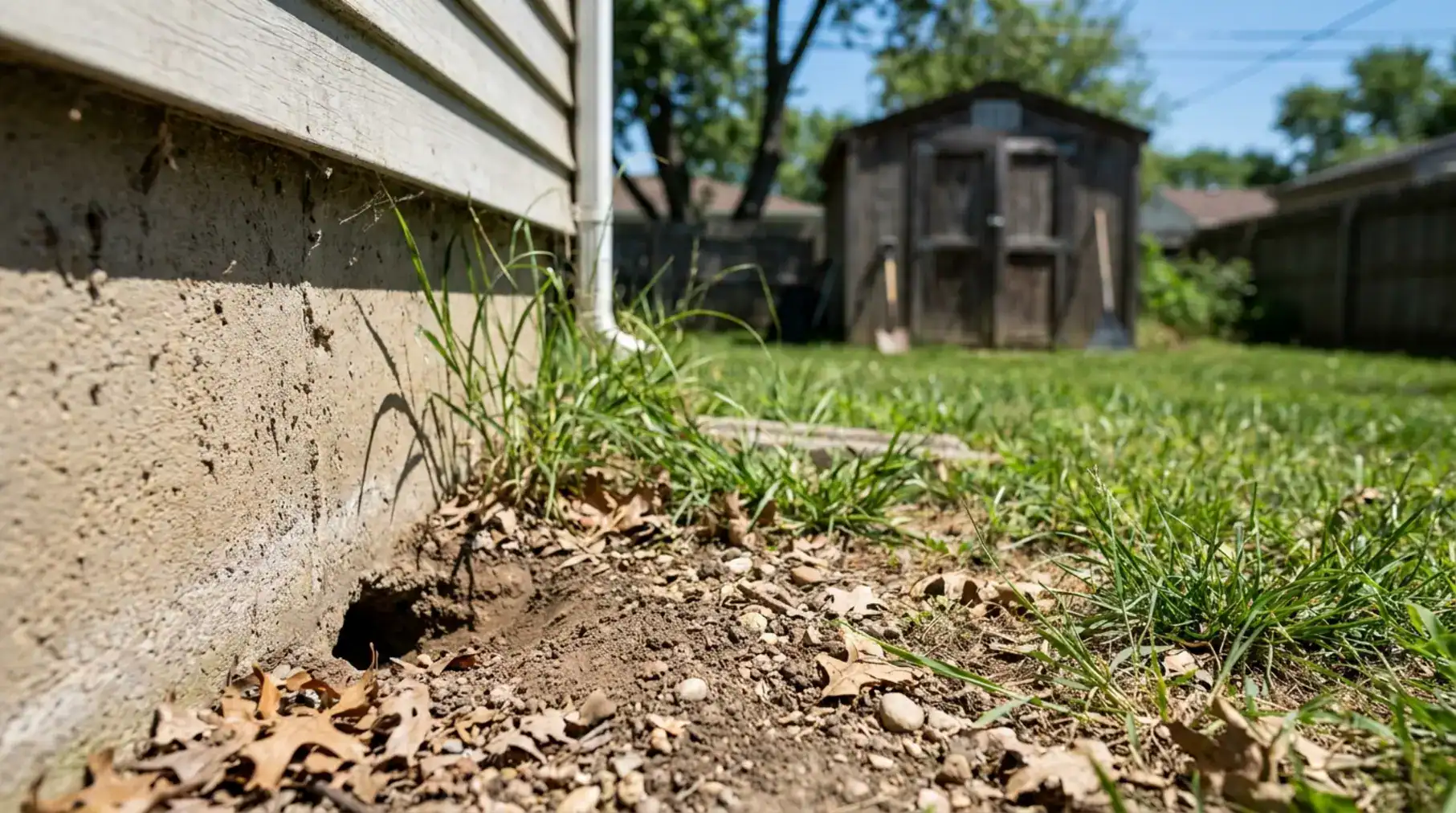
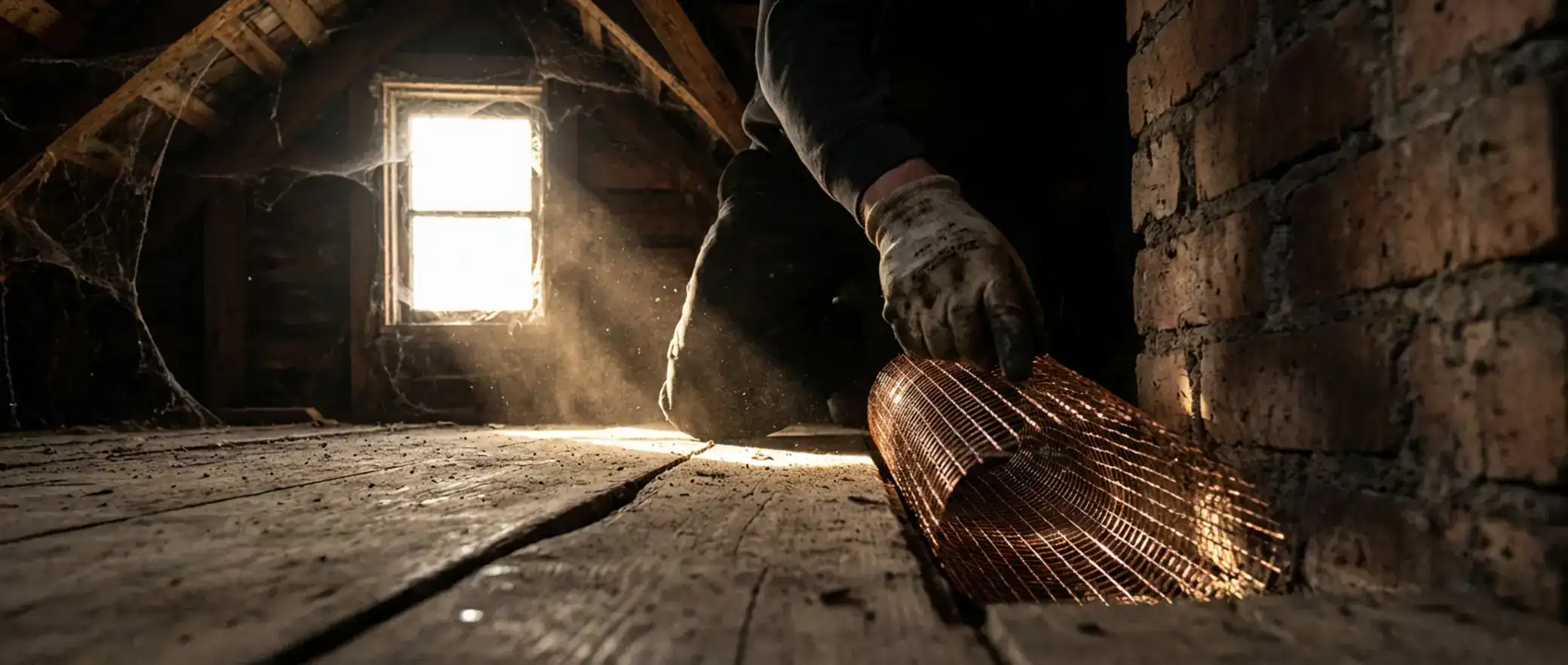
- Seal the Foundation: Inspect your home’s perimeter for any gap larger than a 1/4 inch. Use galvanized steel wool and caulk to seal entries into crawl spaces or basements.
2. Strategic Landscaping to Deter Snakes
Your lawn maintenance habits are your best defense. A well-manicured yard is a “dead zone” for snakes because it offers no protection from predators like hawks or owls.
- Mow Frequently: Keep your grass at 3 inches or shorter. This eliminates the cover snakes need to move across your property unseen.
- The 24-Inch Rule: Prune the bottom branches of all shrubs and hedges to create a 24 to 36-inch gap between the leaves and the ground. This “daylighting” technique removes the dark, cool pockets where snakes love to coil during the heat of the day.
- Eliminate Clutter: Remove brush piles, leaf litter, and stacks of construction materials. If you must keep firewood, store it on a raised rack at least 18 inches off the ground and as far from your house as possible.
3. Manage Moisture and Standing Water
Water management is often the missing piece in outdoor snake prevention tips. Standing water attracts the prey that snakes crave.
- Fix Drainage Issues: Ensure gutters clear properly and that low spots in the yard are leveled.
- Audit Water Features: While beautiful, koi ponds and bird baths are essentially “watering holes” for the local wildlife. If you have a snake problem, consider removing these features or keeping the area around them completely clear of vegetation.
Building Professional Grade Snake-Proof Barriers
When habitat modification isn’t enough, especially in areas with high venomous snake populations, you must turn to snake exclusion techniques. A physical barrier is the only way to ensure 100% protection for a specific area, like a play zone or a dog run.
Specifications for Snake-Proof Fencing
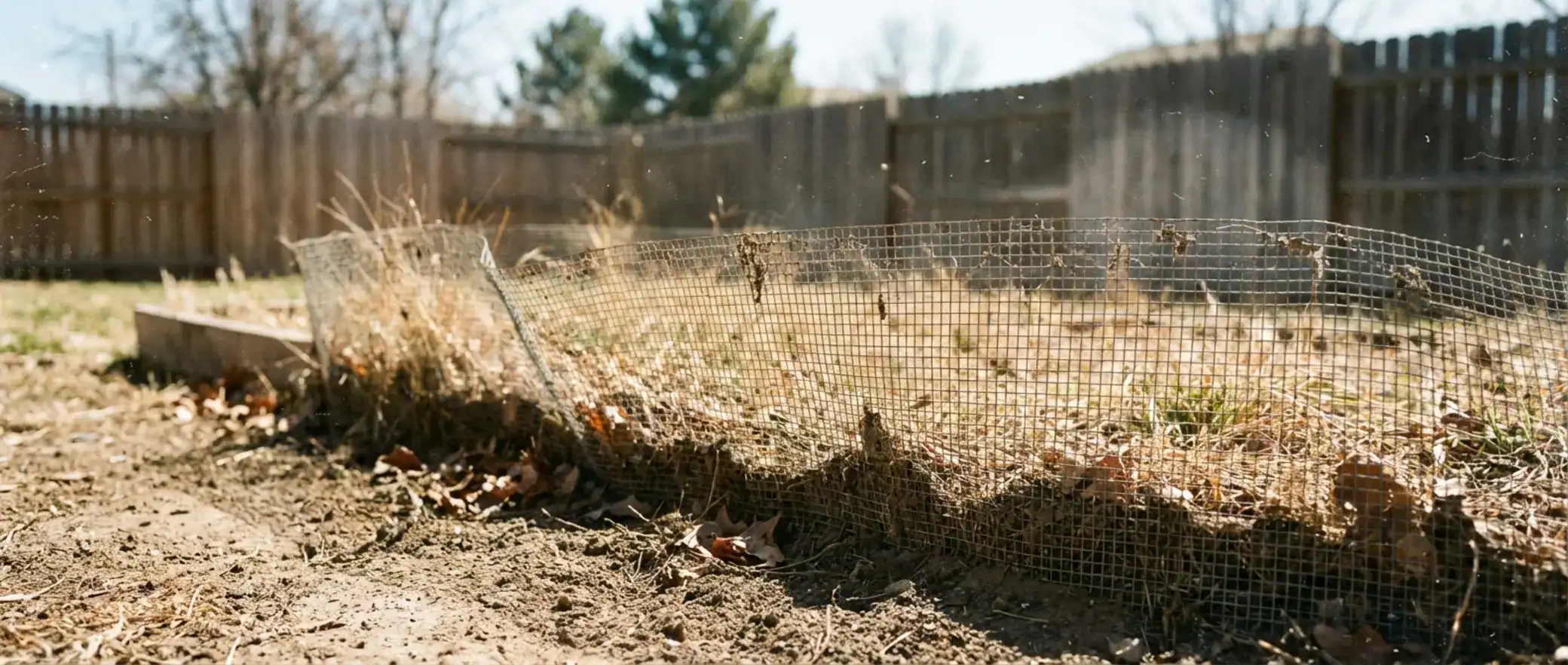
A standard chain-link or wooden privacy fence will not stop a snake. They can easily slide under the gaps or through the mesh. To build an effective barrier, you must use 1/4-inch galvanized hardware cloth.
- Height: The fence should stand at least 30 inches tall. Most heavy-bodied snakes, like Rattlesnakes, are poor climbers and cannot scale a smooth vertical surface higher than half their body length.
- Trenching: This is the most critical step. You must dig a trench 10 to 12 inches deep.
- The L-Shape Footer: Instead of just burying the mesh straight down, bend the bottom 10-12 inches of the hardware cloth outward at a 90-degree angle (creating an “L” shape) before burying it. This prevents snakes from using existing rodent burrows to tunnel under the fence.
- Angle: If possible, tilt the entire fence outward at a 30-degree angle to make climbing even more difficult.
| Barrier Type | Estimated Cost (Per Linear Ft) | Efficacy Rating | Lifespan |
| DIY Hardware Cloth (1/4″) | $7.00 – $12.00 | High | 10-15 Years |
| Professional Vinyl Mesh | $14.50 – $25.00 | Excellent | 20+ Years |
| Plastic Snake Netting | $2.00 – $5.00 | Low (Safety Hazard) | 1-2 Years |
Safety Warning: Avoid using “bird netting” or plastic mesh as a snake deterrent. These often trap snakes, leading to a slow, cruel death. Furthermore, a trapped, panicked snake is much more likely to strike at a homeowner or pet trying to free it.
Natural Deterrents and Safe Home Remedies
While we have established that DIY snake repellent solutions are rarely a primary fix, some natural options can serve as a supplementary layer of disruption. If you are looking for non-toxic snake repellent options, focus on disrupting their olfactory senses without harming the environment.
Research suggests that high concentrations of cinnamon and clove essential oils can cause a snake to retreat if they are sprayed directly in a confined area . However, these oils evaporate quickly and must be reapplied after every rain or heavy dew.
✓ Use a mixture of 50% cinnamon oil and 50% clove oil in a spray bottle.
✓ Apply the mixture to porch steps or around doorways to disrupt the Jacobson’s organ.
✓ Avoid using “Snake-A-Way” or similar products near air intakes, as the smell is noxious to humans.
There is no scientific evidence that snake deterrent plants like lemongrass, marigolds, or “Mother-in-Law’s Tongue” actually work. A snake will happily slither through a patch of marigolds to reach a toad hiding on the other side. Do not rely on “repellent plants” as a primary safety strategy.
Seasonal Considerations for Snake Activity and Prevention
Snakes are highly seasonal. Understanding their calendar allows you to time your habitat modifications for maximum impact.
- Spring (The Emergence): This is when snakes leave their winter dens. Sightings spike as they search for mates and food. This is the best time to check your snake-proof fencing for damage caused by winter erosion.
- Summer (The Heat): During the hottest months, snakes become crepuscular or nocturnal, meaning they are active at dawn, dusk, and night. Be extra cautious when walking the dog late in the evening.
- Fall (The Search for Shelter): As temperatures drop, snakes look for warm places to overwinter. This is the most important time to ensure your house foundation and garage door seals are intact.
In many southern regions, like Houston or North Atlanta, the “snake season” can last from March through November. If you find a snake in your yard during these months, don’t panic. Over 90% of encounters involve non-venomous species .
Educating Your Family About Safety Around Snakes
Education is the final piece of the preventing snakes in your yard puzzle. You must teach children and family members how to coexist safely with local wildlife.
- The “Freeze and Back Away” Rule: Teach children that if they see a snake, they should not run or scream. They should stand still like a statue and then slowly back away until they are at least 10 feet away.
- Wear Shoes: Most snake bites occur on the hands or feet when someone accidentally steps on or reaches near a hidden snake. Enforce a “no bare feet” rule in the yard, especially in long grass or near garden beds.
- Use a Flashlight: Never walk in the yard after dark without a bright light. Many venomous species, like the Eastern Copperhead, are perfectly camouflaged against fall leaves and are very active at night.
If you suspect a snake in your yard is venomous, do not attempt to kill it. Most bites happen when people try to interact with the snake. Instead, seek safe removal of snakes found in the yard by calling a professional wildlife relocator. The average cost for professional removal ranges from $150 to $400, which is significantly cheaper than a hospital bill for antivenom treatment .
Common Questions About How to Keep Snakes Out: Habitat Modification Guide
Do snake repellents really work?
Most commercial chemical and ultrasonic repellents do not work in real-world settings. Habitat modification for snake prevention is the only scientifically backed method to keep them away. Snakes habituate to vibrations and often ignore the scent of granules if prey is present.
Does mulch attract snakes to my garden?
Yes, thick layers of wood mulch provide moisture and insulation, creating a perfect hiding spot for both snakes and their prey. To reduce the risk, use large, sharp decorative rocks or “lava rocks” which are uncomfortable for snakes to crawl over.
What is the best landscaping to deter snakes?
A “clean and clear” approach is best. This means keeping grass under 3 inches, pruning shrubs 2 feet off the ground, and removing all ground-level debris like woodpiles or rock walls.
How deep should a snake fence be buried?
A functional snake fence must be buried at least 10 to 12 inches deep. It should also have an “L-shaped” flare pointing away from the yard to prevent snakes from following rodent tunnels under the barrier.
Will vinegar or bleach keep snakes away from pools?
There is no evidence that vinegar or bleach deters snakes from swimming pools. In fact, these chemicals can be harmful to your pool’s balance and local wildlife without providing any protective benefit.
Can snakes climb over a wooden fence?
Most heavy-bodied snakes are poor climbers, but some species, like Black Rat Snakes, are excellent at scaling rough surfaces. If you have a wooden fence, you should still attach 1/4-inch hardware cloth to the bottom to ensure no gaps exist.
References & Expert Sources
- EPA Technical Fact Sheet on Naphthalene
- CDC Safety Guidelines for Venomous Snakes
- University of Georgia Extension: Snake Management in Residential Areas
- Humane Society: Standard Snake Exclusion Practices
Final Thoughts
The desire for a quick snake repellent yard fix is understandable, but true safety comes from a commitment to property maintenance. By viewing your yard through the eyes of a predator, you can identify and eliminate the triggers that invite snakes onto your land. Start today by clearing one pile of debris, trimming one overgrown shrub, or sealing one gap in your foundation. Creating a snake-resistant environment is not an overnight task, but it is the only way to ensure lasting peace of mind for your family. If you have encountered a persistent snake issue despite these modifications, share your story in the comments below so our community of experts can help you troubleshoot your specific habitat challenges. Once you transform your property into a “Class-A” inhospitable zone, you’ll find that the most effective snake repellent yard is simply a well-maintained one.