Have you ever stepped into your yard and wondered what’s causing those peculiar mounds or why the ground feels like a wet sponge? You are likely standing on a battlefield designed by two very different underground architects. Identifying the specific culprit between mole vs vole tunnels is the only way to save your landscaping from becoming a structural and financial disaster.
How do you distinguish mole tunnels from vole tunnels?
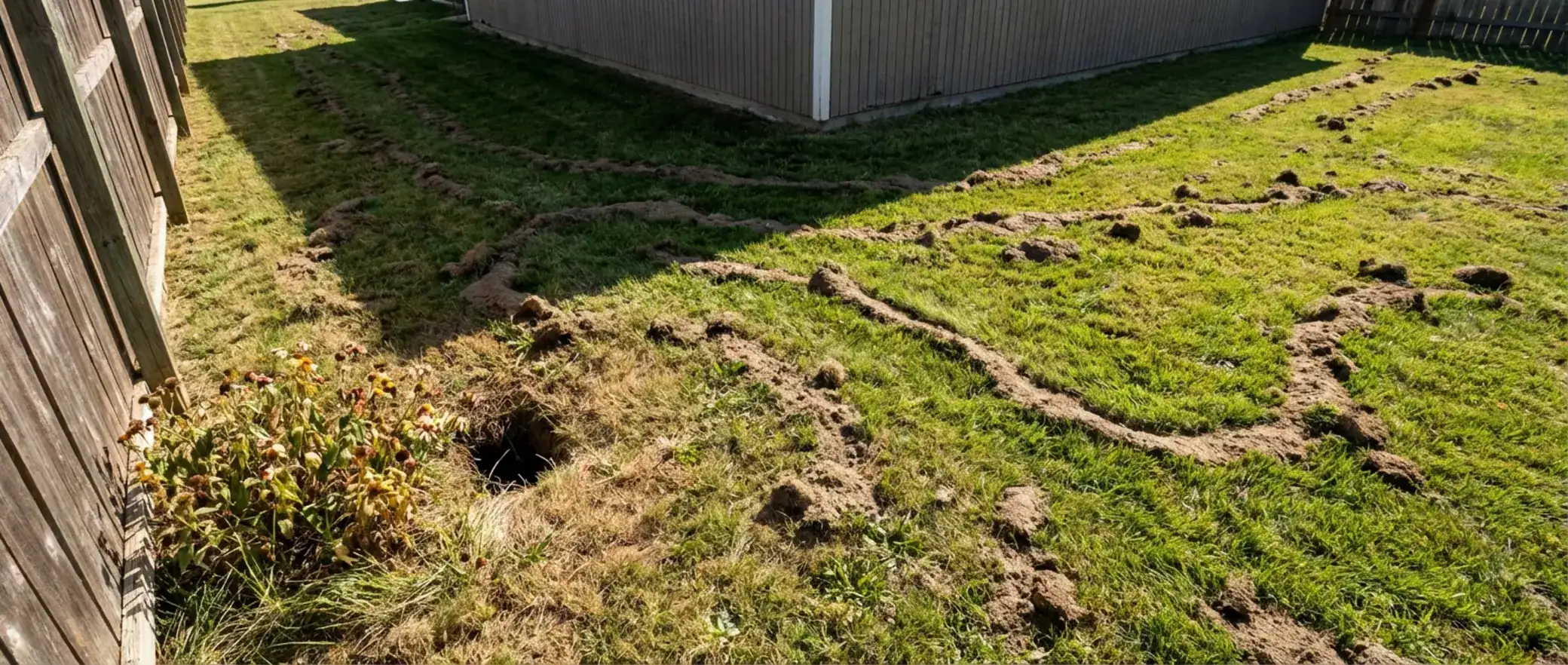
Mole tunnels are characterized by raised, squishy ridges on the lawn and volcano-shaped dirt mounds. Voles create 1-2 inch wide surface runways that look like miniature grass highways leading to open, golf ball-sized holes. Moles are meat-eaters that disrupt soil structure, while voles are herbivores that actively consume your plant roots and flower bulbs.
Homeowners frequently bleed money by purchasing the wrong treatments for these pests. Actually, misidentification is the number one reason why DIY pest control fails. If you buy grain-based poison for a meat-eating mole, you are essentially providing a free snack for the neighborhood mice while the mole continues its 150-foot-per-day digging spree. In 2026, professional wildlife removal prices have climbed to between $100 and $550 . Understanding the “crime scene” in your dirt is the first step toward stopping the bleed.
The Carnivore vs. The Vegetarian: A Biological Breakdown
Before you can read the tunnels, you have to know the players. Moles and voles are often grouped together as “rodents,” but this is a scientific error. Moles are insectivores, meaning they belong to the same group as shrews. They are solitary loners that spend nearly 99% of their lives in total darkness.
Voles, on the other hand, are true rodents. They are often called meadow mice because they look exactly like a mouse that grew a shorter tail and smaller ears. Unlike the lonely mole, voles are social and multiply at an alarming rate. A single female vole can produce up to 30 offspring in a single year .
| Feature | Moles (The Meat-Eaters) | Voles (The Vegetarians) |
|---|---|---|
| Diet | Earthworms, grubs, and soil insects. | Roots, bulbs, bark, and grass. |
| Appearance | Pink paddle-paws, no visible eyes, snout. | Mouse-like body, round ears, short tail. |
| Primary Sign | Conical “volcano” mounds and ridges. | Open holes and surface runways. |
| Social Behavior | Territorial loners (usually 1-2 per yard). | Colonies (can have dozens in one area). |
Decoding the Dirt: Reading Mole Tunnels
If you see a mound of dirt that looks like a miniature volcano, you are looking at the excavation site of a mole. Moles dig two distinct types of tunnels. The first are deep “highways” located 16 to 18 inches below the surface. These are used for nesting and traveling through the winter. The second are the surface feeding runs that create those annoying, raised ridges across your turf.
A single mole can dig up to 18 feet in one hour . This incredible speed is why a single animal can make your entire backyard look like a disaster zone in 48 hours. Because they are insectivores, they are searching for high-protein meals like earthworms and white grubs. They can consume nearly 100% of their body weight in insects every single day .
The “mound” is simply the byproduct of their deep tunneling. When a mole digs its deep travel runs, it has to push the excess dirt somewhere. It pushes the soil upward through a vertical shaft, creating a uniform, conical mound. If your mounds are fan-shaped or lopsided, you might be dealing with a pocket gopher instead. However, the uniform volcano shape is the definitive mole signature.
Recognizing the Vole Highway: Surface Runways
Voles do not have the massive, paddle-like paws that moles use to move earth. Instead, they are surface-dwellers that prefer to hide under a layer of mulch or overgrown grass. Vole tunnels are actually runways. They look like 1-2 inch wide “roads” where the grass has been eaten down to the dirt or cleared away through constant travel.
These runways are most visible in early spring right after the snow melts. During the winter, voles feel safe under the snowpack and will create elaborate trench systems across your lawn. When the snow disappears, you are left with a web of dead-grass paths.
One of the most dangerous signs of vole activity is “girdling.” This occurs when voles chew the bark all the way around the base of a tree or shrub. Since trees transport nutrients through the layer just beneath the bark, this behavior effectively starves the plant to death. If you see a young fruit tree or burning bush suddenly turn brown in the spring, check the base for small tooth marks.
The Active Tunnel Test: A DIY Diagnostic
Before you set a trap, you must know if the tunnel is currently being used. Both moles and voles abandon old runs once the local food source is depleted. Setting a trap in an inactive tunnel is a waste of time. Here is the industry-standard way to check for activity:
- Locate a prominent raised ridge or runway.
- Step on the tunnel to flatten a small section (about 6 inches).
- Mark the spot with a small flag or stick.
- Wait 24 hours.
If the “roof” of the tunnel has been pushed back up or the runway has been cleared of debris, you have a resident currently using that path. Moles are creatures of habit and will almost always repair a collapsed main artery. If the tunnel stays flat, move on to a different area.
Effective Strategies for Controlling Moles and Voles
Once you have identified the pest and the active runs, you need a targeted strike. The most important lesson in controlling moles and voles in your yard is that one strategy does not fit both.
Mole Eradication: The Meat-Eater Method
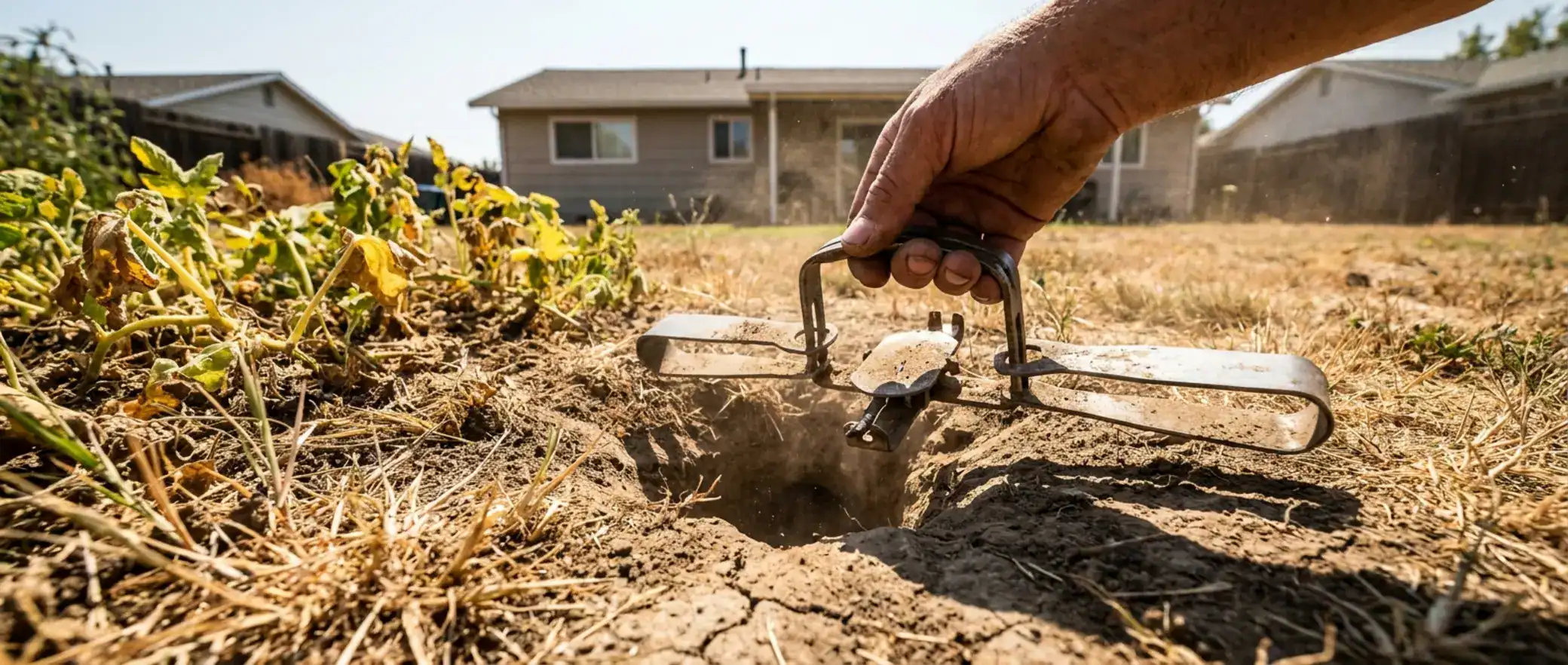
For moles, mechanical traps are the gold standard. The Victor Out O’Sight Scissor Trap is a favorite among professionals. These traps are placed over a flattened section of an active run. When the mole tries to push the dirt back up to clear its tunnel, it triggers the scissor jaws.
Baiting is difficult because moles only eat live or simulated prey. In 2026, many homeowners are finding success with bromethalin-based “worms” like Talpirid. These look and feel like earthworms to a mole but contain a lethal dose of a neurotoxin.
Safety First: You must ensure any toxic baits are placed deep within the tunnel system and the entry point is sealed to prevent curious pets from digging them up.
Vole Management: The Habitat Modification Method
Voles are much easier to manage through habitat changes. They hate open spaces because they are prime targets for hawks and owls.
- Keep your grass mowed short, especially in late autumn.
- Clear away tall weeds and brush piles near your garden beds.
- Use 1/4 inch hardware cloth (mesh) buried 6 inches deep around high-value bulbs or the base of young trees.
- For active infestations, standard mouse snap traps baited with peanut butter and oatmeal work exceptionally well. Place them directly in the surface runways and cover them with a box to protect birds.
The Hardware Store Trap: Avoiding Consumer Fraud
Be wary of products labeled as “Mole and Vole Repellent” that rely on ultrasonic sound waves. Scientific studies from major universities have repeatedly shown that these spikes have zero effect on burrowing mammals . The vibrations do not bother them, and they often dig tunnels right next to the vibrating spike.
Similarly, avoid the “poison peanuts” sold at big-box retailers for moles. Moles are physiologically incapable of digesting seeds or grains. Selling grain bait for a mole is essentially a marketing scam that preys on frustrated homeowners. If you want to use bait for moles, it must be an earthworm or grub mimic.
Ecological Impact: Why You Might Want to Keep Them
It sounds crazy to a homeowner with a ruined lawn, but moles and voles play a vital role in soil health. This process is called bioturbation. Moles are nature’s rototillers. Their deep tunnels aerate the soil, allowing oxygen and water to reach deep root systems. They also eat thousands of Japanese Beetle grubs every summer, which can save your lawn from an even worse insect infestation.
Voles are a primary food source for local predators. If you have a healthy population of owls, foxes, or hawks, you likely have voles nearby. In 2026, researchers are even using environmental DNA (eDNA) from soil samples to track these populations without having to trap them, helping gardeners find a balance between a beautiful lawn and a healthy ecosystem .
Seasonal Activity Patterns: Timing Your Defense
Understanding seasonal activity patterns of moles and voles will help you predict when to be on high alert.
- Spring: This is the peak for vole damage discovery. As the snow melts, their winter runways are exposed. Moles also move closer to the surface as the ground warms and earthworms become active.
- Summer: Moles may dig deeper to stay cool and find moisture during droughts. Surface ridges may disappear, but they are still there.
- Autumn: This is a secondary peak for moles as they forage heavily to gain weight before the frost. This is often the best time to trap.
- Winter: Moles move to their 18-inch deep travel runs. Voles remain active under the snow, which is when most tree girdling occurs.
DIY Solutions for Repairing Damage
Once the pests are gone, the work isn’t over. DIY solutions for repairing damage caused by tunneling focus on restoring soil density. For mole ridges, you can simply step them down or use a lawn roller. However, for deep molehills, you should remove the excavated dirt rather than trying to push it back in, as this often leads to a persistent “hump” in your lawn.
For vole runways, the grass will often grow back on its own if the roots haven’t been entirely consumed. If the area is bare, light raking followed by a high-quality seed and starter fertilizer will usually fill the trenches within three to four weeks. If you live in areas with heavy clay soil, like Indiana, you may need to fill the tunnels with a mixture of sand and topsoil to prevent future erosion .
Common Questions About Mole vs. Vole Damage: Reading the Tunnels
What animal leaves a 2-inch hole in my yard?
If the hole is open and about the size of a golf ball, it is likely a vole. These holes usually lack a dirt mound and are found near surface runways. Moles do not usually leave open holes; they prefer to keep their tunnels sealed to maintain humidity and protection.
Do moles carry diseases?
While any wild animal can carry parasites like fleas or ticks, moles are rarely a direct disease threat to humans. They are extremely shy and almost never come into contact with people. However, voles are rodents and can carry diseases similar to mice, such as Hantavirus, though this is rare in suburban garden settings.
Does killing grubs get rid of moles?
This is a common myth. While moles eat grubs, their primary food source is actually the earthworm. You can kill 100% of the grubs in your lawn and the moles will still stay for the worms. Actually, using heavy insecticides can harm your soil’s health while failing to remove the moles.
Can you drown a mole with a hose?
Trying to drown a mole is generally ineffective and a waste of water. Their tunnel systems are elaborate and often include “sump” areas for drainage. Additionally, moles are surprisingly good swimmers and can easily navigate through flooded tunnels to find an air pocket.
How many mole traps do I need?
Because moles are territorial, you usually only have one or two moles per half-acre. You don’t need a dozen traps. Two or three high-quality traps placed in active runs are usually sufficient to clear a standard residential yard.
Why does my yard feel squishy?
A squishy, “bouncy” lawn is a classic sign of mole vs vole tunnels creating air pockets just below the surface. This happens when moles create a high density of surface feeding runs. Over time, these tunnels collapse, leading to a structural failure of the turf.
References & Expert Sources
- Clemson University HGIC – Moles and Voles Identification
- University of California ANR – Vole Management Guidelines
- Piedmont Master Gardeners – Understanding Burrowing Mammals
- USDA APHIS – Wildlife Damage Management
- University of Nebraska-Lincoln – Mole Control in Turfgrass
- EPA – Rodenticide Safety and Regulations
- Purdue University – Managing Vole Damage in Landscapes
- University of Maryland Extension – Mole Identification and Control
- National Wildlife Control Training Program – Trapping Standards
- Nature Scientific Reports – 2026 eDNA Tracking Study
Final Thoughts
Reading the tunnels in your yard is a bit like being a crime scene investigator. If you see the volcanic mounds and raised ridges of a meat-eater, reach for a scissor trap. If you find the surface runways and chewed bark of a vegetarian, focus on habitat modification and colony control. By correctly identifying the difference between mole vs vole tunnels, you save yourself from the frustration of failed treatments and the high cost of property repair. Take a walk through your yard today and look closely at the dirt. The evidence is right beneath your feet, waiting to be read.