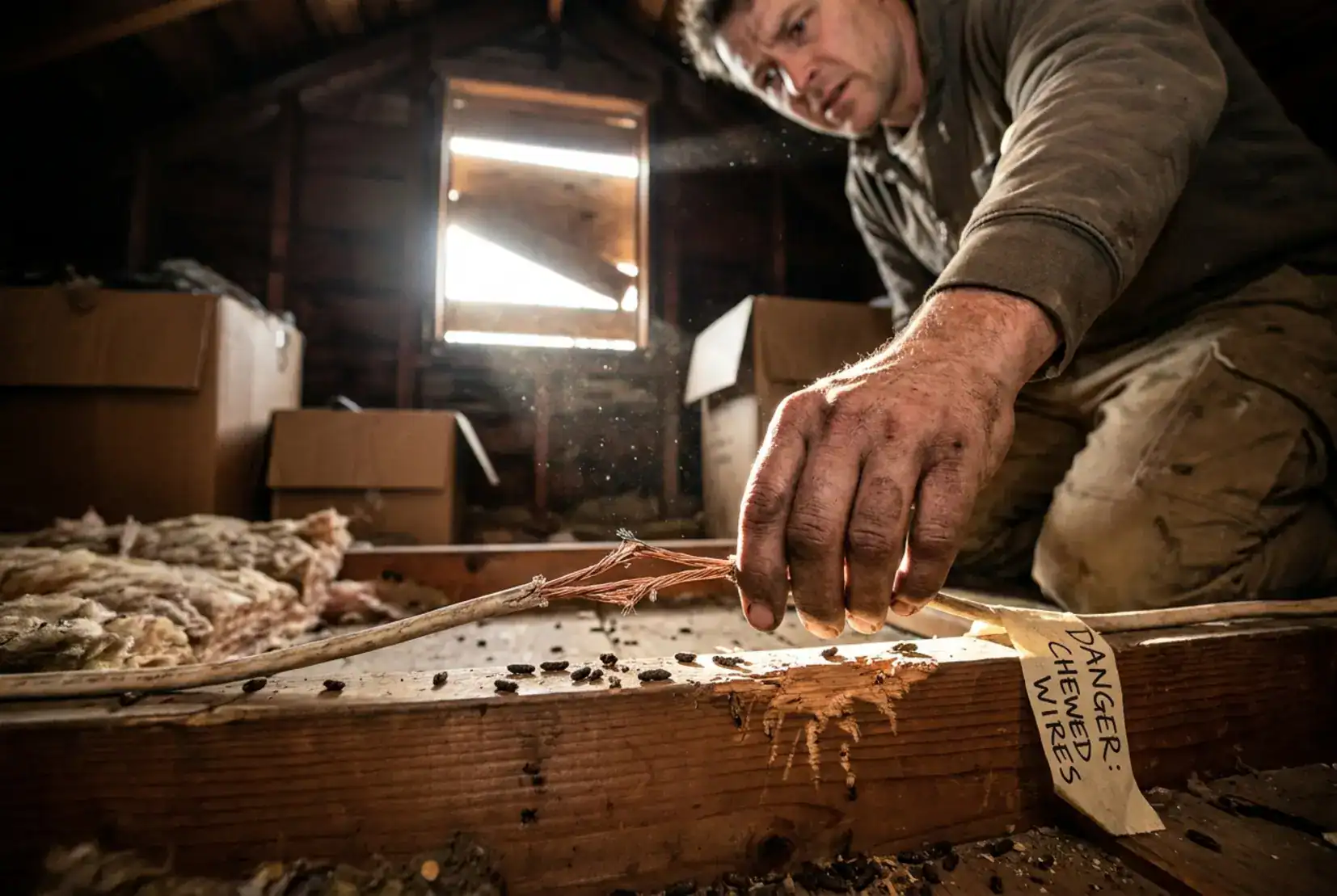
Imagine waking up at 3:00 AM to the sound of frantic scratching just inches from your head. For many homeowners, the discovery of squirrels in attic spaces is a stressful event. However, this is not just a noise problem. It is a serious safety risk. These rodents possess a bite force of approximately 22,000 PSI. This allows them to chew through wood, aluminum, and even electrical wiring. When they strip the plastic insulation from your home’s wiring, they create an exposed circuit. This situation is a leading cause of residential fires that seem to start without warning.
How do you successfully remove squirrels from your soffit?
To evict squirrels, you must first identify all entry points using visual inspections or thermal cameras. Install a one-way exclusion door over the primary hole. This allows squirrels to leave but prevents re-entry. Seal all other gaps with 16-gauge galvanized hardware cloth. Always check for babies during spring and fall before sealing the final exit.
Recognizing the Signs of Squirrels in Attic and Soffit
You might not see the animal immediately. Squirrels are experts at staying hidden. However, they leave clear indicators of their presence. The most common sign is the “race track” sound. Because soffits are hollow tubes that run the perimeter of your house, a squirrel can run from one side of the home to the other in seconds. You will hear scampering or heavy thumping, usually at dawn and dusk.
Visible damage is another key indicator. Look for signs of squirrels in attic areas by inspecting the eaves from the ground. Use a pair of binoculars to look for chewed edges on your fascia boards. You should also look for small “shingle crumbs” in your gutters. This suggests an animal is gnawing on the roofline to widen an entry point.
Odors also play a role in identification. A squirrel infestation in soffit areas will eventually produce a distinct, pungent smell of urine. This scent can permeate your drywall and enter your living space. If you notice a localized “musty” smell near a ceiling corner, an active nest is likely nearby. Furthermore, you might see dark rub marks around holes. These are caused by the oils in the squirrel’s fur as they squeeze through tight gaps.
Identifying Soffit Wildlife Intrusion Entry Points
Squirrels do not need a large opening to enter your home. They can squeeze through a gap as small as one and a half inches. They often exploit architectural flaws or areas where different building materials meet. Specifically, the junction where the roofline meets the gutter is a primary target.
Many homeowners overlook the area behind the gutter. Squirrels will jump into the gutter and chew through the fascia board at the back. This hole is invisible from the ground. It is also protected from rain, making it an ideal doorway. You must also inspect your gable vents and ridge vents. If the screens are made of plastic or thin mesh, a squirrel will shred them in minutes.
Storm damage also creates opportunities. High winds can loosen your soffit panels. Once a panel is slightly ajar, a squirrel will use its teeth to pull it down further. Because of this, you should perform a roofline inspection after every major weather event. Identifying these soffit wildlife intrusion points early can save you thousands of dollars in repair costs.
Health Risks Associated with Squirrels in the Attic
Ignoring a squirrel problem is a dangerous gamble. Beyond the fire hazard, there are significant health risks associated with squirrels in the attic. These animals carry parasites like fleas, ticks, and mites. Once the squirrels are evicted, these parasites often look for a new host. This host is usually you or your pets.
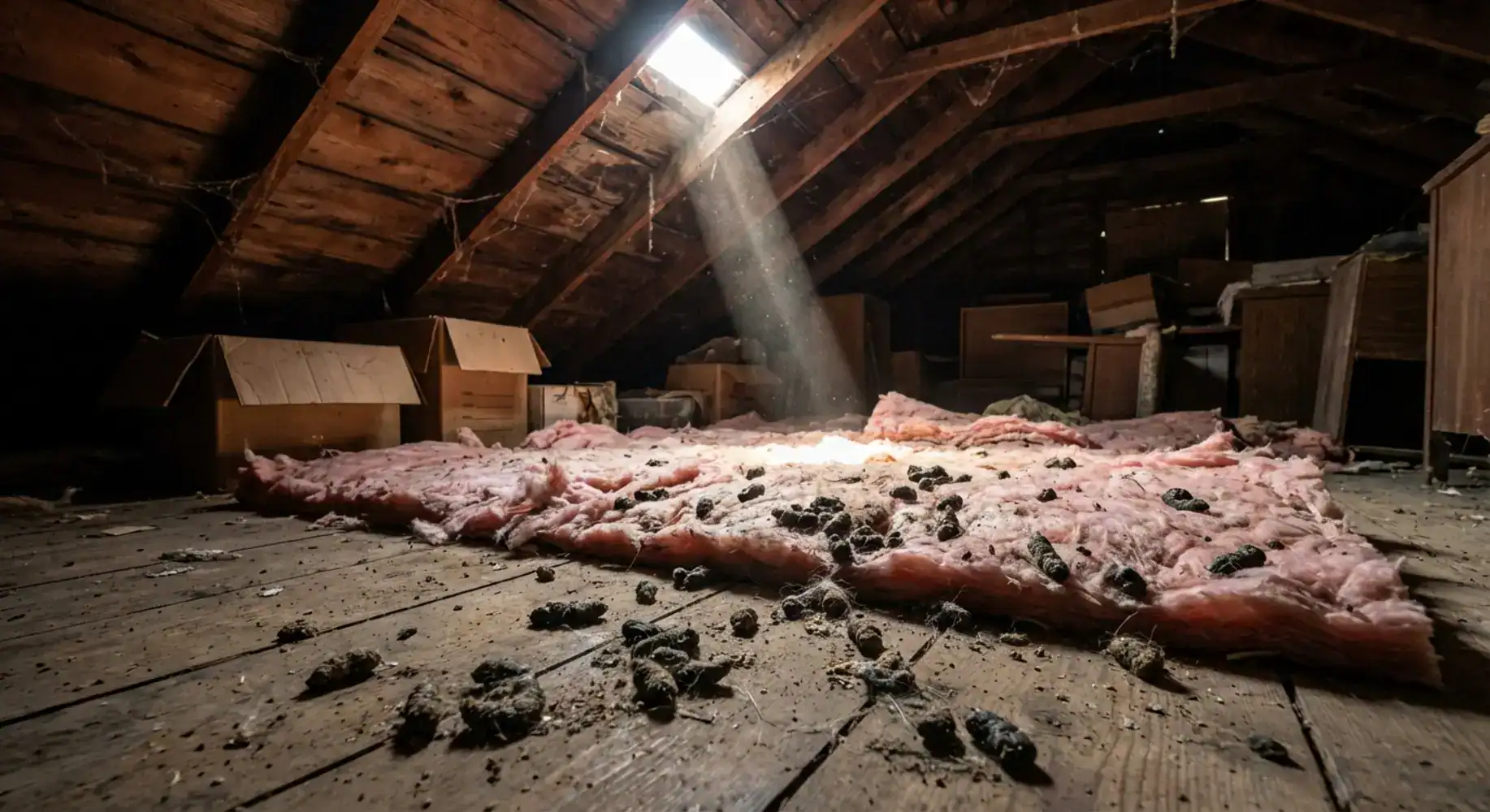
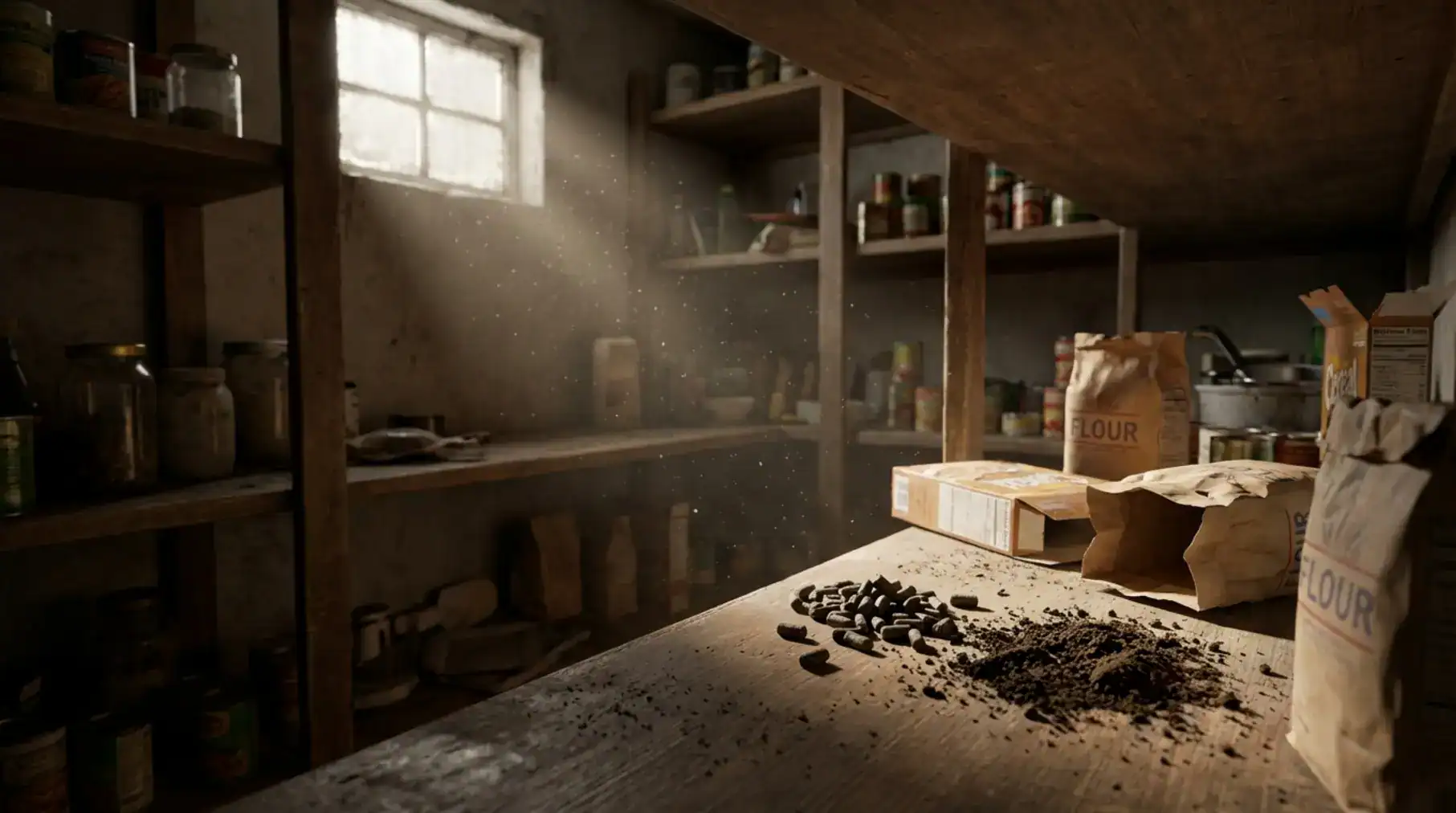
Their waste is also a biohazard. Squirrel droppings can carry zoonotic diseases. Leptospirosis and salmonellosis are two common concerns. When their urine dries, it can turn into airborne particles. If you disturb an old nest without a respirator, you may inhale these pathogens.
Structural rot is a secondary health concern. Squirrel urine is highly acidic. It can soak into your wooden rafters and ceiling joists. Over time, this leads to wood rot and structural weakness. It also encourages the growth of toxic mold. Consequently, a small pest problem can evolve into a major environmental hazard within your home.
Humane Squirrel Removal and the One-Way Door Strategy
The most effective way to handle removing squirrels from eaves is the exclusion method. This is a humane approach that does not involve lethal traps or poisons. The centerpiece of this strategy is the one-way exclusion door. This device is a spring-loaded funnel or door that allows the animal to exit but prevents them from pushing their way back in.
First, you must find every hole. Seal all but the most active entry point. You should use 16-gauge galvanized hardware cloth for these seals. Squirrels cannot chew through this material. DIY squirrel eviction often fails because homeowners use expanding foam or wood. A squirrel will chew through foam in less than an hour.
Next, mount the one-way door over the final opening. Ensure the edges are secure so the squirrel cannot squeeze around the device. Within 48 to 72 hours, the squirrels will leave to forage for food. Once they are out, they will try to get back in. They will spend hours scratching at the door. Eventually, they will give up and seek a new nesting site. This is the cornerstone of humane squirrel removal.
Understanding Squirrel Behavior During Mating Season
Timing is everything when dealing with squirrels in the soffit. You must have a basic understanding of squirrel behavior during mating season before you begin exclusion. Squirrels typically have two birthing seasons. These occur in early spring (February to April) and late summer (August to September).
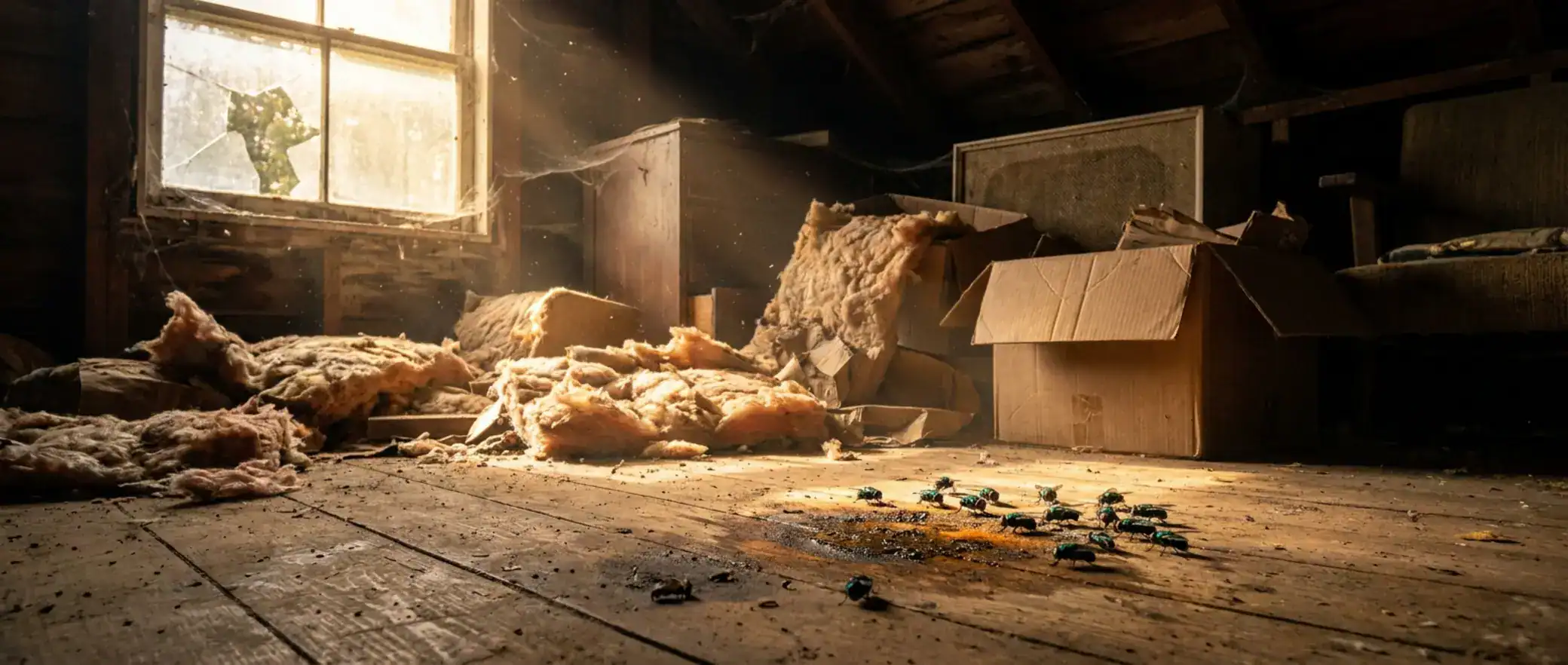
If you install a one-way door during these windows, you run a massive risk. You might evict the mother and trap the babies inside. Baby squirrels are immobile for the first six weeks of their lives. If they are trapped, they will die a slow death. This creates a horrific odor and attracts flies and beetles into your home.
The mother squirrel will also become desperate. She will cause massive squirrel damage in attic areas trying to chew her way back to her young. She can destroy shingles and siding in a matter of hours. If it is “baby season,” you should wait until the young are old enough to leave the nest on their own. This usually takes about eight to ten weeks from birth.
The Drip Edge Retrofit: The Pro’s Secret Fix
Professional wildlife technicians often use a technique called the drip edge retrofit. Many homes lack a proper drip edge between the roof and the fascia board. This leaves a “builder’s gap” that squirrels love. To fix this, you install an L-shaped metal flashing under the first row of shingles.
This metal shield should extend down over the top of the fascia board. It acts as armor. Even if a squirrel tries to chew at the roofline, they hit metal instead of wood. This is one of the most cost-effective methods for squirrel eviction because it provides a permanent solution.
You should also check your “roof returns.” These are the areas where the roof meets a vertical wall. These spots often have gaps that are only covered by thin shingles. Installing custom-cut galvanized steel flashing here is essential. This process is part of a homeowner’s guide to repairing squirrel damage in attics that actually works long-term.
Essential Squirrel Proofing Tactics for Homeowners
Prevention is much cheaper than eviction. You can use several squirrel proofing tactics to keep your home secure. First, focus on the “bridge” to your roof. Squirrels can jump 6 to 8 feet horizontally. This means any tree branch within 10 feet of your roof is a highway.
Keep your trees trimmed back significantly. Use a telescoping pole saw to remove branches that overhang the house. You can also install plastic “rollers” on power lines. These are sections of PVC pipe that spin when a squirrel tries to walk on them. It makes it impossible for them to maintain balance.
Regular inspections are part of attic pest prevention. Every six months, go into your attic during the day. Turn off all the lights. Look for any “light leaks” where the roof meets the walls. If you can see daylight, a squirrel can find a way in. Seal these gaps immediately with metal mesh and a high-quality sealant. These are seasonal tips for preventing squirrel infestations that every homeowner should follow.
Comparing Professional Wildlife Removal to DIY Methods
Many people attempt DIY squirrel eviction to save money. If you have the right ladders and materials, you can succeed. However, you must be honest about your capabilities. Working on a 20-foot ladder while a squirrel is hissing at you is not for everyone.
Professional wildlife removal services typically cost between $300 and $600 for a standard exclusion. If the damage is severe, the price can climb to $1,500. This often includes sanitizing the area and repairing the entry points. Professionals also use thermal imaging cameras. This technology allows them to find nests hidden deep inside wall cavities without cutting into your drywall.
When you weigh the costs, remember the importance of professional wildlife control services. A pro provides a warranty. If the squirrel returns, they fix it for free. A DIY fix often fails because a small gap was missed. Consequently, the squirrel control methods used by experts are usually more reliable for high-risk infestations.
Materials Comparison for Squirrel Exclusion
Choosing the right materials is the difference between success and a recurring nightmare. You must avoid cheap “quick fixes” like chicken wire or spray foam.
| Material | Squirrel Resistance | Recommended Use |
| 16-Gauge Hardware Cloth | Highest | Main exclusion and vent covers. |
| Aluminum Flashing | High | Drip edges and fascia armor. |
| Expanding Foam | Zero | Filling air gaps only; useless against teeth. |
| Chicken Wire | Low | Too flimsy; squirrels can bend or snap it. |
| Copper Stuf-Fit | Medium | Packing into small holes before sealing. |
Common DIY Mistakes When Evicting Squirrels
The most frequent error in how to remove squirrels from attic spaces is trapping the animal inside. Many homeowners see a hole and immediately nail a board over it. This is a disaster. If the squirrel is inside, it will chew through your ceiling to get out. You must ensure the animal is out before the final seal.
Another mistake is using poison. Removing wildlife from home using rodenticides is often illegal. Squirrels are classified differently than rats. Furthermore, poison does not work instantly. The squirrel will crawl into a hard-to-reach corner of your soffit and die. The resulting smell of decay will last for weeks and may require you to tear out your soffit panels to find the carcass.
Finally, do not rely on “repellents.” Mothballs, peppermint oil, and ultrasonic sound devices are ineffective. Squirrels are highly adaptable. They will tolerate a bad smell if it means they have a warm, safe place to sleep. Focus on physical barriers rather than sensory deterrents. These are the common DIY mistakes when evicting squirrels that lead to wasted time and money.
The Ecological Impact of Squirrels in Urban Areas
While they are pests in our homes, we should consider the ecological impact of squirrels in urban areas. They are nature’s foresters. Squirrels bury thousands of nuts every year and forget where many are hidden. This results in the growth of new trees.
Because of this, we should prioritize humane methods. Relocating a squirrel is sometimes an option, but you must check local laws. In many states, it is illegal to move a squirrel to a new county because it can spread diseases to local populations. Humane squirrel removal focuses on keeping the squirrel in its natural environment but out of your human-made structure.
Understanding squirrel habits and behaviors helps us coexist. They want a high, dry place to nest because it mimics the hollows of old-growth trees. By making our homes “un-treelike” through metal flashing and trimmed branches, we guide them back to the actual trees where they belong.
Cleaning Up After an Infestation
Once the eviction is over, the work is not finished. You must perform a deep clean. This is part of the homeowner’s guide to repairing squirrel damage in attics. Wear a HEPA-rated respirator and disposable gloves.
Remove any insulation that is heavily soiled with urine or feces. Use a shop vacuum with a high-efficiency filter to remove small debris. Once the area is clear, spray a professional-grade enzymatic cleaner. These cleaners break down the organic proteins in the urine. This is crucial because the scent of old urine acts as a beacon for other attic critters. It tells them that the space is a safe nesting site.
Check all your attic vents to ensure they have not been compromised. If you find chewed wires, you must call a licensed electrician. Do not attempt to tape over chewed wires yourself. The copper may be thinned, which causes heat buildup and potential fires. Attic pest prevention ends with a clean, safe, and repaired environment.
Common Questions About Squirrels in the Soffit: Eviction Strategies
What time of day are squirrels most active in the roof?
Squirrels are diurnal, meaning they are active during daylight hours. You will most likely hear them scampering in the early morning as they leave to forage and in the late afternoon as they return to sleep. If you hear noises late at night, you may actually be dealing with raccoons or flying squirrels, which are nocturnal.
Can a squirrel chew through aluminum soffit panels?
Yes, a determined squirrel can chew through thin aluminum. While aluminum is more resistant than wood, it is not “squirrel-proof.” This is why 16-gauge galvanized steel is the industry standard for exclusion. It is much harder than aluminum and specifically designed to resist gnawing.
Does homeowners insurance cover squirrel damage?
Most standard policies do not cover damage caused by rodents or pests. Insurance companies view pest prevention as a routine maintenance task for the homeowner. However, if a squirrel chews a wire and causes a fire, the resulting fire damage is usually covered. Always check your specific policy for “vermin” exclusions.
How far away should I relocate a trapped squirrel?
If you are legally allowed to relocate, you should take the squirrel at least 5 to 10 miles away. If you release them closer, they will use their incredible sense of smell and homing instinct to return to your house. Ensure the release site has plenty of water and food sources to give them a chance at survival.
Will a fake owl keep squirrels off my roof?
Typically, no. Squirrels are smart and will eventually notice that the owl does not move. After a few days, they will ignore it. Some homeowners have more success by moving the owl to a new location every day, but even this is a temporary fix. Physical barriers are always superior to visual decoys.
References & Expert Sources
-
- *
-
- *
-
- *
-
- *
-
- *
Final Thoughts
Taking immediate action is the only way to protect your home from the long-term effects of squirrels in attic spaces. While these animals appear harmless, their ability to damage your home’s infrastructure is significant. By using a combination of one-way doors, metal hardware cloth, and the drip edge retrofit, you can reclaim your peace of mind. Stay proactive with biannual inspections and always prioritize humane, effective eviction strategies for squirrels.