When photos of squirming maggots in a South Korean daycare’s rice bowls went viral last year, parents panicked. Entomologists quickly clarified those were not fly maggots, but rather the larvae of the Indian meal moth hiding in their food supply. Chances are, these same pests are quietly multiplying in your kitchen right now. Setting up pantry moth traps is the first required step to reclaiming your food.
The most effective attractant for pantry moth traps is a synthetic female sex pheromone called (Z,E)-9,12-Tetradecadienyl acetate. This specific chemical compound mimics the exact scent of a female Indian meal moth, drawing active male moths onto a sticky glue board to break the rapid breeding cycle.
Understanding the Lifecycle and Behavior of Pantry Moths
Understanding the lifecycle and behavior of pantry moths allows you to target them at their most vulnerable stages before they destroy your dry goods. By knowing how they breed, you can break their life cycle entirely.
The Indian meal moth (Plodia interpunctella) is defined as the most common household food pest in North America. They have a 5/8-inch wingspan with two-toned wings. Specifically, their wings look whitish-gray near the head and reddish-brown at the tips. They enter your home hiding inside contaminated grocery store items .
A single adult female lays between 100 to 400 eggs directly onto a food source. These practically invisible eggs hatch within four to eight days depending on the temperature. The ideal environment for rapid breeding is a warm kitchen sitting at 86°F (30°C) with high humidity.
Once hatched, the larval stage begins. This is the most destructive phase. Moth larvae in food can actively feed for anywhere between 13 and 288 days. They grow up to half an inch long before leaving the food to spin cocoons. They are notorious for chewing directly through thin plastic Ziploc bags and cardboard cereal boxes to reach their next meal.
Identifying Pantry Moths and Infestation Signs
Identifying pantry moths quickly will save you from throwing out hundreds of dollars in ruined groceries. The earliest warning signs are usually visible inside the food containers themselves.
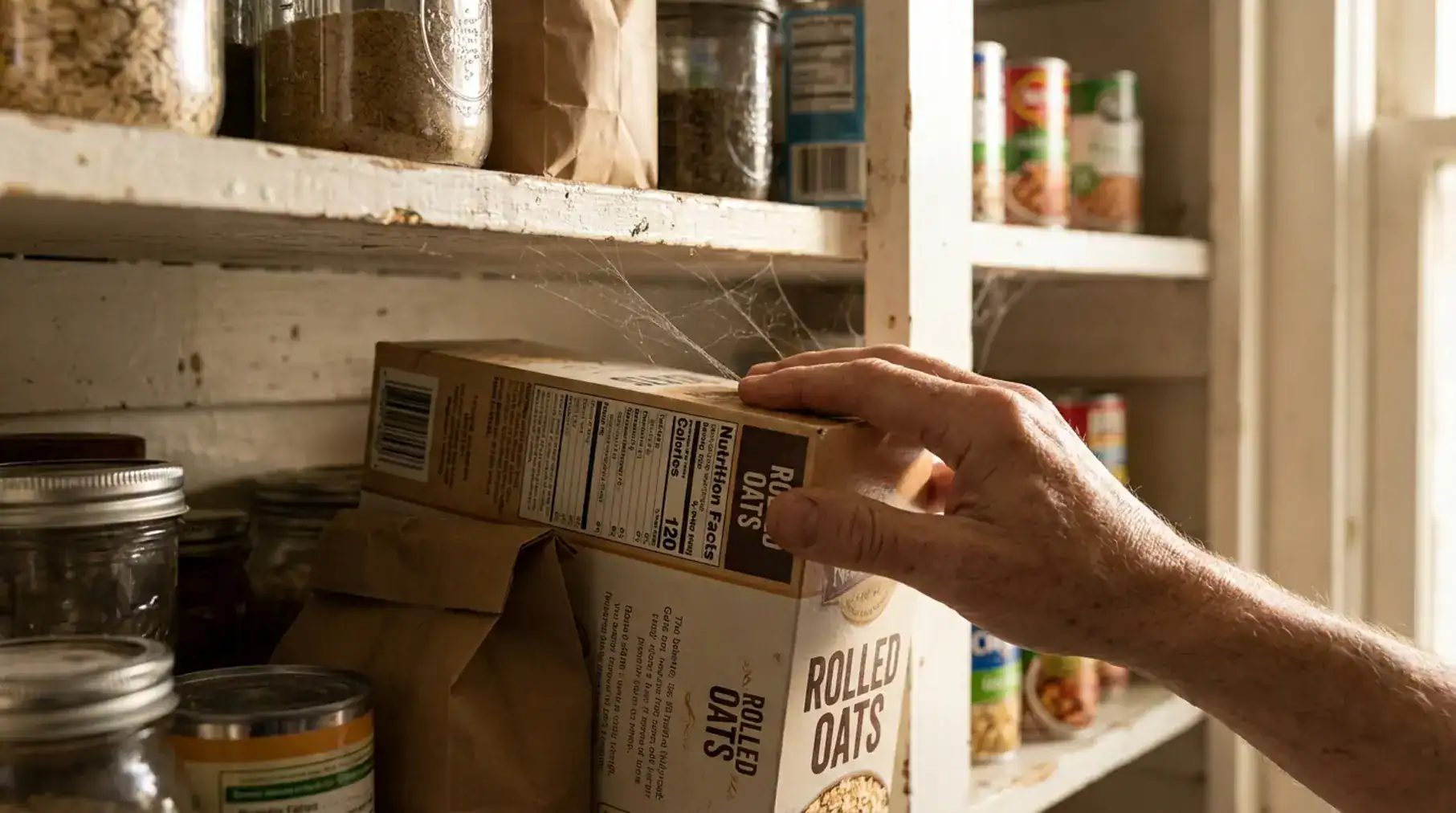
Look for silken webbing clumping your flour, cornmeal, or spices together. You might also spot tiny exoskeletons or frass (insect droppings) inside sealed tea bags and raw cashew bags. Another dead giveaway is finding small gray moths flying erratically around your kitchen during the day.
How Do Pantry Moth Traps Work?
Pantry moth traps use potent synthetic pheromones to lure adult male moths onto sticky glue boards, which interrupts the mating process and reduces future larvae populations. They are heavily relied upon as a first line of defense.
The core technology behind these traps relies on chemical mimicry. Pheromone attractants for moths specifically use a synthetic version of the female sex hormone. Because of this, traps only catch adult males. You must understand that a trap full of dead moths does not mean your infestation is cured. Females are still flying around laying eggs, and larvae are still eating your food.
Industry experts note that high-quality pheromone lures remain active for exactly three months after you remove them from their airtight foil packaging . After 90 days, the chemical scent fades, and the trap becomes useless.
The Problem With Pheromone Traps
While effective, you can easily misuse these tools. Placing too many traps in a small space causes “pheromone confusion”. If you put five traps in a single small pantry, the air becomes so saturated with the scent that male moths cannot pinpoint the actual glue boards. They will simply fly around confused without ever getting stuck.
Safety Note: Never place pheromone traps near open kitchen windows. The powerful scent can drift outside and attract new moths from your neighborhood directly into your home.
Step-by-Step Guide to Setting Up and Using Moth Traps Effectively
Proper placement and deployment of sticky pantry moth traps determine whether you will catch stray males or completely waste your pheromone lures. Following a strict sequence ensures maximum catch rates.
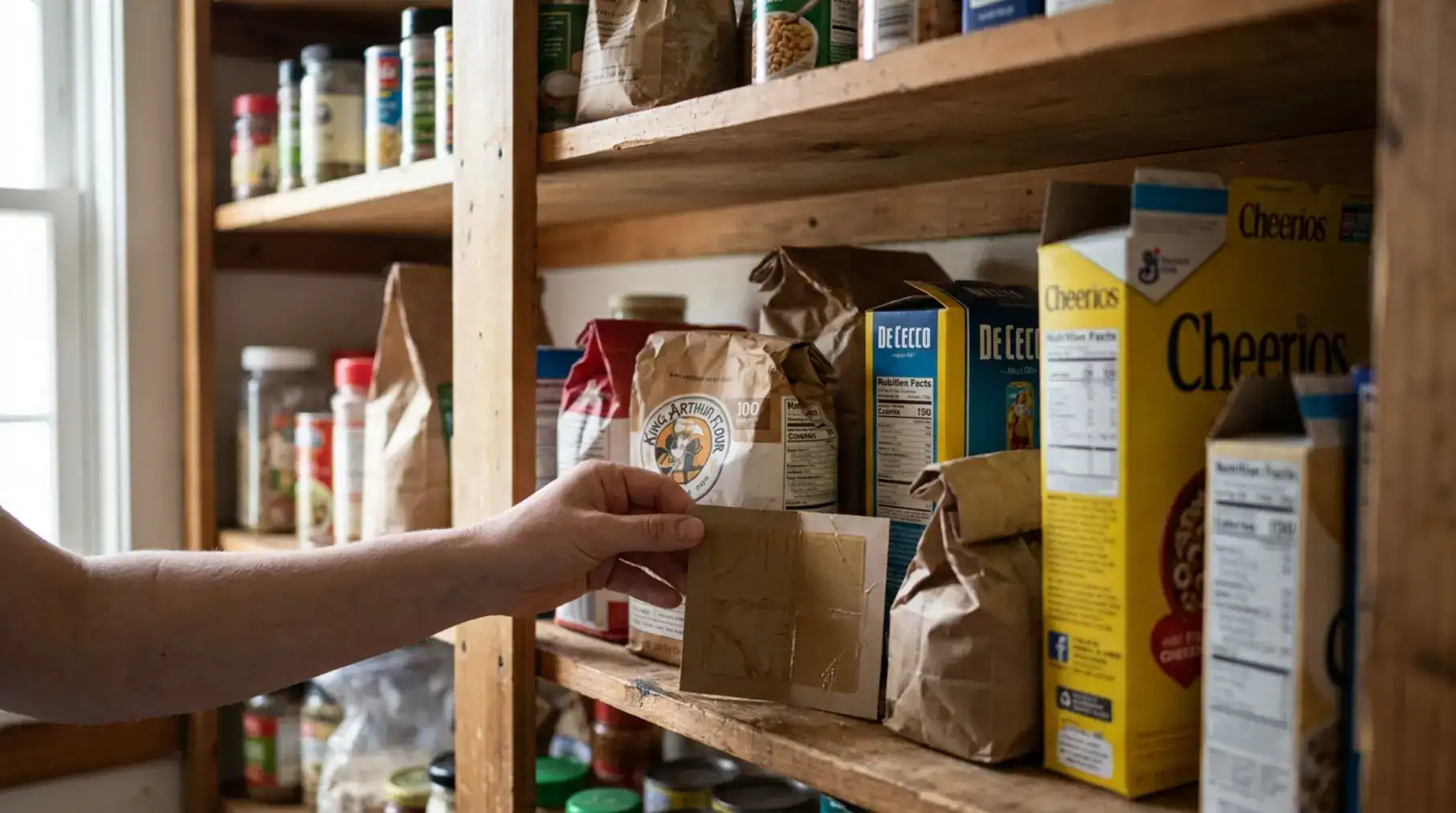
- Remove the packaging entirely. Take the trap out of its wrapper and peel off the protective film covering the sticky glue board.
- Activate the pheromone lure. If your trap uses a separate foil-wrapped pheromone square, open it and drop it directly onto the center of the glue board.
- Fold the trap into a triangle. Bend the cardboard along the perforated lines to create a tent shape, which protects the glue from dust while allowing moths to fly inside.
- Place the trap in a dark area. Position the trap on a high shelf in a dark corner of your pantry, away from direct sunlight and drafts.
- Monitor the catch rate weekly. Check the glue boards every seven days to gauge the severity of your problem.
Troubleshooting Trap Failures
If your traps remain empty despite seeing moths fly around, you likely have a placement issue. Repellents like lavender, cedar chips, or peppermint oil actively block pheromone scents. If you store these near your traps, the males will not approach the glue board.
Additionally, ensure you have correctly identified the pest. A clothes moth trap will catch zero Indian meal moths because the pheromones are highly species-specific. Cross-treating them with the wrong trap results in a zero percent catch rate.
Cleaning Pantry to Prevent Moths: The Eradication Protocol
Thoroughly cleaning your pantry to prevent moths is mandatory because pheromone traps do not catch females or kill the active larvae eating your food. A trap acts as an alarm bell, but cleaning is the actual weapon.
Start by completely emptying your kitchen cabinets. Throw away any open bags of flour, grains, nuts, or pet food. Because larvae can chew through thin packaging, you must also inspect unopened cardboard boxes. If you see tiny holes, discard the box immediately. Seal all infested items in heavy-duty garbage bags and take them outside to your exterior trash can right away.
Next, you need to execute a deep vacuuming protocol. Focus heavily on the adjustable shelf peg-holes inside your cabinets. Larvae almost always leave the food source and travel upward to pupate. They love to spin their cocoons inside these tiny, pre-drilled holes, behind door hinges, and along the wall-ceiling junctions.
How Do I Clean My Pantry to Prevent Moths?
After vacuuming, wash down every shelf, wall, and bracket using warm soapy water. Follow this by wiping down the surfaces with a 50/50 white vinegar and water solution. Vinegar breaks down remaining organic material and helps lift away old pheromone trails left by female moths.
Safety Note: Never use bleach near unsealed food storage areas. Bleach does not penetrate the protective silk of a moth cocoon effectively and poses a harsh chemical risk around food prep zones.
For new groceries, place dry goods in a deep freezer at 0°F (-18°C) for at least 72 hours before storing them in your pantry . This freezing process kills any microscopic eggs hiding in the flour or rice you just bought.
Pantry Moth Trap Reviews: Comparing the Best Options
The best pantry moth traps utilize high-quality, individually foiled pheromone lures to guarantee maximum potency for up to three months. Cheaper alternatives often use weak attractants that fail to draw males effectively.
Dr. Killigan’s Premium Pantry Moth Traps
Dr. Killigan’s produces the most recognized premium trap on the market today.
- Rating: 9/10
- Key Features: Individually foiled pheromone infused directly into the glue, non-toxic formulation, and a dark design that hides dead insects from view.
- Pros:
- Extremely sticky glue holds struggling moths.
- No separate lure squares to drop or lose.
- Pet-safe and odorless.
- Cons:
- Higher price point than generic brands.
- Cardboard can warp in high humidity.
- Verdict: This is the top choice for homeowners dealing with a severe infestation who want reliable, maximum-strength pheromones.
PIMAG Upgraded Moth Traps
PIMAG released an upgraded line of traps recently featuring enhanced extraction technology for Indian meal moths.
- Rating: 8/10
- Key Features: Double-potent pheromone concentration designed specifically to target food moths within 48 hours of placement.
- Pros:
- Very budget-friendly.
- Traps fill rapidly in active infestation zones.
- Safe for kids and pets.
- Cons:
- The cardboard housing feels flimsy.
- Glue can dry out slightly faster than premium brands.
- Verdict: Excellent for budget-conscious buyers who need to blanket a large kitchen or multiple closets without overspending.
Plantura Dual-Side Glue Boards
Plantura offers a unique European-style approach to pest management tips for pantries.
- Rating: 7.5/10
- Key Features: A flat, dual-sided sticky board that you can hang from hooks or place flat on shelves.
- Pros:
- Double the catching surface area.
- Very easy to monitor from a distance.
- Long lifespan.
- Cons:
- Exposes dead bugs openly to your kitchen.
- Can easily stick to your hands during setup.
- Verdict: Best for large walk-in pantries where you can hang the trap safely out of reach of children.
Biological Warfare: Traps Plus Trichogramma Wasps
Releasing microscopic Trichogramma wasps alongside sticky traps creates a dual-action biological defense that destroys both male moths and unhatched eggs. This is considered the ultimate method for eliminating pantry moths entirely.
Trichogramma wasps are natural parasites that hunt down moth eggs. They are less than 0.5 millimeters long, making them practically invisible to the naked eye. When you place a wasp release card in your cabinet, thousands of these beneficial insects hatch and begin searching for moth eggs. A single female wasp will lay her own eggs inside 50 different moth eggs, destroying them instantly.
Think of it like a coordinated military strike. Your sticky traps capture the flying adult males, immediately stopping new mating. Meanwhile, the wasps act as ground troops, sweeping the dark crevices of your cabinets to assassinate the hidden eggs you missed while cleaning.
This approach is highly favored by organic food facilities and is gaining massive popularity in residential kitchens . They do not bite or sting humans, and they naturally die off as soon as the moth egg food supply runs out.
Pantry Moth Trap vs. Sprays: Choosing the Right Pest Control Method for Your Pantry
Comparing a pantry moth trap vs. sprays reveals that while traps offer non-toxic monitoring, chemical sprays introduce serious health risks when used near food preparation zones. Knowing when to use each requires careful consideration.
Chemical contact sprays kill adult moths and larvae on contact. Some even contain insect growth regulators (IGRs) that prevent larvae from maturing into adults. However, these chemicals are highly toxic. You must remove all food from the area, spray, wait for it to dry, and thoroughly ventilate the kitchen before restocking.
Traps for Indian meal moths, conversely, use zero insecticides. They are simply cardboard, glue, and a synthetic scent. They are entirely food-safe pest control tools. While sprays offer a faster knockdown of visible bugs, traps provide continuous, silent protection over three months without contaminating your organic baking supplies.
Because of this, industry experts strongly advise against using chemical sprays in pantries unless the infestation has breached the walls or baseboards. A combination of aggressive cleaning, biological wasps, and pheromone glue boards is almost always superior to pesticide sprays.
Homemade Pantry Moth Traps and Natural Methods
While homemade pantry moth traps offer budget-friendly pest control, they lack the specific pheromone science required to actually stop a kitchen infestation. Relying solely on natural repellents often leads to prolonged food loss.
Many DIY pantry moth traps use a mixture of apple cider vinegar, a few drops of dish soap, and warm water in a small jar. The sweet scent of the vinegar attracts the moths, and the soap breaks the surface tension of the water, causing them to drown. While this method catches a few stray adults, it does not interrupt the breeding cycle. It lacks the targeted sex hormones needed to pull males away from females.
Exploring the environmental impact of pest traps and organic alternatives reveals a strong preference for botanical repellents. Bay leaves and peppermint oil are frequently recommended as natural pantry moth traps. Unfortunately, these only work as mild deterrents.
If a female moth is determined to lay her eggs on your expensive raw almonds, a bay leaf will not stop her. These natural methods should only be used as supportive measures after you have properly eradicated the nest with deep cleaning and commercial pheromone lures.
Safe Food Storage Practices to Avoid Pantry Pests
Implementing safe food storage practices to avoid pantry pests requires transferring all vulnerable groceries into impenetrable, airtight containers immediately after purchase. Leaving food in its original packaging guarantees future problems.
Larvae possess strong mandibles capable of chewing directly through soft plastics and cardboard . That cereal box from the store is essentially an open door for insects.
To achieve true pantry moth prevention, you must invest in heavy-duty storage. Borosilicate glass jars with silicone seal gaskets are the gold standard. Thick, rigid plastic containers with snap-locking lids are also highly effective. Mason jars work perfectly for storing bulk rice, flour, and birdseed.
Additionally, keeping your kitchen humidity below 55 percent makes the environment hostile to insect breeding. Buy only what you can consume within a few months to avoid long-term storage of vulnerable grains.
Case Studies of Pantry Moth Infestations and Successful Elimination Strategies
Real-world case studies of pantry moth infestations show that combining deep cleaning with traps saves hundreds of dollars in wasted groceries. Passive reliance on a single sticky board always results in failure.
In a recent community forum discussion regarding budget-friendly solutions for controlling pantry moth issues, one homeowner shared how a single bag of contaminated birdseed cost them over $200 in ruined pantry staples. They initially bought cheap traps, but the population continued to explode.
This perfectly illustrates the limitation of trapping. A multi-layered approach is required. You must trap the males, clean away the larvae, and lock down the food supply so newly hatched pests starve to death.
Common Questions About Pantry Moth Traps: Pheromones and Cleaning Tips
Are pantry moth traps effective?
Yes, they are highly effective at monitoring infestations and reducing populations by capturing adult males. However, they must be combined with deep cleaning to remove the eggs and larvae that traps cannot catch.
Can pantry moth traps be reused?
No, these products are designed for single use only. Once the glue fills with insects or the pheromone lure dries out after roughly three months, you must throw the trap away and deploy a fresh one.
How do you get rid of pantry moths naturally?
The most reliable natural eradication method is combining pheromone sticky boards with the release of Trichogramma wasps. Furthermore, freezing your newly purchased grains at 0°F for 72 hours naturally destroys hidden eggs without using toxic chemicals.
What food do pantry moths eat?
They feed on a wide variety of dry goods found in residential kitchens. Their favorites include milled flour, cornmeal, unsealed rice, raw nuts, dried fruits, powdered milk, and dry pet kibble.
When should I use a pantry moth trap?
You should set up a trap immediately at the first sign of webbing in your food or if you spot small gray moths flying in the kitchen. Many experts also recommend keeping one trap active year-round as an early warning monitoring system.
Final Thoughts
Battling a kitchen infestation can feel overwhelming, but utilizing pantry moth traps effectively gives you an immediate advantage. By using potent synthetic pheromones to capture the breeding males, you sever the rapid multiplication cycle that makes these pests so devastating to your food supply.
However, traps alone will never solve the entire puzzle. You must adopt a zero-tolerance policy for loose cardboard boxes and unsealed plastic bags in your cabinets. Combining consistent trapping with aggressive vacuuming, targeted biological wasps, and airtight glass storage guarantees those crawling larvae will disappear forever. Reclaim your kitchen today by placing your first trap and completely sanitizing your cabinet shelves.