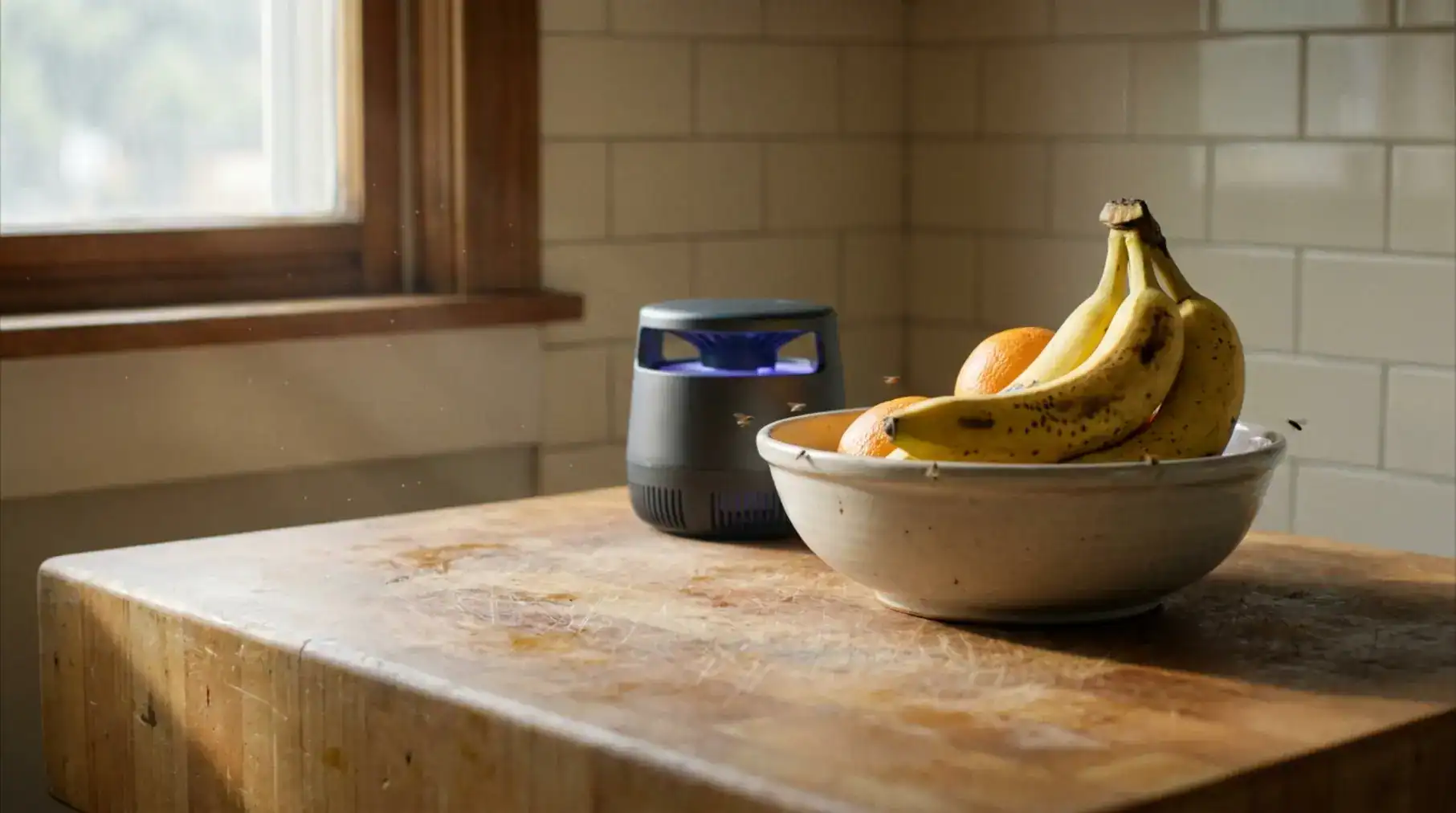
Last night, your kitchen looked like a sticky confetti party – but buzzing invaders still hovered right over your fruit bowl. Choosing the correct indoor fly trap requires far more than just grabbing a blue light or a yellow ribbon off the shelf. You need scientific precision, accurate species identification, and a clear understanding of ongoing costs to finally reclaim your space.
The best indoor fly trap is a hybrid system that pairs a 365nm to 395nm UV-A light to attract insects with a concealed adhesive glue board to secure them. Devices like the Zevo or Katchy effectively eliminate house flies and gnats silently without aerosolizing bacteria like traditional zappers.
Types of Fly Traps: What Are You Really Buying?
Understanding the distinct types of insect catchers ensures you deploy the right mechanism for your specific infestation.
A bug zapper for indoors atomizes insects upon contact. This violently spreads microscopic bacteria across nearby kitchen counters and food prep surfaces. Consequently, experts heavily advise against using electric zapping devices inside residential dining areas. In contrast, modern light traps for flies utilize a highly sanitary hybrid approach. They pull pests in with a soft glow and silently trap them on hidden adhesive pads.
Sticky tape fly traps remain the absolute cheapest option on the market today. These simple paper strips catch everything that lands on them, though they proudly display a visible graveyard of dead bugs in your living room. Evaluating the effectiveness of various fly trap types requires looking at how they interact with pest biology. Think of it like a fishing lure; using the wrong bait guarantees an empty net.
The Science of Ultraviolet Light and Trap Safety
Ultraviolet light traps utilize a biological response called phototaxis to draw insects, but they require precise wavelength calibration to work inside a home.
House flies, moths, and fungus gnats instinctively navigate toward UV-A wavelengths measuring exactly between 365nm and 395nm. Unfortunately, many cheap online devices simply use standard blue LED bulbs. These fake lights fail entirely to trigger the phototaxis response in flying pests. Because of this deception, consumers often wrongly assume a UV light fly trap does not work at all.
According to industry experts, actual UV devices catch a massive number of flying pests when placed in dark corridors. However, efficacy drops massively in brightly lit rooms because natural daytime sunlight washes out the artificial UV glow indoors.
Safety Note: You must verify that any electric fly trap for indoors specifically emits regulated UV-A wavelengths to prevent eye strain and skin damage in residential areas.
Sticky Tape Fly Traps: Cost-Effective but Messy
Traditional adhesive fly traps offer an incredibly cheap and highly effective indoor fly control method, but they come with significant aesthetic drawbacks.
A basic fly paper ribbon costs roughly one dollar upfront. These non-chemical fly traps catch everything from tiny plant gnats to large house moths instantly upon physical contact. Because the glue relies on accidental physical interaction rather than visual light attraction, they work flawlessly during bright daytime hours. However, the visual reality of dead bugs hanging from your kitchen ceiling deeply bothers many homeowners.
Additionally, the environmental impact of indoor fly traps relying on disposable synthetic plastics creates modern sustainability concerns. Landfills process millions of these non-biodegradable sticky cards every year. To offset rising expenses, many budget-conscious users buy generic bulk rolls to cut their own custom sizes. This strategy heavily reduces the overall cost of indoor fly traps for large properties.
Fly Species Identification: Which Pest Needs Which Trap?
Matching the correct trap mechanism to common indoor fly species and their behaviors dictates whether you eliminate the swarm or waste your money.
Different bugs respond to entirely different environmental stimuli. Fruit flies ignore ultraviolet light completely because they actively seek out the olfactory cues of fermenting sugar and yeast. Therefore, using a light-based indoor fly catcher for fruit flies will end in utter frustration. Fungus gnats, however, readily fly toward glowing blue lights positioned near damp potted plants.
House flies exhibit strong responses to visual targets and sharp light contrasts. Understanding the seasonal variations in indoor fly issues also helps you prepare your home properly. Summer humidity rapidly breeds fruit flies near kitchens, while cold autumn weather brings large house flies indoors looking for warmth. Identifying your specific target remains the mandatory first step in modern indoor pest control.
Best Indoor Fly Traps Reviewed (2026 Editions)
Selecting the highest-performing units requires evaluating upfront prices, replacement cartridge frequency, and verified user experiences.
Zevo Flying Insect Trap Starter Kit
The Zevo Flying Insect Trap is defined as a wall-plug hybrid device utilizing a dual-spectrum light system to lure pests onto a replaceable backing. Spectrum Brands manufactures this highly popular unit specifically for residential spaces.
- Rating: 9/10
- Key Features: Dual-spectrum UV and blue light, wall-facing discreet design, and chemical-free operation.
Pros:
- Completely hides dead insects from view behind a plastic shield
- Plugs directly into standard outlets without dangling cords
- Extremely safe around curious pets and young children
Cons:
- Proprietary refill cartridges remain quite expensive
- Blocks the second outlet plug in older home receptacles
- Verdict: Zevo offers the best bug traps for home use if you prioritize aesthetics and completely mess-free disposal.
Katchy Midnight Automatic Indoor Insect Trap
The Katchy Midnight is defined as a fan-assisted hybrid trap that pulls insects downward onto a hidden glue board located at the base of the unit.
- Rating: 8.5/10
- Key Features: 2000-RPM suction fan, automated ambient light sensor, and top-mounted UV-A halo.
Pros:
- Active suction easily captures weak-flying pests like mosquitoes and gnats
- Refill glue boards are generic and very cheap to replace
- Operates completely silently on the lowest fan setting
Cons:
- Requires valuable counter space and a dedicated USB power cord
- The internal fan requires monthly dusting to maintain efficiency
- Verdict: This unit dominates as the premier indoor insect trap for massive fungus gnat infestations near indoor houseplant collections.
STEM Flying Insects Light Trap
The STEM trap is defined as a continuous-operation plug-in device designed to rotate 90 degrees to fit awkwardly placed wall outlets.
- Rating: 8/10
- Key Features: Rotatable plug base, soft blue indicator light, and people-safe physical trapping mechanisms.
Pros:
- Highly accessible price point for the initial starter kit
- Uses a simple slide-in cartridge system for fast maintenance
- Does not emit any noticeable odors or chemical smells
Cons:
- Cartridges fill up incredibly fast in heavy infestation areas
- The light output feels slightly weaker than premium competitors
- Verdict: Buy this unit if you need non-toxic indoor fly traps for tight spaces like small apartment bathrooms or narrow hallways.
Safer Brand Home Indoor Plug-In Fly Trap
The Safer Home device is defined as an eco-friendly light trap that uses a sleek, decorative housing to blend seamlessly with modern home decor. Woodstream Corporation produces this unit as a direct alternative to chemical sprays.
- Rating: 8.5/10
- Key Features: 400 square foot coverage area, UV LED technology, and completely silent capture.
Pros:
- Looks exactly like a premium smart-home device rather than a pest trap
- Catches a wide variety of nocturnal flying insects efficiently
- Uses significantly less electricity than traditional zappers
Cons:
- Refill pads occasionally lose their stickiness in highly humid climates
- Requires placement away from bright windows to function properly
- Verdict: This represents the top choice for homeowners who refuse to compromise their interior design while fighting pests.
Giant Fly Glue Trap (30ft Roll)
The Giant Fly Glue Trap is defined as a bulk roll of commercial-grade adhesive paper designed to be cut to size and hung near high-traffic pest zones.
- Rating: 7/10
- Key Features: 30 feet of continuous super-sticky surface, pre-printed decorative patterns, and zero electricity requirements.
Pros:
- Unbeatable value yielding the lowest cost-per-kill ratio available
- Catches thousands of flies without ever needing an electrical outlet
- Immediately stops severe infestations in garages or basements
Cons:
- Highly visible and generally considered disgusting by guests
- Can accidentally snare pet hair if hung too low to the ground
- Verdict: Choose this industrial solution if you need aggressive fly extermination techniques in non-decorative spaces like a garage or utility room.
Maximizing Your Indoor Insect Trap Effectiveness
Proper placement and the strategic use of additional attractants exponentially increase the catch rates of any indoor insect catcher.
Placement dictates success. If you plug a light trap directly next to a bright window, the sunlight washes out the UV spectrum, rendering the device invisible to bugs. You must position light devices in dark hallways, near shadowed trash cans, or run them exclusively overnight. Alternatively, hang sticky tapes directly over the source of the infestation, such as a fruit bowl or a kitchen sink drain.
When integrating fly traps with other pest control measures, always pair your adult-catching devices with biological soil treatments like Bti. Catching the flying adults solves half the problem, but treating the breeding ground stops the next generation. Additionally, some users add chemical lures. Liquid octenol lures mimic human breath and dramatically boost the trap rate for biting pests.
Safety, Environmental Impact, and Pet Concerns
Evaluating safety concerns with indoor insect traps ensures that keeping your home pest-free does not introduce entirely new hazards to your family.
Chemical-free pest management always wins in residential settings. Traditional bug sprays leave toxic residues on countertops where families prepare meals. Conversely, non-toxic indoor fly traps rely strictly on light and physics. If a dog licks a modern glue board, the primary concern is a sticky tongue, not chemical poisoning. However, you still need to mount adhesive fly traps high enough to prevent cats from knocking them down and getting the industrial glue stuck in their fur.
Analyzing customer experiences and testimonials on indoor fly traps reveals a massive shift toward eco-conscious buying. People actively want to reduce their reliance on aerosolized neurotoxins. Maintaining good hygiene safely is the core goal of the modern homeowner.
Cost Breakdown and Total Cost of Ownership
The true financial burden of keeping your home pest-free extends far beyond the initial purchase price due to continuous refill expenses.
A comparison of sticky vs. electric fly traps reveals wildly different business models. Major brands sell the base light unit cheaply to lock you into their proprietary refill ecosystem. Replacing a branded glue board every fourteen days rapidly inflates your annual household budget. To combat this, budget-savvy consumers create DIY indoor fly trap solutions by cutting generic yellow bulk pads to fit inside expensive proprietary plastic housings.
| Trap Model | Upfront Cost | Refill Cost | Estimated Annual Cost (24 refills) |
|---|---|---|---|
| Zevo Starter Kit | $20.00 | $8.00 (2-pack) | $116.00 |
| Katchy Midnight | $35.00 | $10.00 (10-pack) | $59.00 |
| Safer Home Plug-In | $18.00 | $9.00 (3-pack) | $90.00 |
| DIY Hack (Generic Bulk Tape) | $10.00 | $10.00 (30ft roll) | $20.00 |
Common Questions About Best Fly Traps for Indoors: UV Light vs. Sticky Tape
Do ultraviolet light traps work on house flies?
Yes, UV light traps effectively catch house flies, but only under specific lighting conditions. Because house flies are highly active during the day, sunlight often overpowers the trap’s artificial glow. You must run these devices at night or in very dark rooms for maximum impact.
Are sticky tape fly traps toxic to cats and dogs?
No, the adhesive used on standard sticky traps does not contain toxic insecticides. However, the glue is incredibly strong. If a pet touches the trap, removing the adhesive from their fur requires vegetable oil, heavy scrubbing, and significant patience.
How often should I replace my indoor insect trap cartridges?
You should replace the sticky cartridge every 14 to 30 days. Regular maintenance and cleaning of fly traps ensures the adhesive remains tacky and the UV light stays unobstructed by layers of dead insect bodies.
Why is my bug trap not catching fruit flies?
Fruit flies lack a strong phototaxis response to ultraviolet light. Instead of flying toward a glowing bulb, they actively seek the smell of fermenting food. You need an odor-based liquid trap baited with apple cider vinegar to eliminate a fruit fly infestation.
Can I build DIY refill cartridges to save money?
Yes, many consumers buy cheap bulk sticky rolls and trace the shape of proprietary cartridges using scissors. This DIY method bypasses expensive brand-name refills, drastically lowering the long-term operational costs of your pest control setup.
References and Expert Sources
- EPA Guide on Safe Pest Control
- University of Florida IFAS Extension Pest Management
- Axios Tampa: Indoor Fly Traps Tested
- Journal of Economic Entomology
- Consumer Reports Pest Control Buying Guide
- PestWest Technical UV Standards
- Woodstream Corporation Product Specifications
- World Health Organization Vector-Borne Disease Data
- Exterminator Zach Smith Fly Trap Visual Reviews
- Reddit r/pestcontrol Community Catch Rates
Final Thoughts
Deciding how to get rid of flies indoors ultimately comes down to balancing aesthetics, species-specific science, and your long-term budget. If you want a completely hands-off, highly discreet solution, investing in a premium UV hybrid trap keeps your kitchen sanitary and your walls free of dangling bug corpses. Conversely, if you face a massive infestation in a garage or basement, rolling out thirty feet of industrial sticky tape delivers immediate, brutal efficiency for pennies on the dollar.
Never settle for a single method when battling a stubborn pest issue. Pair your new indoor fly trap with impeccable sanitation habits and targeted larval treatments to permanently break the breeding cycle. Review the exact fly species buzzing around your home today, reference the annual cost calculator above, and purchase the specialized trap that actually fits your specific needs.