Every organic gardener knows the panic of spotting an aggressive, swarming mound right next to prize heirloom tomatoes. You need an effective fire ant killer garden solution that wipes out the colony without poisoning your soil or contaminating your food. Resorting to heavy chemical pesticides is not an option when you plan to eat the harvest. Finding a safe, biological approach is essential for protecting your plants, your pets, and your family.
Understanding the Fire Ant Threat in Your Vegetable Garden
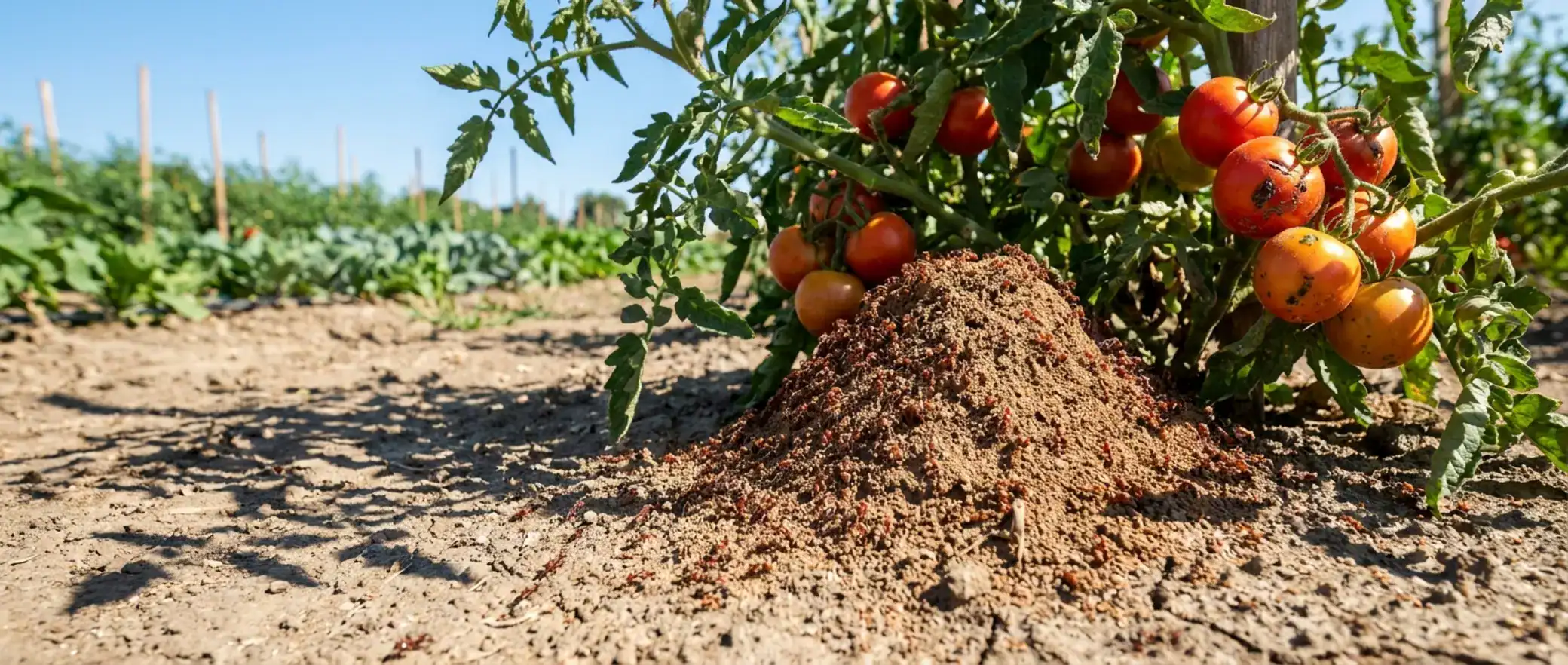
Red imported fire ants actively destroy vegetable gardens by girdling plant roots and drastically reducing crop yields. Visual identification of fire ant damage is the first necessary step before deploying an organic fire ant control strategy.
Solenopsis invicta is defined as a highly aggressive invasive species known for building multi-queen colonies that house up to 100,000 workers. These insects do not just sting gardeners. They actively seek out moisture during droughts. Consequently, they will chew through the stems and roots of okra, potatoes, and beans to extract water. Severe infestations can reduce vegetable crop yields by up to 25%.
Learning how to get rid of fire ants in vegetable garden beds requires understanding their biology. Ants forage up to 100 feet from their central mound. Because of this, treating a single visible hill rarely eliminates the entire threat. You must address the subterranean network. If you notice stunted plant growth, wilting during well-watered conditions, or direct damage to pea pods, you are likely witnessing the harmful effects of fire ants on vegetable crops firsthand. fire ants destroy gardens
Why Chemical Fire Ant Solutions Fall Short for Organic Gardens
Chemical fire ant baits introduce toxic residues to edible crops and often rely on genetically modified carrier ingredients that void organic certifications. A clear comparison of chemical vs. organic fire ant solutions reveals that synthetic options pose severe risks to soil health and human safety.
Conventional pest control relies on synthetic toxins like hydramethylnon or fipronil. These products carry strict harvest withholding periods. Specifically, you cannot apply them near food-producing plants without risking chemical absorption into the vegetables. Furthermore, chemical treatments indiscriminately kill beneficial insects. Earthworms, predatory beetles, and native pollinators suffer heavy casualties.
Recent regulatory actions highlight another massive issue with conventional “natural” baits. In late 2025, the Australian National Fire Ant Eradication Program temporarily suspended specific S-methoprene bait treatments on certified organic farms. The active ingredient was safe, but the inert carrier ingredients – soybean oil and corn grit – were sourced from genetically modified crops. This GM contamination violates strict organic standards globally.
| Feature | Organic Solutions | Chemical Solutions |
|---|---|---|
| Toxicity to Edibles | Zero harvest interval | High residue risk |
| Environmental Impact | Protects earthworms | Kills non-target bugs |
| Certification | OMRI-listed options available | Prohibited in organics |
| Carrier Ingredients | Non-GMO verified | Often GM corn or soy |
Identifying the Best Organic Fire Ant Control Methods
The most successful eco-friendly fire ant solutions rely on naturally occurring biological agents rather than synthetic poisons. Selecting the right organic pest management tool depends heavily on the immediate threat level to your crops.
Managing fire ants organically means abandoning the search for a single magic bullet. Instead, you must stack biological tools. Natural fire ant remedies work by attacking the insect’s nervous system or physical exoskeleton using botanical derivatives.
Spinosad Baits: The Organic Gold Standard
Spinosad is defined as a natural metabolite produced by the soil-dwelling bacteria Saccharopolyspora spinosa. It is the undisputed best fire ant bait for gardens. Worker ants carry these granules deep into the mound to feed the queen. Within 48 hours, the workers die. Within two to three weeks, the queen succumbs, and the colony collapses. Products like Ferti-lome Come and Get It are heavily verified. OMRI is defined as the Organic Materials Review Institute, the primary certification body for natural pesticides. Always look for the OMRI seal to ensure the bait carrier is GMO-free.
D-limonene (Orange Oil) Mound Drench
For an immediate contact kill, citrus-based liquid drenches are highly effective. D-limonene is defined as a solvent extracted from orange peels that dissolves the waxy coating on an ant’s exoskeleton, causing rapid suffocation. This natural insecticide for fire ants works in hours, not weeks. However, you must dilute it carefully. Applying concentrated orange oil directly to your vegetable beds will chemically burn the roots of your crops.
Beneficial Nematodes and Biological Controls
Microscopic biological warfare is highly effective for long-term fire ant pest control. Steinernema carpocapsae is defined as a species of beneficial nematode that actively hunts fire ant larvae underground. You apply these microscopic worms via a watering can. They enter the ant larvae and release a symbiotic bacteria that kills the host. Additionally, researchers are continually exploring Phorid flies, a natural predator that targets fire ant workers, though nematodes remain the most accessible biological option for home gardeners.
Detailed DIY Recipes and Application Rules
Executing precise application methods ensures maximum colony eradication without harming delicate vegetable roots. Proper formulation of any home remedies: effectiveness and application success requires strict adherence to tested ratios.
Many gardeners fail because they apply the right product in the wrong way. Organic treatments degrade quickly under ultraviolet light and heavy rain. Consequently, timing and dosage are everything.
The Texas Two-Step Method Explained
Industry experts strongly recommend the Texas Two-Step method for severe garden infestations. Texas Two-Step method This protocol combines a yard-wide broadcast bait with targeted mound drenches.
- Broadcast a Spinosad-based bait at a rate of 1 to 1.5 pounds per acre using a hand spreader. Do not dump bait directly on top of the mounds.
- Wait exactly 48 hours to allow workers to transport the bait to the queen.
- Spot-treat any remaining aggressive mounds with a liquid orange oil drench.
Exact Orange Oil Drench Recipe
Do not guess your measurements when mixing botanical oils. Texas A&M AgriLife Extension tested and verified a specific recipe for maximum efficacy with minimum plant damage.
- Mix 2 ounces of Medina Orange Oil concentrate.
- Add 2 ounces of mild liquid dish soap to act as a surfactant.
- Stir thoroughly into 1 gallon of water.
- Pour 1 to 2 gallons of this mixture slowly over the mound during the coolest part of the day.
Safety Note: Always perform a patch test on a small section of grass or soil near your vegetable garden pest solutions area. If the grass yellows within 24 hours, dilute the mixture with an additional half-gallon of water.
Proper Food-Grade Diatomaceous Earth Application
Diatomaceous earth (DE) is fossilized marine phytoplankton. It acts as a mechanical killer, slicing through insect joints. However, dumping a cup of DE on a mound is useless. Ants will simply tunnel around it. For effective insect control for gardens, use a powder duster to apply a microscopic layer of DE in a three-foot perimeter around the mound and base of your vegetable stems.
Seasonality and Timing: When to Treat Fire Ants
Fire ant foraging behavior is strictly dictated by soil temperature, making seasonal timing the critical factor in organic baiting. Treating mounds outside of these specific thermal windows guarantees failure and wastes expensive organic baits.
Gardeners often complain that organic baits do not work. Actually, the product usually works perfectly, but the application timing is totally wrong. Understanding seasonal activities: when to treat for fire ants is the secret to clearing your garden.
The Thermodynamics of Foraging
Fire ants are highly temperature-sensitive. Specifically, they only forage for food when the soil temperature sits between 70°F and 95°F. If you apply Spinosad bait at high noon in mid-July when soil temperatures exceed 100°F, the ants will stay deep underground. The ultraviolet light will degrade the organic bait before sunset.
The optimal baiting windows occur in mid-Spring (April to May) and early Fall (September to October). During these periods, ants actively search for protein and lipids to build colony numbers. Apply baits in the late afternoon. As a result, the nocturnal foraging workers will collect the fresh granules overnight.
Rain presents another massive hurdle. Organic baits are highly water-soluble. If it rains within 48 hours of application, the Spinosad dissolves entirely. Always check the weather forecast before initiating a broadcast bait strategy.
Maintaining a Fire Ant-Free Vegetable Garden Organically
Long-term fire ant management relies heavily on cultivating a robust soil microbiome that naturally disrupts ant pheromones. Integrating slow-release organic fertilizers and beneficial insects creates a hostile environment for new colonies.
Eradicating an active mound is only half the battle. Preventing re-infestation requires proactive habitat modification. Tips for maintaining a fire ant-free garden organically focus on making your soil unappealing to scouting queens.
The Role of Soil Health in Deterring Fire Ants
Healthy, biologically active soil actively repels invasive ants. The role of soil health in deterring fire ants is heavily tied to microbial competition. Adding horticultural molasses to your watering routine feeds beneficial soil microbes. These microbes multiply rapidly and naturally mask the pheromone trails that fire ants use to navigate. Field data shows that using a molasses-based slow-release organic fertilizer (SROF) can reduce new mound formation by up to 40% over three months. reduce new mound formation
Strategic Mulching and Companion Planting
Ground cover impacts ant nesting preferences. Pine straw mulch is naturally acidic and physical difficult for ants to excavate. Using pine straw instead of heavy wood chips acts as a moderate ant repellent for plants, deterring mound construction by roughly 30%. Additionally, you should consider planting strong aromatic herbs. Creeping thyme, mint, and garlic provide excellent companion planting benefits, though they will not eliminate an existing colony.
Protecting Natural Predators
Beneficial insects in the garden vs. fire ants is a constant turf war. Ground beetles, parasitic wasps, and native spiders prey on fire ant queens during their mating flights. When you avoid chemical pesticides, you allow these natural defenders to thrive. Implementing precautionary measures to protect vegetable gardens means letting the native ecosystem do the heavy lifting for you.
Common Myths in Organic Fire Ant Management
Many popular home remedies for fire ant infestation are scientifically unproven and can actually accelerate colony reproduction. Relying on kitchen pantry myths rather than biological controls puts your vegetable harvest at unnecessary risk.
The internet is flooded with terrible gardening advice. Executing an unverified hack will only agitate the colony, causing them to split into multiple smaller mounds – a defense mechanism known as “budding”.
- The Grits Myth: Pouring dry grits on an ant mound will not kill them. The myth claims ants eat the grits, drink water, and explode. This is biologically impossible. Adult fire ants cannot digest solid food. They will simply carry the grits away or feed them to their larvae, effectively providing them with a free meal.
- The Boiling Water Myth: While boiling water will kill ants on contact, it rarely reaches the queen. The queen resides up to three feet underground. You need three to four gallons of boiling water to penetrate that deeply. Doing this in a vegetable bed will permanently sterilize your soil and instantly kill your crop roots.
- The Baking Soda Myth: Mixing baking soda and vinegar creates a fun science fair volcano, but it does absolutely nothing to a fire ant colony.
Avoid these useless distractions. Stick to the proven biological science of Spinosad, D-limonene, and beneficial nematodes to protect your food.
Common Questions About Fire Ants in the Vegetable Garden: Organic Solutions
Gardeners frequently encounter specific challenges when transitioning from chemical pesticides to natural fire ant remedies. These targeted answers address the most common obstacles in managing fire ants organically.
Is organic fire ant control safe for pets and children?
Yes. When applied correctly, OMRI-listed organic fire ant control products like Spinosad baits are completely safe for mammals. Once the bait is broadcasted into the grass or garden bed, the active bacterial metabolites pose no threat to dogs, cats, or children playing nearby.
How long does it take for eco-friendly fire ant solutions to work?
Eco-friendly fire ant solutions operate on different timelines. Orange oil mound drenches kill on contact within 24 hours. Conversely, Spinosad broadcast baits take between two to three weeks to achieve total colony collapse, as the workers must slowly feed the active ingredient to the queen.
Can I use fire ant traps in a raised vegetable bed?
Yes. Fire ant traps filled with organic bait can be highly effective in raised beds where broadcasting granules is difficult. Place the traps along the inner perimeter of the wood retaining walls. The ants will forage along the edges, find the bait, and carry it back down into the soil matrix.
Are there any harmless home remedies for fire ant infestation?
The most reliable home remedies for fire ant infestation involve properly diluted liquid dish soap and water. While it lacks the extreme punch of D-limonene, a heavy drench of soapy water can drown a small, newly established colony by breaking the surface tension of the water, preventing the ants from floating.
Will fire ants in crops ruin my harvest completely?
Fire ants in crops can severely damage your yield if left unchecked. During dry periods, they will actively chew into low-hanging tomatoes, cucumbers, and root vegetables to extract moisture. Prompt application of organic baits during the spring foraging season is the best way to prevent late-summer harvest losses.
Final Thoughts
Successfully eliminating an infestation requires patience, precise timing, and a deep understanding of soil biology. You do not need to choose between a bountiful harvest and a toxic-free yard. By utilizing proven organic methods like Spinosad broadcast baits and targeted citrus oil drenches, you can protect your heirloom vegetables and the surrounding ecosystem simultaneously.
Remember that consistency is your greatest weapon. Treat your beds during the optimal temperature windows in spring and fall, and continuously build your soil health with molasses-based fertilizers to naturally deter scouting queens. If you strictly follow the Texas Two-Step method, you will secure an incredibly effective fire ant killer garden strategy that keeps your harvest safe, clean, and completely ant-free.