You have likely spent hundreds of dollars on topical drops and oral flea pills for your dog, only to find another flea hopping across the kitchen floor two days later. It is frustrating because most of us are fighting the wrong battle. When it comes to beneficial nematodes fleas are actually outnumbered and outgunned in their own habitat-the yard.
Are beneficial nematodes effective for flea control?
Yes, beneficial nematodes for fleas are highly effective, specifically the Steinernema carpocapsae species. These microscopic organisms hunt and kill flea larvae and pupae in the soil before they become biting adults. When applied correctly to moist soil at dusk, they can reduce flea populations by up to 90 percent within 24 to 48 hours without using toxic chemicals.
What Are Beneficial Nematodes and How Do They Work?
To understand how these hunters work, you must first understand what they are. Beneficial nematodes are microscopic roundworms that occur naturally in soil. They are not the same as the parasitic heartworms or roundworms that your veterinarian warns you about. These are entomopathogenic nematodes, which means they exclusively infect and kill insects.
The specific species you need for a flea problem is Steinernema carpocapsae (SC). While other species like Heterorhabditis bacteriophora (HB) are great for grubs, SC is an “ambush” predator. It stays near the soil surface and waits for flea larvae to crawl by. Once the nematode finds a host, it enters through natural body openings.
Inside the host, the nematode releases a specialized symbiotic bacteria called Xenorhabdus nematophila. This is where the actual kill happens. The bacteria multiply rapidly and cause septicemia in the flea larva. The insect usually dies within 24 to 48 hours. The nematodes then feed on the bacteria and the decaying insect tissue, reproducing inside the carcass. Eventually, thousands of new nematodes emerge from the dead flea to find more targets.
Think of it like an invisible security force living in your grass. They do not have eyes, but they can sense the heat and carbon dioxide emitted by pests. Because they are biological control agents, they are completely safe for humans, pets, birds, and even earthworms. They only have a “key” that fits the “lock” of specific insect pests.
The Benefits of Using Nematodes for Flea Control
One of the biggest reasons homeowners are switching to beneficial insects for yards is the rising issue of chemical resistance. Traditional pyrethroid sprays often fail because fleas have evolved to survive them. Nematodes provide a physical and biological attack that fleas cannot develop immunity against.
- Eco-friendliness: These organisms are 100 percent organic and EPA-exempt. You do not have to worry about toxic runoff into local waterways or your garden.
- Targeted action: Unlike broad-spectrum pesticides, nematodes do not kill pollinators like bees or butterflies. They stay in the soil and mulch where flea larvae hide.
- Self-replicating: As long as there are flea larvae to eat and the soil stays moist, the nematodes will keep reproducing. This creates a sustainable flea management system.
- Safety for the family: There is no “wait time” after application. Your kids and dogs can play in the grass immediately after you spray, provided you are not bothered by a wet lawn.
Research from institutions like Cornell University shows that high-concentration applications of Steinernema carpocapsae can achieve nearly total control of the pre-adult stages of fleas. This is critical because adult fleas on your pet only represent 5 percent of the total population. The other 95 percent are eggs, larvae, and pupae waiting in your dirt to emerge.
How to Use Nematodes for Flea Control
Applying live organisms is not the same as spraying a bottle of poison. You are handling living creatures that have specific needs. If you ignore these needs, the nematodes will die before they can do their job. This is the primary reason why some people think they do not work.
Preparation Before Application
You must check your soil temperature first. For the best beneficial nematodes for flea treatment, the ground must be at least 55°F (13°C) but no hotter than 85°F (29°C). If the ground is too cold, the nematodes will remain dormant. If it is too hot, they will cook and die.
Moisture is the most important factor. Think of nematodes as aquatic creatures that live in the thin film of water surrounding soil particles. If the soil is dry, they cannot move. You must water your yard thoroughly the day before you plan to apply them. The soil should feel like a wrung-out sponge-moist but not a swamp.
Supplies Needed for Success
- A hose-end sprayer specifically designed for nematodes (like the Nema-Jet) or a standard 2-gallon pump sprayer.
- A large bucket for pre-mixing.
- A thermometer to check soil and water temperature.
- Enough nematodes for your square footage. Usually, 10 million nematodes cover about 1,000 to 2,000 square feet.
Steps for a Successful Application of Nematodes
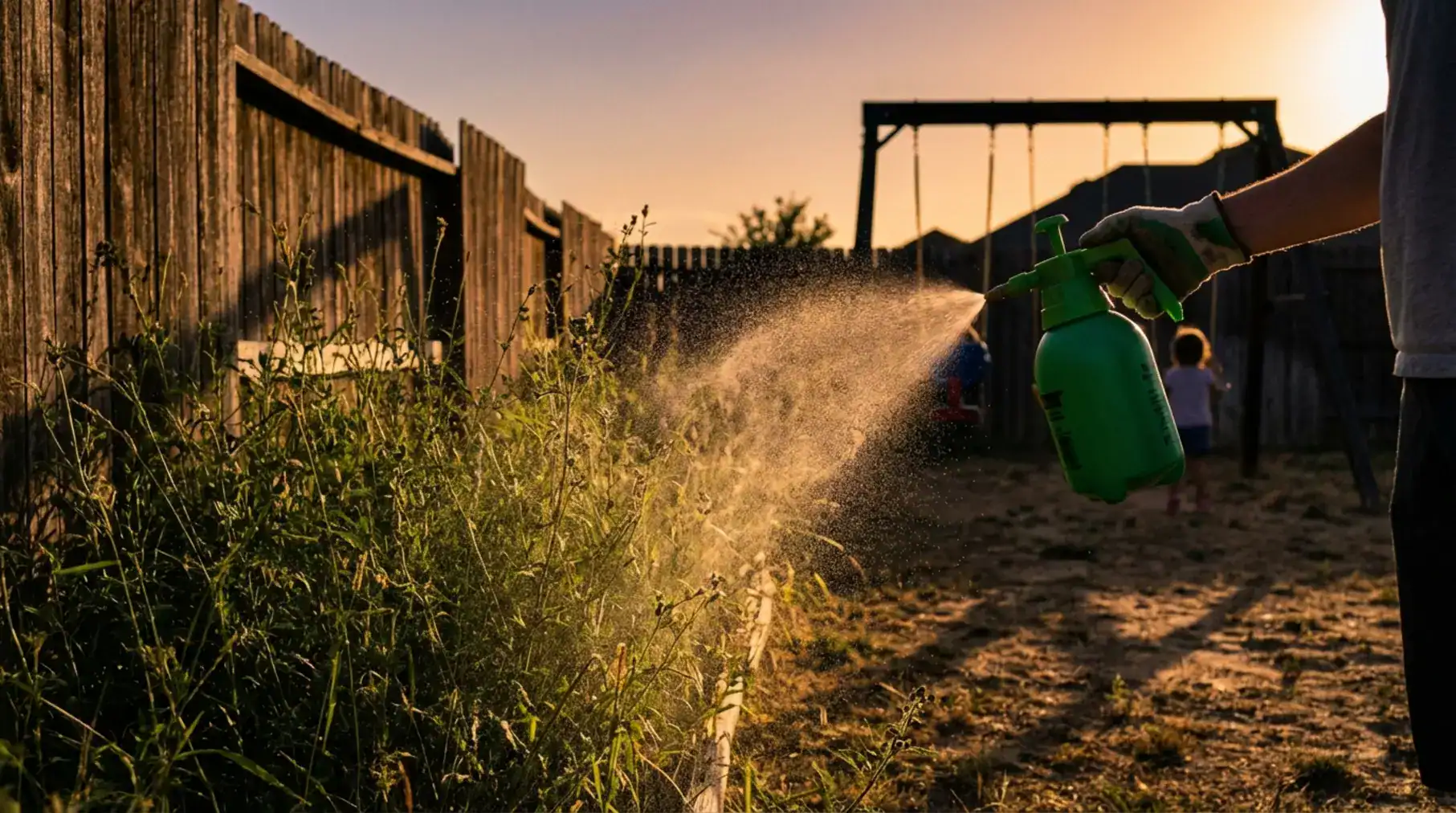
- Timing: You must apply them at dusk or on a very cloudy, rainy day. UV light kills nematodes in minutes. Nighttime gives them several hours to burrow into the soil safely.
- Mixing: Empty the contents of the nematode package into a bucket of room-temperature water. Stir gently. Most packages use a carrier like vermiculite or a sponge.
- Filtering: If your sprayer has a fine mesh filter, remove it. Nematodes are microscopic, but they are still larger than many fine filter holes. You do not want to strain out the “invisible army.”
- Pressure Control: Keep your water pressure below 72 PSI. If you use a high-powered pressure washer or a very high-pressure pump, you can actually slice the nematodes in half as they exit the nozzle.
- Distribution: Spray evenly across shaded areas, under decks, and in pet runs. These are the spots where flea larvae congregate. They rarely survive in the middle of a sun-baked, dry lawn.
Maintaining Effectiveness Post-Application
Once the nematodes are in the soil, the clock starts. They need about a week to establish their population and begin the hunt. During this first week, you must keep the top two inches of soil moist. This does not mean you should flood the yard. A light, 10-minute watering every morning is usually enough to keep the environment hospitable.
If you live in a particularly dry climate, you may need to water more frequently. Because of this, many people find that spring and fall are the best times for application. The natural rainfall and cooler temperatures help maintain the required moisture levels.
Maintenance and care of treated yard post-application includes monitoring your pets. You will likely still see adult fleas for about 10 to 14 days. Do not panic. The nematodes are killing the next generation. They do not kill the adults that are already hopping around. Use a flea comb on your pet during this transition period to bridge the gap.
Common Mistakes When Using Beneficial Nematodes
This quote highlights the three most common mistakes people make. First, the user applied them in direct sunlight. UV rays are lethal to these organisms. Second, they expected instant results on adult fleas. Third, they likely did not keep the soil moist enough for the nematodes to travel.
Other common pitfalls include:
- Storing them in the garage: Nematodes are live animals. If you leave them in a hot mailbox or a warm garage, they will die. They must be refrigerated immediately upon arrival.
- Using chlorinated water: If your city water has very high chlorine levels, let the water sit in a bucket for an hour before mixing. This allows the chlorine to dissipate.
- Not removing the thatch: If your lawn has a thick layer of dead grass (thatch), the nematodes can get stuck and dry out before reaching the soil. A good raking before application helps.
How Long Do Beneficial Nematodes Last in the Soil?
In ideal conditions, a single application can provide flea prevention using beneficial nematodes for about six to eight weeks. However, their lifespan is entirely dependent on the environment. If the soil dries out completely, the population will crash. If all the host insects are eaten, the population will naturally dwindle as they run out of food.
For a heavy infestation, you should plan on reapplying every 4 to 6 weeks during the peak flea season. For preventative maintenance, an application in the early spring and another in the late summer is usually enough to keep the yard flea-free.
How long do beneficial nematodes last in the soil? They can survive through a mild winter by burrowing deep into the earth. However, in regions where the ground freezes solid, you will need to restart your population every spring. The Steinernema feltiae (SF) species is actually better for cooler soils, so some homeowners use a “Triple Blend” that contains SC, HB, and SF to cover all bases.
Economic Considerations: How Much Do Beneficial Nematodes Cost?
When comparing the effectiveness of nematodes compared to chemical treatments, the price is surprisingly competitive. A single bottle of chemical yard spray might cost $15 to $20, but it often requires multiple applications and can damage your local ecosystem.
| Quantity | Approximate Price | Typical Coverage Area |
| 5 Million | $15 – $22 | 500 – 1,000 sq. ft. |
| 10 Million | $25 – $35 | 1,000 – 2,000 sq. ft. |
| 50 Million | $60 – $85 | 5,000 – 10,000 sq. ft. |
| 100 Million | $110 – $140 | 1/4 Acre to 1/2 Acre |
Reputable suppliers like Arbico Organics, Buglogical, and Nature’s Good Guys are the best places to buy. They ship the products in insulated containers with cold packs to ensure viability. Avoid buying from third-party sellers on massive marketplaces where the product might have been sitting in a hot warehouse for months.
Integrating Nematodes into Your Pest Management Strategy
While nematodes are a powerhouse for outdoor control, they are only one part of an Integrated Pest Management (IPM) strategy. Because they do not work well on dry surfaces, you should not use beneficial nematodes indoors for flea control. They will simply die in your carpet.
Instead, use a multi-pronged approach:
- Indoors: Use food-grade Diatomaceous Earth (DE) in floor cracks and vacuum daily. The DE dehydrates adult fleas, while the vacuuming removes eggs.
- On the Pet: Use a natural flea shampoo or veterinarian-prescribed oral medication to kill the adults currently living on the animal.
- Outdoors: Deploy your beneficial nematodes for fleas to destroy the base of the population in the soil.
- Habitat Modification: Keep your grass mowed short and remove piles of leaves or grass clippings. Fleas love moisture and shade; by removing debris, you reduce their hiding spots and help the nematodes reach the soil easier.
This combination creates a “pincer maneuver.” You are attacking the fleas from the inside (on the pet), the middle (the house), and the source (the yard). Actually, this is the only way to truly win a flea war.
Common Questions About Beneficial Nematodes: Natural Flea Control for Yards
Are beneficial nematodes safe for dogs and cats?
Yes, they are 100 percent safe for all mammals, birds, and reptiles. They are biological control agents that target specific insect pests and cannot survive at the body temperature of a mammal. They do not cause heartworms or any other parasitic infection in pets.
Can I use nematodes if it is raining?
Applying nematodes in a light rain is actually one of the best times to do it. The rain provides the moisture they need to travel and protects them from UV light. Just avoid applying them during a heavy downpour that might cause significant runoff, washing them away from your yard entirely.
Why didn’t the nematodes kill the adult fleas on my dog?
Nematodes are soil-dwelling organisms that target the larval and pupal stages of the flea lifecycle. They do not jump onto pets and they do not live in the hair of animals. They work by breaking the lifecycle in the environment so that no new adults can emerge to infest your pet.
Do I need to reapply them every year?
In most climates, yes. While some nematodes may survive a mild winter, the population is usually too small by springtime to provide effective control. Starting a fresh population every spring ensures you stay ahead of the flea breeding cycle.
Can I mix nematodes with fertilizer?
It is best to avoid mixing them with synthetic fertilizers or pesticides. High concentrations of nitrogen can be stressful or lethal to the nematodes. If you need to fertilize, do it a week before or a week after your nematode application.
How do I know if the nematodes arrived alive?
Most people cannot see them without a microscope. However, you can do a “clear glass test.” Mix a small amount of the product in a clear glass of water and hold it up to a bright light. You should see tiny, hair-like organisms wiggling or curling in the water. If they are all perfectly straight and unmoving, they may have died in transit.
References & Expert Sources
- Cornell University: Entomopathogenic Nematodes
- UC Riverside: Surprise Steinernema adamsi Discovery
- Arbico Organics: Nematode FAQs and Efficacy
- USDA Biological Control Program
- Colorado State University: Insect Parasitic Nematodes
- NCBI: Efficacy of Steinernema on Siphonaptera Larvae
- Beneficial Nematodes Application Guide
- Natural flea control methods for yards
- UC IPM: Flea Management Guidelines
- ScienceDirect: Biological Control Agents in Agriculture
Final Thoughts
Making the switch to natural flea control is more than just a trend; it is a smarter way to manage your home environment. By using beneficial nematodes fleas are handled at their source without exposing your family to neurological toxins found in many yard sprays.
It requires a bit more planning regarding moisture and timing, but the results are a healthier yard and a happier pet. Remember to keep the soil moist, apply at dusk, and stay patient while the invisible army does its work.
You can reclaim your backyard from pests by simply letting nature do what it does best. Take the first step this spring by establishing a healthy nematode population and breaking the flea cycle for good.