Imagine you wake up at 3:00 AM to a rhythmic scratching sound behind your bedroom headboard. It is a sickening noise that suggests your home’s perimeter has been breached by an intruder that doesn’t use the front door. This is the reality for millions of homeowners, and the solution is no longer as simple as buying a box of poison at the hardware store. Recent shifts in pest management have turned toward rodent exclusion as the primary defense against these persistent invaders.
What is the most effective material for rodent exclusion?
The most effective materials for rodent exclusion are copper mesh and professional-grade stainless steel fill fabrics like Xcluder. Unlike standard steel wool, these materials do not rust when exposed to moisture, ensuring a permanent physical barrier. To be effective, these must be packed into gaps smaller than 1/4 inch and sealed with a specialized pest-resistant expanding foam or high-grade caulk.
The landscape of pest control changed dramatically between 2024 and 2026. Following the high-profile death of “Flaco,” the Eurasian eagle-owl in New York City who was found with multiple rodenticides in his system, legislation has moved aggressively to protect wildlife. . States like California have already implemented the Poison-Free Wildlife Act, which forces homeowners and professionals to exhaust non-chemical methods before even considering baits. . Because of these laws, learning how to rodent proof a home is now a legal and ethical necessity for property owners.
The Rising Necessity of Rodent Exclusion
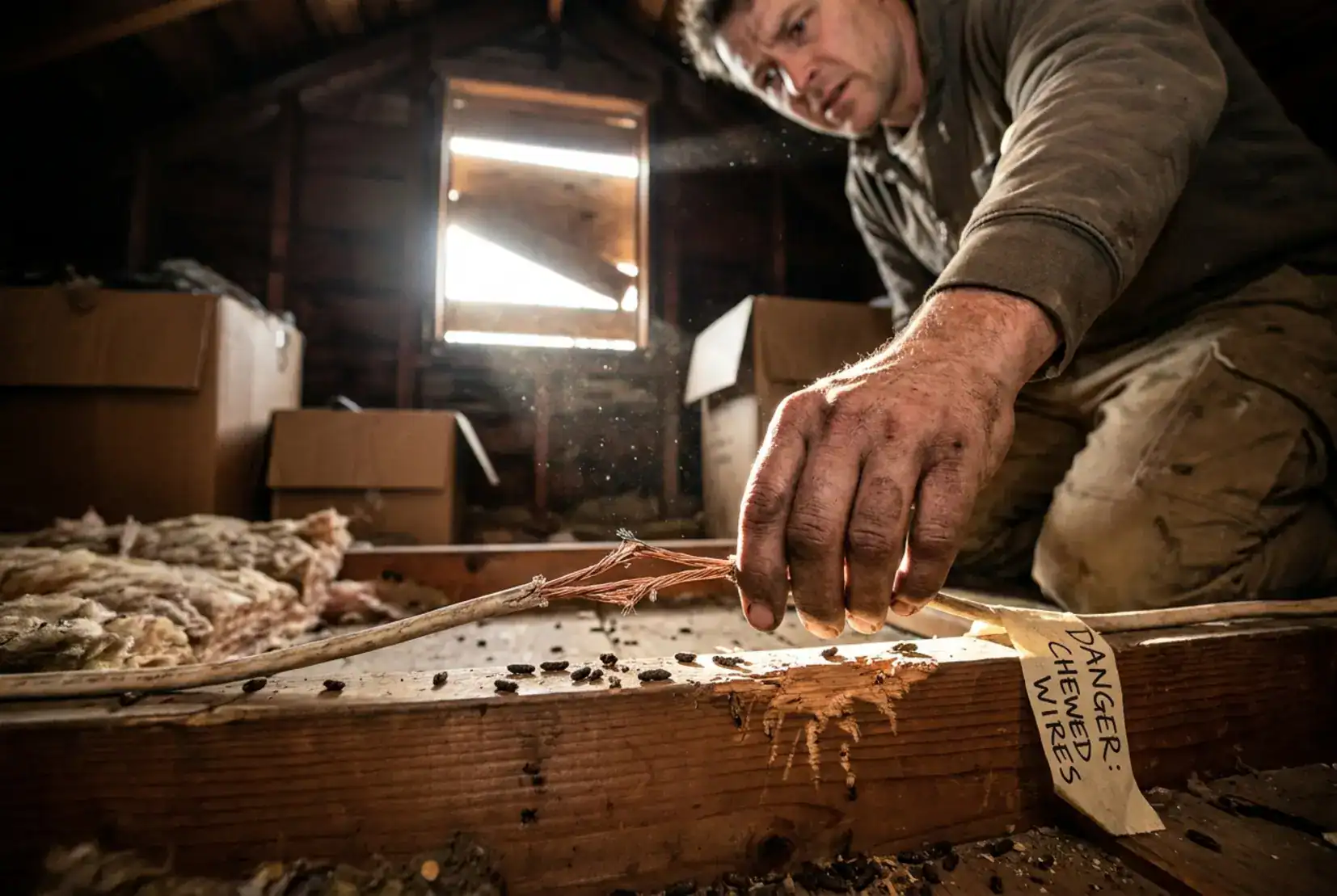
Rodent populations are not just a nuisance. They represent a significant threat to your property’s structural integrity and your family’s health. Rats and mice have incisors that never stop growing. To keep these teeth at a manageable length, they must chew constantly. They can easily gnaw through wood, plastic, soft aluminum, and even standard electrical wiring. This behavior is a leading cause of “unexplained” house fires. .
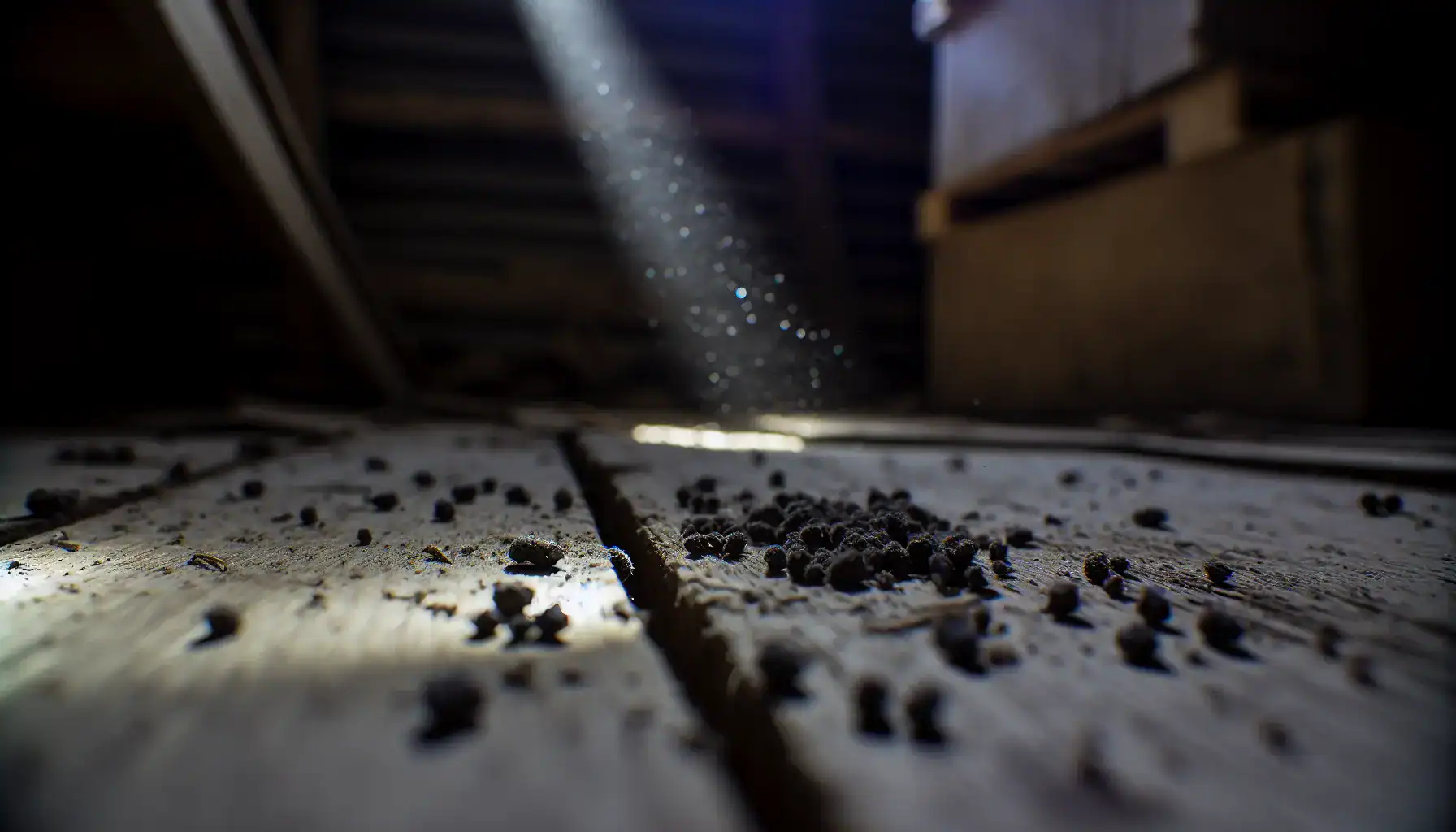
Beyond the physical damage, the health risks associated with rodent infestations are severe. Rodents are vectors for diseases such as Hantavirus, Salmonellosis, and Leptospirosis. They leave behind a trail of urine and droppings that can aerosolize and contaminate the air you breathe. . Many homeowners believe that setting a few traps is enough. However, without proper rodent proofing techniques, you are simply removing the current residents while leaving the door wide open for the next generation.
Seasonal rodent activity and prevention tips often focus on the autumn “cool down.” As temperatures drop, rodents look for the warmth provided by your HVAC system and insulation. A mouse can squeeze through a gap the size of a dime (roughly 1/4 inch), while a rat needs only a hole the size of a quarter (1/2 inch). If you can fit a standard No. 2 pencil into a crack, a mouse can get inside. This is why identifies entry points is the most critical step in any rodent exclusion methods strategy.
Steel Wool for Rodent Exclusion: Pros and Cons
For decades, the standard DIY rodent exclusion solutions involved stuffing steel wool into holes. It is cheap, easy to find, and initially very effective. Rodents find the sharp, abrasive texture of the metal filaments painful to chew. When they encounter a tightly packed wad of steel wool, they generally stop digging and look for a softer path.
However, steel wool has a significant “Achilles heel.” Most common steel wool is made of carbon steel. When this material is exposed to the humidity in your crawlspace or the rain hitting your exterior walls, it undergoes a chemical reaction known as oxidation. This leads to galvanic corrosion, where the metal breaks down into brittle, orange flakes of rust. .
If you must use steel wool for rodent exclusion, you must ensure it is Grade 2 or Grade 3 (coarse). Fine grades like 0000 are too soft and can actually be pulled apart and used by rodents as nesting material. Furthermore, standard kitchen pads often contain soaps that can attract pests rather than deter them. For these reasons, steel wool is rarely considered a permanent solution for rodent exclusion in modern pest management.
| Material | Longevity | Rust Resistance | Best Use Case |
| Steel Wool (Grade 2/3) | Short-term (1-2 years) | Very Low | Interior dry gaps |
| Copper Mesh | Permanent | Very High | Exterior vents and weep holes |
| Xcluder Fabric | Permanent | High | High-pressure entry points |
Copper Mesh: The Durable Alternative
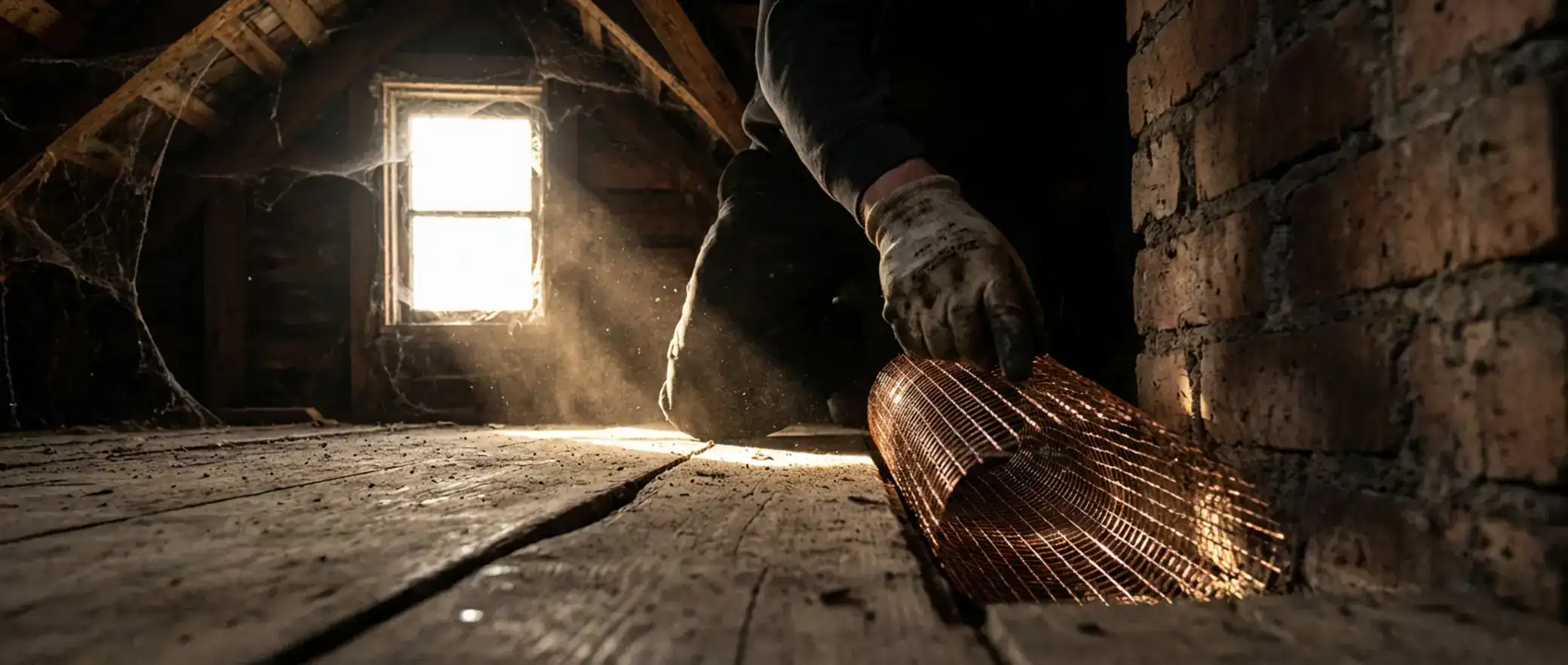
When comparing the long-term effectiveness of exclusion materials, copper mesh is the clear winner for exterior applications. Products like Stuf-fit are specifically designed for the rigors of pest exclusion. Unlike steel, copper does not rust. It may develop a green patina over time, but it maintains its structural integrity and abrasive properties for decades.
Copper mesh rodent proofing is also much easier to work with. It is flexible and can be cut with standard heavy-duty scissors. Because it is a knitted mesh rather than a loose bundle of fibers, it stays together better when being stuffed into tight spaces. This makes it ideal for sealing around utility lines, HVAC penetrations, and especially brick weep holes.
How effective is copper mesh for rodent proofing? In a side-by-side comparison, copper mesh provides the same level of dental irritation to the rodent as steel wool but removes the failure point of moisture degradation. This is why it is widely considered one of the best practices for rodent proofing by professionals. It is a one-and-done solution that saves you from the cycle of re-stuffing holes every spring.
Xcluder Fill Fabric: The Game Changer
If you are looking for the absolute gold standard in rodent proofing materials, you will eventually find Xcluder. This is a patented fill fabric that combines stainless steel fibers with poly fibers. The result is a material that has a “spring-back” memory. When you stuff it into a hole, it expands to fill the crevices, locking itself into place so that a rat cannot pull it out with its claws.
Xcluder fill fabric is specifically designed to be permanent. It won’t rust, it won’t stain, and it is impossible for rodents to chew through. While it is more expensive than a roll of copper mesh, the environmental impact of rodent control methods that last forever is significantly lower than using temporary fixes that require chemical backups. For areas with high rodent pressure, such as urban alleyway-facing walls, Xcluder is often the only DIY rodent exclusion solution that holds up over time.
How to Rodent Proof a House From the Inside and Outside
Effective rodent exclusion strategies require a methodical approach. You cannot simply walk around the house and plug the obvious holes. You must think like a rodent. Follow these steps to secure your perimeter.
1. Identify Entry Points
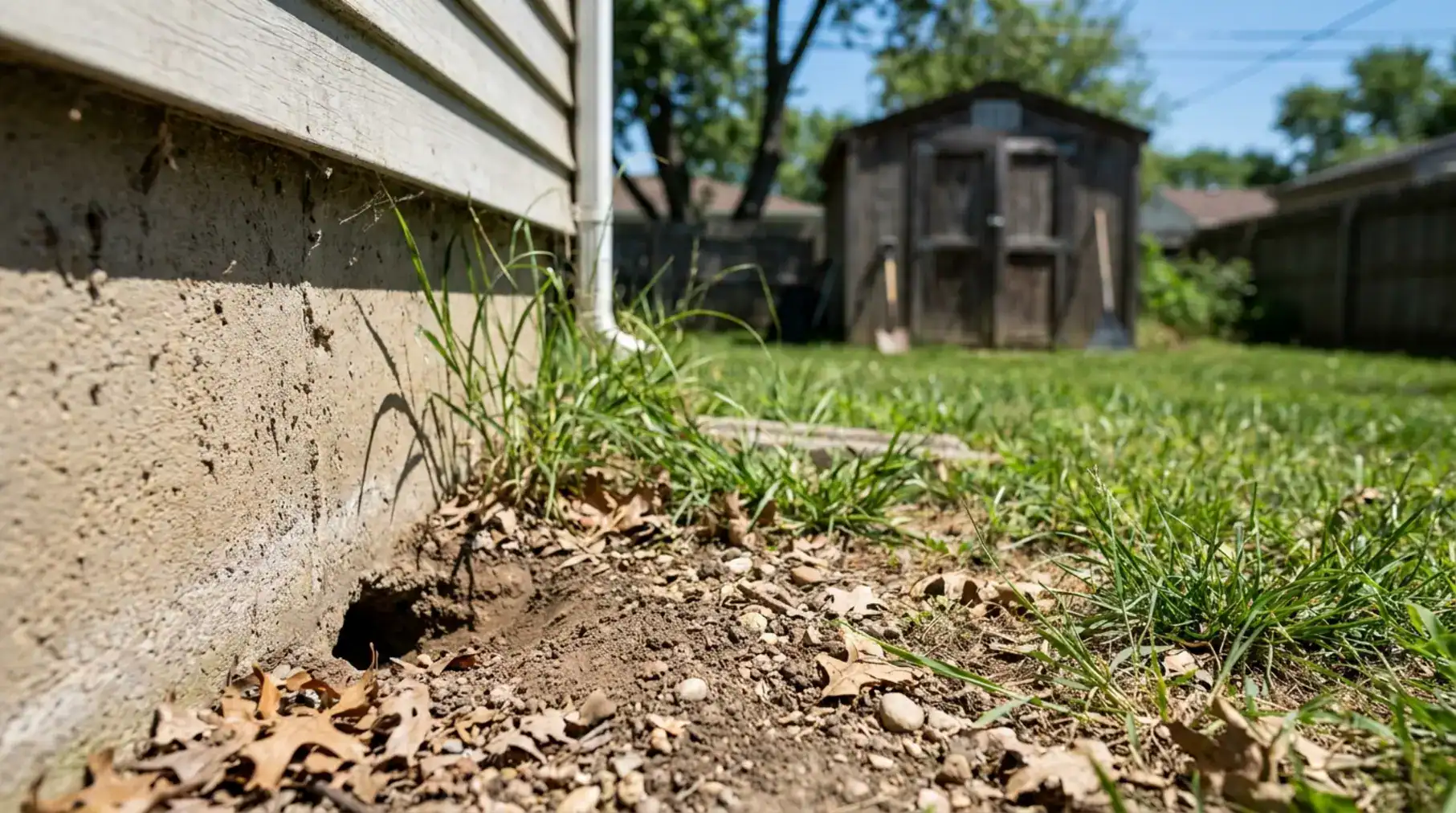
Start by looking for “sebum marks.” These are oily, dark grease stains left by rodent fur as they squeeze through tight openings. Common areas include:
- Where utility lines (gas, water, electric) enter the siding.
- Gaps in the J-channel of vinyl siding.
- The bottom of garage door seals.
- Roofline gaps and soffit vents.
- Corner posts of the house.
2. Clean and Prep
Before installing any materials for rodent proofing, clean the area with an enzymatic cleaner to remove the pheromone trails left by previous rodents. This prevents new rodents from being “called” to that specific spot by the scent of their predecessors.
3. The Sandwich Method
For a truly rodent-proof barrier, professionals use what is known as the sandwich method.
- First, cut a piece of copper mesh or Xcluder fabric that is slightly larger than the hole.
- Use a flathead screwdriver to pack the mesh tightly into the gap. You want it to be recessed about half an inch from the surface.
- Apply a bead of pest-resistant expanding foam (like Great Stuff Pestblock) or a high-quality silicone caulk over the mesh.
- The foam or caulk acts as the “glue” that prevents the mesh from being pulled out, while the mesh acts as the “teeth-breaker” that prevents the rodent from chewing through the foam.
4. Safety First
You must wear heavy-duty leather gloves when handling coarse steel wool or Xcluder. The metal filaments are designed to be sharp and can cause microscopic splinters or deep cuts if handled with bare hands. Also, ensure you are wearing eye protection when working with expanding foam or overhead vents.
Common Myths About Rodent Proofing
There is a significant amount of misinformation on forums like Reddit and Quora regarding how to keep mice out. One of the most common myths is that expanding foam alone is enough. Standard polyurethane foam is essentially “mouse bread.” They can chew through it in minutes. Unless the foam is specifically infused with bittering agents (like PUR Black) or paired with a metallic mesh, it is not a deterrent.
Another myth is that rodents won’t chew through wood if it is treated or painted. A hungry rat will chew through a two-by-four if it smells food on the other side. This is why the use of rodent-proof barriers like 1/4 inch galvanized hardware cloth is necessary for larger gaps like foundation vents.
Lastly, many people believe that “ultrasonic” plug-in devices are an effective alternative to physical exclusion. Independent studies have repeatedly shown that these devices have little to no long-term effect on rodent behavior. . The only permanent solutions for rodent exclusion involve physical barriers that the animals cannot bypass or destroy.
Choosing Between DIY and Professional Pest Control
While many homeowners can handle basic rodent exclusion tasks, there are times when the high cost of pest control services is a necessary investment. Professional exterminators have access to tools that the average homeowner does not, such as infrared cameras to find nests inside walls and specialized “gun foam” systems that provide a much tighter seal than consumer-grade cans.
You should consider calling a professional if:
- You hear noises in the attic or crawlspace that you cannot locate.
- You have a multi-unit building where rodents can travel between walls.
- You have already performed exclusion work but are still seeing new droppings.
- You are dealing with a severe infestation that requires professional-grade sanitization.
A professional exclusion job can range from $300 to $1,500, but when you consider the potential damage to your home’s electrical system or the health risks associated with rodent infestations, the return on investment is clear. .
Common Questions About Rodent Proofing 101: Steel Wool and Copper Mesh
Is copper mesh better than steel wool for mice?
Yes, copper mesh is superior because it does not rust or degrade when exposed to moisture. While both materials irritate a rodent’s mouth, copper provides a permanent solution that won’t leave rust stains on your home’s exterior.
Can rats chew through copper mesh?
Technically, a rat’s teeth are hard enough to mar copper, but the knitted structure of the mesh makes it nearly impossible for them to get enough leverage to chew through it. When properly packed and sealed with foam, it creates a formidable mechanical barrier.
Will steel wool rust in brick weep holes?
Yes, standard steel wool will rust quickly in weep holes because they are designed to channel moisture out of the wall. This leads to structural failure of the barrier and permanent orange staining on the brick and mortar.
What grade of steel wool is best for rodents?
If you must use it, you should use Grade 2 or Grade 3 coarse steel wool. Fine grades (00 or 0000) are too soft and can be easily manipulated or even used as nesting material by small mice.
Does expanding foam work for mice?
Standard expanding foam does not work on its own. Rodents can chew through it easily. It must be used as a sealant over a metallic mesh like copper or stainless steel to be an effective rodent-proof barrier.
How small of a hole can a mouse fit through?
A mouse can fit through any gap that is 1/4 inch or larger. This is roughly the width of a standard pencil. If their head can fit, their body can follow because their ribs are flexible and collapse.
References & Expert Sources
- EPA: Regulation of Rodenticides and Best Practices
- CDC Wild Rodent Control
- University of California: Integrated Pest Management for House Mice
- National Pest Management Association: Rodent Exclusion Standards
- California Department of Fish and Wildlife: Anticoagulant Law Updates
- National Fire Protection Association: Electrical Safety and Pests
- Cornell University: Structural IPM for Rodents
- NYC Health: Rodent Portal and Legislative Changes
- Federal Trade Commission: Ultrasonic Pest Control Device Warnings
- Journal of Stored Products Research: Efficacy of Metal Meshes
Final Thoughts
Investing in proper rodent exclusion is not just about keeping a few mice out of your pantry; it is about protecting your largest financial asset and your family’s health. The shift away from toxic chemicals toward mechanical barriers like copper mesh and Xcluder fill fabric is a win for the environment and a more permanent solution for your home. By taking the time to identify entry points and using the “sandwich method” of mesh and sealant, you can create a home pest security system that actually works. Don’t wait until you hear the scratching in the walls to take action. Start today and seal those gaps before the winter chill drives the local rodent population into your living space.