You might have heard that the Virginia opossum is a woodland superhero, capable of vacuuming up thousands of ticks a season to protect your family from Lyme disease. Because of this viral internet claim, many homeowners now wonder, are possums good to have around the property? Recent scientific dissections have actually flipped the script on this famous natural tick control legend. While their reputation as tick-eating machines is vastly overstated, these misunderstood marsupials remain one of the most valuable cleanup crews in your local ecosystem.
Do possums really eat thousands of ticks a year?
No. While Virginia opossums are excellent groomers that kill most ticks attached to their own bodies, recent studies analyzing over 1,280 wild possum stomachs found zero evidence that they actively hunt or eat ticks in the environment. However, they remain highly beneficial scavengers that eat slugs, venomous snakes, and rotting carrion.
The Tick Myth: What 1,280 Possum Stomachs Really Reveal
Recent scientific studies have officially debunked the popular myth that possums actively hunt and eat thousands of ticks, revealing they are actually exceptional groomers rather than natural tick vacuums.
For over a decade, the internet celebrated possums tick eaters based on a single, widely misunderstood laboratory experiment. In 2009, researchers at the Cary Institute of Ecosystem Studies placed several wildlife species in cages, introduced hundreds of larval ticks to them, and observed the results . The researchers found that opossums were fastidious groomers. They effectively groomed off and swallowed between 83% and 96% of the ticks that attempted to feed on them. Someone extrapolated that data, and suddenly the media claimed a single possum could eat 5,000 ticks a season.
However, a laboratory cage is not a forest. When a possum is trapped in a box with hundreds of ticks, it will groom them off to survive. In the wild, their behavior is completely different.
In 2021, a landmark study out of Eureka College set out to verify this diet . Researchers analyzed the stomach contents of 32 wild Virginia opossums using high-powered dissecting microscopes. They found exactly zero ticks. To ensure this was not an isolated incident, researchers then conducted a meta-analysis of 23 prior studies spanning over 1,280 opossums. Again, they found zero evidence of ticks in their digestive tracts.
What does this mean for homeowners seeking natural tick control? It means you should not rely on the health benefits of reducing ticks with possums. They do not patrol your lawn eating blacklegged deer ticks. Actually, studies in New York show that wild possums often host an average of 199 larval ticks at a time . They are still incredible groomers, but they are not the Lyme disease shields we once thought they were.
Actual Possum Diet and Benefits: The Ultimate Cleanup Crew
Beyond the debunked tick legend, possums offer incredible natural pest control by consuming garden-destroying slugs, venomous snakes, cockroaches, and rotting carrion.
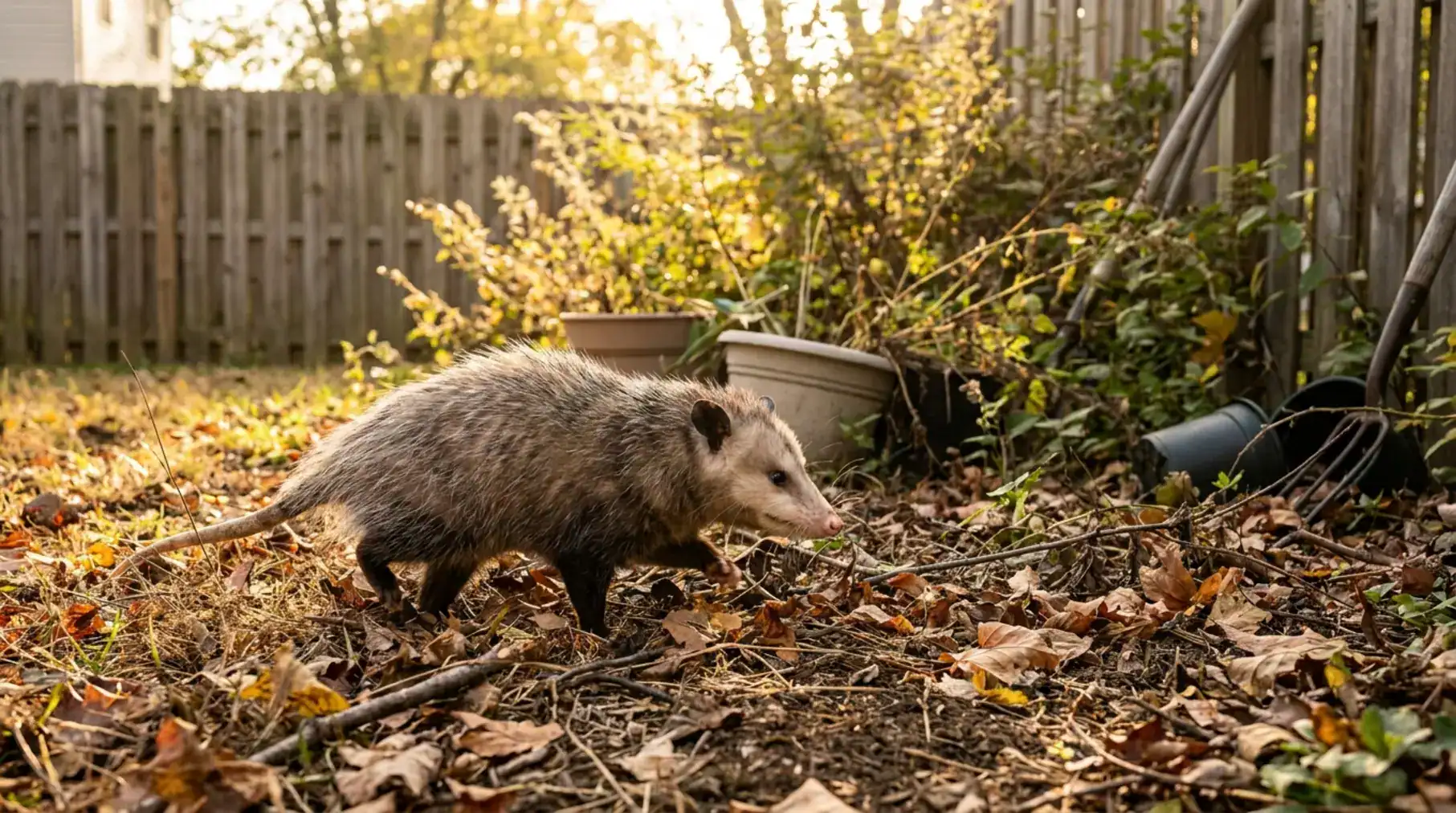
If the tick-eating legend is false, why keep possums around your property? The answer lies in their actual daily diet. The Virginia opossum is an opportunistic omnivore. Think of it like a biological roomba wandering your garden at night. They specialize in cleaning up the messes that other animals leave behind.
When examining possum diet and benefits, their true superpowers become obvious. They heavily prefer invertebrates and dead matter. A typical night of foraging includes eating massive quantities of garden slugs, snails, and cockroaches. For gardeners tired of waking up to chewed-up hostas, this makes possums an invaluable asset. They actively suppress insect populations that actually damage your crops.
Additionally, possums provide critical sanitation services. They eat fallen, overripe fruit that would otherwise attract aggressive yellow jackets. They are also known as carrion eaters. If a rat or bird dies under your porch, a passing possum will happily dispose of the carcass, reducing foul odors and the spread of dangerous bacteria.
Their most impressive biological trait is their natural resistance to snake venom. The Virginia opossum possesses peptide proteins in its blood that neutralize the venom of pit vipers . Because of this, they actively hunt and consume copperheads and rattlesnakes. This form of pest control possums provide is a massive benefit for families living in rural or heavily wooded areas.
Possums in Your Yard: Understanding Behavior and Potential Risks
While they are non-aggressive scavengers, understanding possum ecology means acknowledging their tragically short lifespans, messy scavenging habits, and the specific diseases they can spread to livestock.
It is easy to look at a possum and assume it is a dangerous, overgrown rat. They have 50 sharp teeth – the most of any North American land mammal – and they often hiss loudly when cornered. However, this aggressive display is a complete bluff. Possums are completely non-aggressive. When terrified, their bodies involuntarily enter a catatonic state known as thanatosis, or “playing possum.” They literally faint from fear, emitting a foul odor to convince predators they are already dead.
Unfortunately, this involuntary defense mechanism makes them incredibly vulnerable to cars, resulting in a tragically short lifespan. A wild possum rarely lives past one to two years .
Despite their gentle nature, having possums in your yard does come with specific risks. The common misconceptions about possums often swing too far in both directions. They are neither dangerous monsters nor flawless garden angels.
For instance, they can be messy. Because they are driven by a constant search for calcium and calories, they will raid unsecured trash cans and steal outdoor pet food. While they rarely attack chickens, a starving possum might opportunistically take a small chick or eat unprotected eggs.
Safety Note: If you own horses, you must actively deter possums from grazing areas. Possum feces can carry a parasite that causes Equine Protozoal Myeloencephalitis (EPM). This is a highly lethal neurological disease in horses . If you have a pasture, keeping possums away from horse feed is mandatory.
Regarding other health risks, possums carry diseases just like any wild animal, including leptospirosis and fleas. However, they are virtually immune to rabies. Their resting body temperature sits between 94 and 97 degrees Fahrenheit. This is simply too cold for the rabies virus to survive and replicate.
Creating a Welcoming Environment for Possums (Safely)
You can safely encourage possums to visit your garden by building inexpensive winter shelters and eliminating pesticides, rather than leaving out food that attracts dangerous pests.
Many homeowners want to know what attracts possums to your yard. The most common mistake people make is intentionally leaving out bowls of cat food or kitchen scraps. You must never do this. Hand-feeding wildlife is legally restricted in many municipalities, and leaving food out is a guaranteed way to attract rats, raccoons, and feral cats.
Instead, you should focus on wildlife-friendly gardening. To create a welcoming environment for possums, simply provide natural cover and water. Let a corner of your yard grow slightly wild with dense shrubs or a small brush pile. Stop using chemical pesticides. When you poison slugs and cockroaches, you destroy the possum’s natural food source.
If you live in a region with harsh winters, you can build a safe, inexpensive den box. Because possums do not dig their own burrows, they often suffer from severe frostbite on their hairless ears and tails.
To build a DIY possum shelter:
- Purchase a cheap, hard-sided insulated cooler.
- Use a hole saw to cut a 6-inch circular entry hole on one end.
- Sand the edges of the hole so they are completely smooth.
- Fill the bottom half of the cooler with fresh, dry straw.
- Tape the lid shut securely.
- Place the box in a quiet, elevated corner of your yard, out of direct wind.
Safety Note: You must use straw, never hay. Hay holds moisture and will freeze solid, potentially causing fatal hypothermia for any overwintering animal. Straw is hollow, naturally wicks away moisture, and traps body heat effectively.
Using motion-activated trail cameras is one of the best strategies for safely observing possums. Because possums nocturnal animals, you will rarely see them during the day unless a mother is desperately searching for food for the joeys in her pouch.
Urban Wildlife Management and Professional Removal
Managing possums safely requires knowing when to leave them alone and when to hire professional wildlife removal services to safely extract them from attics or crawlspaces.
Sometimes, a possum habitat overlaps too closely with human dwellings. Because they seek warmth and cannot dig, they frequently find their way into open crawlspaces, torn soffits, or unsecured attics. When this happens, coexistence is no longer an option.
If a possum takes up residence inside your home, do not attempt to trap it yourself without checking local laws. In many states, it is illegal to trap and relocate wild animals without a license because it spreads diseases to new ecosystems.
Professional urban wildlife management companies typically charge between $150 and $600 for possum extraction. A simple outdoor catch-pole removal usually falls on the lower end of that spectrum. Conversely, removing a family of possums from an attic, cleaning up the contaminated feces, and sealing the entry points will command a premium price.
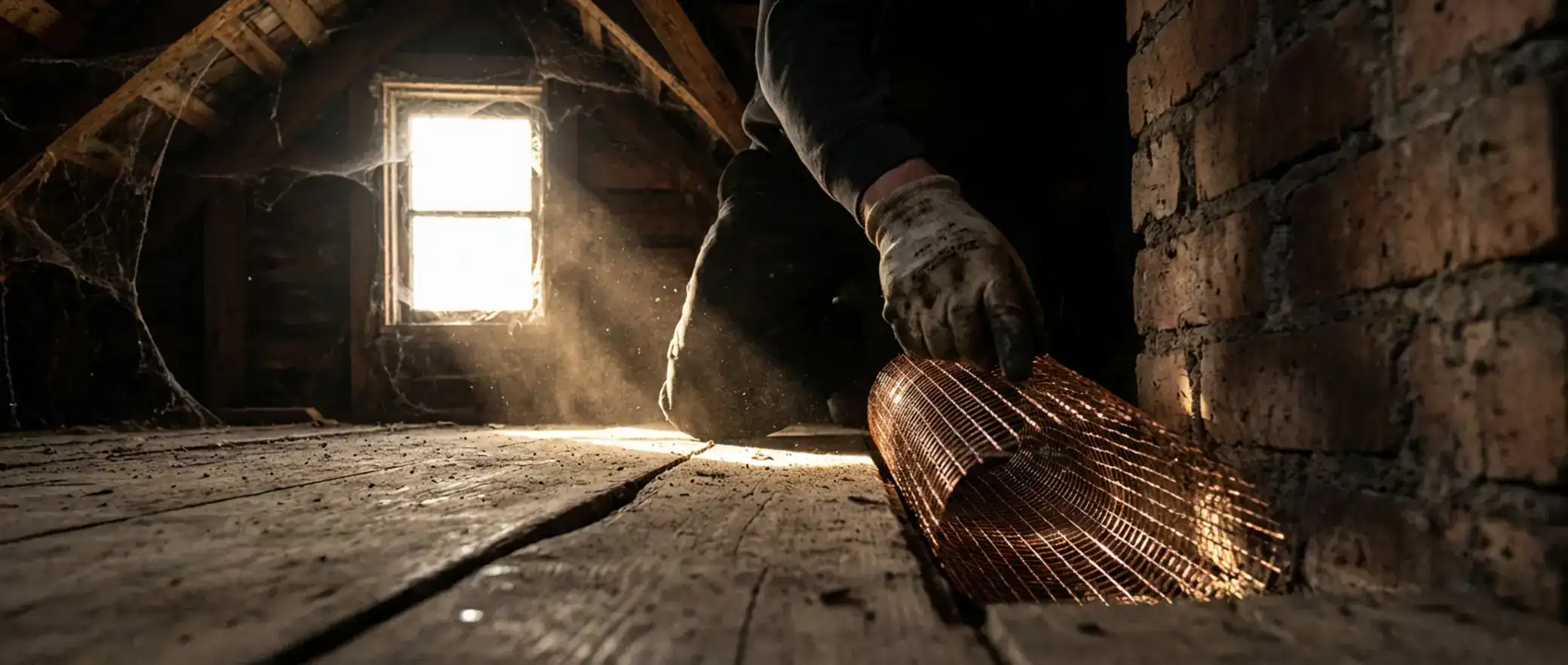
The most effective natural pest control methods and the role of possums rely on keeping them strictly outdoors. Seal your foundation vents with heavy-duty hardware cloth. Secure your garbage cans with bungee cords. By managing your property borders, you reap the advantages of having possums nearby without the sanitation nightmare of them living in your walls.
Possums as Pets: Domestication Realities and Legal Rules
Keeping a Virginia opossum as a pet is largely illegal without permits, and their complex dietary needs make them completely unsuitable for traditional domestication.
As viral videos of rescue possums eating grapes flood social media, searches for possums as pets have skyrocketed. They look surprisingly cute when properly bathed, leading many to ask: can possums be domesticated?
The blunt answer is no. You cannot domesticate a wild species in a single generation. Furthermore, keeping a Virginia opossum is illegal in most U.S. states unless you are a licensed wildlife rehabilitator.
“Rehabilitating an orphaned possum is heartbreaking work. Because of their hyper-fast metabolism and unique biology, feeding them the wrong ratio of calcium to phosphorus will instantly cause metabolic bone disease, resulting in a painful death.”
Some people legally purchase South American Short-tailed Opossums from exotic pet breeders. These are entirely different animals. They are much smaller, do not have a pouch, and require highly specialized care.
If you find an orphaned baby possum in your yard, do not attempt to keep it. The benefits of possums are meant for the ecosystem, not the living room. Contact a local wildlife rescue immediately.
The Role of Possums in Biodiversity and Habitat Health
Integrating possums into your local ecosystem provides massive ecological impact through seed dispersal, soil aeration, and the reduction of invasive urban insects.
The ecological impact of possums in local environments is vastly underappreciated. They sit precisely in the middle of the food web. This means they act as both critical predators for smaller pests and essential prey for larger predators like owls, hawks, and foxes.
Their role of possums in biodiversity and habitat health extends to plant life as well. As they travel up to two miles a night searching for food, they consume vast amounts of native fruits and berries. The seeds pass safely through their digestive tracts and are deposited across the landscape in nutrient-rich fertilizer. This seed dispersal helps regenerate local flora.
By aerating the soil as they root around for grubs, possums help the environment naturally. The benefits of wildlife coexistence in urban settings cannot be overstated. As human expansion pushes wildlife into smaller corridors, learning to live alongside these nocturnal scavengers ensures our local ecosystems remain resilient and balanced.
Common Questions About Possums: Why You Might Want to Keep Them (Tick Eaters)
Are possums helpful for gardens?
Yes. Possums are highly beneficial for gardens because they consume large quantities of destructive pests. While they might occasionally knock over a potted plant, their appetite for slugs, snails, and grubs saves root systems and foliage from massive insect damage.
Do possums reduce Lyme disease?
No. Current research confirms that possums do not reduce the incidence of Lyme disease. While they groom ticks off themselves effectively, they do not actively hunt ticks in the environment, and suburban areas with high possum densities show no corresponding drop in tick populations.
Are possums nocturnal animals?
Yes. Possums are strictly nocturnal scavengers. If you see a possum wandering during the day, it does not necessarily mean it has rabies; it is usually a starving mother looking for extra food or an animal that was flushed out of its daytime den.
What do possums eat besides ticks?
Since the myth of possums tick eaters has been debunked, their actual diet consists of carrion, overripe fruit, insects, venomous snakes, and small rodents. They are highly opportunistic and will eat almost any organic matter they can easily scavenge.
Are possums rodents?
No. The Virginia opossum is North America’s only native marsupial. They are more closely related to kangaroos and koalas than they are to rats or mice, carrying their underdeveloped young inside a maternal pouch for several months after birth.
Why do people fear possums?
The fear and stigma associated with possums stem largely from their rat-like hairless tails, their 50 sharp teeth, and their dramatic hissing defensive displays. These misunderstandings about possum behavior hide the reality that they are incredibly gentle, non-aggressive animals.
Are possums harmful to pets?
Generally, no. Possums are non-confrontational and will attempt to flee or play dead when approached by a dog or cat. However, cornering any wild animal can result in a bite, and possums can transmit fleas to household pets, so keeping a safe distance is recommended.
Final Thoughts
The viral legend of the tick-eating marsupial may have been definitively debunked by modern science, but the underlying question remains: are possums good to have around your property? The answer is an overwhelming yes. They might not be the magical Lyme disease shields the internet wanted them to be, but their actual contributions to your backyard ecosystem are undeniably valuable. From consuming venomous copperhead snakes to systematically wiping out garden-destroying slugs and disease-ridden carrion, the Virginia opossum is a master of urban sanitation.
When you look past their rat-like tails and dramatic hissing, you find a gentle, profoundly vulnerable animal trying to survive in a concrete world. The benefits of having opossums around far outweigh the occasional knocked-over trash can. By choosing coexistence over extermination, you actively support local biodiversity and gain a free, highly efficient pest control partner.
If you want to support these incredible nocturnal scavengers, avoid leaving out pet food that attracts dangerous predators, eliminate chemical pesticides from your lawn care routine, and consider building a simple straw-filled den box this winter.