Your go-to chemical grub killers are vanishing fast as aggressive legislative bans sweep the country. You must learn the science of organic lawn pest control immediately to protect your yard and your family. The landscaping industry is undergoing a massive shift away from toxic synthetic sprays. Because of this, mastering soil biology is no longer just an eco-friendly option. It is a strict requirement for maintaining a resilient, beautiful, and safe property.
The New Era of Chemical-Free Pest Management
Chemical-free pest management relies on biological systems and soil health rather than synthetic sprays to eliminate destructive lawn insects. You can no longer rely on cheap synthetic chemicals to instantly wipe out pests.
Recent update 2026: The legal landscape of lawn maintenance has changed permanently. Connecticut enacted a landmark ban on neonicotinoid pesticides for all residential turfgrass. This aggressive mandate takes full effect in 2027. Similarly, New York is actively phasing out neonic-coated grass seeds by 2029. Maryland lawmakers are fiercely debating similar outdoor chemical bans right now. These chemicals are literally vanishing from retail shelves. Therefore, natural pest control for lawns is a strict legal necessity.
Homeowners now face a stark choice. You can let seasonal pests destroy your yard. Or, you can build an underground biological defense system. The old method of reactive spraying is dead. According to landscape agronomists, true turf immunity comes from the dirt itself. You have to feed the soil ecosystem. Consequently, the soil ecosystem will naturally hunt and suppress turf pests.
Understanding Soil Biology for Pest Prevention
Understanding soil biology for pest prevention means recognizing that a healthy underground ecosystem naturally suppresses pest populations. Compacted, chemically treated dirt cannot protect itself.
The soil food web is defined as the complex network of organisms living in the ground that cycles nutrients and defends plant roots. Your hyper-green, synthetically fertilized lawn is actually a massive magnet for pests. High-nitrogen chemical fertilizers create unnaturally soft, sweet grass growth. Because of this, sap-sucking insects like chinch bugs flock to your yard for an easy meal. This phenomenon is known as the high-nitrogen trap.
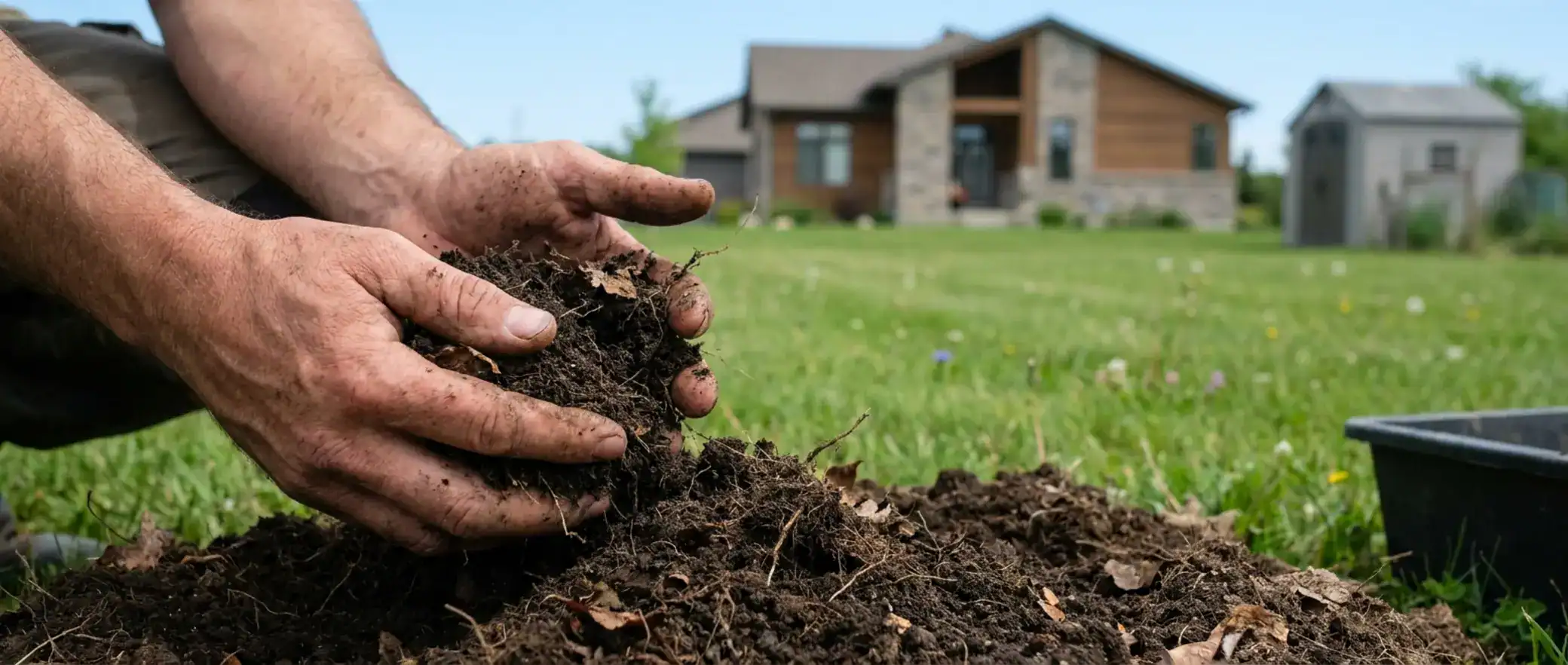
Additionally, synthetic fertilizer salts actively kill earthworms and mycorrhizal fungi. These organisms are the very defense systems your grass needs. When you apply organic fertilizers for lawns, you feed the microbes instead of just the grass blades. The microbes then break down organic matter and deliver nutrients to the roots at a natural, sustainable pace.
Think of your soil as the human immune system. When you take strong antibiotics constantly, you destroy the good bacteria along with the bad. The ecological impact of chemical pesticides functions the exact same way. It wipes out the predatory insects that naturally control grub outbreaks. Healthy soil and pest control are biologically linked.
The Biological Arsenal for Organic Lawn Pest Control
Biological organic lawn pest control uses living organisms like bacteria and microscopic worms to actively hunt and eradicate turf insects. You do not need toxic chemicals to kill grubs.
Instead, you deploy an underground mercenary army. Entomopathogenic nematodes and milky spore bacteria are the heavy hitters of organic pest management techniques. These biological controls seek out and destroy pests natively in the dirt. They are incredibly effective. However, application timing is very strict. You must apply them correctly. Otherwise, they will die before they can protect your yard.
Safety Note: Beneficial nematodes are live organisms that require specific handling. You must keep them refrigerated until the exact moment of use and never spray them in direct ultraviolet sunlight.
Beneficial Nematodes for Active Infestations
Nematodes act fast against common lawn pests and organic treatment options. Specific species like Steinernema carpocapsae actively hunt armyworms and chinch bugs. Another species, Heterorhabditis bacteriophora, dives deep to kill Japanese beetle grubs.
They enter the host pest and release a deadly bacteria. This bacteria kills the grub within 48 hours. You simply apply them using a standard hose-end sprayer. However, the soil temperature must remain above 50 degrees Fahrenheit. Because they are aquatic organisms, you must water the lawn heavily for three days after application. This moisture helps the microscopic worms swim down into the root zone.
A package of 10 million nematodes costs roughly 30 dollars. This amount covers about 2,000 square feet of turf. It is a highly effective, fast-acting component of DIY organic lawn pest treatments.
Milky Spore Bacteria for Long-Term Defense
Milky spore is defined as a naturally occurring soil bacterium that specifically targets Japanese beetle grubs. Unlike nematodes, milky spore takes time to establish dominance in the dirt.
It typically requires one to three years to reach peak spore count. However, it offers incredible long-term lawn health and pest prevention. A single thorough application can last up to 20 years in the soil. This makes it an incredibly cost-effective organic lawn care solution for homeowners. According to industry experts, you should apply the powder in late summer. This timing aligns perfectly with when grubs are actively feeding near the soil surface.
Cultural Practices and Soil Health for Lawn Pest Prevention
Soil health for lawn pest prevention requires physical practices like aeration, proper mowing, and compost topdressing to maintain microbial life. You cannot simply spray biological controls and walk away.
You must cultivate the right environment. Pest-proofing lawn organically starts in your garage with a mower and a core aerator. Pests absolutely love compacted soil covered by a thick thatch layer. Grubs thrive aggressively where grass roots are shallow and weak. Therefore, you must aerate your yard annually. Aeration physically breaks up compaction. It allows vital oxygen to reach the deep root zone.
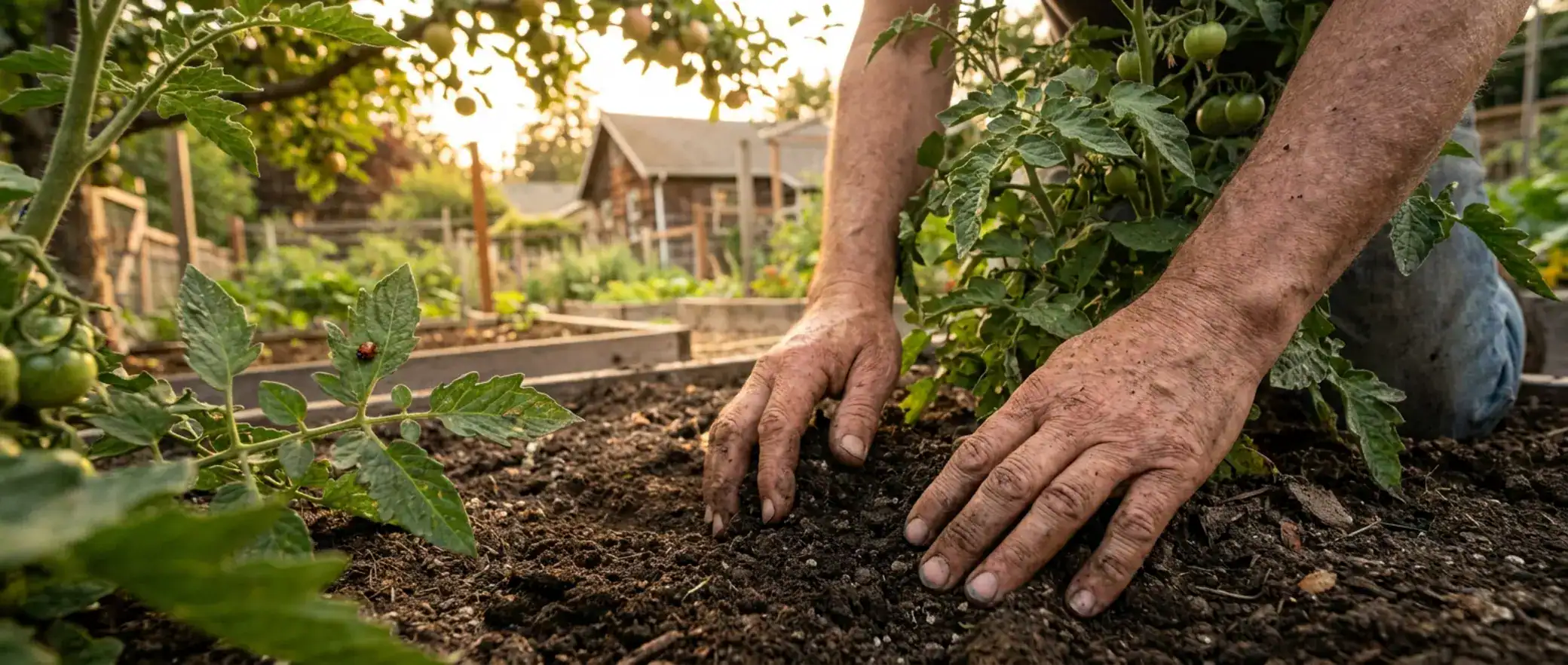
After aerating, you must apply organic soil amendments. Topdressing the yard with a quarter-inch of high-quality compost introduces billions of beneficial microbes. This dramatically increases soil vitality for pest resistance. Additionally, you must adjust your mowing height. Set your mower deck to at least three inches. Taller grass shades the soil surface. This retains moisture and promotes deeper root systems.
- Set mower decks to three inches or higher.
- Water grass deeply and infrequently.
- Core aerate the yard annually.
- Topdress with organic compost immediately after aerating.
- Leave grass clippings on the turf to recycle natural nitrogen.
Overcoming the Challenges of Conventional Lawn Pest Control
The challenges of conventional lawn pest control stem from rapid chemical resistance and the total destruction of the soil’s natural predator ecosystem. Decades of synthetic chemical abuse have broken our lawns.
When you apply broad-spectrum grub killers, you successfully kill the target pest. However, you also kill predatory beetles, earthworms, and native ground bees. By doing this, you break the local food chain. According to environmental scientists, 96 percent of terrestrial birds rely entirely on insects to feed their young. Sterilizing your yard destroys local biodiversity.
Without natural predators, surviving turf pests multiply rapidly the following season. This creates a vicious dependency cycle for the homeowner. Furthermore, insects develop genetic resistance to synthetic sprays over time. This biological adaptation forces chemical companies to formulate even harsher toxins. Non-toxic pest solutions actively break this cycle. They rebuild the predator-prey balance naturally.
Best Practices for Transitioning to Organic Lawn Care
The best practices for transitioning to organic lawn care involve managing visual expectations during the biological transition period while slowly phasing out synthetics. You cannot switch from chemical dependency to organic vitality overnight without friction.
There is a distinct biological transition period. When you stop using synthetic fertilizers, your lawn might actually look worse for six to twelve months. This happens because your soil microbiome is currently dead. The grass is suffering from synthetic chemical withdrawal. It takes months for organic fertilizers to feed the new microbes. Then, those microbes must break down materials to feed the grass.
Patience is absolutely critical here. If you panic and spray a chemical pesticide, you reset the clock to zero. You must lean heavily on soil testing during this sensitive phase. An accurate laboratory soil test reveals your exact pH and nutrient gaps. Proper pH is essential. It dictates basic nutrient availability. If the dirt is too acidic, grass roots physically cannot absorb nutrients.
Adjusting pH with organic lime or elemental sulfur is a foundational step. It is the starting point for all successful organic pest control strategies.
Emerging Threats in Sustainable Gardening Pest Control
Sustainable gardening pest control faces new challenges from invasive species like jumping worms that degrade soil organic matter rapidly. As homeowners shift toward organic compost, new threats are emerging via contaminated retail soil products.
Recent update 2026: Invasive jumping worms (Amynthas species) are spreading aggressively across the Northeast. These worms devour organic matter at an alarming rate. They alter healthy topsoil into a dry texture resembling coffee grounds. Consequently, the soil completely loses its ability to hold water. This severe drought stress weakens the grass. It acts as an open invitation for secondary turf pests.
Similarly, authorities have found live coconut rhinoceros beetle larvae in retail potting soils. You must inspect all eco-friendly lawn care products before applying them to your yard. Look specifically for OMRI-certified compost from reputable, transparent local dealers. Never buy cheap, unlabeled dirt off the back of a truck. Vigilance is a mandatory component of environmental lawn care.
Cost-Effective Organic Lawn Care Solutions Versus Chemical Costs
Cost-effective organic lawn care solutions offer massive long-term financial savings despite slightly higher initial setup costs. One of the biggest myths surrounding organic pest control methods is that they are too expensive for the average homeowner.
Let us look at the actual math. Chemical grub control requires a dedicated annual application. A typical bag of synthetic grub killer costs about 36 dollars. Over a 20-year period, you will spend 720 dollars just on preventative poison. This number completely ignores the hidden costs of repairing the severe soil compaction those chemicals cause.
In stark contrast, a single heavy application of milky spore powder costs roughly 95 dollars for 10,000 square feet. Because the bacteria reproduces inside the dying grubs, it actively multiplies. It lasts up to 20 years in the dirt. That is a massive return on investment. The benefits of organic lawn care extend directly to your household budget.
Lawn Care Cost Comparison (20-Year Period)
| Cost Type | Chemical Approach | Organic Approach |
| Primary Grub Control | $720 | $95 |
| Fertilizer Costs | $1,200 | $1,500 |
| Soil Repair/Aeration | $1,000 | $200 |
| Total 20-Year Cost | $2,920 | $1,795 |
While organic fertilizers for lawns might cost slightly more upfront at the register, the overall yard system becomes self-sustaining. High earthworm populations act as free, permanent aerators. Deeper grass roots require drastically less irrigation water. Ultimately, organic gardening pest strategies save substantial money.
The Role of Beneficial Insects in Organic Pest Management
The role of beneficial insects in organic pest management is to act as a permanent, natural patrol force that consumes destructive lawn pests. You cannot achieve a pest-free lawn without biological allies.
Predator insects are the frontline soldiers of organic pest management techniques. Ladybugs, green lacewings, and predatory ground beetles naturally hunt aphids, chinch bugs, and spider mites. When you permanently eliminate broad-spectrum pesticides, these beneficial insects naturally return to your yard. They work for free. They never stop hunting.
To encourage them, you must learn how to create a balanced ecosystem in your lawn. Plant native wildflower strips along the extreme borders of your grass. These specific flowers provide necessary nectar and pollen for predatory parasitic wasps. These tiny, non-stinging wasps lay their eggs directly inside cutworms and fall armyworms. It is a brutal, entirely natural, and highly effective control mechanism.
Seasonal Trends in Lawn Pest Outbreaks
Tracking seasonal trends in lawn pest outbreaks allows homeowners to apply organic treatments exactly when turf insects are most vulnerable. Pests operate on strict, predictable biological clocks.
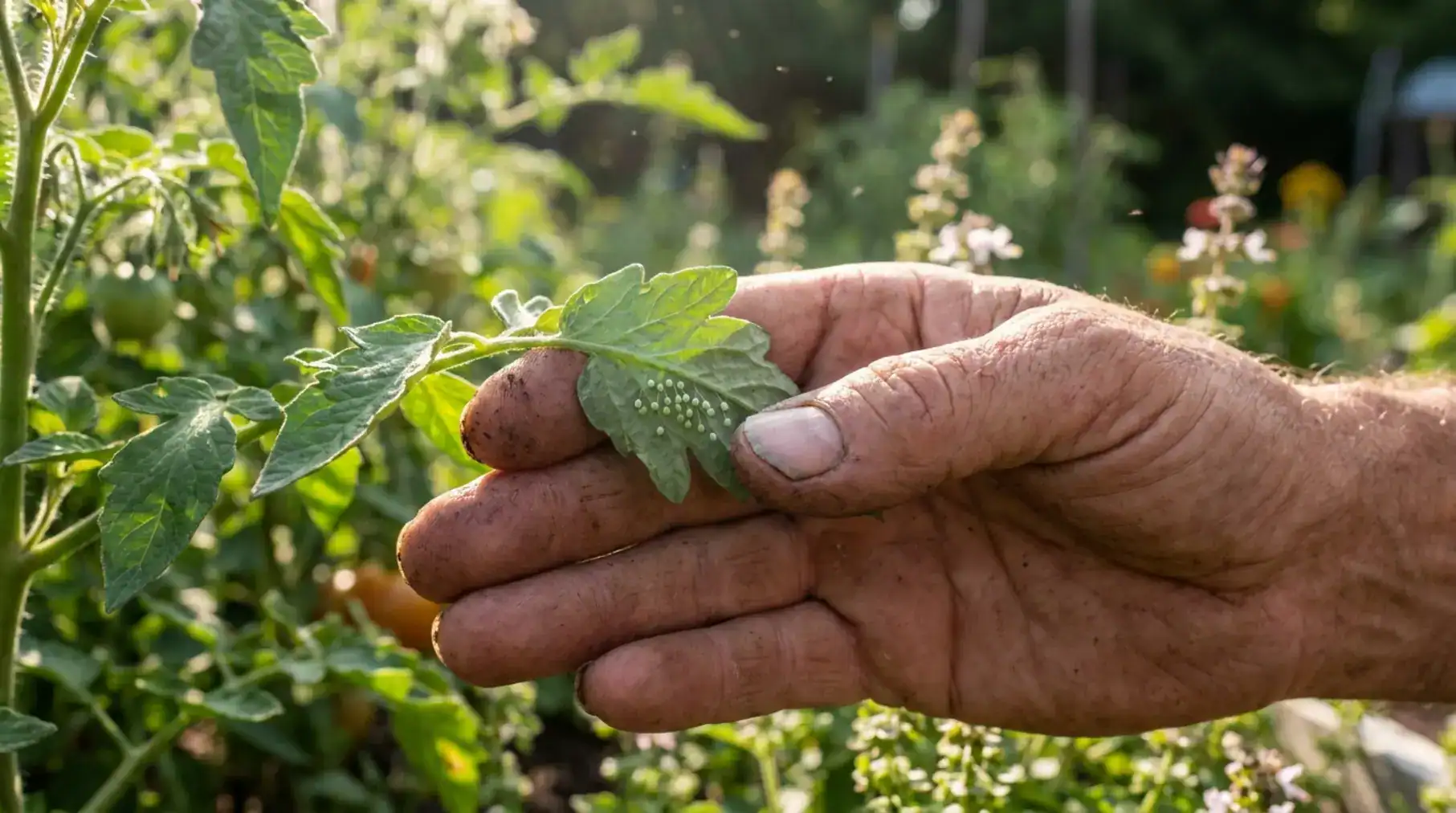
You must time your natural remedies for lawn pests accordingly. In early spring, the frozen soil warms up. Overwintering grubs wake up from dormancy. They move rapidly to the surface to feed on tender grass roots. This is the absolute perfect time to apply a spring dose of beneficial nematodes. You hit them before they mature.
By mid-summer, destructive chinch bugs and sod webworms hit their population peak. During this time, intense heat and drought stress weaken the grass blades. You must maintain proper, deep watering to keep the soil food web alive and active. In late summer and early fall, a second generation of grubs hatches from beetle eggs. This is the optimal window for milky spore applications. Understanding these seasonal trends prevents severe turf damage.
Think of treating pests organically like surfing in the ocean. You have to catch the wave at the exact right moment. If you apply nematodes when the grubs have already dug three feet deep for winter, you miss the wave entirely.
Common Questions About Organic Lawn Care: Preventing Pests via Soil Health
These answers address the most frequent homeowner concerns about adopting chemical-free pest management protocols and protecting local ecosystems.
What is organic lawn pest control?
Organic lawn pest control is the strategic practice of managing turf insects using natural biological agents, cultural habits, and soil health improvements. It strictly avoids synthetic toxic chemicals. It focuses heavily on preventing pest outbreaks by building a resilient, nutrient-dense soil ecosystem that favors predatory insects.
How long do natural remedies for lawn pests take to work?
Natural remedies act slightly slower than synthetic chemical sprays. Beneficial nematodes typically eliminate target grubs within seven to fourteen days after proper watering. However, establishing full yard immunity with milky spore bacteria can take up to three years to peak.
Are organic pest control strategies completely safe for kids and pets?
Yes. Organic methods are completely safe for residential families. Because treatments like milky spore and beneficial nematodes are highly targeted biological agents, they do not harm mammals, birds, or native pollinators. Children and dogs can safely play on the grass immediately after application.
Does high-nitrogen synthetic fertilizer cause pest problems?
Absolutely. Synthetic chemical fertilizers force rapid, unnaturally soft leaf growth. This soft, sweet grass acts as a literal beacon for destructive pests like chinch bugs and fall armyworms. Switching to slow-release organic fertilizers for lawns prevents this dangerous growth spike.
Can I spot-treat with chemicals while using organic soil amendments?
No. Doing this ruins the entire biological process. Applying synthetic chemical pesticides will instantly kill the beneficial microbes and live nematodes you just paid to introduce. You must commit fully to chemical-free pest management for the underground ecosystem to thrive.
Do I need to aerate my yard for DIY organic lawn pest treatments to work?
Yes. Pests love highly compacted, suffocating dirt. Aeration breaks up this hardpan layer, allowing vital oxygen to reach the deep roots. This oxygen feeds the beneficial microbes that actively protect your grass from fungal diseases and pest larvae.
Will pest-proofing lawn organically kill ticks and mosquitoes?
Indirectly, yes. While milky spore targets grubs, creating a balanced ecosystem invites predatory insects and birds that actively feed on ticks and mosquitoes. Additionally, targeted organic treatments like cedarwood oil sprays safely repel these specific biting pests without damaging the soil food web.
References and Expert Sources
The following list contains the foundational research, legislative data, and agronomic studies supporting organic pest prevention strategies.
- Maryland Green Industries Council report on neonicotinoid alternatives 2026
- National Coalition for Pesticide-Free Lawns report on soil microbial health
- Organic Landscaping Association guidelines on cultural turf practices 2025
- USDA Forest Service bulletin on invasive Amynthas jumping worms 2025
- Consumer landscape spending analysis on organic versus synthetic lawn maintenance 2025
- University of Maryland Extension guide on attracting beneficial insects to residential lawns
- Connecticut General Assembly Public Act concerning neonicotinoids
- Journal of Nematology study on Steinernema carpocapsae application rates
- Environmental Protection Agency pollinator protection protocols
- Soil Science Society of America briefing on urban soil compaction
Final Thoughts
The transition away from toxic chemicals is no longer an alternative lifestyle choice. It is becoming a mandated reality across the country. Mastering organic lawn pest control empowers you to protect your family, your pets, and your local water table from harmful synthetic runoff. By investing heavily in the biological health of your dirt, you create a self-sustaining environment that naturally repels invaders.
Patience is your greatest asset during the first year of this ecological transition. Your yard will experience a biological lag as it recovers from chemical dependency. Stay the course, test your dirt annually, and feed the microbes consistently. If you follow these proven agronomic principles, you will cultivate a deeply resilient, vibrantly green property that lasts for decades. Stop treating the symptoms with toxic sprays, and start fixing the root cause today.