There is nothing quite like the panic of lifting an outdoor lid to find a writhing mass of compost bin pests staring back at you. Depending on where you live, tossing food in the regular trash is now legally restricted legally restricted waste disposal. However, the moment you build a backyard pile, you accidentally open a 24-hour buffet for local wildlife. Dealing with maggot swarms and rodents is a frustrating reality for modern gardeners. Your organic recycling system is not broken. Rather, your physical defense system requires a massive upgrade.
How do you manage compost bin pests?
To manage compost bin pests, install 1/4-inch galvanized hardware cloth to physically block rodents and use sealed tumblers to exclude flying insects. Bury food scraps deeply to mask odors. You can also utilize Bokashi pre-fermentation to lower waste pH, making scraps highly unappealing to flies, rats, and raccoons before adding them outdoors.
The Legal Reality Shaping Modern Backyard Composting
Navigating local organic waste recycling laws requires gardeners to secure their bins against local wildlife and insect infestations.
Organic waste recycling is defined as the legal mandate to divert biodegradable materials away from traditional landfills. Specifically, laws like California SB 1383 recently expanded active enforcement California SB 1383 enforcement in cities like Long Beach and Anaheim . Consequently, thousands of first-time composters now face unexpected rodent issues.
Because residents must separate organic waste, pest issues in composting have surged globally. The narrative has shifted dramatically from eco-guilt to pest anxiety. People want to compost responsibly. However, they refuse to invite Norway rats into their gardens. Providing generic advice about balancing greens and browns is no longer sufficient. Modern composters require heavy-duty exclusion strategies.
Identifying Common Compost Bin Pests
Identifying exactly what is crawling in your pile dictates the specific elimination strategy you must deploy.
Knowing your enemy is the first step toward effective pest control for compost bins. You will encounter many organisms in a healthy pile. However, not all of them are hazardous. You must accurately categorize these visitors.
Harmful Invaders vs Neutral Guests
The Norway Rat (Rattus norvegicus) is the primary urban ground-burrowing pest targeting compost bins. These rodents chew through thin plastic and establish warm nests in winter. For a full defense plan against rats and mice getting into more than just your compost, see our rodent exclusion guide. Additionally, they pose severe biological risks severe biological risks.
Safety Note: Poorly managed outdoor bins infested with deer mice and rats frequently harbor zoonotic diseases. You must wear heavy gloves when handling rat-infested materials to avoid exposure to Hantavirus and Salmonellosis .
Blowflies (Calliphoridae) are metallic flies that lay pest maggots in exposed meat or dairy. These are pests that harm compost hygiene. They breed rapidly. Furthermore, they carry bacteria from animal waste directly to your pile.
Fungus gnats and shoreflies thrive in overly wet environments. They swarm when you open the lid. While mostly a nuisance, dense clouds indicate a severe moisture imbalance.
Recognizing Beneficial Insects in Compost
A massive misconception exists regarding spontaneous generation. Maggots do not magically appear from dead matter. Rather, flies lay eggs in exposed scraps.
Many beginners panic when they spot large, segmented grubs in their bins. Often, these are Black Soldier Fly Larvae (BSFL). Black Soldier Flies are highly beneficial insects in compost. They outcompete houseflies. They process waste incredibly fast. You can easily differentiate them from blowfly maggots by their hard, segmented, armor-like bodies.
Root Causes Attracting Pests in Compost
Improper moisture, poor aeration, and exposed food scraps are the primary triggers that lure vermin to organic matter.
Pests rarely invade perfectly balanced piles. Instead, they target stressed environments. Finding the root cause prevents future outbreaks.
How Moisture Imbalance Invites Invaders
Moisture levels influence pest presence in compost directly pest presence factors. A pile should feel like a wrung-out sponge. When a bin becomes completely dry, ants establish massive colonies. They use the dry, fluffy material as a secure nesting ground.
Conversely, anaerobic conditions occur when a pile becomes completely waterlogged. Anaerobic decomposition is defined as the breakdown of organic matter without oxygen. This process releases foul-smelling methane and ammonia. These specific odors signal a free meal to scavengers miles away. This exact smell is notorious for attracting pests in compost.
Nutritional Imbalance and Olfactory Triggers
Improper food scrap management ruins a bin overnight. Scraps like exposed meats, heavy dairy, and baked goods act as a dinner bell. According to industry experts, foxes and rats have highly sensitive olfactory receptors.
You must utilize correct carbon-to-nitrogen ratios to limit pest attraction. A balanced ratio minimizes ammonia off-gassing. You should aim for roughly 30 parts carbon to 1 part nitrogen.
| Material Type | Carbon-to-Nitrogen Ratio (C:N) | Pest Attraction Risk |
|---|---|---|
| Dry Leaves (Brown) | 60:1 | Low |
| Cardboard (Brown) | 350:1 | Low |
| Vegetable Scraps (Green) | 12:1 | High (if unburied) |
| Grass Clippings (Green) | 20:1 | Medium (causes odor if clumped) |
Mechanical Defenses: Best Methods for Composting Without Pests
Physical barriers are the only guaranteed method to stop large scavengers from breaching a residential bin.
A cheap plastic bin will fail. Rats can gnaw through high-density polyethylene (HDPE) walls if they find an edge. Therefore, you must upgrade your hardware.
Using Galvanized Hardware Cloth
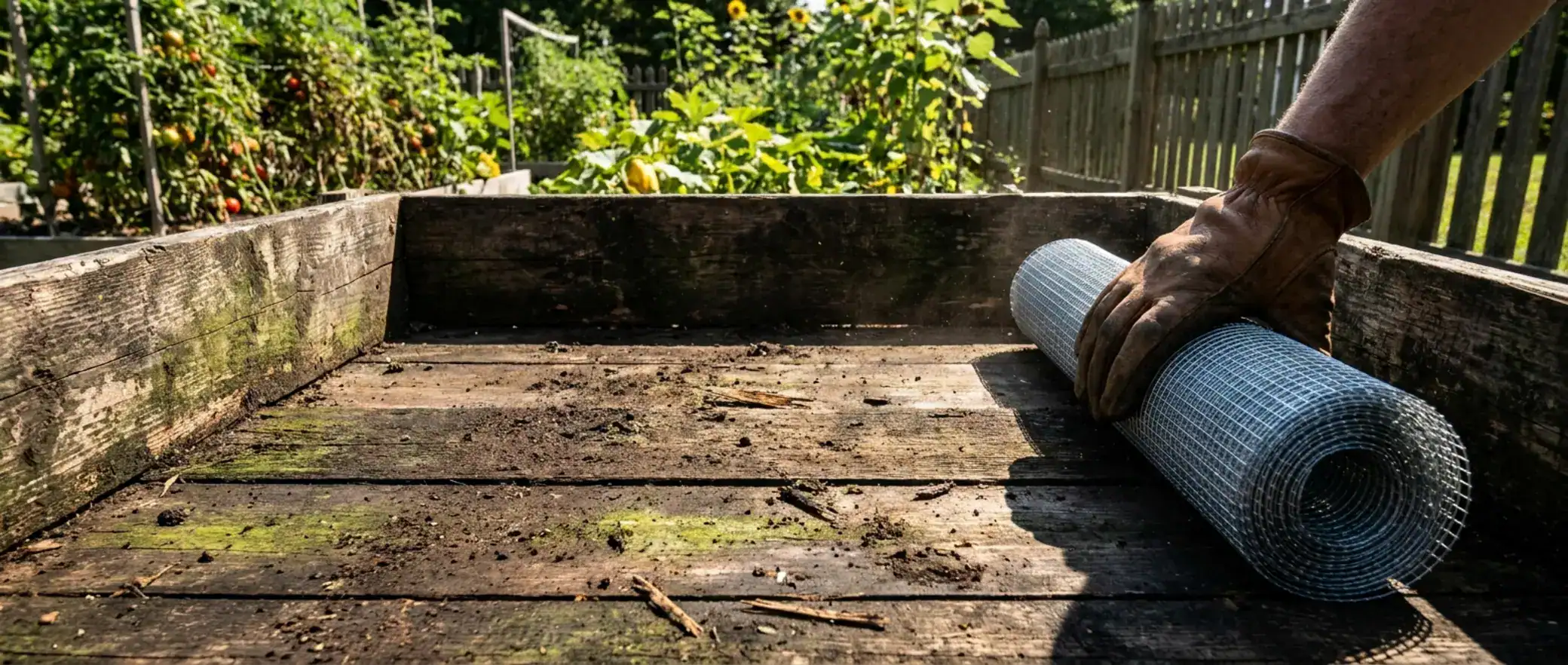
The gold standard for pest prevention in compost bins is metal mesh. Mice can squeeze through holes the size of a dime. Rats fit through quarter-sized gaps. Consequently, standard chicken wire is entirely useless.
You must install 1/4-inch galvanized hardware cloth along the bottom and lower sides of wooden or plastic bins . This stops burrowers completely. Use heavy-duty staples or zip-ties to secure the mesh tightly. Think of it like installing a bank vault door for your food scraps.
Sealed Tumblers and Raised Designs
Keeping rodents out of my compost bin requires elevation. Hard-walled tumblers solve multiple problems simultaneously. Products like the Aerobin 200L or the FCMP IM4000 Tumbler elevate the waste completely off the ground.
These designs physically block raccoons and foxes. Furthermore, sealed lids trap moisture and accelerate the thermophilic phase. Hot composting must reach 130 degrees Fahrenheit for several days to deter nesting mice. Relying on these thick-walled systems is often the best method to ensure composting without pests.
The Dual-Barrier Fermentation Method
Pre-fermenting organic waste indoors drops the pH level to a point where rodents and flies physically reject the material.
Most articles overlook the power of pre-composting. This is the ultimate X-Factor for managing pests in organic compost.
How Bokashi Deters Scavengers
Bokashi composting utilizes anaerobic fermentation to pickle food waste. You layer kitchen scraps inside an airtight bucket. Next, you sprinkle a specialized bran inoculated with Lactobacillus bacteria over the scraps.
This fermentation drops the waste pH to between 3.5 and 4.0 . This highly acidic, pickled material smells awful to rodents. Furthermore, flies cannot breed in it. Once the bucket ferments for two weeks, you transfer it to the outdoor bin. This perfectly answers the question of how to prevent pests in my compost.
You can safely ferment meat, dairy, and baked goods using systems like SCD Probiotics or Bokashicycle. The pre-fermented material breaks down outdoors in mere weeks.
Organic Pest Control for Compost Habitats
Releasing targeted biological agents into a pile controls specific insect populations without contaminating the resulting fertilizer.
When you find pests in my compost, chemical insecticides are never the answer. Spraying synthetic poisons destroys the soil food web. Instead, you should rely on biological warfare.
Deploying Predatory Insects
Biological control agents hunt specific nuisance bugs. For example, Staphyline beetles (Atheta coriaria) aggressively eat fungus gnats and shoreflies. Commercial growers use these beetles extensively. They are now available to residential gardeners .
Beneficial nematodes (Steinernema feltiae) offer another excellent defense. You mix these microscopic roundworms with water. Then, you drench the compost pile. They seek out and destroy gnat larvae hidden deep inside the organic matter.
Using Natural Minerals Safely
You can also use natural remedies for compost bin pests. Food-grade diatomaceous earth (DE) creates a lethal barrier for crawling insects. The microscopic sharp edges pierce the exoskeletons of ants and roaches.
However, you must use DE cautiously. It can irritate earthworms if applied too heavily. Sprinkle it only around the outer perimeter of the bin. This stops ants from marching inward without harming the core decomposers.
Ingredient Management to Prevent Pests in Compost
Strategically layering green and brown materials masks olfactory triggers that attract hungry scavengers.
Habit modification is critical. How you feed your pile determines who shows up to eat.
The Deep Burial Technique
You must never leave food scraps sitting on top of a pile. This is an open invitation for common compost bin pests. Always dig a hole in the center of the pile. Bury food scraps at least two to three inches deep beneath a thick layer of carbon-rich browns.
This physical carbon layer acts as a bio-filter. It traps odors before they escape into the air. If blowflies cannot smell the rotting fruit, they will not lay eggs. This is fundamental for composting best practices for pest control.
Knowing What to Exclude Outdoors
Certain ingredients cause instant problems in standard aerobic bins. In May 2025, UK gardening experts issued urgent warnings against adding baked goods or dairy to residential outdoor bins .
Unless you use the Bokashi method mentioned earlier, you must exclude meat, bones, fat, and dairy. These items putrefy slowly. The resulting odor guarantees a visit from local rats or raccoons. Keep these high-risk items completely out of open-air piles.
Seasonal Considerations for Compost Pest Management
Shifting weather patterns dictate which specific insects or mammals will target your organic waste throughout the year.
Pest pressure fluctuates. Recognizing seasonal patterns helps you anticipate attacks before they happen.
Spring and Summer Threats
During spring, heavy rains often saturate outdoor bins. High moisture levels influence pest presence in compost by creating ideal breeding grounds for fungus gnats breeding grounds for fungus gnats. You must add extra dry cardboard or wood chips to absorb this excess water.
Conversely, summer brings extreme heat. Bins dry out rapidly. This dry environment invites massive ant colonies. The role of temperature in pest management for compost bins requires you to monitor moisture weekly. Water the pile lightly with a hose to evict nesting ants.
Fall and Winter Scavengers
As natural food sources dwindle in autumn, rodents become desperate. The compost bin location effect on pest attraction becomes obvious. Bins placed directly against warm house walls attract mice seeking winter shelter.
During cold months, the internal heat of a decomposing pile acts as a magnet for Norway rats. You must double-check all 1/4-inch mesh barriers in late October. Ensure no structural gaps exist. Turn the pile frequently to disturb any attempted nesting.
Troubleshooting Pest Problems in Small-Scale Composting Setups
Quickly addressing foul odors or sudden insect swarms requires a systematic reset of the pile’s internal environment.
Even veteran gardeners face occasional outbreaks. Fast intervention stops a minor issue from becoming a neighborhood nuisance.
Resetting a Maggot-Infested Bin
If you have flies in my compost bin, you must act fast. First, identify the maggots. If they are beneficial Black Soldier Fly Larvae, leave them alone. If they are tiny, white housefly maggots, you have exposed nitrogen.
To fix this compost bin pest infestation, immediately cover the entire top layer with four inches of dry autumn leaves or shredded paper. Stop adding new kitchen scraps for one week. The dry carbon will suffocate the odors. Eventually, the fly lifecycle will break.
Eliminating Rodent Intruders
If rats breach your container, halt all food additions immediately. A rat cannot survive without a steady food source.
Do not use chemical rodenticides near your compost. Poisoned rats are eaten by local owls, hawks, and neighborhood cats, causing secondary poisoning fatalities. Instead, focus entirely on physical exclusion. Empty the bin, line it fully with heavy wire mesh, and restart the process. Sometimes, eliminating pests from compost requires a total structural rebuild.
Restoring Balance and Odor Control
A pile that smells like ammonia or rotten eggs is actively attracting pests in compost. This indicates severe anaerobic conditions.
Use a pitchfork to turn the entire pile violently. This injects much-needed oxygen into the compacted center. Add massive amounts of dry browns to soak up the foul leachate. Creating a balanced compost to deter pests is an ongoing process of observation and rapid adjustment.
Many beginners wonder if worms help prevent pests in compost. Vermicomposting setups rely on Red Wiggler worms to consume waste quickly. Because worms eat the food before it rots, the lack of odor naturally prevents scavengers from arriving.
Common Questions About Composting Without Pests: Management Tips
What are the most common pests in compost bins?
The most frequent invaders include fruit flies, fungus gnats, blowfly maggots, ants, and Norway rats. Identifying the exact species determines your defense strategy. For instance, dry bins attract ants, while wet, smelly bins attract maggots and rodents.
Can pests in compost bins be harmful to my garden?
Yes, certain pests cause significant damage. While some bugs merely slow decomposition, rats and deer mice carry Hantavirus and Salmonellosis. Their droppings contaminate the final fertilizer. You must never use rat-infested compost directly on edible vegetable crops.
How can I add to my compost to repel pests effectively?
You can safely add crushed eggshells to deter soft-bodied slugs. However, the best addition is Bokashi pre-fermented scraps. The high acidity naturally repels mammals and flies. Additionally, maintaining a thick top layer of dry brown leaves actively masks the odors that attract scavengers.
What is the impact of pests on compost quality?
Pests change the bacterial profile of the resulting humus. Beneficial insects and pests in compost both break down material. However, invasive pests like blowflies introduce harmful pathogens. A pile balanced with beneficial nematodes and proper earthworms yields a much safer, nutrient-dense fertilizer.
Are compost container pests worse in plastic or wooden bins?
Wooden bins suffer more rodent attacks because rats easily chew through cedar and pine. Cheap plastic bins also crack in the sun, creating access points. High-end, insulated plastic tumblers elevated off the ground offer the strongest defense against raccoons and mice.
References and Expert Sources
- Urban agriculture extension publication on rodent-proof bin design 2025
- California SB 1383 local enforcement data 2025
- CDC guidelines on rodent-borne diseases in residential environments 2024
- Bioline Agrosciences report on Atheta coriaria efficacy 2025
- UK National Gardening alert on Rattus norvegicus population spikes 2025
- Journal of Environmental Management study on Bokashi acidity and pathogen reduction 2023
- EPA guidelines on safe residential organic waste management 2025
- Cornell University Composting Environmental Factors Guide
- SCD Probiotics Technical Manual 2025
- FCMP IM4000 Tumbler Mechanical Specifications
Final Thoughts
Successfully keeping compost bin pests away from your backyard requires a proactive, multi-layered approach. You cannot simply throw food scraps onto the ground and expect a clean result. Instead, you must combine robust mechanical barriers like galvanized steel mesh with smart biological practices like Bokashi fermentation. Understanding the exact environmental triggers that draw in flies and rodents empowers you to fix problems before they escalate.
By burying your organic waste deeply and maintaining precise moisture levels, you mask the odors that scavengers hunt for. Regular turning ensures your pile remains aerobic and structurally sound throughout changing seasons. If you follow these strict guidelines, you will generate incredibly rich, dark humus for your garden completely free of unwanted visitors. Secure your hardware cloth, monitor your carbon ratios, and reclaim your backyard today.