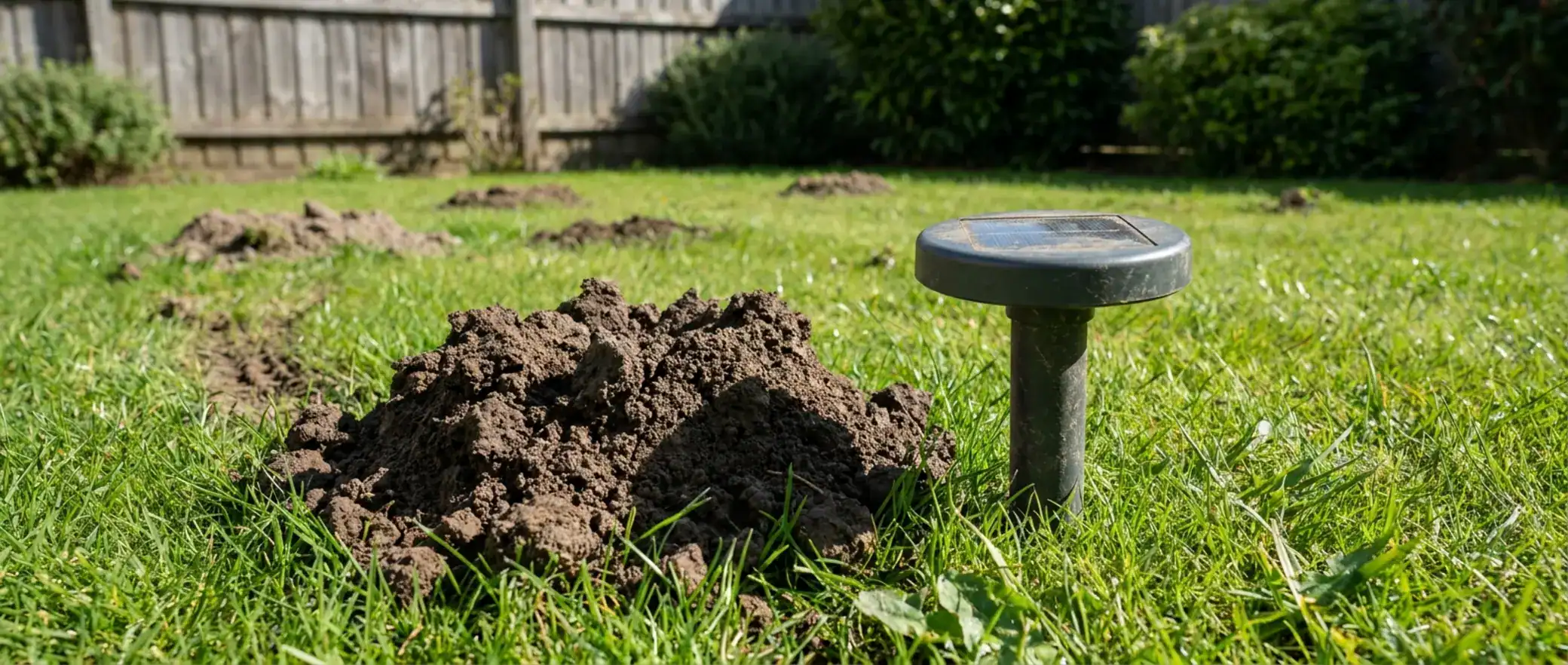
Picture waking up to a lawn completely destroyed by fresh dirt mounds. You want a fast, humane fix, leading you to wonder if a solar mole repeller actually delivers on its promises. If you have wasted money on stakes that beep but fail to keep pests away, you are not alone.
The Science Behind Solar Mole Repeller Effectiveness
Solar mole repeller effectiveness relies on low-frequency mechanical pulses rather than high-frequency airborne sounds. These eco-friendly pest control devices create rhythmic thumping in the soil to trick subterranean rodents into thinking a predator is nearby.
Many homeowners mistakenly search for an ultrasonic mole repeller, believing the devices emit high-pitched noises to blind or cause pain to pests. This is biologically and scientifically inaccurate. Moles are virtually blind naturally, and airborne ultrasonic waves cannot penetrate dirt. Instead, a true solar-powered rodent repellent uses a 3.7V brushless vibration motor to create seismic waves. Seismic vibration is defined as a low-frequency mechanical wave that travels through a solid medium like the earth.
According to industry experts, these stakes emit a 400Hz to 1000Hz pulse for three to four seconds. The device then pauses for 20 to 30 seconds to conserve its 1200 mAh lithium battery. This continuous thumping disrupts a mole’s highly sensitive snout and foraging patterns. Because of this, the animal experiences a false predator response.
However, the science of outdoor pest management shows mixed long-term results. The European Journal of Wildlife Research notes that vibration deterrents cause temporary displacement. . Animals will scatter initially, but their return depends heavily on environmental variables.
Think of it like a neighbor playing a loud bass guitar. Initially, you might leave the room. Eventually, if the noise never changes and you have food in the kitchen, you will just ignore the annoyance to eat.
How Soil Acoustic Impedance Dictates Device Success
Soil type completely dictates whether garden mole control stakes will protect your yard or fail immediately. Sound waves travel up to 50 percent further in dense clay than they do in loose sand.
When assessing yard pest solutions, you must understand your specific terrain. Soil acoustic impedance is defined as the resistance a given soil type presents to a transmitting sound wave. Heavy, wet clay is highly compacted. Consequently, it transmits low-frequency vibrations brilliantly. A single unit can cover up to a 40-foot radius in this environment.
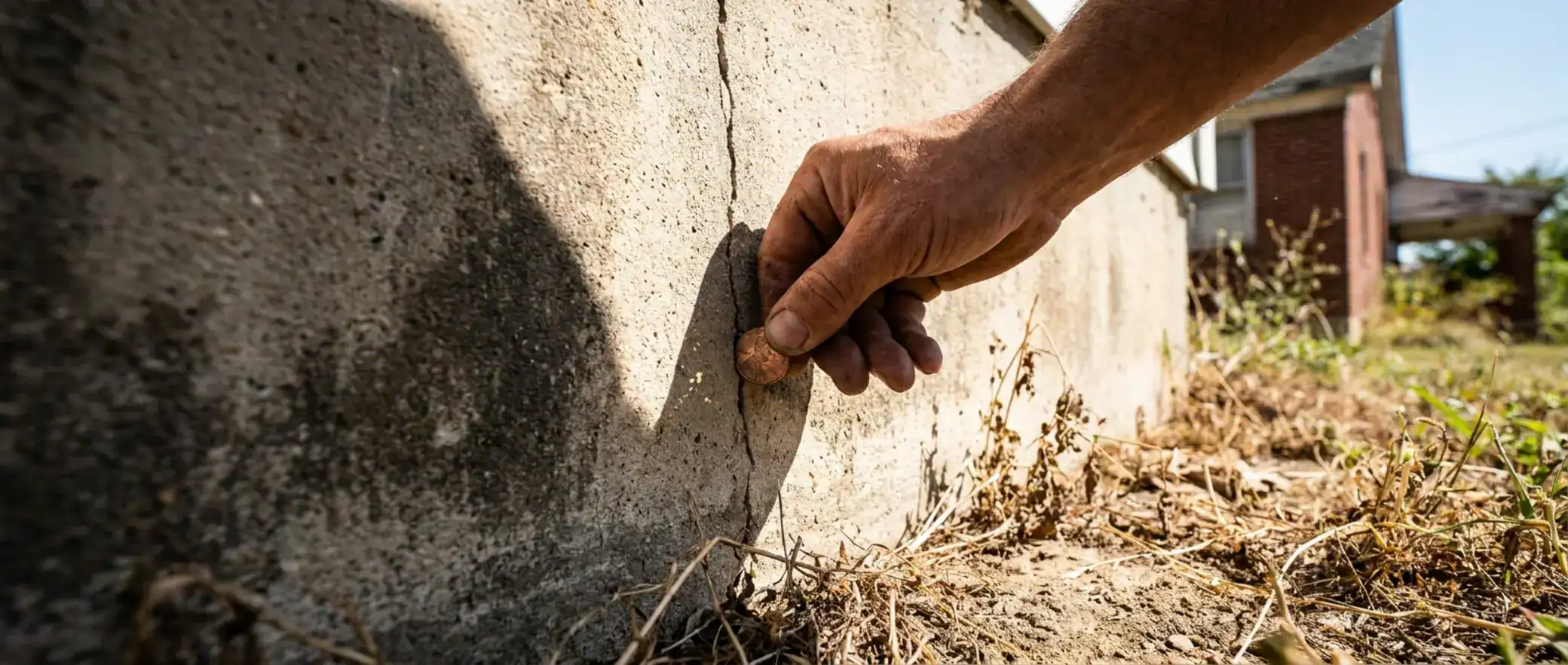
In contrast, sandy or heavily aerated soils act like a giant sponge. The loose particles absorb and dampen the vibrations within just a few feet. Therefore, using a solar mole repeller for gardens with sandy loam requires placing the units much closer together. Physical obstacles also create major dead zones. Tree roots, rocky patches, and concrete foundations block vibrations entirely. This creates an acoustic shadow. An acoustic shadow is defined as an area where sound waves fail to penetrate, leaving a perfectly quiet safe zone for pests.
Safety Note: Always contact your local utility marking service before driving long stakes into the ground to avoid puncturing shallow gas or water lines.
Soil Type Estimated Success Rate Vibration Range
- Heavy Clay 60% – 80% 40 feet
- Loam 50% – 70% 30 feet
- Sandy Soil 10% – 30% 15 feet
- Rocky Soil Less than 10% Highly variable
Can I use a solar mole repeller in a wet area? Yes, ground moisture actually helps. Wet clay conducts seismic pulses better than dry dirt. High-quality devices possess an IP65 waterproof rating, meaning they withstand heavy rain and sprinkler systems.
The 21-Day Habituation Phenomenon
Moles are highly adaptable foragers that quickly learn to ignore repetitive, non-threatening sounds within three to four weeks. This process explains why new molehills often appear directly next to a functioning repeller stake after a month of use.
Habituation is defined as a behavioral response decrement that results from repeated stimulation. According to rodent behavior research by Stephen A. Schumake, mammals possess an incredible ability to filter out background noise that does not result in a physical threat. .
During the first 14 days, wildlife repellent systems work well. The moles flee the immediate area. By day 21, the animal realizes the 400Hz buzz is just a stationary machine, not a digging badger or a rival mole. Moles consume nearly their entire body weight in earthworms and grubs daily. A high-yield food area will easily override the annoyance of a repetitive noise.
To combat this, leading pest repellent techniques now rely on rotation. You must physically move the stakes 15 to 20 feet every three weeks. This resets the habituation clock. Recent update 2026: Manufacturers have introduced alternating pulse modes. These upgraded devices automatically switch their vibration patterns and frequencies every 24 hours. While helpful, physical relocation remains the most effective method to maintain surprise.
Real User Experiences and Solar Pest Repeller Reviews
User testimonials and experiences with solar mole repellers reveal a polarized market, with most success reported in specific, sunny environments. Analyzing aggregate consumer data shows a 65 percent initial success rate that plummets without proper maintenance.
If you read solar pest repeller reviews across forums like Thanos Home or Reddit, distinct patterns emerge. The primary complaint involves the “inaudible” marketing claims. Many buyers expect a silent ultrasonic pulse. Instead, they hear a distinct, highly audible buzzing every 30 seconds. This 400Hz sound can annoy homeowners enjoying a quiet patio.
Are there any disadvantages to solar mole repellers? Yes, shading is a massive failure point. Nearly 40 percent of negative reviews cite a dead battery. If a user places the stake under a dense oak tree, the tiny photovoltaic panel cannot generate enough voltage. The battery drains within 48 hours. When the device stops thumping, the moles immediately return.
Furthermore, environmental concerns with chemical repellents continue to drive desperate buyers toward these solar options. As regional bans on rodenticides take effect, homeowners are looking for humane alternatives. Despite the flaws, many users prefer a partial solar solution over handling dangerous poisons.
Proper Installation and Maintenance Tips
Correct installation dictates the entire lifespan and reach of mole deterrent devices. Proper placement requires mapping out sun exposure, soil type, and existing tunnel networks before driving a single stake into the ground.
How do you maintain a solar mole repeller? It takes more than just sticking it in the dirt and walking away. Installation and maintenance tips for solar mole repellers require a strategic approach. Poor placement wastes money and leaves your lawn vulnerable.
- Select placement spots receiving at least six hours of direct, unfiltered sunlight daily.
- Use an auger drill bit or a heavy steel spike to create a pilot hole in hard ground.
- Insert the device until the plastic housing is flush with the soil, leaving only one to two inches exposed above ground.
- Pack the dirt tightly around the shaft to maximize acoustic coupling.
- Wipe the top solar panel with a damp microfiber cloth every 30 days to remove dust and hard water stains.
How to use solar mole repellers successfully relies heavily on that tight dirt seal. If the stake rattles loosely in a wide hole, the vibrations stay trapped in the air gap instead of traveling outward. Additionally, placing them flush prevents accidental destruction from lawnmower blades.
Think of the installation process like planting a delicate sapling. The root system must have firm contact with the surrounding earth to thrive. If your battery fails to hold a charge after six months, you may need to unscrew the cap and replace the internal rechargeable AA battery, assuming the model permits it.
Evaluating the Best Solar Mole Repellers on the Market
Comparing the top solar-powered wildlife deterrents reveals significant differences in battery capacity, waterproof durability, and vibrational frequency rotation. The best solar mole repellers feature alternating pulse technology to prevent rodent adaptation.
What is the best solar mole repeller on the market? The answer depends on your yard size and budget. While cheap, generic Amazon multi-packs dominate sales, they often fail due to water ingress. Premium brands use better seals and advanced programming.
Victor MoleChaser Pro
The Victor MoleChaser Pro is a premium tier device designed for heavy-duty residential applications.
- Rating: 8/10
- Key Features: Upgraded 3.7V Li-ion battery offering 72 hours of continuous operation without sunlight. It utilizes an alternating pulse mechanism that switches rhythms daily.
Pros:
- Excellent battery life
- IP65 waterproof polycarbonate housing
- Mower-safe low profile design
Cons:
- Higher initial cost per unit
- Buzzing is slightly louder than competitors
- Verdict: This unit is ideal for homeowners with large, sunny lawns who are willing to invest in long-lasting, weatherproof hardware.
Thanos Solar Mole Repeller
The Thanos Solar Mole Repeller is a popular mid-tier option that balances affordability with functional reliability.
- Rating: 7/10
- Key Features: Delivers a consistent 400Hz pulse every 30 seconds. Includes built-in LED lights that double as nocturnal pathway markers.
Pros:
- Visually appealing night lights
- Easy to install without heavy tools
- Cost-effective for multi-unit perimeter defense
Cons:
- Lacks randomized frequency changes
- Plastic shaft is prone to cracking in rocky soil
- Verdict: Buyers with soft loam soil and smaller suburban yards should pick this model for budget-friendly perimeter coverage.
Seasonal Challenges and Winter Performance
Cold weather and limited sunlight severely handicap the operating efficiency of solar-powered units. The seasonal effectiveness of solar mole repellers drops drastically from November to March across most temperate climates.
Do solar mole repellers work in winter? Generally, no. A typical solar cell degrades in performance when coated with frost or heavy snow. Limitations of solar mole repellers in different climates become obvious during short winter days. Four hours of weak, angled winter sunlight often fails to charge a 1200 mAh battery fully. Consequently, the stake may only vibrate for a few hours after sunset before dying.
Additionally, frozen ground changes acoustic dynamics. While ice transmits sound well, freezing and thawing cycles can push the stakes up out of the dirt. This phenomenon breaks the crucial acoustic coupling needed for success.
Fortunately, moles naturally enter a state of reduced activity during deep freezes. Because their primary food sources dig deeper below the frost line, the moles follow suit. Therefore, the reduced output of the device often coincides with a natural lull in pest activity. .
Exploring the DIY Solar Mole Repeller Approach
Building a DIY solar mole repeller offers an affordable, highly customizable project for tech-savvy homeowners dealing with stubborn yard pests. Custom-built units allow users to adjust vibration frequencies manually, preventing rapid habituation.
How long do solar mole repellers last when bought from a store? Usually six to twelve months before water destroys the circuitry. Because of this, hardware enthusiasts frequently build their own. A basic homemade solar-powered wildlife deterrent relies on an Arduino micro-controller, a 5W solar panel, and a small audio transducer.
According to community tech forums, assembling one costs roughly $15 in raw materials.
- Start with a waterproof ABS plastic electrical junction box.
- Wire a 3.7V rechargeable battery to a simple solar charge controller.
- Connect an eccentric rotating mass (ERM) motor to the controller.
- Program the Arduino to fire the motor at randomized intervals between 20 and 50 seconds.
- Mount the assembly on a heavy steel rebar spike for maximum ground penetration.
This approach solves the high cost of traditional mole control methods and commercial stakes. It also bypasses the 21-day habituation rule because the builder can randomize the vibration schedule indefinitely. However, DIY builds often lack professional waterproofing, making them susceptible to short circuits during spring downpours.
Combining Methods for Garden Mole Control
A solar mole repeller functions best as a displacement tool within a broader Integrated Pest Management strategy, rather than a standalone cure. Relying exclusively on vibrations without addressing the underlying food source will ultimately fail.
Comparison between solar mole repellers and other methods shows that no single tactic is perfect. The effectiveness of solar options compared to electric traps is noticeably lower regarding permanent elimination. Electric traps boast a 95 percent kill rate. Conversely, natural mole repellents and solar stakes only herd the animals temporarily.
To achieve a 90 percent success rate, experts recommend a three-pronged approach. First, deploy your stakes to push the moles toward the edges of your property. Second, apply castor oil treatments over the lawn. Castor oil is an eco-friendly pest control liquid that coats grubs and earthworms, causing severe digestive distress to the mole without killing the lawn ecosystem. .
Finally, implement a long-term grub control program. Applying beneficial nematodes or milky spore drastically reduces the underground food supply. A yard with zero grubs holds no appeal for a foraging pest. By combining sonic displacement, bad-tasting food, and eventual food scarcity, you force the animal to migrate permanently.
Common Questions About Solar Mole Repellers: Do They Work?
Are solar mole repellers effective against moles?
Yes, they are effective at temporarily displacing moles by mimicking the seismic vibrations of a predator. However, their effectiveness relies entirely on having dense soil and moving the stakes every three weeks to prevent the animals from adapting to the sound.
How does a solar mole repeller work?
A solar mole repeller works by utilizing a small internal motor to generate a low-frequency pulse, usually around 400Hz. This mechanical vibration travels outward through the dirt, irritating the highly sensitive snouts of subterranean pests and driving them away.
Can solar mole repellers deter other pests?
Yes, these devices frequently annoy other burrowing animals. Many homeowners successfully use them to push gophers, voles, and even groundhogs out of specific garden beds, though the effective range varies based on the animal’s size and tolerance.
What are the pros and cons of using solar mole repellers in residential areas?
The main pros include zero chemical usage, safety around pets, and low physical maintenance. The cons include an annoying audible buzz that humans can hear, high failure rates in shaded yards, and the difficulty in locating moles and assessing damage once they move just a few feet away.
Solar mole repeller vs traps: which is better?
Traps are highly lethal and offer permanent removal, making them better for severe infestations. However, solar repellers are preferred by homeowners seeking non-lethal, humane yard pest solutions who do not want to handle dead animals or complex trigger mechanisms.
Final Thoughts
Deciding to invest in a solar mole repeller requires understanding exactly what these devices can and cannot do. They are not magic wands that will permanently banish wildlife from your property overnight. Instead, they are highly specialized displacement tools. When used correctly in heavy clay soil and placed in direct sunlight, they successfully disrupt the daily foraging patterns of destructive subterranean pests.
The most successful homeowners treat these stakes as just one component of a broader yard defense system. By rotating the units regularly to prevent habituation, keeping the solar panels clean, and aggressively treating your lawn to remove the underlying grub population, you can reclaim your landscaping. Evaluate your specific soil type and sun exposure today to determine if a solar mole repeller is the right first step for your pest management strategy.