Imagine lying in bed at 3:00 AM, staring at the ceiling as heavy thumping and scratching noises echo from the attic. You realize that you need to find a way to get rid of raccoons attic dwellers before they destroy your insulation or chew through electrical wiring. This situation is more than a nuisance; it is a direct threat to your home and your health that requires a professional approach.
How do you get rid of raccoons in the attic humanely?
To remove raccoons humanely, use a two-step eviction process: first, apply male raccoon eviction fluid near the nesting site to trigger the mother’s natural instinct to relocate her young. Once the raccoons exit, install a professional-grade one-way exclusion door over the entry point, allowing them to leave but never return, followed by permanent structural repairs.
Identifying Signs of Raccoons in the Attic
Before you take action, you must confirm exactly what is living above your head. Raccoons are nocturnal, so your primary evidence will be acoustic and visual. Unlike the light pitter-patter of squirrels or the skittering of mice, a raccoon sounds like a heavy-set intruder walking across the floorboards.
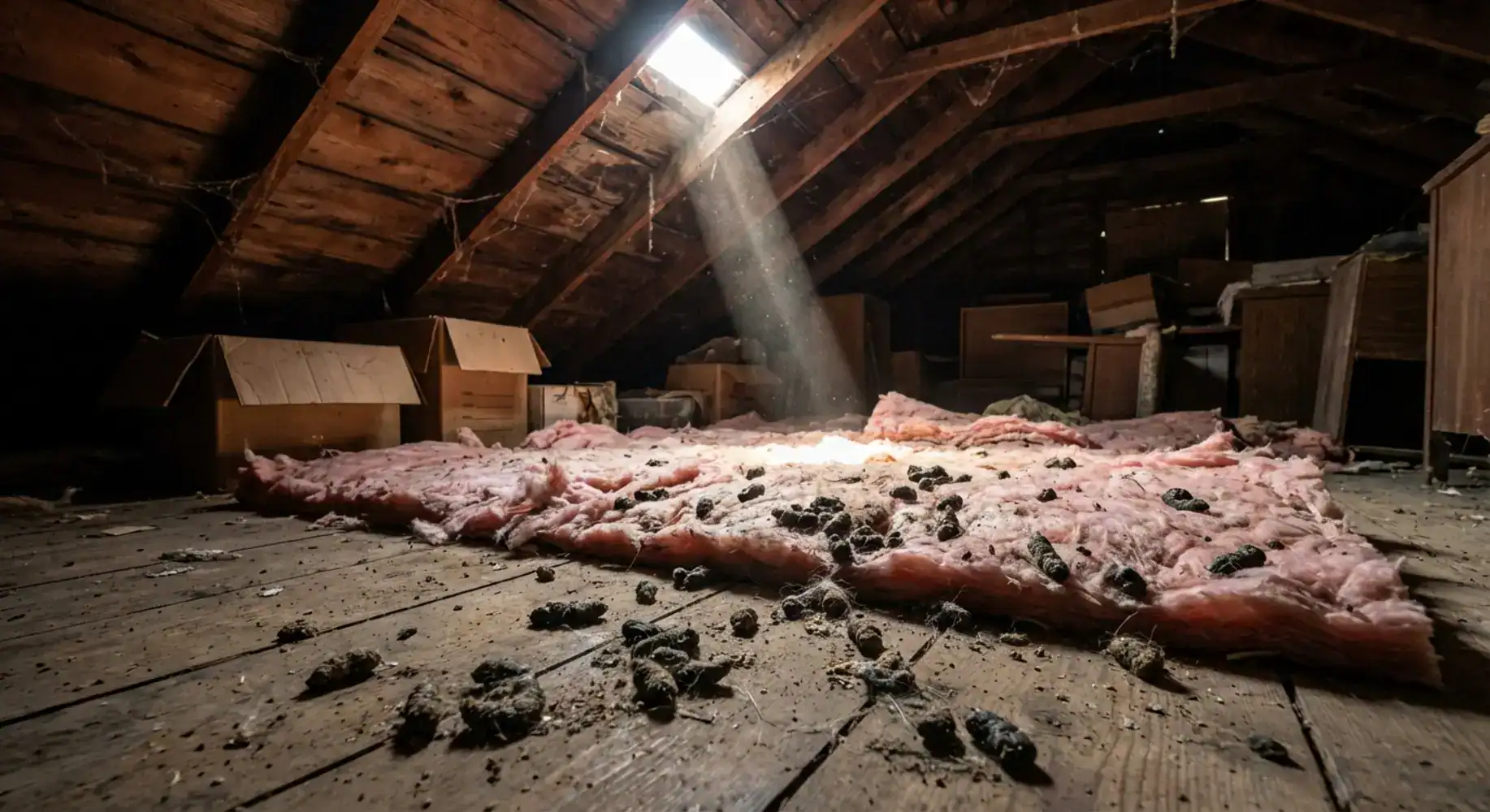
Identifying signs of raccoons in the attic starts with recognizing their specific vocalizations. You might hear chattering, growling, or the distinct “mewing” of kits if a mother has established a nursery. In the insulation, you will find raccoon trails that are typically 10 to 12 inches wide, looking like miniature flattened highways. These animals create specific latrine sites where they consistently deposit waste. Because of this, a concentrated foul odor often permeates the rooms directly below the nesting area.
Look for entry points such as damaged soffits, torn roof vents, or gaps in the roofline. Raccoons are incredibly strong and can easily compress their bodies to fit through gaps as small as 4 inches wide. If you see muddy “handprints” on your siding or downspouts, you are definitely dealing with a raccoon. Attic wildlife infestations often go unnoticed until structural damage becomes visible from the outside, so a thorough exterior inspection is your first line of defense.
Dangers of DIY Raccoon Removal
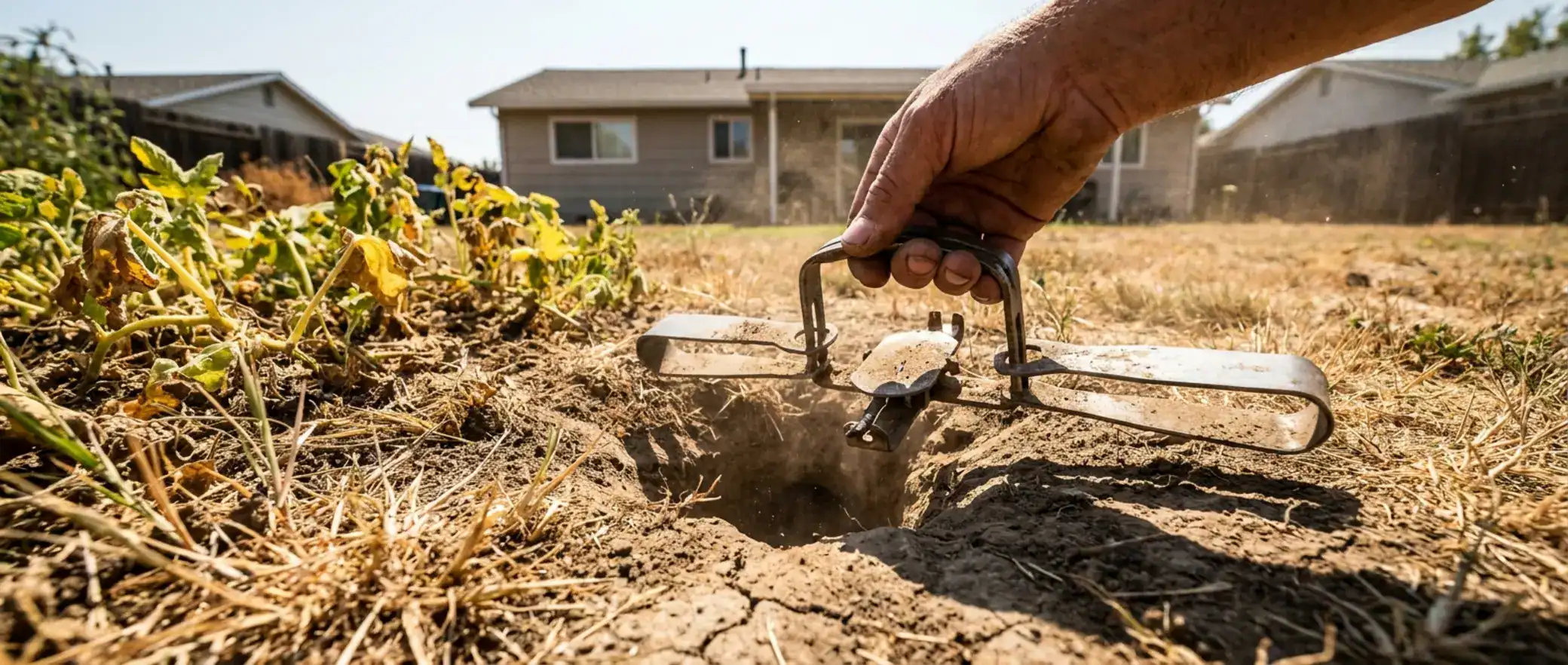
Many homeowners attempt to solve the problem themselves using traps or by sealing holes. However, the dangers of DIY raccoon removal are significant and often lead to much higher costs in the long run. If you seal an entry point without ensuring the attic is empty, you might trap a mother raccoon inside. She will literally rip through your shingles or drywall to escape.
Even worse is the “Orphan Problem.” If you trap and relocate a mother but leave her kits behind, the babies will die slowly behind your walls. This creates a horrific odor and a severe biological hazard. Trapping a raccoon without addressing her kits can turn your home into a biohazard. Beyond the smell, raccoons are primary rabies vector species. A cornered raccoon in a tight attic space is a dangerous adversary that will bite and scratch to protect itself.
Health risks extend beyond bites. Raccoon feces carry Baylisascaris procyonis, also known as raccoon roundworm. These eggs are incredibly hardy and can survive for up to 12 years in insulation. If you disturb a latrine site without a high-grade N95 mask, you risk inhaling these eggs, which can cause neural larva migrans in humans. Because of these risks, raccoon control strategies must prioritize safety and biology over simple capture.
Humane Raccoon Eviction Methods and Biology
Humane raccoon removal is based on understanding the biology and behavior of raccoons in urban areas. These animals are highly intelligent and have multiple den sites throughout a neighborhood. The goal of humane wildlife removal is to make your attic feel unsafe or undesirable, prompting the raccoon to move to one of its backup dens on its own.
Non-lethal raccoon removal focuses on two primary tools: eviction fluids and one-way doors. These methods are much more effective than traditional trapping because they do not involve the stress of capture or the legal hurdles of relocation. Actually, in many jurisdictions, it is illegal to relocate a raccoon more than a kilometer away because the return rate is nearly 100%.
Raccoon eviction methods work best when they leverage the mother’s maternal instincts. By using the scent of a male raccoon, you convince the mother that her kits are in danger of infanticide. This “predator pressure” is the most powerful psychological tool in the wildlife technician’s arsenal. When combined with mechanical exclusion, these techniques provide a permanent solution rather than a temporary fix.
One-Way Raccoon Doors: Mechanical Excellence
One-way raccoon doors are the gold standard for removing adult raccoons and mobile juveniles. These devices consist of a spring-loaded or gravity-weighted flap that allows an animal to push its way out of a hole but prevents it from pushing back in. Because raccoons must leave every night for food and water, the door eventually locks them out permanently.
How to Install a One-Way Raccoon Door
To install this device correctly, you must follow a specific sequence to ensure no animals are trapped inside.
- Locate the primary entry point. Look for the hole with the most fur stuck to the edges or the most prominent paw prints.
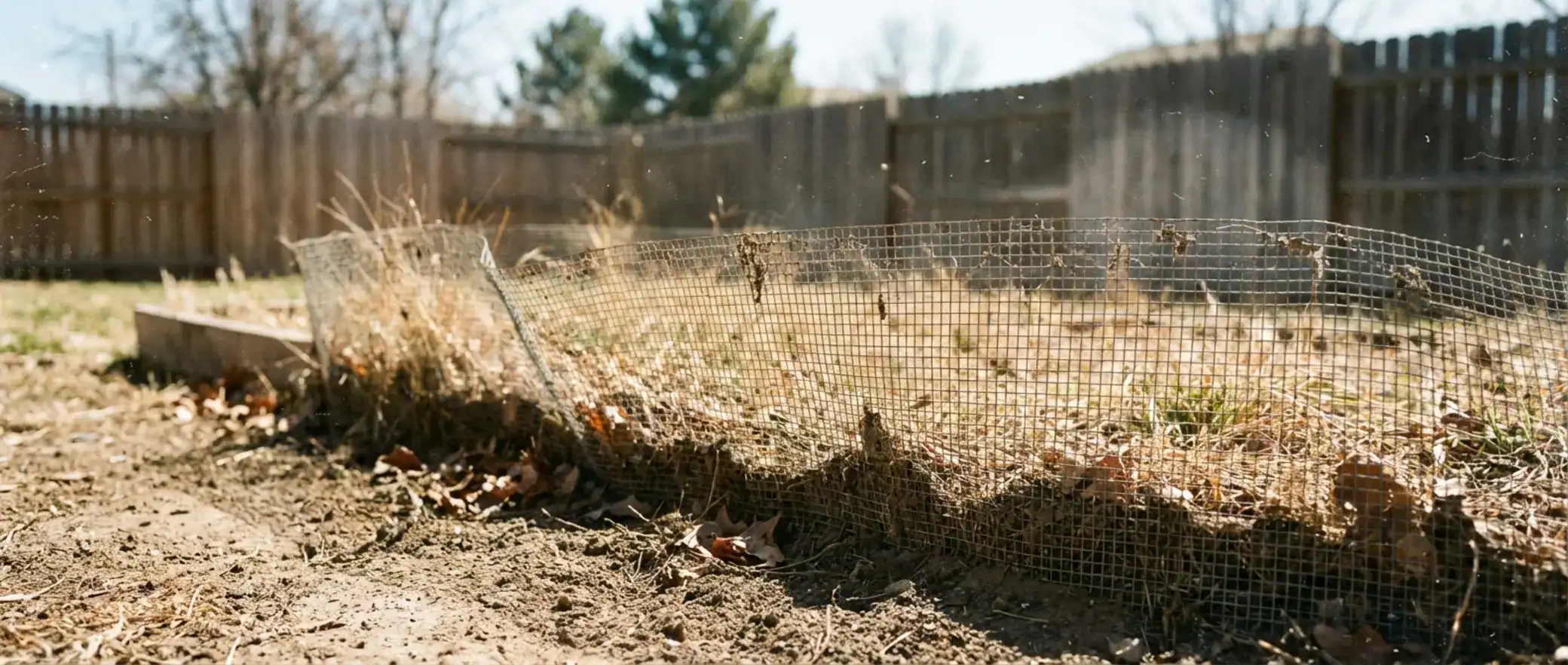
- Seal all secondary holes first. Use 16-gauge galvanized steel mesh to cover every other possible entry point. If you don’t do this, the raccoon will simply find another way back in.
- Mount the door. Screw the one-way door directly over the primary entry hole. Ensure you are using heavy-duty screws that can withstand the weight of a 30-pound animal pushing against the frame.
- Use the “Wadded Newspaper Trick.” Stuff a ball of newspaper into the door’s exit. If the paper is pushed out the next morning, you know the raccoon has exited. If the paper remains for three consecutive nights, the attic is likely empty.
- Monitor for activity. Listen closely for any scratching or muffled sounds. If you hear nothing for 72 hours, it is safe to remove the door and perform a permanent repair.
Raccoon removal techniques using these doors are highly effective during the fall and winter. However, you must never use a one-way door during the spring “baby season” (February through May). If you lock a mother out while her immobile kits are inside, she will destroy your roof trying to get back to them.
Natural Eviction Fluids for Raccoons
Understanding raccoon eviction fluids is essential for any homeowner facing a maternity colony. These fluids are not simple repellents like peppermint oil or ammonia. Actually, professional-grade eviction fluid is made from the urine and glandular secretions of a dominant male (boar) raccoon.
In the wild, male raccoons are a threat to kits that are not their own. A nursing mother is hardwired to fear the scent of a male. When she smells this fluid, she believes a predator has found her nursery. In 75% of cases involving nursing mothers, she will safely relocate her kits within 48 to 72 hours.
To use these eco-friendly products for wildlife eviction, apply the fluid to a few tennis balls and toss them near the nesting site. You can also soak rags in the fluid and place them near the entry hole. This is the only effective raccoon repellent for attic use because it targets a biological survival instinct rather than a minor scent annoyance. Do not waste money on ultrasonic deterrent solutions; the FTC has explicitly warned that these devices are fraudulent and do not work.
Raccoon Eviction Timing Matrix
The success of your removal effort depends entirely on the calendar. Following a specific timeline ensures you do not inadvertently cause an “orphan situation.”
| Month Range | Raccoon Behavior | Recommended Method |
| January – February | Winter Torpor / Mating | One-Way Door (Verify no kits) |
| March – May | Baby Season (Peak Kits) | Eviction Fluids ONLY |
| June – August | Mobile Juveniles | Eviction Fluids + One-Way Door |
| September – December | Foraging / Winter Denning | One-Way Door |
During the cold snaps of early 2026, many raccoons entered “torpor,” staying inside for days at a time. Because of this, you must be patient during winter months and monitor the entry hole for longer periods before sealing it up.
Raccoon Prevention Tips and Exclusion Techniques
Once you have successfully evicted the intruders, you must focus on long-term solutions for raccoon-proofing your home. Raccoons have excellent memories and will return to a successful den site year after year if it isn’t properly secured.
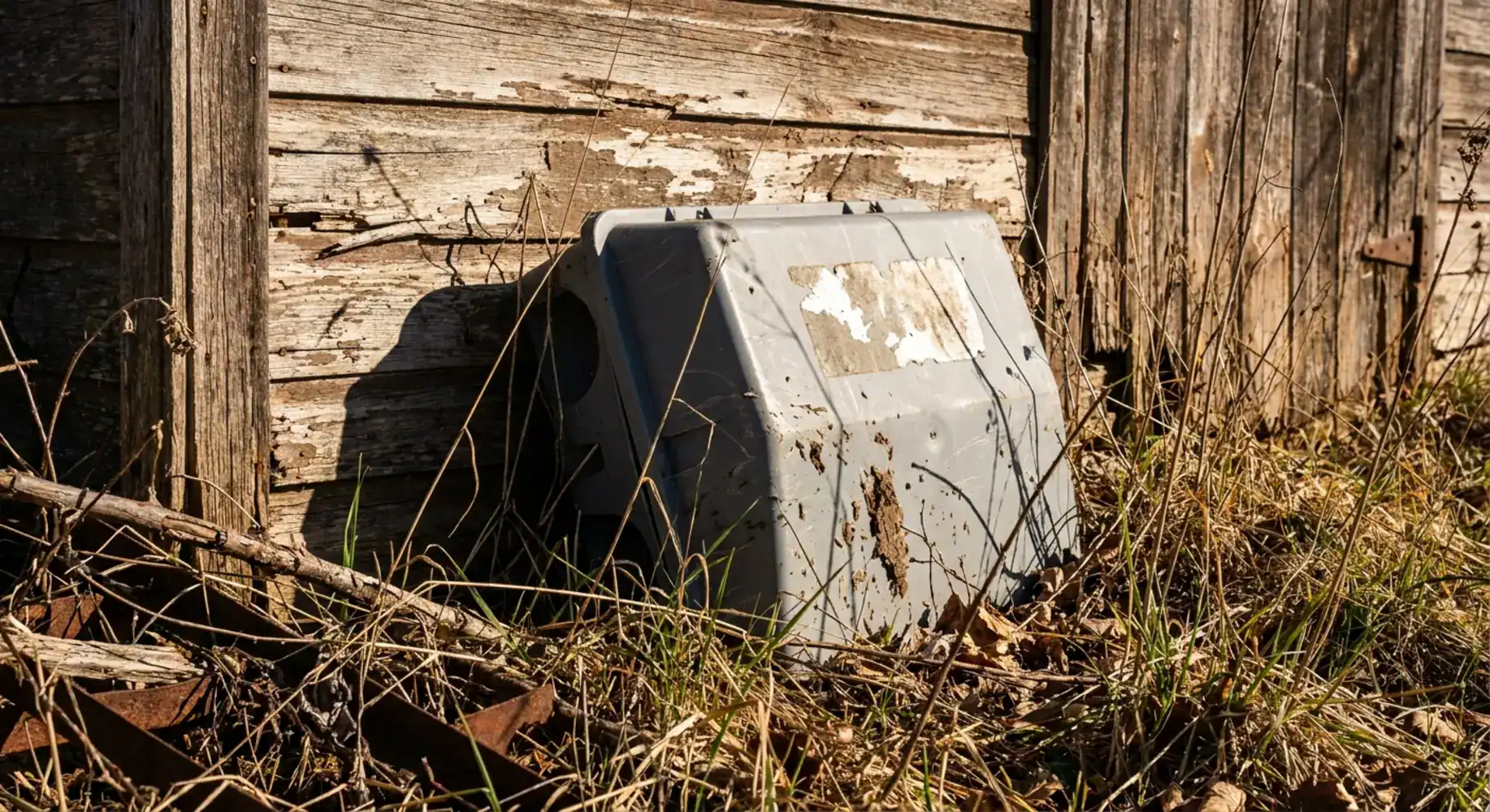
✓ Secure your roof vents. Replace plastic vent covers with heavy-duty metal cages. Raccoons can chew through plastic in minutes.
✓ Reinforce soffit intersections. This is the most common entry point. Use 16-gauge galvanized steel mesh to reinforce the areas where the roof meets the eaves.
✓ Trim overhanging branches. Keep trees at least 10 feet away from your roofline to eliminate easy “bridges” for wildlife.
✓ Manage attractants. Secure your trash cans with bungee cords and never leave pet food outside overnight.
✓ Install chimney caps. An uncapped chimney is essentially a hollow tree waiting for a raccoon to move in.
Raccoon exclusion techniques are about creating a “hardened” structure. If a raccoon finds that every potential entry point is reinforced with steel, it will move on to an easier target. These preventative measures are much cheaper than paying for attic animal control services every spring.
Legal Considerations for Raccoon Removal
Before you start, you must understand the legal considerations for raccoon removal. Laws vary significantly by state and province. In many areas, it is illegal to trap and relocate a raccoon because it is considered a rabies vector species. Relocated raccoons often die within weeks due to territorial disputes or inability to find food in an unfamiliar environment.
Actually, in states like California and New York, you may be required to either release the animal on the same property or euthanize it. This makes humane eviction methods like one-way doors even more attractive, as they allow the animal to remain in its home territory without staying in your attic. Always check with your local wildlife agency to see if a permit is required for any form of trapping or structural exclusion.
Costs Associated with Professional Raccoon Removal Services
Professional raccoon removal is an investment in your home’s integrity. While DIY methods might seem cheaper, the risk of a $5,000 insulation replacement makes professional help look like a bargain.
- Initial Inspection: $150 – $300. A pro uses thermal imaging cameras to find kits hidden in the walls.
- Eviction and Exclusion: $300 – $700. This covers the installation of one-way doors and sealing primary entry points.
- Attic Sanitation: $500 – $1,500. This involves removing feces and fogging the attic with an enzyme-based cleaner to kill roundworm eggs and eliminate pheromones.
- Full Insulation Replacement: $2,000 – $5,000+. This is only necessary if the raccoon has established multiple latrines and destroyed the R-value of your insulation.
Effective raccoon deterrents for homeowners should include a 1-year warranty on all exclusion work. If a pro won’t guarantee that the raccoons stay out, they aren’t the right person for the job.
Common Questions About Humane Raccoon Removal: One-Way Doors & Eviction Fluids
What is raccoon eviction fluid made of?
Professional raccoon eviction fluid is primarily composed of the urine and glandular secretions of a dominant male (boar) raccoon. It works by mimicking the presence of a territorial male, which triggers a mother’s instinct to move her kits away from a potential predator. It is most effective during the spring nesting season.
How long does it take for a one-way door to work?
In most cases, a one-way raccoon door will successfully evict an adult raccoon within 24 to 72 hours. Because raccoons must leave the attic every night to find water and food, they will naturally pass through the door and find themselves locked out. However, you should monitor the door for at least a week during winter months when activity levels are lower.
Is it legal to trap and relocate a raccoon?
In many jurisdictions, raccoon trapping & relocation is strictly regulated or prohibited. For instance, many states require you to release the animal within 100 yards of the capture site or have it euthanized by a vet. This is because relocation often spreads diseases like rabies and has a 99% failure rate for the animal’s survival.
Does bleach kill raccoon roundworm eggs?
No, bleach does not kill raccoon roundworm eggs (Baylisascaris procyonis). Bleach only removes the sticky outer coating of the eggs, potentially making them easier to wash away, but it does not destroy them. The only effective ways to kill these eggs are through extreme heat, such as a propane torch or boiling lye, which is why professional cleanup is recommended.
Will a mother raccoon come back for her babies?
Yes, a mother raccoon has a very strong maternal instinct and will return multiple times to retrieve her young. If she is locked out by a one-way door, she may cause significant structural damage to your roof to get back inside. This is why it is vital to use eviction fluids first to encourage her to move the kits herself before installing mechanical doors.
References & Expert Sources
- Humane removal of raccoons in attics
- How Raccoon Eviction Fluid Works
- CDC: Baylisascaris (Raccoon Roundworm) Information
- California Department of Fish and Wildlife: Keep Me Wild
- Skedaddle Humane Wildlife Control: One-Way Door Risks
- Internet Center for Wildlife Damage Management: Raccoon Control
- California Wildlife: Raccoons Conflicts
- SPCB Consumer Information
- National Wildlife Control Operators Association (NWCOA)
- Connecticut DEEP: Raccoon Fact Sheet
Final Thoughts
Solving a raccoon infestation is not about winning a fight; it is about outsmarting a very clever animal. By choosing to remove raccoons humanely, you protect your home from the structural and biological fallout of dead animals in the walls. Utilizing the science of male pheromones through eviction fluids and the mechanical precision of one-way doors allows you to get rid of raccoons attic inhabitants safely and permanently. Remember that timing is everything; respecting the baby season and the animal’s biology will save you thousands of dollars in repairs. Take a walk around your home today and look for those vulnerable soffits. Prevention is the only true way to ensure your nights remain quiet and your attic stays empty.