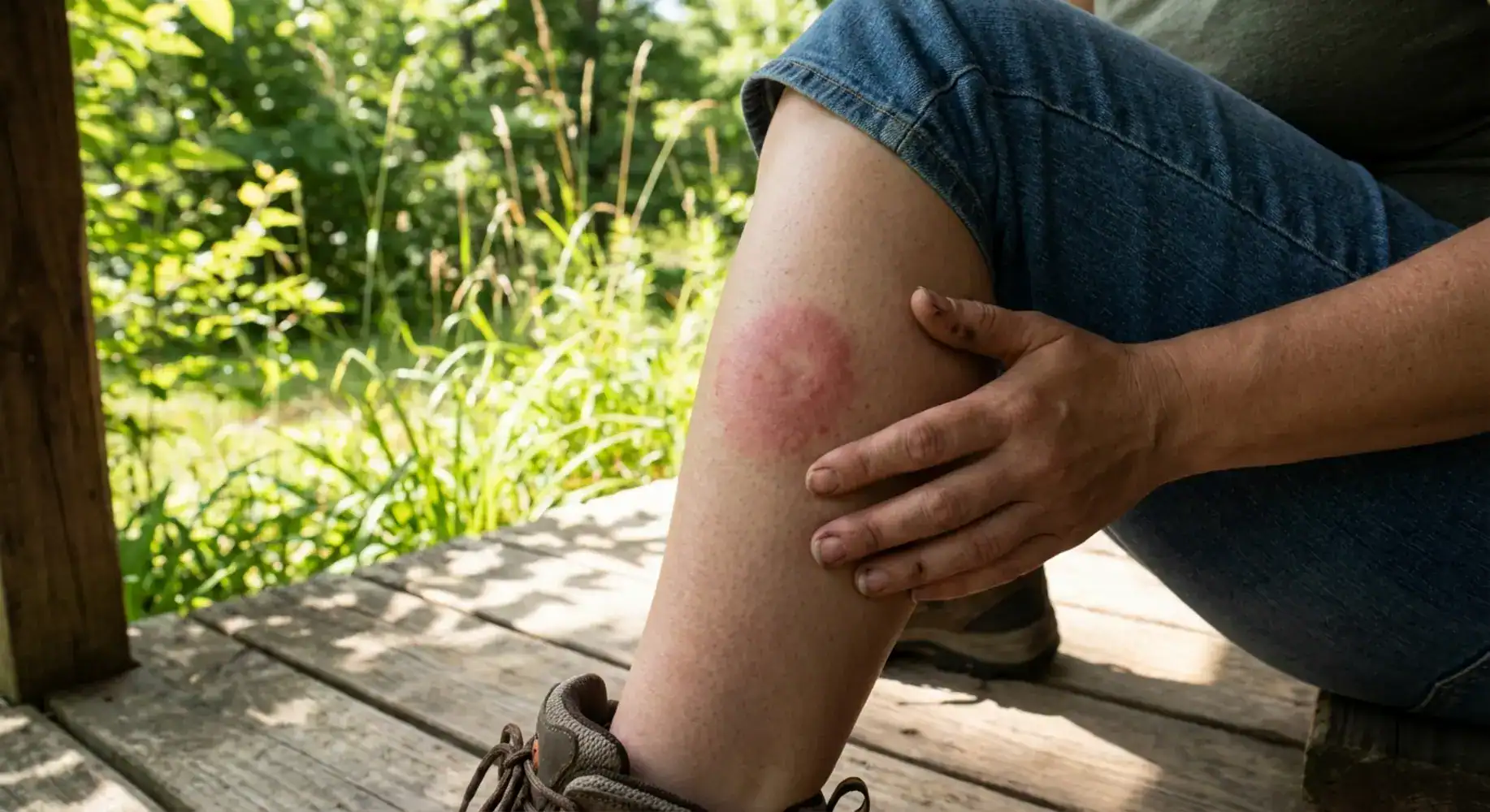
Imagine waking up with a nagging fatigue that feels like more than just a late night, only to spot a faint, expanding red circle on your leg. Because lyme disease symptoms can mimic a dozen other illnesses, the difference between a quick recovery and a lifelong battle depends entirely on how fast you recognize the warning signs.
When should you see a doctor for lyme disease symptoms?
You should see a doctor immediately if you notice an expanding red rash over two inches wide or experience “summer flu” symptoms like fever, chills, and muscle aches after being in wooded areas. Early medical intervention is the only way to prevent the Borrelia burgdorferi bacteria from spreading to your joints, heart, and nervous system.
Understanding the Hidden Threat of Lyme Disease Symptoms
Lyme disease has become a massive public health challenge. Specifically, the CDC now estimates that over 476,000 people are diagnosed and treated for this infection every year in the United States. This represents a significant increase in lyme disease incidence compared to just a decade ago. Warmer winters have allowed the black-legged tick, or Ixodes scapularis, to expand its habitat into new regions.
The emotional toll of these symptoms is often as heavy as the physical burden. Many patients describe a sense of “medical gaslighting” when their early indicators are dismissed as a simple virus. Because lyme disease symptoms are so diverse, understanding the importance of early detection is your best defense against long-term complications.
This illness is caused by the bacterium Borrelia burgdorferi. It enters your bloodstream through the bite of an infected tick. These ticks are often no larger than a poppy seed. Consequently, most people do not even realize they have been bitten. This makes the appearance of physical symptoms your primary warning signal.
Early Lyme Disease Symptoms: The 3 to 30 Day Window
The first signs of infection typically appear within a month of exposure. This period is known as the early localized stage. During this time, the bacteria are still concentrated near the site of the bite. If you can catch the infection now, your chances of a full recovery are nearly 100 percent.
The hallmark sign of early lyme disease symptoms is the erythema migrans (EM) rash. This rash appears in about 70 to 80 percent of infected individuals. However, it does not always look like the classic bullseye you see in textbooks. Actually, many rashes are solid red or even bluish.
Along with the rash, you may experience systemic “flu-like” symptoms. This is often confusing because Lyme season peaks in the summer when the flu is rare. If you feel sudden fatigue, fever, or muscle aches in June or July, you should consider it a major lyme disease indicator.
| Symptom Type | Typical Manifestation | Timeline Post-Bite |
| EM Rash | Expanding red patch (>2 inches) | 3-30 Days |
| Systemic | Fatigue, Chills, Fever | 3-14 Days |
| Neurological | Headache, Stiff Neck | 7-30 Days |
| Lymphatic | Swollen Lymph Nodes | 7-21 Days |
Identifying the Lyme Disease Rash: Beyond the Bullseye
One of the most common misconceptions about lyme disease symptoms is that the rash always looks like a target. In reality, the “bullseye” pattern only occurs in about 20 percent of cases. For the other 80 percent, the rash may be a solid pink or red oval that gradually expands.
The lyme disease rash appearance can also vary significantly based on skin tone. This is a critical point that many medical guides overlook. On darker skin, the rash may not look red at all. Instead, it might appear like a bruised area, a purple patch, or a dark brown hyperpigmented circle. If you are looking for a bright red ring on deep skin tones, you might miss the infection entirely.
Is a rash always present with lyme disease? The answer is a firm no. Between 20 and 30 percent of patients never develop any skin reaction. For these individuals, the infection is much harder to catch. This is why you must pay close attention to other early signs of lyme disease, such as unexplained joint stiffness or profound exhaustion.
Lyme Disease Symptoms in Adults vs. Children
Lyme disease does not affect everyone the same way. A groundbreaking 2026 study from Johns Hopkins revealed that lyme disease symptoms in adults differ drastically from those in children. Understanding these variations can help parents and caregivers seek help faster.
In children, the signs of lyme disease are often behavioral. A child might become unusually irritable, have trouble concentrating in school, or complain of a “tummy ache.” Headaches are also particularly prevalent in pediatric cases. Because children spend more time playing in the grass, they are at a higher risk for multiple bites.
Lyme disease symptoms in adults tend to be more physical. Adults often report severe joint pain, particularly in the knees. However, the 2026 research highlighted fascinating gender differences. Women are 17 percent more likely to experience light sensitivity and vomiting. Men, on the other hand, report severe sleep disruption in nearly 40 percent of cases.
✓ Children often present with mood changes or “brain fog” rather than joint pain.
✓ Adults are more likely to experience localized lyme arthritis in large joints.
✓ Females show higher rates of heart palpitations during the early stages.
✓ Males often experience more intense neurological headaches and neck stiffness.
Chronic and Acute Lyme Disease Symptoms: Understanding Progression
If the infection is not treated during the first few weeks, it enters the disseminated stages. This is where the lyme disease stage symptoms become much more severe. The bacteria move through the bloodstream to colonize distant organs and tissues.
Acute lyme disease symptoms occur in the first few months. This may include “Stage 2” signs like facial nerve palsy, also known as Bell’s palsy. This causes one side of the face to droop. You might also experience Lyme carditis, where the bacteria interfere with the electrical signals of your heart. This can cause fainting or shortness of breath.
Chronic lyme disease symptoms, often referred to as Post-Treatment Lyme Disease Syndrome (PTLDS), occur months or years later. Patients often struggle with debilitating fatigue, chronic joint swelling, and cognitive impairment. There is a lot of debate regarding “chronic Lyme,” but the medical community generally agrees that the lingering immune response can cause long-term damage even after the bacteria are gone.
When to See a Doctor for Lyme Disease Symptoms: The Triage Protocol
Knowing when to seek medical attention for lyme disease can save you from months of suffering. Most people hesitate because they don’t want to overreact to a simple bug bite. However, with Lyme, it is always better to be safe. Use this triage protocol to decide your next step.
- The “Wait and Watch” Phase: If you found a tick that was attached for less than 24 hours and you have no symptoms, you can usually wait. Monitor the site for 30 days.
- The Primary Care Visit: If the tick was engorged (fat) or attached for more than 24 hours, call your doctor. In endemic areas, they may prescribe a single prophylactic dose of doxycycline to prevent the infection before it starts.
- The Urgent Care Visit: Go to urgent care immediately if you see an expanding rash or have a high fever with a stiff neck. Do not wait for a scheduled appointment.
- The Emergency Room: Seek ER care if you experience a drooping face, severe chest pain, or a heart rate that feels irregular. These are signs of neurological or cardiac involvement.
What should I do if I think I have lyme disease but my test was negative? This is a common problem. Standard blood tests look for antibodies, which can take four to six weeks to develop. If you test too early, you will get a false negative. If your symptoms are clear, a lyme-literate doctor may treat you based on clinical signs alone.
Modern Lyme Disease Diagnosis Symptoms and Testing in 2026
The diagnostic landscape has changed significantly in the last year. For decades, the medical community relied on “two-tier testing” which was notoriously inaccurate during the early stages. Specifically, the old Western Blot tests often missed up to 50 percent of early infections.
In 2026, new FDA-cleared tests have reached the market. The IGeneX iDart ImmunoBlot is a major advancement. It includes specific protein bands that were previously omitted, making it much more sensitive to different strains of Borrelia. Additionally, a new tool called “EC Pocket Lyme” uses microneedles to test skin fluid directly at the bite site. This can detect bacterial DNA before your body even produces antibodies.
The role of blood tests in diagnosing lyme disease is shifting from “ruling it out” to “confirming the strain.” If you are experiencing symptoms of lyme infection, ask your doctor about these modern immunoblot options. Relying on outdated testing methods is one of the biggest reasons for delayed treatment.
Lyme Disease Symptoms and Treatment: What to Expect
Once you receive a diagnosis, the standard treatment is a course of oral antibiotics. Doxycycline is the most common choice for adults and older children. For younger children or pregnant women, doctors usually prescribe amoxicillin.
The duration of treatment typically ranges from 14 to 21 days. Most people begin to feel better within the first week. However, it is vital to finish the entire prescription. Stopping early can allow the bacteria to survive in “persister” forms, which may contribute to recurring lyme disease-related symptoms.
What happens if you still feel sick after the antibiotics? This is a reality for about 10 to 20 percent of patients. This is known as PTLDS. It is not necessarily an active infection, but rather a state of systemic inflammation. Treatment for this stage often involves physical therapy, anti-inflammatory diets, and symptom management rather than more antibiotics.
- Generic Doxycycline usually costs between $15 and $40 with insurance.
- Most patients return to full activity within three to four weeks.
- Early treatment reduces the risk of permanent joint damage by over 90 percent.
Preventive Measures for Avoiding Lyme Disease
The best way to handle tick-borne disease symptoms is to prevent the bite in the first place. Ticks do not jump or fly. Instead, they wait on the tips of tall grass or shrubs. When you brush past them, they latch onto your clothing and crawl upward looking for skin.
Proper clothing is your first line of defense. If you are hiking, tuck your pants into your socks. It looks silly, but it creates a physical barrier. You should also treat your outdoor gear with permethrin, an insecticide that kills ticks on contact. On your skin, use a repellent containing at least 20 percent DEET or Picaridin.
After coming indoors, perform a thorough tick check. Pay close attention to warm, dark areas like the armpits, behind the knees, and the scalp. Taking a hot shower within two hours of being outside has been shown to significantly reduce the risk of infection. This helps wash off any ticks that have not yet attached.
Common Questions About Lyme Disease Symptoms: When to See a Doctor
How long after a tick bite do lyme symptoms appear?
Early signs of lyme disease usually emerge between 3 and 30 days after the bite. Most patients notice the EM rash or fever within the first week. However, the bacteria can sometimes remain dormant, leading people to wonder can lyme disease symptoms appear years later. While the acute infection starts early, the late-stage symptoms like arthritis may not surface for months.
Does every tick carry Lyme disease?
No, only black-legged ticks (deer ticks) carry the Borrelia bacteria. Even then, not every deer tick is infected. In endemic areas like the Northeast US, roughly 20 to 50 percent of ticks may carry the pathogen. This is why testing the tick itself is often discouraged by the CDC. A positive tick does not always mean a positive human.
How is lyme disease diagnosed without a rash?
When a rash is absent, doctors rely on clinical manifestations and blood testing. They will look for a combination of summer flu symptoms and potential exposure to tick habitats. In 2026, advanced immunoblotting has made it easier to identify the infection through blood markers even when the skin remains clear.
Can Lyme disease mimic other illnesses?
Lyme is often called “The Great Imitator.” Its symptoms can look exactly like fibromyalgia, chronic fatigue syndrome, multiple sclerosis, or even rheumatoid arthritis. This is why understanding the progression of lyme disease symptoms is so important. If your joint pain moves from one joint to another, it is a strong indicator of Lyme rather than standard arthritis.
What is the difference between Lyme and other tick-borne illnesses?
Ticks can carry multiple pathogens simultaneously, such as Anaplasma or Babesia. While Lyme is known for its expanding rash, Babesia often causes a high fever and a specific type of anemia. Anaplasmosis typically causes a severe headache and low white blood cell counts. A lyme-literate doctor will often test for these “co-infections” if your symptoms are unusually severe.
References & Expert Sources
- CDC Lyme Disease Symptoms
- Johns Hopkins Lyme Research Center Study 2026
- Mayo Clinic Diagnosis and Treatment Protocols
- Harvard Health: Non-Rash Lyme Symptoms
- IGeneX iDart Testing Technology Report
- FDA Clears New Lyme Test Indications
- Lyme vaccine Phase 3 trial results
- CDC Lyme Disease Signs
- Yale Medicine: Pediatric Lyme Disease Manifestations
- Cleveland Clinic: Living with Lyme Disease
Final Thoughts on Early Signs of Lyme Disease
Understanding lyme disease symptoms is not about living in fear of the outdoors. It is about being an informed advocate for your own health. The medical landscape is changing rapidly. With new 2026 diagnostic tools and a vaccine on the horizon, the outlook for managing this disease has never been better.
If you suspect you have been exposed, do not wait for the “perfect” bullseye rash to appear. Modern research proves that the infection is often invisible on the surface while it works deep within the body. Early detection remains the most effective tool we have. By staying vigilant and acting quickly, you can ensure that a simple tick bite remains a minor footnote rather than a life-altering event. Be proactive, check for ticks daily, and never hesitate to consult a professional if your body tells you something is wrong.