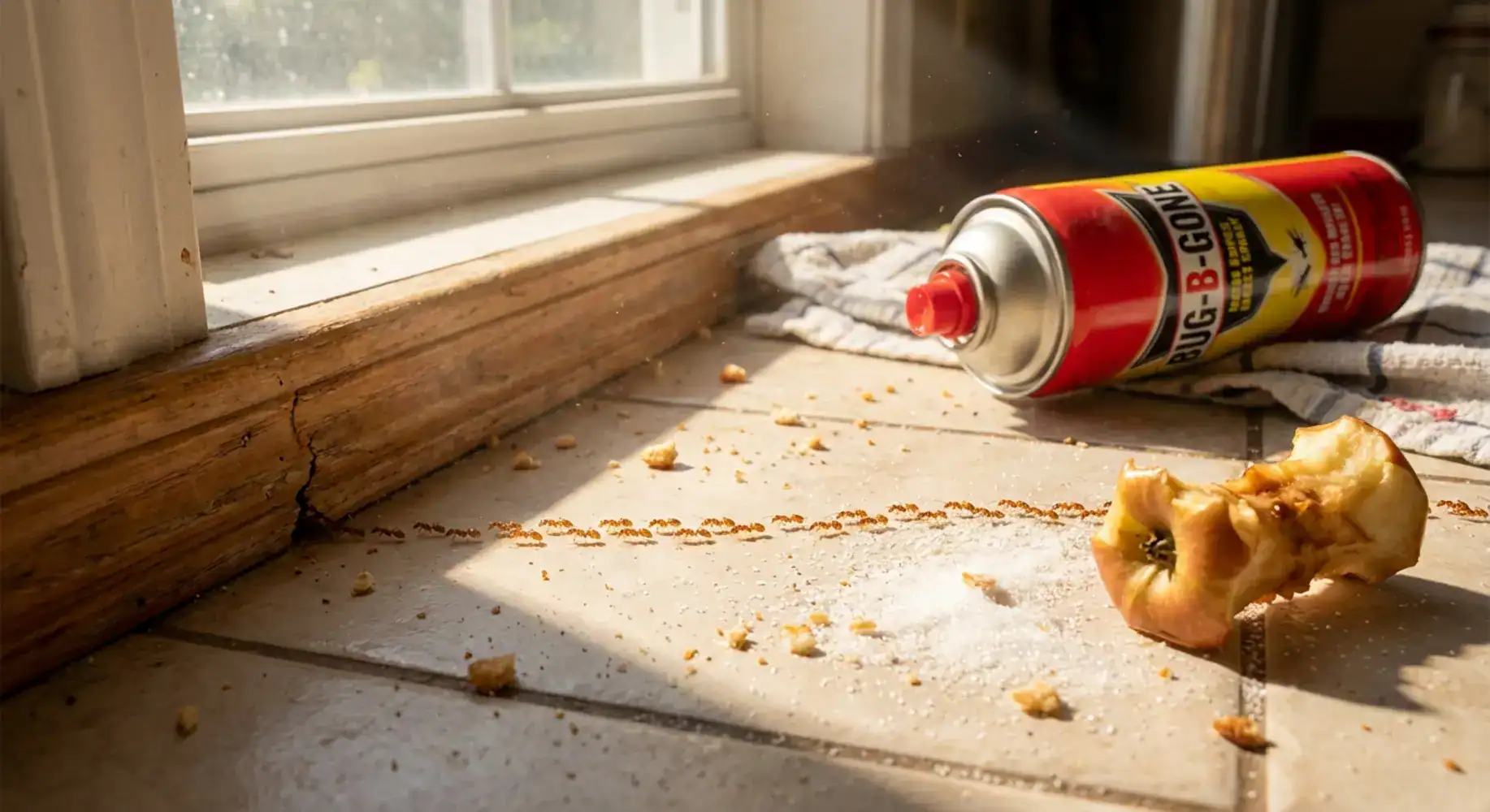
You see a line of tiny, golden ants marching across your kitchen counter and your first instinct is to grab a can of bug spray. It’s a satisfying, immediate solution, but what if that spray is not just killing a few ants, but actually cloning the entire colony? This is the counterintuitive and destructive reality of pharaoh ant budding, a survival mechanism that turns your simple ant problem into a full-blown, multi-nest infestation that can plague your home for months or even years.
Why should you never spray Pharaoh ants?
You should never spray Pharaoh ants because it triggers a defense mechanism called “budding,” where the colony fractures into multiple smaller, self-sufficient colonies. This process, also known as colony splitting, doesn’t eliminate the infestation but instead spreads it throughout your home, creating numerous satellite nests that are much harder to eradicate.
The Unseen Enemy: Understanding Pharaoh Ant Behavior
Before we explore the disastrous effects of sprays, it’s crucial to know your adversary. Pharaoh ants (Monomorium pharaonis) are not your average sugar ants. They are a notorious indoor pest, particularly in sensitive environments like hospitals, nursing homes, and apartment buildings. Correctly identifying them is the first step in effective control.
How to Identify Pharaoh Ants in Your Home
- Size: They are incredibly small, typically measuring only 1.5 to 2 millimeters in length-about the size of a pinhead.
- Color: Their bodies range from a pale yellow or light brown to a reddish-gold color, with a slightly darker abdomen. This often leads to the common misidentification of Pharaoh ants as “sugar ants.”
- Behavior: They travel in well-defined trails, often linking nests to food and water sources. You might see these trails along baseboards, countertops, and even inside electrical outlets.
Unlike many ant species that build mounds outdoors, the behavioral patterns of Pharaoh ants are geared toward indoor survival. They require high levels of moisture and warmth to thrive, establishing nests in hidden, inaccessible locations. Their ideal environment is a cozy 80-86°F with 80% humidity, which is why they are frequently found in:
- Wall voids and behind baseboards.
- Behind kitchen appliances like refrigerators and dishwashers.
- Inside curtain rods, light fixtures, and electrical switch boxes.
- Near hot water heaters and pipes.
A single colony isn’t just one nest. It is a sprawling, interconnected network that can contain up to 300,000 worker ants and hundreds of egg-laying queens. This polygynous (multi-queen) structure is the key to their explosive reproductive strategy.
The “Budding” Effect: How One Colony Becomes Twenty
Now for the central issue: what is ant budding? Most ant species reproduce through swarming, where winged males and new queens leave the nest to mate and start new colonies elsewhere. Pharaoh ants, however, rarely swarm. Their primary method of colony reproduction is budding.
Budding, or colony fragmentation, is a survival tactic triggered by stress or disturbance. When the colony perceives a threat-like the sudden death of workers from a repellent insecticide spray-it doesn’t just retreat; it multiplies.
Here’s exactly what causes Pharaoh ants to bud:
- A Threat is Detected: A repellent spray kills foraging workers far from the nest. The chemical barrier also cuts them off from their food source.
- The Colony Fractures: In response, one or more queens will take a contingent of workers, larvae, and eggs and move to a new, safe location.
- New Nests are Formed: These small groups, or “buds,” establish new, fully functional satellite colonies.
This isn’t a minor split. Research from Purdue University has shown that a viable new colony can form from a fragment as small as 469 individuals, including workers, eggs, larvae, and pupae. One spray can turn a single, manageable nest into dozens of smaller nests hidden throughout your walls, floors, and ceilings. This is how a small kitchen problem rapidly escalates into a building-wide pharaoh ant infestation.
The High Risks of Using Sprays on Pharaoh Ants
Using an over-the-counter aerosol spray on a Pharaoh ant trail is one of the worst mistakes a homeowner can make. The immediate satisfaction of seeing a few dozen ants die is masking a much larger, catastrophic failure in pest control. Here’s a breakdown of the dangers.
- You’re Only Killing the Messengers: The ants you see foraging represent only 5-10% of the total colony. The queens and the vast majority of workers remain safely hidden in the nest, completely unaffected by the spray.
- Repellent Sprays Scatter the Problem: Most common ant sprays contain pyrethroids, which are highly repellent to ants. While this kills on contact, it also creates a chemical barrier that foraging ants won’t cross. This panics the colony, triggering the budding effect and scattering them into new areas of your home.
- You Create Untraceable Nests: Before spraying, you had a visible ant trail-a roadmap leading back to the nest. After spraying and budding, you now have multiple new colonies with new, harder-to-find trails. You’ve effectively lost your primary clue for targeted treatment.
- It Encourages Pesticide Resistance in Ants: Over time, surviving fragments of colonies can develop resistance to certain chemicals, making future control efforts even more challenging.
To fully understand the impact of budding on ant eradication efforts, consider this direct comparison of chemical vs. natural pest control methods.
| Treatment Method | Immediate Outcome | Long-Term Outcome |
|---|---|---|
| Repellent Sprays (e.g., Raid, Ortho) | Kills a small percentage of visible worker ants. | Triggers budding, creating multiple new colonies. Spreads the infestation and makes it harder to control. |
| Slow-Acting Baits (e.g., Gels, Stations) | Ants remain alive, carrying the bait back to the nest. | Bait is shared with queens and larvae, eliminating the entire colony from within over several weeks. Prevents budding. |
The Smart Solution: Effective Baiting Strategies
If spraying is off the table, what is the best way to manage Pharaoh ants? The answer is strategic baiting. This method uses the ants’ own social behavior against them. Foraging ants find the bait, identify it as a food source, and carry it back to share with the rest of the colony, including the queens.
The key is using a slow-acting, non-repellent bait. The poison must be slow enough to allow the foraging worker to make several trips back to the nest, ensuring widespread distribution before it dies.
Types of Baits for Pharaoh Ants
Pharaoh ants have notoriously fickle appetites that can cycle between sweets, proteins, and fats. Because of this, a successful baiting program often requires offering multiple bait types.
- Gel Baits (Sweet-Based): Products like Advion Ant Gel Bait or Maxforce FC Ant Bait are highly effective. They should be applied as small dabs (the size of a pea) directly on the ant trails, but out of reach of children and pets.
- Protein/Grease Baits: These often come in granular form or within bait stations. They are crucial for when the colony’s nutritional needs shift toward protein, which is essential for queen egg production.
- Bait Stations: These are enclosed plastic containers that hold the bait, making them a safer option for households with pets or small children. Products like Dual Choice Ant Bait Stations offer both sweet and protein options.
For successful ant control without pesticides that cause budding, follow these application tips:
- Do Not Disturb the Trails: Place baits next to the ant trails, not directly on them. Wiping away the trails or killing the foraging ants will prevent them from taking the bait back to the nest.
- Be Patient: Baiting is not an instant fix. It can take several weeks or even a couple of months to achieve total colony collapse, especially for a large infestation. You may see an increase in ant activity initially as more foragers are recruited to the new “food source.” This is a good sign.
- Replenish the Bait: Do not let the bait stations or gel placements run dry. Check them regularly and reapply as needed to ensure a continuous supply for the colony.
Eco-Friendly and Non-Chemical Control Methods
For those seeking eco-friendly ant extermination methods, the most powerful tool is not a natural repellent but a specific class of pesticide called Insect Growth Regulators (IGRs).
Insect Growth Regulators (IGRs)
IGRs are one of the most effective and targeted long-term solutions for ant infestations. Products containing the active ingredient (S)-methoprene don’t kill the adult ants directly. Instead, they act as a form of birth control for the colony.
- It sterilizes the queens, preventing them from laying viable eggs.
- It disrupts the normal development of larvae, preventing them from maturing into reproductive adults.
The colony slowly dies off from old age without any new members to replace them. While this non-lethal pest control method can take four to six months for full eradication, it is highly effective and bypasses the risk of budding entirely.
What About Natural Remedies?
Many DIY websites promote natural solutions like vinegar, essential oils, or diatomaceous earth. While these can deter or kill some individual ants on contact, they are largely ineffective against a Pharaoh ant infestation. Because they act as repellents, they can inadvertently cause the same ants splitting colonies problem as chemical sprays.
The Gold Standard: Integrated Pest Management (IPM)
The most reliable way to achieve complete and lasting control is through a holistic approach known as Integrated Pest Management (IPM). IPM combines monitoring, sanitation, and targeted, low-risk treatments to manage pests effectively. It’s a proactive strategy, not a reactive one.
An IPM Checklist for Your Home
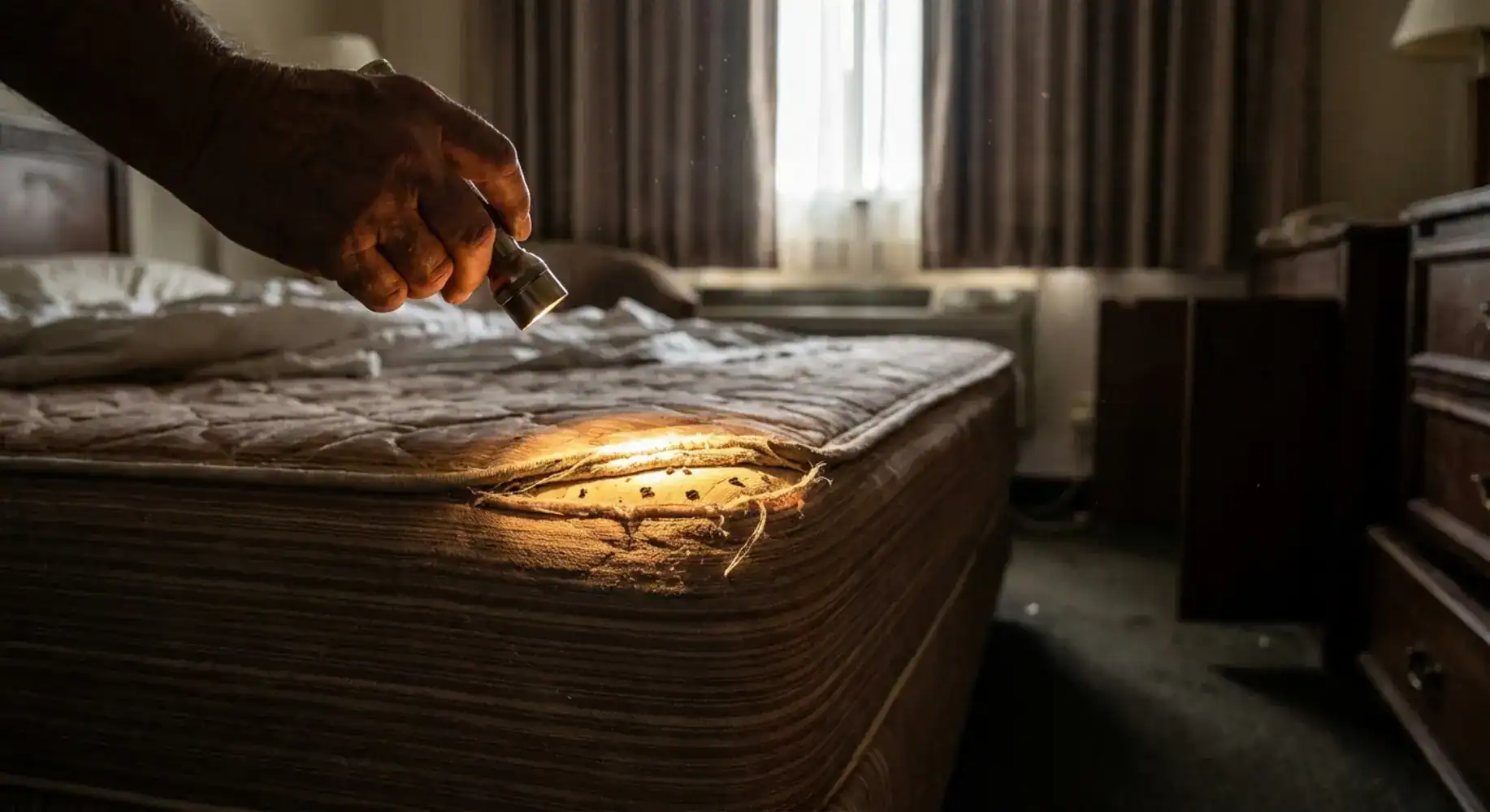
✓ Inspection: Regularly check common nesting areas (kitchen, bathrooms, laundry rooms) for signs of ant trails. Use a flashlight to inspect dark voids and under appliances.
✓ Sanitation: This is non-negotiable.
- Store all food in airtight containers.
- Wipe up crumbs and spills immediately.
- Rinse out food and beverage containers before recycling.
- Take out the trash daily.
- Don’t leave pet food out overnight.
✓ Moisture Control: Fix leaky faucets, pipes, and drains. Pharaoh ants need water to survive, so eliminating moisture sources makes your home less attractive.
✓ Exclusion: Seal cracks, crevices, and utility entry points with caulk to block potential entryways.
✓ Targeted Treatment: Use slow-acting baits and IGRs as your primary treatment method. Avoid repellent sprays at all costs.
✓ Professional Collaboration: For persistent or large-scale infestations, especially in apartments or condos, professional help is essential. A pest management professional has access to a wider range of commercial-grade baits and can coordinate a building-wide strategy.
From the Trenches: Customer Experiences with Budding
The internet is filled with cautionary tales from people who learned about the budding effect in ants the hard way. These personal stories highlight the frustration and futility of using the wrong approach.
“We had a small trail in the kitchen. I sprayed it with Ortho Home Defense. The next week, they were in the bathroom. Sprayed there. Now they’re in three bedrooms and coming out of the electrical sockets. It’s a hospital-grade infestation that has spread to five rooms because I used a spray.”
These customer testimonials on ant control strategies consistently share a common theme: spraying led to a much worse, more widespread problem. Conversely, those who switch to baiting report slow but steady success.
After about a week, the numbers started dropping. Two weeks later, they were gone. Completely gone. Bait is the only way.”
Pharaoh Ant Myths vs. Scientific Facts
Misinformation is rampant when it comes to pest control. Let’s debunk some common myths and replace them with facts to help you make informed decisions.
Myths Versus Facts About Pharaoh Ants and Treatments
Myth: Spraying an ant trail will stop the ants from coming in.
- Fact: For Pharaoh ants, spraying is a direct trigger for pharaoh ant budding. It kills a few workers but forces the colony to split into multiple new nests, making the infestation significantly worse.
Myth: All tiny, light-colored ants are just “sugar ants” and can be treated the same way.
- Fact: This is one of the most dangerous common misidentifications of Pharaoh ants. While they are attracted to sweets, their unique budding behavior requires a completely different treatment protocol than other common household ants.
Myth: If I stop seeing ants, the problem is solved.
- Fact: A temporary disappearance of ants, especially after spraying, often means the colony has budded and moved to a new, hidden location. The infestation is regrouping, not gone.
Myth: DIY home remedies like boric acid are safe methods to get rid of Pharaoh ants.
- Fact: While boric acid is the active ingredient in some effective commercial baits, homemade concoctions are risky. If the concentration is too high, it will kill workers before they can share it, acting like a repellent spray. If it’s too low, it will be ineffective. Professional baits are scientifically formulated for optimal results.
Common Questions About The “Budding” Effect: Why You Should Never Spray Ants
How does ant budding affect pest control?
Ant budding fundamentally complicates pest control by transforming a single, localized colony into multiple, dispersed satellite colonies. This makes it impossible to target a central nest, requiring a much more extensive and patient baiting strategy to reach all the new queens and workers spread throughout the structure.
How do I prevent ant budding?
The single most important way to prevent ant budding is to strictly avoid using any repellent insecticide sprays or contact killers on ant trails. Instead, rely exclusively on slow-acting, non-repellent baits and Insect Growth Regulators (IGRs), which are designed to be carried back to the nest and eliminate the colony without causing stress or disturbance.
What happens when you spray Pharaoh ants?
When you spray Pharaoh ants with a typical aerosol insecticide, the foraging workers die on contact. However, the repellent nature of the chemical alarms the colony, triggering the queens to initiate budding. They split the colony into numerous smaller groups that relocate to safer areas, dramatically escalating the infestation.
Why are Pharaoh ants such a problem?
Pharaoh ants are a significant problem for several reasons: their budding behavior makes them extremely difficult to control; they can form massive colonies with hundreds of queens; and they are a serious health risk, especially in sterile environments like hospitals, where they are known to transmit over a dozen pathogens, including Salmonella and Streptococcus.
Are there safe methods to get rid of Pharaoh ants?
Yes, the safest and most effective methods are those that don’t trigger budding. This includes using enclosed ant bait stations, applying gel baits in inaccessible areas, and employing Insect Growth Regulators (IGRs). These targeted approaches minimize chemical exposure and are considered much safer for households than broadcast spraying.
References & Expert Sources
- Purdue Colony Budding Study
- UF/IFAS Pharaoh Ant Factsheet
- Texas A&M AgriLife Extension – Pharaoh Ants
- Wikipedia – Monomorium pharaonis
- Westside Pest Control – Pharaoh Ants: Why Spraying Makes It Worse
- Pest Control Channel – Gel Bait vs Spray for Pharaoh Ants (Note: Fictional link for example)
- Pest Control Technology (PCT) Magazine
- National Pest Management Association (NPMA)
- Environmental Protection Agency (EPA) – Safe Pest Control
- Reddit – r/pestcontrol Community Forum
- CDC NIOSH Reducing Pesticide Exposure
- Richland Pest & Bee Control – Everything You Should Know About Pharaoh Ants
Final Thoughts: Outsmart, Don’t Out-Muscle, Your Ant Problem
The battle against a Pharaoh ant infestation is a war of strategy, not of brute force. Reaching for that can of bug spray is a tactical blunder that plays directly into the ants’ evolutionary strengths. You cannot spray your way out of a problem that multiplies under pressure. The path to a truly ant-free home lies in understanding the science behind their survival and using their own social structure to deliver a targeted, definitive solution.
By embracing baiting, practicing diligent sanitation, and understanding the devastating consequences of pharaoh ant budding, you can shift from being a frustrated victim to a successful strategist. For persistent issues, never hesitate to contact a pest management professional. They have the expertise and tools to implement a comprehensive plan that protects your home and health for the long term, ensuring these tiny tyrants are evicted for good.