If you have recently returned from a coastal vacation only to discover itchy, red welts on your ankles, you might be worried about sand flea bites. This common anxiety often stems from social media videos showing swarms of “beach bugs,” but the truth about what is actually biting you is likely far different from what you imagine.
What is the difference between sand fleas and regular fleas?
The primary difference lies in their biology: sand fleas found on U.S. beaches are usually harmless crustaceans (mole crabs) that do not bite humans, whereas regular fleas are parasitic insects that feed on blood. If you experience “sand flea bites,” you are likely reacting to sand flies, biting midges, or the tropical chigoe flea.
The Great Identity Crisis: What Are Sand Fleas?
To understand the difference between sand fleas and fleas, we must first look at the massive confusion surrounding the term “sand flea.” In the United States, particularly along the Atlantic and Gulf Coasts, what locals call a sand flea is actually a crustacean. Specifically, these are mole crabs or “beach hoppers” belonging to the order Amphipoda. They are more closely related to shrimp and lobsters than to any insect.
These beach fleas typically live in the intertidal zone, which is the area where the waves crash onto the shore. They spend their time buried in the wet sand, filtering plankton from the receding water. If you have ever seen a small, tan, barrel-shaped creature scurrying into the sand after a wave, you have seen a mole crab. It is important to note that these creatures do not possess mouthparts capable of biting humans. Consequently, the panic often seen in viral videos is usually misplaced.
However, a “true” sand flea does exist, known scientifically as Tunga penetrans or the chigoe flea. This is a parasitic insect found in tropical climates like the Caribbean, South America, and Sub-Saharan Africa. Unlike the harmless U.S. crustacean, the female chigoe flea does cause a condition called tungiasis by burrowing into the skin. This distinction is the core of the sand fleas vs regular fleas debate: one is a local beach resident that minds its own business, while the other is a global health concern.
Identifying Regular Fleas: The Household Parasite
When we discuss regular fleas, we are generally referring to the cat flea (Ctenocephalides felis) or the dog flea (Ctenocephalides canis). These are true insects belonging to the order Siphonaptera. Unlike their crustacean namesakes, these pests are highly specialized parasites designed to survive in the fur of mammals and the carpets of human homes.
Regular fleas are laterally compressed, meaning they are thin from side to side. This shape allows them to move quickly through dense hair or fur. They do not have wings, but they possess incredibly powerful hind legs. These legs enable them to jump significant distances to reach a host. Because they require blood to reproduce, they are aggressive biters.
A sand flea infestation is a misnomer in a home environment. Regular fleas thrive indoors because they find warmth, food, and plenty of places to hide, such as rug fibers and pet bedding. In contrast, the crustaceans found at the beach cannot survive away from the salt water and moist sand. Therefore, if you find jumping bugs in your living room, you are dealing with a standard flea problem, not a beach-born crustacean.
Sand Fleas vs Regular Fleas: A Comparison of Physical Traits
Proper sand flea identification requires a close look at the anatomy of the creature in question. Because these two groups are in entirely different biological classes, their physical differences are quite stark when viewed under magnification or even with the naked eye.
| Feature | Sand Flea (U.S. Crustacean) | Regular Flea (Insect) |
|---|---|---|
| **Size** | 0.25 to 1 inch long | 1/12 to 1/8 inch long |
| **Body Shape** | Barrel-shaped or shrimp-like | Thin, flattened side-to-side |
| **Color** | Tan, gray, or translucent | Dark brown to black |
| **Leg Count** | Five pairs (10 legs) | Three pairs (6 legs) |
| **Antennae** | Two thick, visible antennae | Microscopic or hidden |
Beyond these traits, you should observe their movement. Sand fleas (crustaceans) tend to hop in a somewhat erratic, shrimp-like fashion and will quickly try to bury themselves back into the sand. Regular fleas jump with precision toward heat and carbon dioxide sources. They are also incredibly difficult to crush due to their hardened exoskeletons.
The Reality of Sand Flea Bites and Symptoms
If you have itchy welts after a day at the beach, you are likely experiencing the symptoms of sand flea bites, even if the culprit wasn’t technically a “flea.” In the United States, the most likely biters are sand flies or biting midges, often called “no-see-ums.”
What do sand flea bites look like?
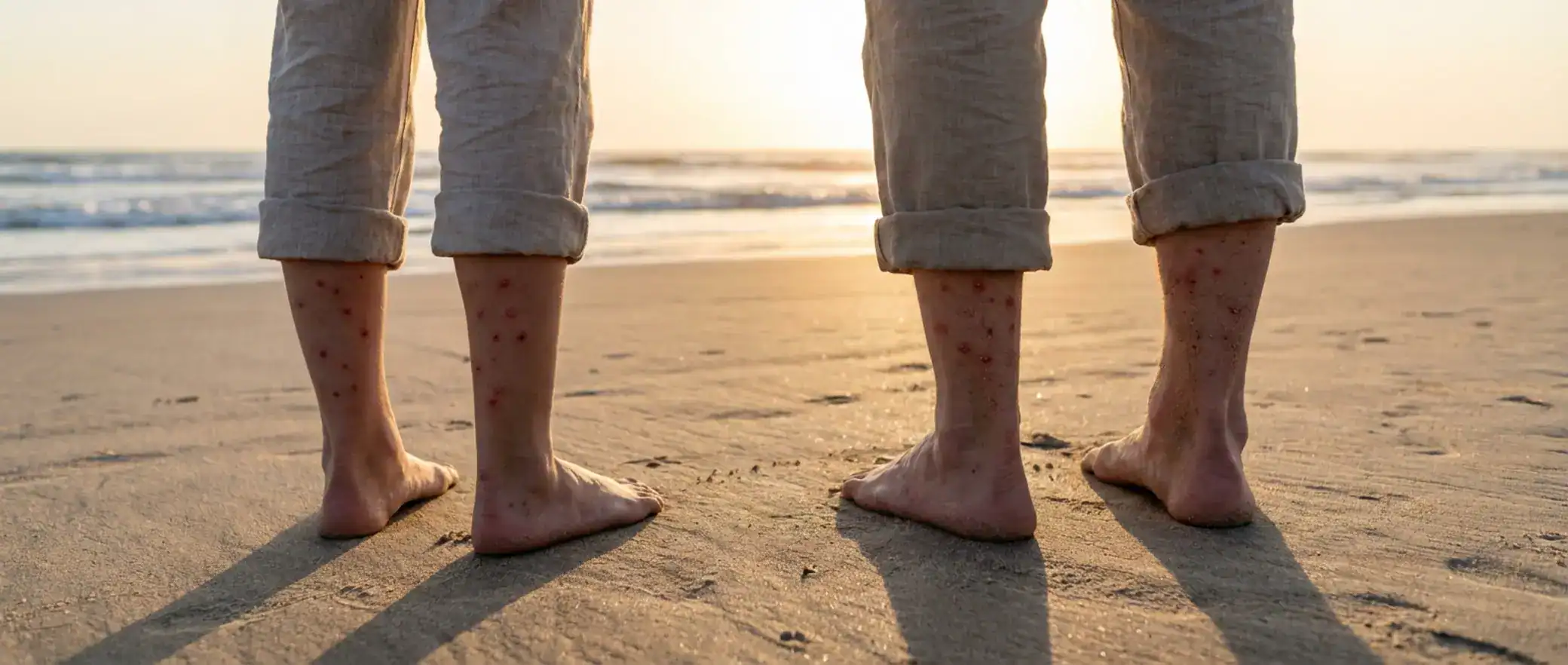
When people ask, what do sand flea bites look like, they are usually describing small, red, raised bumps. These often appear in clusters or rows, specifically around the ankles and feet. This is because these small flying insects stay close to the ground and cannot fly high against the wind.
Specifically, you might notice:
✓ Small, red welts that itch more intensely than a mosquito bite.
✓ A tiny red dot in the center of the bump where the skin was pierced.
✓ Clusters of 3 to 5 bites in a localized area.
✓ Bites that appear primarily in the early morning or late evening.
In contrast, a sand flea vs dog flea comparison shows that regular flea bites are often smaller and less swollen unless the person has flea bite allergies. People with these allergies may develop large hives or even a rash around the bite site.
Are sand flea bites dangerous?
In the continental U.S., these bites are annoying but rarely a medical emergency. However, are sand flea bites dangerous in a global context? Yes. In tropical regions, the chigoe flea (Tunga penetrans) causes tungiasis. The female flea burrows into the skin, usually under a toenail or in the sole of the foot.
As she feeds on blood and produces eggs, her body swells significantly. This creates a painful, white lesion with a black dot in the center. If left untreated, these lesions can lead to secondary infections like tetanus or gangrene. According to 2025 PAHO guidelines, this parasitic skin disease is a significant health issue in endemic areas, affecting up to 60 percent of some local populations.
Effective Sand Flea Bite Treatment and Relief
Once you have identified the source of your discomfort, you need an effective sand flea bite treatment. Most beach-related bites from midges or flies will resolve on their own within a week, but the itching can be maddening.
For standard insect bites at the beach, follow these steps:
- Wash the area immediately with soap and water to remove any bacteria or salt.
- Apply a cold compress or ice pack to reduce swelling and numb the itch.
- Use an over-the-counter sand flea bite treatment such as 1% hydrocortisone cream.
- Apply calamine lotion to create a cooling sensation and protect the skin.
- Take an oral antihistamine if the itching prevents sleep or causes significant distress.
If you suspect you have been to a region where chigoe fleas are present and you see a burrowed parasite, do not attempt home surgery. Using unsterile needles can lead to severe infections. Instead, see a medical professional. In 2026, the gold standard for treating tungiasis is the dimeticone oil NYDA. This silicone-based oil suffocates the embedded flea and has a cure rate of up to 95 percent within seven days.
How to Get Rid of Sand Fleas in Your Yard
If you live near the coast and notice jumping bugs in your grass, you might need to know how to get rid of sand fleas in your yard. Because sand fleas (crustaceans) need extreme moisture and salt, they rarely thrive in a typical lawn. What you are likely seeing are either regular fleas or “lawn hoppers.”
To implement effective flea control methods in your yard:
✓ Keep your grass mown short to allow sunlight to reach the soil, which kills flea larvae.
✓ Remove piles of damp leaves or organic debris where pests hide.
✓ Use DIY pest control for sand fleas such as food-grade Diatomaceous Earth. This natural powder dehydrates and kills insects without harming pets.
✓ Rake the sandy areas of your yard frequently to disrupt the life cycle of sand fleas and other biting midges.
Actually, many people find that spreading a thin layer of salt in very sandy patches can help deter certain coastal pests, though this should be used sparingly as it can kill your grass.
Sand Flea Prevention: Tips for Beachgoers
Prevention is always better than treatment. Understanding the difference between sand fleas and regular fleas for prevention allows you to choose the right strategy for your environment. If you are heading to the shore, you need a different toolkit than someone protecting their dog at home.
For effective sand flea prevention at the beach:
- Avoid the beach during dawn and dusk, as this is when biting midges and sand flies are most active.
- Sit on a chair rather than a towel directly on the sand to stay above the “jump zone.”
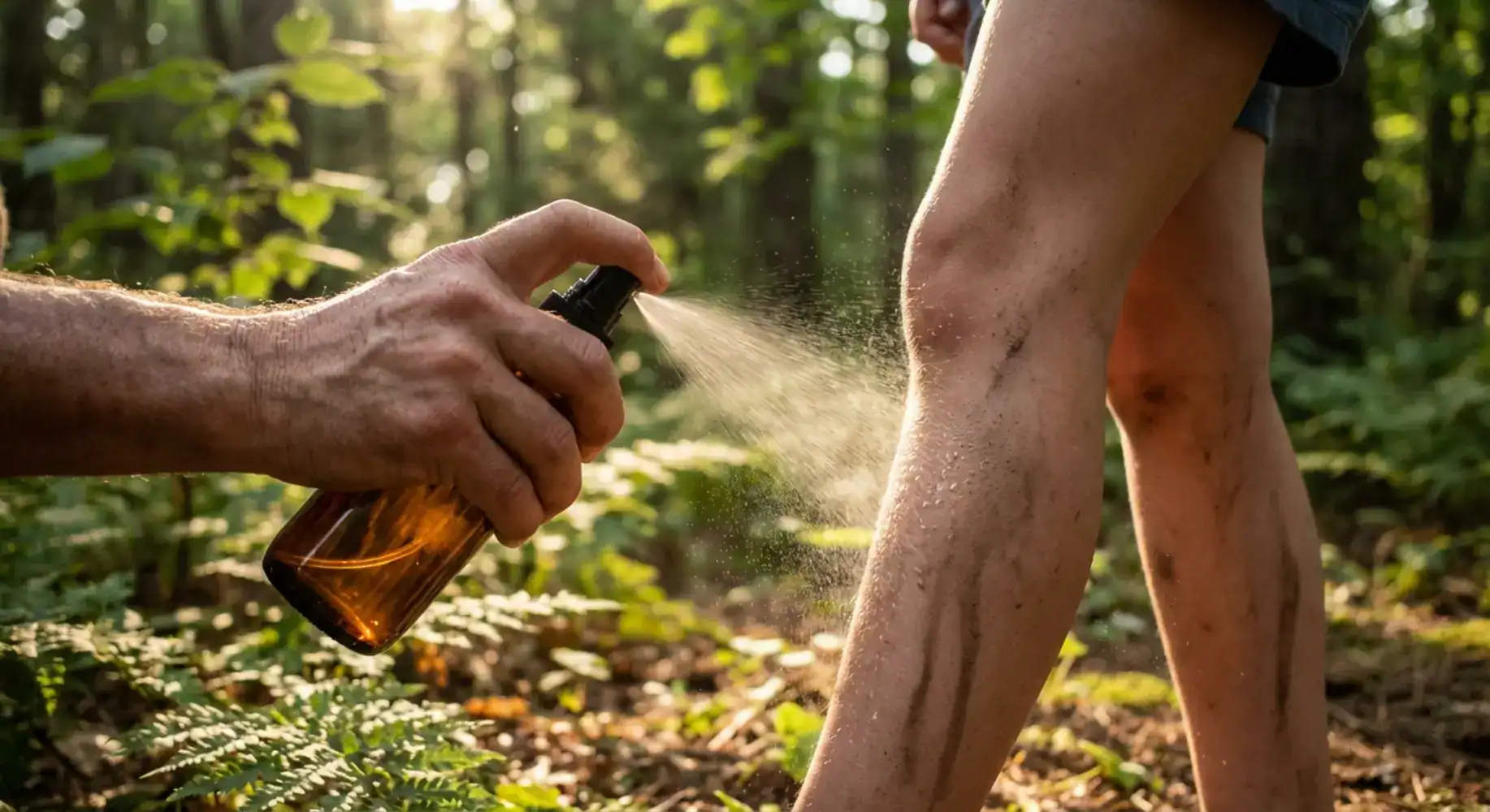
- Apply an insect repellent containing DEET or Picaridin, specifically focusing on your ankles and feet.
- Wear closed-toe shoes if you are walking through sea oats or dunes where bugs often congregate.
- Stay close to the water’s edge where the sand is wet and packed; biting insects prefer the dry, loose sand near the dunes.
Similarly, if you are worried about your pets, you should ask, do sand fleas bite dogs or cats? While mole crabs do not, regular fleas certainly do. Always check your pet’s fur after a beach trip to ensure you aren’t bringing hitchhiking regular fleas back into your home.
Common Misunderstandings and Myths
A major point of confusion is the difference between sand fleas and sand flies. While the names are used interchangeably by many tourists, they are vastly different creatures. Sand flies are actual flies that bite and can carry diseases like Leishmaniasis. In 2026, cases of Leishmaniasis have been reported more frequently in Texas and Florida, making the identification of sand fleas and their flying lookalikes even more important for public health.
Another myth is that sand fleas can infest your home. As we have established, the beach crustaceans cannot survive the dry air and lack of salt water in a house. If you have an infestation, it is 100 percent a regular flea issue. Do not spend money on “beach flea” sprays for your carpet; instead, follow a standard flea identification guide to treat your pets and home for Siphonaptera.
Finally, some people believe that parasites in sand can be “popped” like a pimple. This is dangerous advice. Whether it is a midge bite or a burrowed chigoe flea, scratching or squeezing the area can introduce staph or strep bacteria into your bloodstream.
Common Questions About Sand Fleas vs. Regular Fleas: Identification
What do sand fleas look like to the human eye?
Sand fleas are tan or translucent crustaceans that look like tiny, barrel-shaped shrimp. They are much larger than regular fleas, often reaching an inch in length, and they have ten legs instead of six.
Can sand fleas infest your home?
No, sand fleas cannot survive or breed inside a typical home environment. They require the high salinity and constant moisture of the intertidal beach zone to stay alive, whereas regular fleas are perfectly adapted to carpets and pet beds.
Why do sand flea bites itch so much?
The intense itching is an allergic reaction to the saliva injected by the biting insect (usually a sand fly or midge). These insects use a “pool-feeding” method where they cut the skin and lick the blood, which causes more inflammation than the clean “needle” pierce of a mosquito.
What is the fastest treatment for sand flea bites?
The fastest relief comes from a combination of cold compresses and 1% hydrocortisone cream. If the reaction is severe, an oral antihistamine will help reduce the body’s internal inflammatory response and stop the itching cycle.
Do sand fleas live in wet or dry sand?
Harmless mole crabs live in the wet sand at the tide line, while biting midges and sand flies prefer the dry sand near the dunes. If you are being bitten, move closer to the water where the sand is saturated.
Are there sand fleas in Florida?
Florida has millions of mole crabs, but they do not bite humans. The itchy welts experienced by Florida beachgoers are almost always caused by sand flies or biting midges, which are often active after summer storms.
References & Expert Sources
- World Health Organization: Tungiasis Fact Sheet
- PAHO Tungiasis Treatment Guidelines
- CDC: Flea-Borne Diseases and Identification
- Efficacy of Dimeticone in Tungiasis Treatment
- University of Florida: Coastal Entomology Report
- Orkin: Sand Flea Myths and Facts
- Terminix: Identifying Beach Pests
- Biological Specs of the Order Amphipoda
- Sole Hope: The #ZeroJiggers Initiative
- Cleveland Clinic: Flea Bites Treatment
Final Thoughts
Accurate sand flea identification is the most powerful tool you have to combat the discomfort of beach-related itching. By recognizing that the jumping crustaceans on U.S. beaches are harmless, you can lower your anxiety and focus on the real culprits: the tiny flies and midges hiding in the dunes. While sand flea bites can be incredibly frustrating, they are manageable with basic over-the-counter remedies and proper timing of your beach visits. Always remember that a “flea” at the beach is almost never the same “flea” in your carpet. Protect yourself with repellent, stay away from the dunes at dusk, and enjoy the surf without the worry of a phantom infestation. Knowledge truly is the best defense against the tiny biters of the coast.