


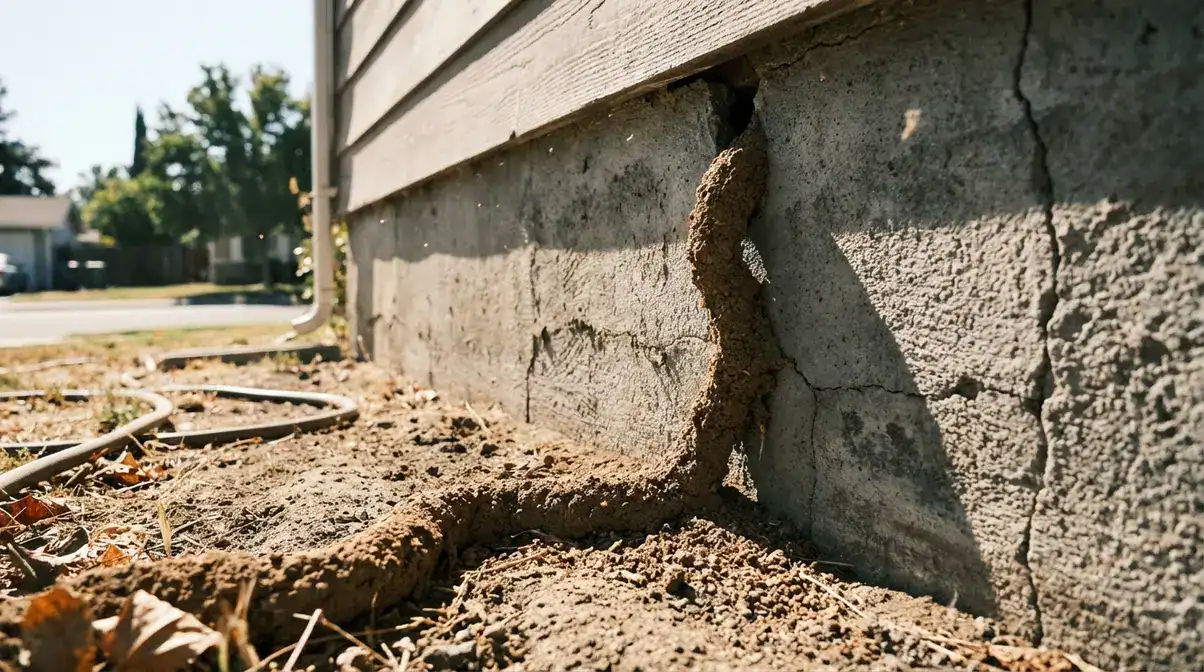
Finding pencil-thin lines of dirt snaking across your foundation can be alarming, and for good reason. These are often termite mud tubes, the superhighways for a hidden army causing over $5 billion in property damage annually in the U.S. alone. Understanding how to interpret these structures is the first critical step in protecting your home from becoming another statistic. This guide will teach you how to become a termite detective, distinguishing between an active, costly infestation and the harmless remnants of a past battle.
How can I tell if termite mud tubes are active?
To determine if termite mud tubes are active, carefully break off a one-inch section in the middle. If the tube is repaired or rebuilt within 24 to 72 hours, the infestation is active. Active tubes are typically moist and dark, while old, inactive tubes are dry, brittle, and crumble easily.
Decoding the Dirt: What Exactly Are Termite Mud Tubes?
Termite mud tubes, also known as termite tunnels, are the primary mode of transportation for subterranean termites. Unlike drywood termites, which live inside the wood they consume, subterranean termites build their colonies in the soil and require constant moisture to survive. Because of this, they cannot tolerate exposure to open air and sunlight, which would quickly dehydrate and kill them.
These protective tunnels are masterfully constructed from a mixture of soil, wood particles, fecal matter, and the termites’ own saliva. This cement-like mixture creates a safe, humid environment for worker termites to travel back and forth between their underground nest and the wooden structures of your home, their food source. Finding these mud tubes in homes, particularly on foundation walls, in crawl spaces, or along floor joists, is one of the most definitive termite signs you can discover.
Not All Tunnels Are Created Equal: The 4 Types of Mud Tubes
Professionals categorize mud tubes into four distinct types, each providing clues about the termite colony’s activity and intentions. Learning to identify them gives you a significant advantage in assessing the threat level.
1. Exploratory Tubes
These are the thinnest and most fragile of the tubes, often branching out in multiple directions like the roots of a plant. As their name suggests, exploratory tubes are built by worker termites searching for new sources of wood (cellulose). They are often abandoned if a food source isn’t found, which means they can be dry and brittle even if the main colony is still active elsewhere. While they don’t always indicate a current feeding site, they prove a colony is, or was, nearby.
2. Working (or Utility) Tubes
Working tubes are the highways of the termite world. Typically between 1/4 and 1 inch in diameter, these are the most common tubes you’ll find. They are well-constructed, durable paths that connect the soil nest directly to a food source, such as the sill plate or floor joists of your house. These tubes have a high volume of two-way traffic, with workers carrying chewed wood back to the colony. Consequently, finding an active working tube is a clear indicator of ongoing damage from termites.
3. Swarming Tubes (Swarm Castles)
These are larger, more temporary structures built to facilitate the exit of winged reproductive termites, known as alates or “swarmers.” They often appear in the spring and can be quite large, sometimes reaching several inches in width. If you find these, it signals a mature, well-established colony that has been present for several years. Swarming tubes are a serious sign of a major termite colony activity that requires immediate professional attention.
4. Drop Tubes
Drop tubes are fascinating feats of termite engineering. They are suspended tubes that drop down from a wooden structure (like a floor joist) back toward the soil. They often have a lighter, more wood-heavy composition and look like stalactites in a cave. These tubes serve as shortcuts, creating a more direct path between the food source and the nest, and are a strong sign of a heavy, active infestation.
The Litmus Test: Distinguishing Between Active and Old Termite Damage
The most pressing question for any homeowner is whether the tubes they’ve found represent a current threat or are simply old termite damage characteristics. Misinterpreting this can lead to either unnecessary panic or a false sense of security. Here’s how you can tell the difference.
The 24-72 Hour Break Test: Your Most Reliable Indicator
This simple, practical test is the gold standard for assessing activity. It’s a crucial step for homeowners to identify termite damage early.
- Select a Spot: Choose a mud tube that is easily accessible.
- Break a Section: Using a screwdriver or another small tool, carefully break away a 1-inch section from the middle of the tube. Be gentle to avoid disturbing more than necessary.
- Observe and Wait: Mark your calendar and check the broken section daily for the next 1-3 days.
- Analyze the Results:
- Repaired Tube: If the termites have rebuilt the broken section, you have a confirmed active termite infestation. The speed of repair can even indicate the colony’s size and vigor.
- No Repair: If the tube remains broken after 72 hours, it is likely inactive. The termites have either been eliminated or have abandoned that particular route.
Not sure if what you found is termite damage or carpenter ant damage? See our full comparison guide.
Visual and Tactile Clues: A Comparison
While the break test is definitive, you can often make an educated guess based on appearance and texture. Here’s a side-by-side comparison:
| Characteristic | Active Mud Tubes | Old (Inactive) Mud Tubes |
| Moisture Content | Moist, soft, or damp to the touch. The interior will be dark and wet, as termites require this humidity. | Dry, dusty, and brittle. Crumbles into fine dirt when touched. |
| Color | Typically darker, resembling the color of damp soil. Fresh repairs will be noticeably darker than the surrounding tube. | Lighter in color, often matching the color of dry local soil. May have a flaky or peeling appearance. |
| Integrity | Structurally sound and difficult to break apart. If you peek inside a broken section, you may see live, cream-colored worker termites. | Easily falls apart with minimal pressure. The interior will be empty and filled with dry debris. |
Beyond the Tubes: Corroborating Signs of an Active Infestation
While mud tubes are a primary clue, confirming an active infestation often involves looking for other evidence. If you see mud tubes, your next step should be to search for these corroborating signs nearby.
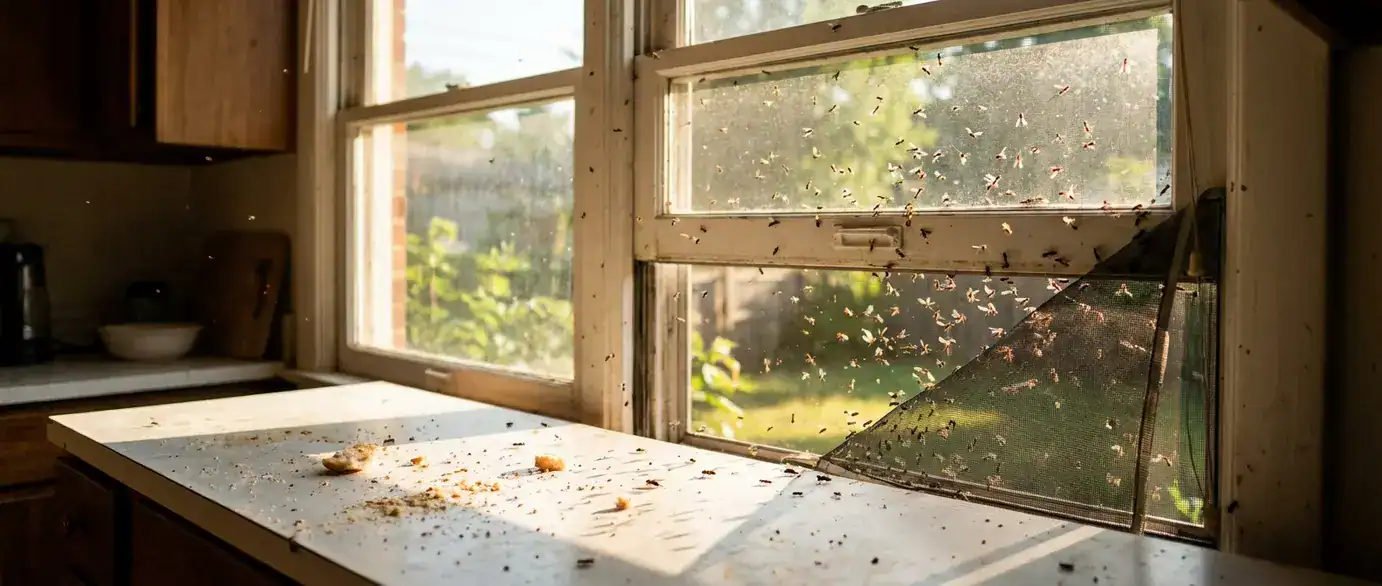
- Live Termites: This is the most obvious sign. You might see small, creamy-white worker termites inside a broken tube or darker-headed soldier termites rushing to defend the breach. In the spring, you may see swarms of winged termites near windows and doors.
- Hollow-Sounding Wood: Tap on wooden beams, baseboards, and walls near the mud tubes. Wood damaged by termites often sounds hollow or papery because the interior has been eaten away, leaving only a thin veneer of paint or wood grain.
- Frass (Termite Droppings): While more common with drywood termites, subterranean termites use their fecal matter to build tubes. You may find small piles of what looks like dirt or pepper near the tubes, which could be frass.
- Discarded Wings: After a swarm, reproductive termites shed their wings. Finding piles of identical, translucent wings on windowsills or in spiderwebs is a tell-tale sign of a nearby mature colony.
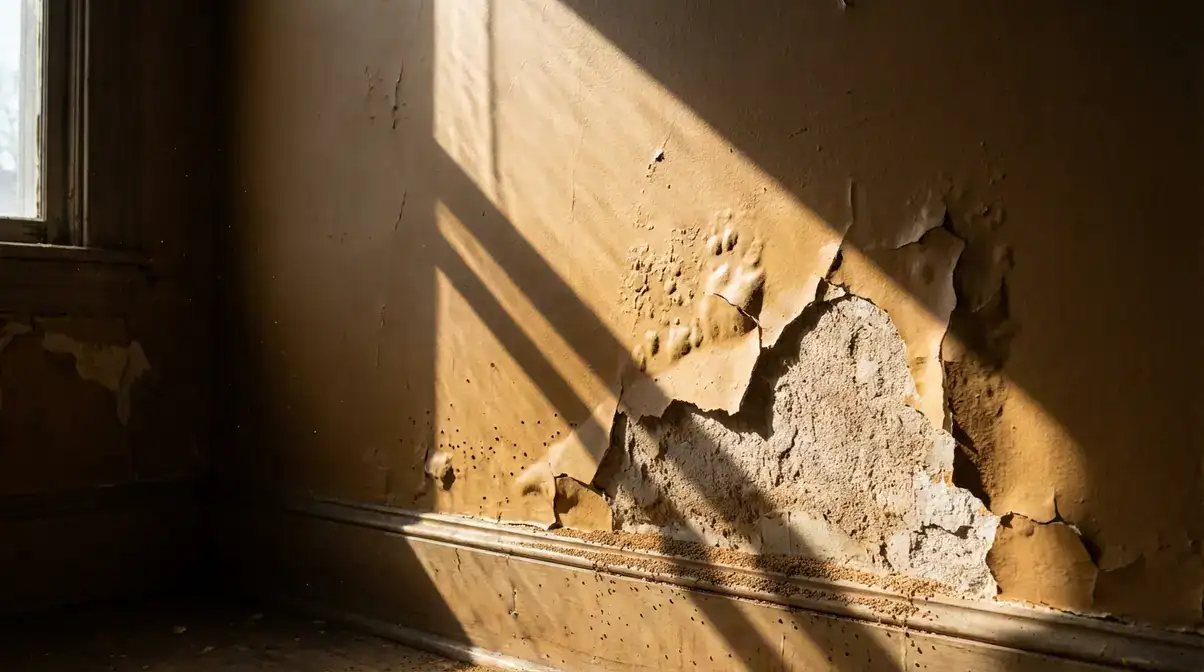
- Buckling Paint or Tiny Holes: Unexplained blistering or bubbling paint can indicate moisture from termite activity underneath. You may also see tiny holes where termites have emerged.
The Financial Fallout: The True Cost of Ignoring Termite Damage
Understanding the financial impact of termite infestations on homeowners is often the biggest motivator for taking swift action. The costs are twofold: treatment and repair.
- Treatment Costs: The average price for a professional post-construction termite treatment was $1,100 in 2024. This can range from a few hundred dollars for a small, localized treatment to several thousand for a complex infestation requiring extensive baiting systems or liquid barriers.
- Repair Costs: This is where the real financial pain occurs. The national average for termite damage repair is around $3,000. However, if termites have compromised structural elements like joists, beams, or support posts, repair costs can easily soar to $15,000 or more. It’s crucial to remember that homeowner’s insurance almost never covers termite damage, leaving you to foot the entire bill.
Early detection through diligent inspection is the single most effective way to mitigate these potentially devastating costs. The money spent on a professional inspection ($150-$300) is a tiny investment compared to the cost of unchecked structural damage.
Building a Fortress: Proactive Termite Prevention Strategies
The best way to deal with termite mud tubes is to prevent them from ever being built. Effective prevention of termite infestations centers on eliminating the conditions termites need to thrive: moisture and access.
- Control Moisture: Termites are drawn to moisture like moths to a flame.
- Fix all leaky faucets, pipes, and AC units immediately.
- Ensure gutters and downspouts divert water at least 3-4 feet away from your foundation.
- Grade the soil around your foundation so that it slopes away from the house.
- Keep crawl spaces well-ventilated and dry. Consider a vapor barrier to reduce ground moisture.
- Eliminate Wood-to-Ground Contact: Create a buffer between the soil and the wooden parts of your home.
- Never stack firewood, lumber, or other cellulose debris against your foundation. Keep it at least 20 feet away and elevated off the ground.
- Maintain an 18-inch gap between soil and any wood portions of your home.
- Remove dead stumps or roots near the house.
- Seal Entry Points: Deny termites easy access to your home.
- Seal any cracks or holes in your foundation with mortar or caulk.
- Pay close attention to where utility lines (water, gas, electric) enter the house and seal any gaps around them.
- Schedule Regular Inspections: The importance of regular home inspections for termite activity cannot be overstated. A professional can spot subtle signs you might miss. An annual inspection is a wise investment, especially in high-risk areas like the southeastern U.S.
Common Misconceptions About Termites and Their Mud Tubes
Misinformation can be as damaging as the termites themselves. Let’s set the record straight on a few common myths.
- Myth: If you scrape away the mud tubes, the termites are gone.
- Fact: This is one of the worst mistakes a homeowner can make. Scraping away a tube is like removing a single section of a highway. The colony is still active underground, and the workers will simply rebuild the tube, often in a less visible location. This action does nothing to address the core problem.
- Myth: A brick or concrete slab foundation makes a home safe from termites.
- Fact: Termites are relentless. They can enter through tiny cracks in the slab- often less than 1/16th of an inch wide- or travel behind brick veneer. No home is immune based on foundation type alone.
- Myth: You can treat a termite problem yourself with store-bought chemicals.
- Fact: While some DIY products exist, they are rarely effective at eliminating an entire colony. Professional pest control for termites uses non-repellent termiticides and strategic baiting systems that are not available to the public. These products are designed to be carried back to the nest, eliminating the queen and the entire colony. DIY treatments often kill only a few workers and can have a 40% failure rate, allowing the colony to recover and continue its destruction.
Common Questions About Identifying Mud Tubes: Active Infestation vs. Old Damage
Should I remove old termite mud tubes?
Yes, it is highly recommended to remove old, inactive termite mud tubes. This action serves as a clean slate. If new tubes appear in the same area, you will know immediately that you have a new or recurring active infestation, allowing for a much faster response.
Can termites live in walls without mud tubes?
Subterranean termites require mud tubes to travel from the soil to the wooden structure of your home. However, once inside a wall with a moisture source (like a slow plumbing leak), they can survive and build “secondary” nests without a direct connection to the ground. This is why addressing soil moisture indicators and indoor leaks is critical.
How quickly do termites build mud tubes?
Termites are incredibly efficient builders. A determined colony can construct several inches or even feet of exploratory tubing overnight if conditions are right. This rapid construction is why the 24-72 hour break test is so effective for determining if termites are active.
Are mud tubes a sign of subterranean termites only?
Yes, mud tubes are a hallmark of subterranean termite behavior. Other common types, such as drywood or dampwood termites, do not build them. This makes mud tubes a key factor in distinguishing mud tubes and identifying the specific type of termite threat you are facing.
What do termite droppings look like?
Termite droppings, or frass, look different depending on the species. For subterranean termites, the frass is liquid and used as a component in building their mud tubes, so you won’t see distinct pellets. Drywood termites, however, produce very small, dry, six-sided pellets that can resemble sand or coffee grounds, which they push out of “kick-out” holes in the wood.
References & Expert Sources
- “Controlling Termite Infestations: Prevention & Pest Control Guide Released,” news release about Connor’s Pest Pros guide.
- “Florida Pest Control. (2026). Is Termite Activity Increasing?. Florida Pest Control.
- “Celebrate Termite Awareness Week, National Pesticide Safety Education Month,” Pest Management Professional (summarizing PPMA/NPMA campaign).
- “Top 50 Most Termite‑Infested Cities in 2025,” Orkin.
- Pest Management Association (via Catseye Pest Control). (2018). How Termites Are Damaging Homes Across the United States.
- “Rollins, Inc. Reports Fourth Quarter and Full Year 2025 Financial Results.”
- University of Florida, IFAS Extension. (2022). Termite Species Distribution in Florida and UF Termite Identification Services.
- “The Ultimate Termite Control Guide: From Prevention to Professional Treatment,” BugZone Pest. (covers mud tubes and signs of infestation among other topics.)
- Termite Inspection & Repair. (2018). How Termites Are Damaging Homes Across the United States. Catseye Pest Control.
- BugZone Pest Control. (2025). The Ultimate Termite Control Guide: From Prevention to Professional Treatment.
- DoMyOwn. (2026). Termite Identification Guide.
Final Thoughts
Identifying termite mud tubes is a skill every homeowner should possess. By understanding the different types of tubes and knowing how to perform a simple break test, you can shift from a position of uncertainty to one of empowered action. Remember that old, inactive tubes are a warning sign of your home’s vulnerability, while active tubes are a clear and present danger demanding immediate professional intervention. Don’t wait for hollow-sounding wood or a swarm in your living room; take control by inspecting your foundation regularly and addressing any signs of these destructive pests before they can cause thousands of dollars in damage. Scheduling a professional inspection is the most reliable way to gain peace of mind and protect your most valuable investment.

I genuinely felt calmer by the end of this. nothing in my situation changed while I was reading, obviously, but my reaction to it already feels a little different.