You tapped your wall while hanging a picture, and the sound was off – a dull, papery thud instead of a solid knock. Later, you notice a small blister in the paint that you swear wasn’t there last week. These subtle changes are easy to ignore, but they could be the first whispers of a silent invasion of termites in drywall, a problem that causes over $5 billion in property damage annually in the U.S. alone.
What are the key signs of termites in drywall?
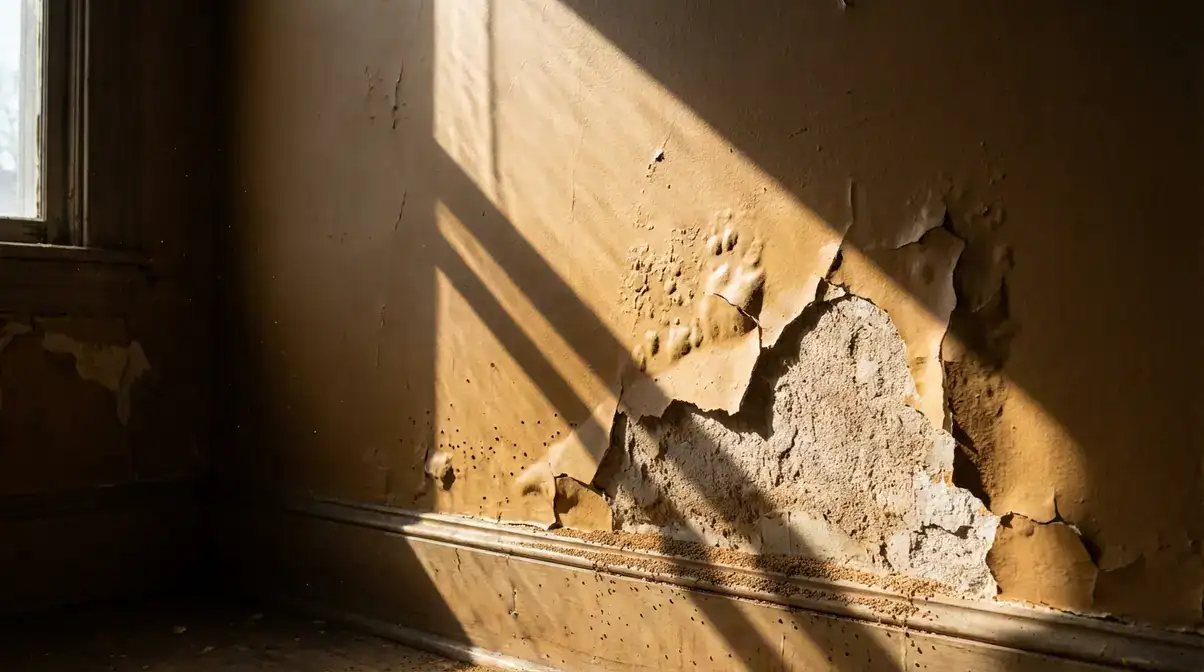
The primary signs of termites in drywall include tiny, unexplained pinholes (1-2mm) on the surface, bubbling or peeling paint that resembles water damage, hollow sounds when tapping the wall, and fine, sawdust-like piles of termite droppings (frass) along baseboards. These symptoms indicate termites are eating the wood framing behind the drywall.
The Hidden Truth: Understanding Termite Damage in Drywall
Many homeowners mistakenly believe termites eat drywall itself. This is a critical misunderstanding. Termites are after cellulose, the organic fiber found in wood. While drywall is mainly made of gypsum, its paper backing and the wooden studs behind it are a perfect meal for a hungry colony. Understanding termite life cycle and behavior reveals that they are relentless foragers, and your home’s structure is their primary target.
Here’s what really happens:
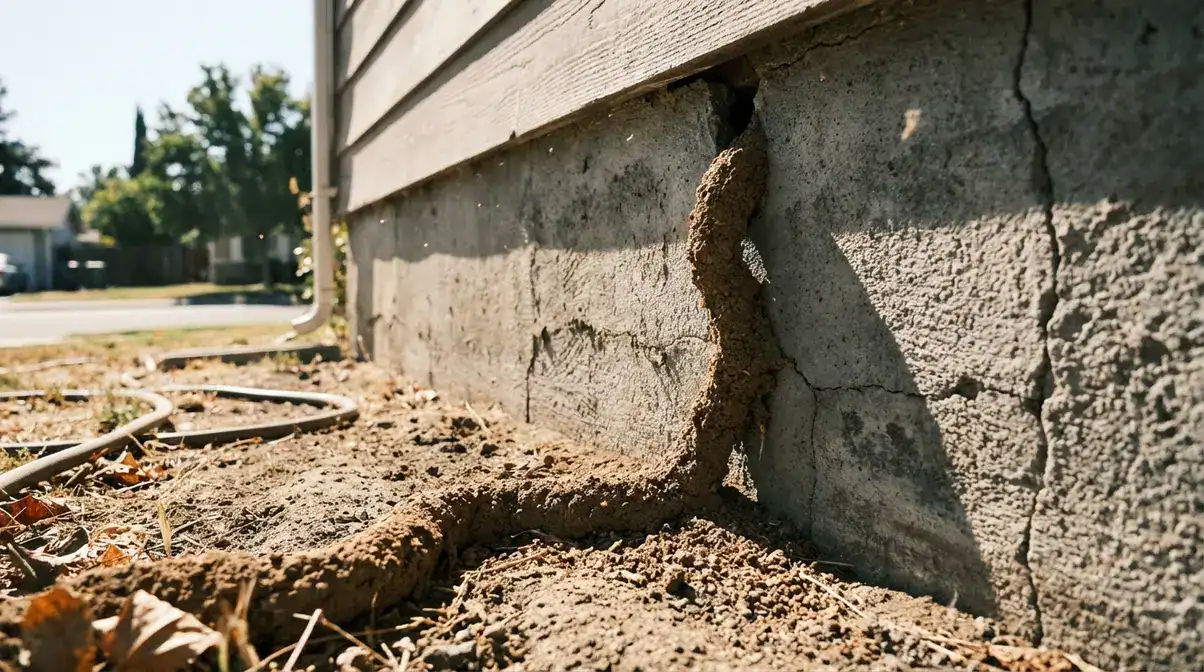
- Subterranean Termites: These pests travel from the soil into your home. They build mud tubes-pencil-thick tunnels made of soil and wood-for moisture and protection. They will travel behind the drywall to consume wooden studs, support beams, and ceiling joists.
- Drywood Termites: Unlike their subterranean cousins, these termites don’t need soil contact. They can infest your home directly, often through the roof or eaves, and live inside the wood they consume. They create galleries and tunnels within the framing, weakening it from the inside out.
So, can termites come through drywall? Yes, but not because they want to eat it. They create tiny holes to exit, or their activity behind the wall causes visible damage on the surface. The drywall itself is just collateral damage-a thin veil hiding a potentially catastrophic structural problem.
Early Warning Signs: Decoding Pinholes and Bubbling Paint
Catching a drywall termite infestation early can save you thousands in repairs. Pinholes and bubbling paint are two of the most common-and most frequently misdiagnosed-initial clues.
The Mystery of Pinholes in Drywall from Termites
Have you spotted tiny, unexplained holes in your wall? Before you grab the spackle, take a closer look. These might not be from picture hooks or stray darts.
- What They Look Like: Termite pinholes, also known as exit holes, are incredibly small, typically 1-2 millimeters in diameter. Drywood termites create these holes to push out their droppings, or “frass,” from their galleries.
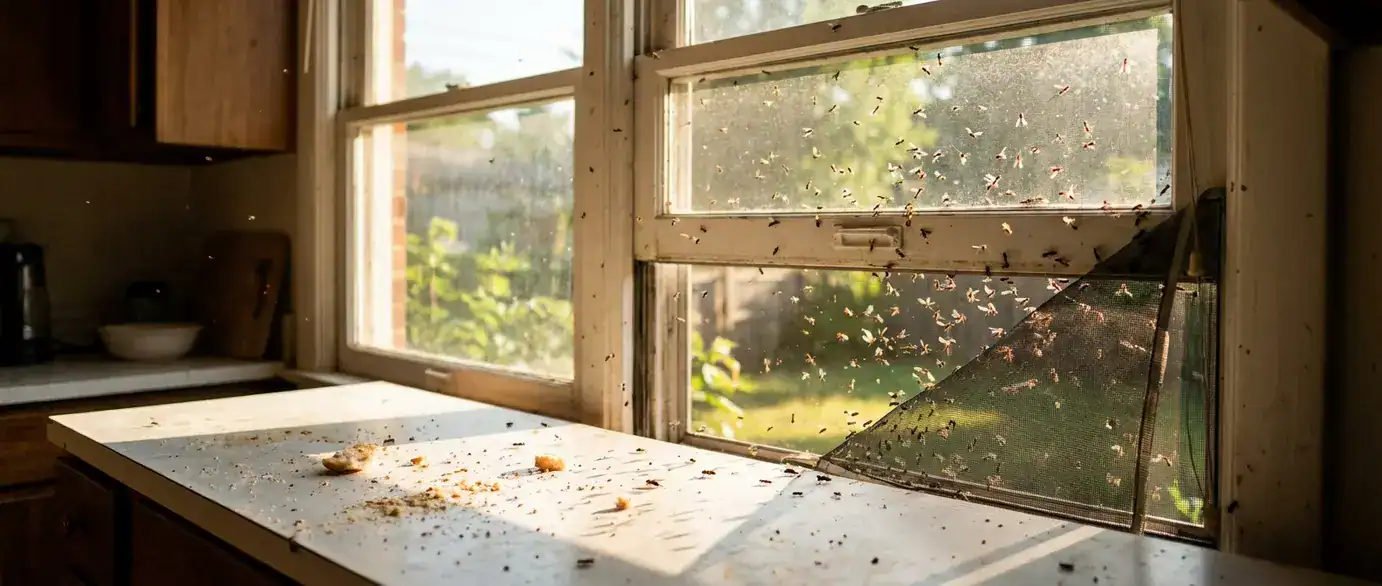
- Why They Appear: As the termite colony matures, it needs to expand. Swarmers (winged reproductive termites) will also use these holes to leave the nest and start new colonies. Finding these holes is a definitive red flag.
- The Telltale Clue: Often, you will find tiny piles of frass directly below these pinholes. The frass of drywood termites looks like small, hexagonal pellets resembling coffee grounds or sand. If you see these pellets, you are almost certainly dealing with an active drywood termite colony. Are pinholes in drywall a sign of termites? When accompanied by frass, the answer is a resounding yes.
Why Bubbling Paint Can Signal Termite Activity
Seeing paint bubble or peel is frustrating. Your first instinct is likely to blame moisture from a pipe leak or high humidity. However, bubbling paint termites cause is a distinct phenomenon.
- How it Happens: As termites tunnel through the wood studs behind your wall, they disrupt the drywall and its paper backing. Their activity generates moisture and heat, which gets trapped between the drywall and the paint. This causes the paint to lose adhesion, resulting in blisters and bubbles.
- The Key Difference from Water Damage: Water damage typically creates a large, stained area that feels soft or mushy. The bubbling is often widespread and accompanied by a distinct musty odor. In contrast, drywall bubbling due to pest damage may appear in more isolated patches, and the wall behind it might still feel firm. A crucial test: if the bubbling paint returns after you’ve repaired it and confirmed there are no leaks, termite activity is a strong possibility.
How to Identify Termites in Drywall: Your 5-Minute Inspection Checklist
Think you might have termite activity in walls? Don’t panic. You can perform several easy DIY methods for detecting termites in drywall right now. Grab a flashlight and a screwdriver and walk through this checklist.
| Inspection Step | What to Do | What It Means |
| 1. The Tap Test | Using the handle of your screwdriver, tap gently along the drywall, especially near the baseboards and window frames. Listen carefully to the sound. | A solid, dense sound is normal. If you hear a hollow, papery, or crinkling sound, it indicates that the wood behind the wall has been eaten away, leaving a void. This can mean over 50% wood loss. |
| 2. The Pinhole & Frass Search | Shine your flashlight along the walls at an angle. Look for tiny, 1-2mm holes. Check the baseboards and floor directly below these areas for small piles of pellets that look like sand or coffee grounds. | These are exit holes and frass from drywood termites. Finding even 6-10 pellets is a sign of an active colony. |
| 3. The Bubble & Discoloration Check | Examine the paint for any unusual bubbling, peeling, or blistering. Also look for faint, discolored lines or trails beneath the paint or wallpaper. | This points to moisture from termite tunnels. The faint lines are the galleries themselves, visible just beneath the surface. |
| 4. The Mud Tube Hunt | Check the foundation of your home, both inside and out. Look for pencil-thick tubes of mud running from the ground up the walls. | These are the highways for subterranean termites, a clear sign they are moving from the soil into your home’s structure. |
| 5. The Structural Clue Check | Pay attention to doors and windows that have recently become difficult to open or close. Check for sagging or warped drywall panels. | When termites damage wooden frames, it can cause them to warp. This structural shifting makes doors and windows stick. This is a sign of advanced **structural damage from termites**. |
When DIY Isn’t Enough: Advanced Termite Detection
If your DIY inspection reveals suspicious signs, professionals use advanced tools for confirmation. Detecting termites in drywall using technology offers near-certainty without destructive measures.
- Infrared Thermography: These cameras detect the subtle heat signatures generated by a large termite colony, allowing inspectors to “see” activity behind the walls. This method has a 95% detection success rate.
- Acoustic Emission Sensors: These devices can literally hear the sound of termites chewing and the clicking sounds soldier termites make.
- Borescopes: For a definitive visual, an inspector can drill a small hole and insert a tiny camera to look inside the wall cavity for live termites, tunnels, and damage. Homeowners can even buy affordable borescope attachments for smartphones for around $20-50.
How Do You Treat Termites in Drywall?
Discovering termite damage in drywall requires a two-pronged approach: eliminating the colony and repairing the damage. While some minor spot treatments are possible, a widespread infestation is not a DIY project.
Professional Treatment Options
Hiring a licensed pest control professional is the most effective way to ensure the entire colony is eradicated. The two primary methods are liquid treatments and baiting systems.
- Liquid Termiticides (e.g., Termidor): This involves creating a continuous chemical barrier in the soil around your home’s foundation. Foraging termites pass through it, become carriers, and transfer the poison back to the colony, leading to its collapse. For drywall issues, professionals may also inject termiticide foam directly into wall voids.
- Pros: Fast-acting and provides a long-lasting protective barrier.
- Cons: Can be more invasive and requires precise application.
- Baiting Systems (e.g., Sentricon): These systems use strategically placed bait stations around your property. Termites find the bait-which contains a slow-acting insect growth regulator-and share it with the colony. This stops the termites from molting and eventually wipes out the entire population, including the queen.
- Pros: Less invasive, environmentally friendly, and targets the entire colony.
- Cons: Can take longer to achieve full colony elimination.
Expert vs. DIY Termite Pest Control for Drywall
For very small, localized issues (like a single piece of infested furniture), DIY products might offer a temporary fix. You can find termite foam injections online, like Termidor Foam, for around $45 a can. However, for termites in your home’s structure, DIY methods are extremely risky. You might kill a few foragers, but you will almost certainly miss the colony’s core, allowing them to continue their silent destruction.
A year later, the paint started bubbling. When the pro opened the wall, the studs were like wet cardboard. The $50 DIY attempt turned into an $8,000 structural repair bill. Don’t make my mistake.”
The High Cost of Termite Repair in Drywall
Ignoring the signs of termites in drywall is a costly gamble. The longer you wait, the more expensive the solution becomes. The cost analysis of termite damage repair in homes can be broken down into several stages.
- Professional Inspection: Expect to pay $150 – $300 for a thorough home inspection for termites.
- Termite Treatment: The cost varies by home size and infestation severity.
- Liquid Treatment: $1,000 – $3,500
- Baiting System: $1,200 – $3,000 (includes installation and one year of monitoring)
- Fumigation (Tenting): For severe drywood termite infestations, this can cost $1,200 – $2,500 or more.
- Drywall and Structural Repair: This is where the costs can skyrocket.
- Minor Repair: For a small area with pinholes, patching and painting might cost $250 – $750.
- Moderate Repair: Replacing a full sheet of drywall and addressing minor wood damage could be $1,200 – $2,500.
- Major Structural Repair: If termites have damaged load-bearing studs, joists, or beams, repairs can easily exceed $4,500 – $10,000+.
What is the cost of repairing termite damage in drywall? It depends entirely on how early you act. A $300 inspection today could save you from a five-figure repair bill tomorrow.
Prevention of Termites in Drywall: An Ounce of Prevention is Worth a Ton of Cure
The best termite management strategy is to make your home as uninviting as possible to these pests. Effective home maintenance to prevent termite damage in drywall is your first and best line of defense.
The Importance of Annual Termite Inspections in Homes
An annual inspection by a trained professional is the single most important preventive step you can take. They can spot the subtle signs you might miss and identify risk factors before they lead to an infestation. Given that termite damage can spread at a rate of 1-2 feet per month, an annual checkup offers priceless peace of mind and can reduce potential repair costs by over 50%.
Proactive Home Maintenance Tips
You can significantly lower your risk of a drywall termite infestation with these simple habits:
- Eliminate Moisture: Promptly fix leaky faucets, pipes, and AC units. Ensure your gutters and downspouts direct water away from the foundation. Termites need moisture to survive, so a dry home is a safer home.
- Remove Food Sources: Keep firewood, lumber, and other wood debris at least 20 feet away from your home and elevated off the ground.
- Seal Entry Points: Caulk any cracks in your foundation, around utility lines, and where siding meets the concrete.
- Maintain Yard and Garden: Trim shrubs and trees so they don’t touch your home’s exterior. This reduces hidden pathways for termites to enter. Avoid using wood mulch directly against your foundation.
- Ensure Proper Ventilation: Use exhaust fans in bathrooms and kitchens and ensure crawl spaces are well-ventilated to reduce humidity.
Common Questions About Signs of Termites in Drywall: Pinholes and Bubbling Paint
Are pinholes in drywall always a sign of termites?
Not always, but it is a strong possibility. Tiny holes can also be caused by other wood-boring insects like powderpost beetles, or even from nails. However, if the holes are 1-2mm and you see tiny, pellet-like frass nearby, it is highly indicative of a drywood termite infestation.
Can termites live in drywall?
No, they cannot sustain themselves on drywall alone. Termites live in the wooden structures behind or within your walls. They may tunnel through the drywall or use it for shelter, but their food source is the wood framing, which is why the damage is often hidden from view.
What does termite frass look like compared to regular dust?
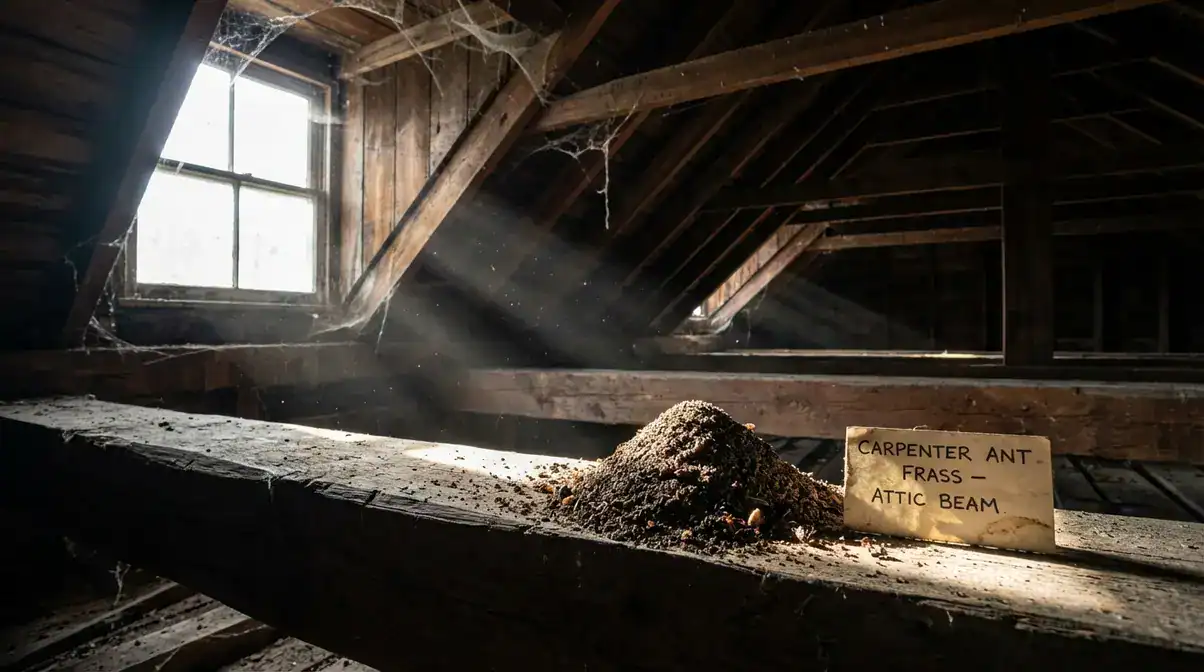
Termite frass is distinct from household dust. Drywood termite frass consists of uniform, six-sided pellets about 1/16-inch long, often described as looking like sand or coffee grounds. In contrast, dust is fine, irregular, and soft. Ant frass often contains insect parts and debris, while termite frass is only digested wood.
What should I do if I see mud tubes on my drywall?
Call a pest control professional immediately. Mud tubes are a definitive sign of a subterranean termite infestation. Do not remove the tubes yourself, as this can disrupt the termites’ trail and make it harder for a professional to track and treat the source of the infestation.
How can I tell if bubbling paint is from termites or water damage?
Check for other corroborating signs. Bubbling paint from termites is often more localized and may recur even after the area is dry. Press on the area; if it feels firm but sounds hollow when tapped, termites are a likely cause. Water damage usually creates larger stains, feels soft or spongy, and has a strong musty smell.
Can I treat termites in my drywall myself?
It is not recommended for a structural infestation. While DIY foam treatments can kill termites on contact in a small, accessible area, they will not eliminate the entire colony. A hidden colony will continue to cause drywall deterioration due to termites, leading to far greater damage over time.
How quickly can termites damage drywall and the wood behind it?
A mature termite colony can cause significant damage in just a few months. Depending on the colony size and species (e.g., the aggressive Formosan termite), they can consume wood rapidly. A small issue like pinhole leaks in drywall can escalate to major structural weakness within a year or two if left untreated.
References & Expert Sources
- Signs of Termites in Walls | Termites in Drywall – Orkin
- 9 Signs of Termites In Your Drywall – Angi
- Signs of Termite Damage | Good Life Inspections Guide
- Signs Of Termites | Termite Infestation – Orkin
- Do Termites Eat Drywall? – Critter Wranglers
- “The Formosan Subterranean Termite” – Mississippi State University Extension
Final Thoughts
The discovery of potential termites in drywall can be unsettling, turning your sanctuary into a source of stress. However, knowledge is your greatest asset. By learning to recognize the subtle warnings-the tiny pinholes, the phantom paint bubbles, and the hollow echoes in your walls-you transform from a potential victim into a proactive defender of your home. Prompt action is the key. A thorough inspection based on these signs, followed by professional consultation if needed, is not an expense but an investment in preserving the structural integrity and value of your property. Don’t let your home become another statistic; take control, inspect diligently, and ensure your walls stand strong for years to come.