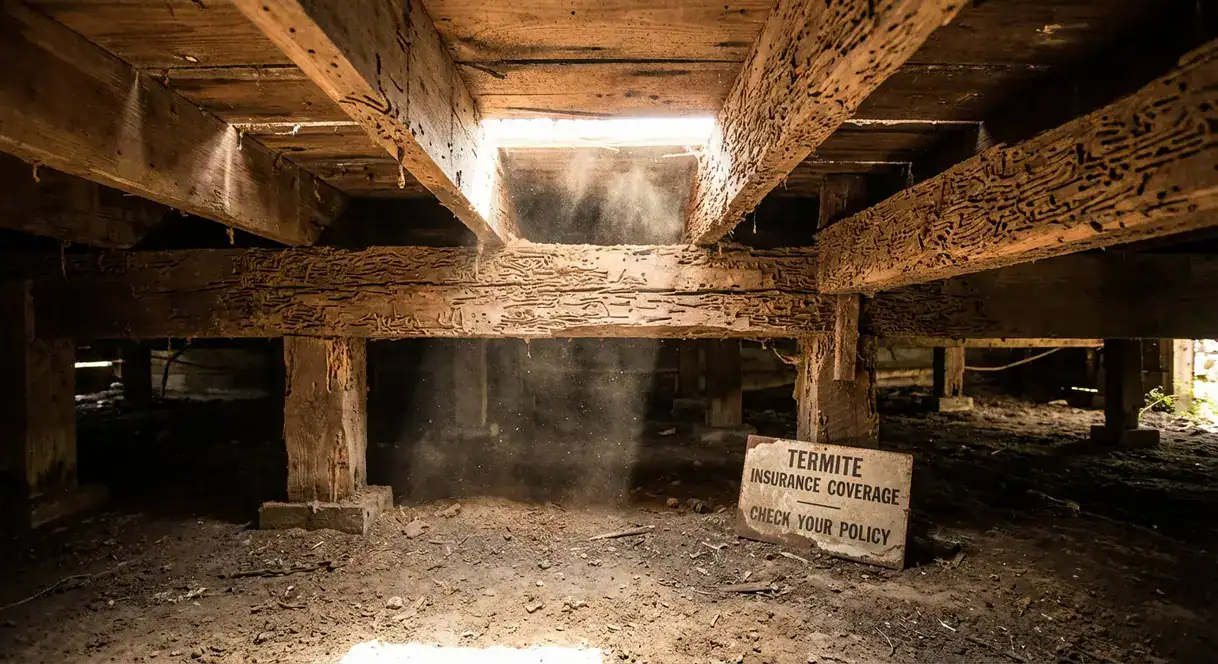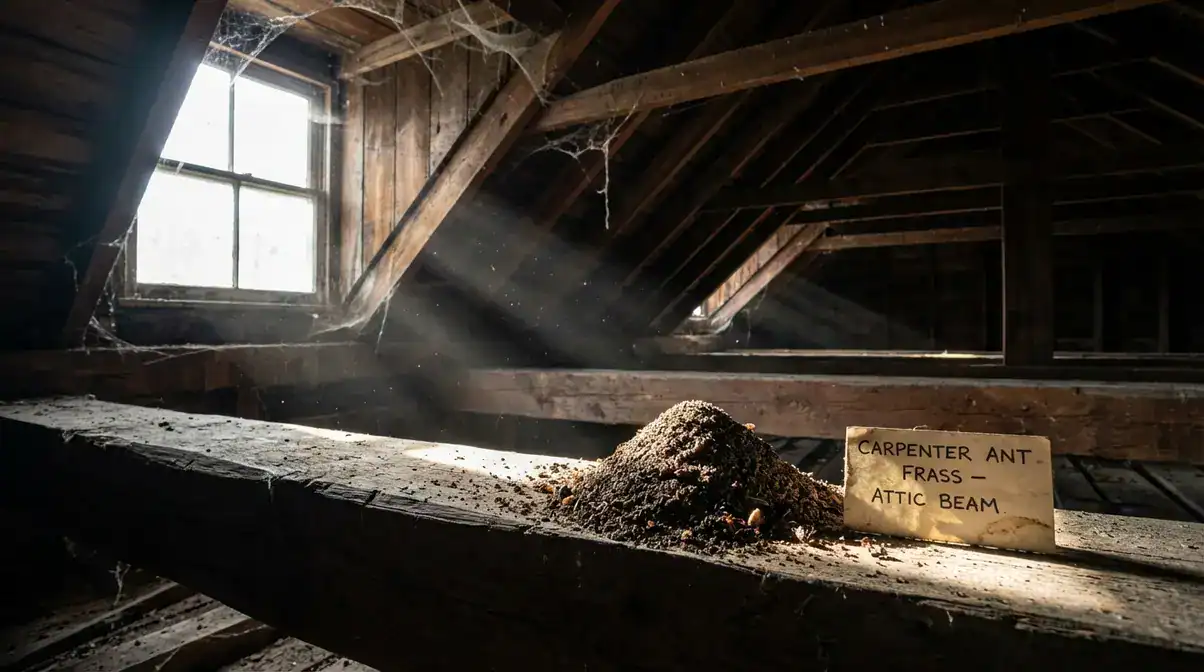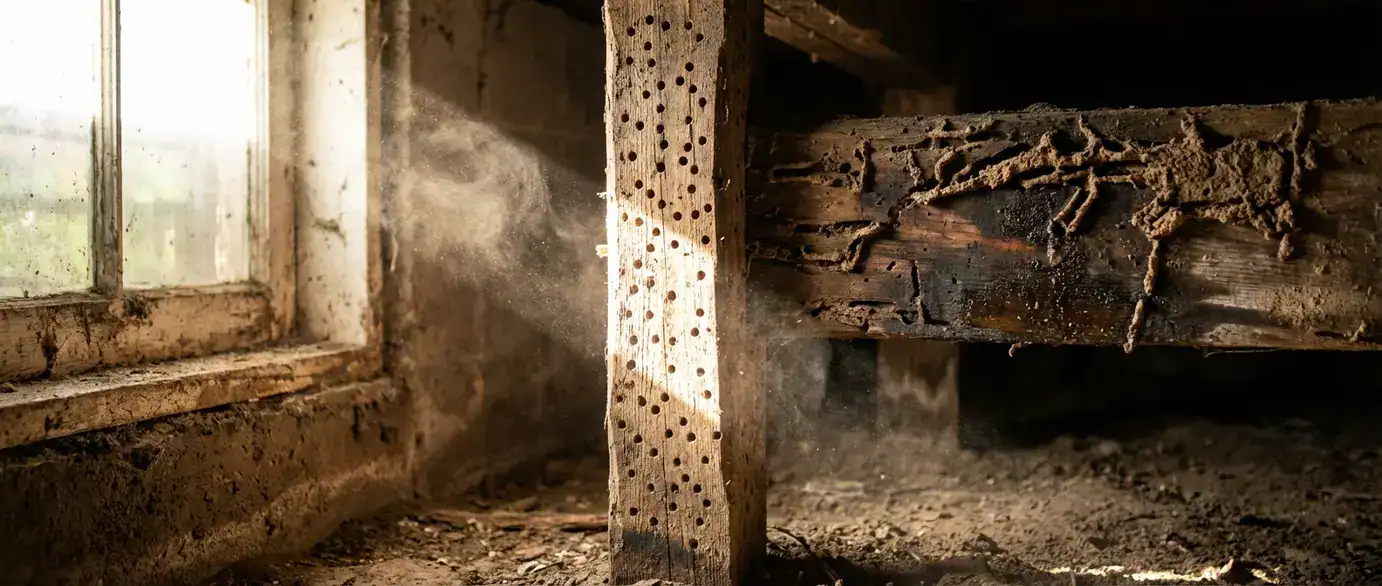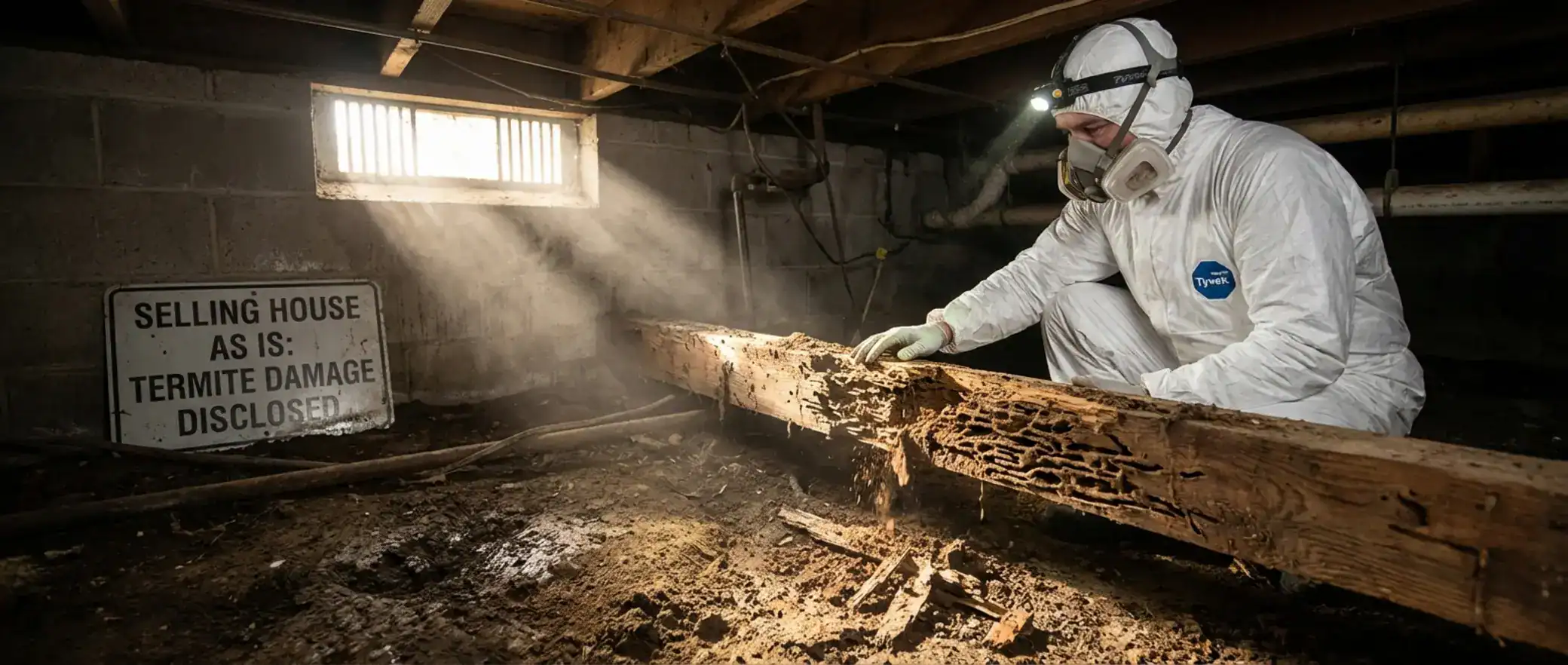
The discovery of termites can feel like a death sentence for a home sale, but it doesn’t have to be. For the approximately 600,000 U.S. homeowners who face termite damage annually, understanding your legal obligations is the first step to a successful transaction. Navigating the complexities of selling a house with termites requires transparency, strategy, and a firm grasp of the law to avoid costly lawsuits down the road. But let’s start with a simple question: Would you buy a house if you knew it had a history of termites? Your answer likely depends on how that history is presented.
What do I need to disclose when selling a house with termites?
You’re legally required to disclose any known termite history — including past infestations, treatments, and existing damage — even if it’s since been repaired. This information counts as a “material fact” that could influence a buyer’s decision. Failure to disclose can lead to lawsuits for fraud or misrepresentation.
Understanding Termite Disclosure Laws: Why Honesty is Non-Negotiable
Termite disclosure laws exist for one primary reason: to protect buyers from investing in a property with significant hidden problems. Termites and other wood-destroying insects can cause catastrophic structural damage that isn’t always visible during a standard home tour. Legally, this is known as a “latent defect” — a fault in the property that a reasonably thorough inspection could not have caught.
Because of this, most states have established legal obligations when selling a home with termites. Sellers must fill out a property disclosure statement — a formal document where they answer specific questions about the home’s condition. Lying on this form- either by omission or direct falsehood- constitutes fraud.
Recent legal precedents continually reinforce these seller obligations:
- An Arizona Court of Appeals ruling emphasized that sellers cannot hide behind an “as-is” clause to avoid disclosing known termite damage.
- Texas House Bill 3391 clarified that sellers must disclose not only active infestations but also previous damage and treatments, ensuring buyers have a complete history.
These laws underscore a simple truth: the potential impact of termites on home sale is too significant to conceal. A history of infestation directly affects property value, safety, and a buyer’s willingness to purchase.
A State-by-State Guide to Termite Disclosure Requirements
While the general principle of disclosure is nearly universal, the specific requirements vary significantly by location. Understanding termite disclosure laws by state is critical for a legally sound sale. Some states have highly detailed forms and require specific reports, while others have more general disclosure rules.
Below is a breakdown of requirements in several key states known for stricter mandates. This is not exhaustive legal advice, but it illustrates the level of detail sellers must provide.
| State | Specific Disclosure Requirement | Key Document/Form |
|---|---|---|
| California | Sellers must provide a copy of a recent Structural Pest Control (SPC) report, often called a “termite report,” to the buyer. This must be done as soon as practicable before the transfer of title. California Civil Code §1102.3 mandates this proactive disclosure. | Transfer Disclosure Statement (TDS) and Structural Pest Control (SPC) Report. |
| Texas | The Texas Seller’s Disclosure Notice explicitly asks about active termites, previous termite damage, previous treatments, and any termite warranties. The seller must answer truthfully based on their knowledge. | Seller’s Disclosure Notice (TREC Form OP-H). |
| Florida | Sellers must disclose any facts that “materially affect the value of the property,” which includes termite damage. The Florida Realtors/Florida Bar “As Is” contract contains a provision for a Wood-Destroying Organism (WDO) inspection report. | Seller’s Property Disclosure and WDO Inspection Report. |
| New York | The Property Condition Disclosure Statement includes direct questions (Q30-31) about insect damage. Sellers can either fill out the form or provide a $500 credit to the buyer at closing, but choosing the credit does not absolve them from liability for active concealment. | Property Condition Disclosure Statement (§462). |
| Maryland | Maryland law is particularly strict on latent defects. Sellers must disclose any known material facts, and termite damage is a classic example. Courts have held sellers liable even without a real estate agent’s involvement. | Maryland Residential Property Disclosure and Disclaimer Statement. |
Buyer’s Pre-Purchase Checklist for Termite Diligence
For buyers considering a house with termite history for sale, this checklist can help ensure you get the full picture:
✓ Request and review the seller’s property disclosure statement carefully.
✓ Ask for all documentation related to past termite activity, including initial inspection reports, treatment invoices, repair receipts, and any active warranties.
✓ Make your offer contingent on a satisfactory professional termite inspection performed by your own chosen inspector.
✓ Review the new Wood-Destroying Insect Report (WDIR) with your inspector to understand any new findings or areas of concern.
✓ If damage is found, get repair estimates from at least two licensed contractors.
Best Practices for Selling a House with Termite Damage
Discovering termites doesn’t mean your sale is doomed. In fact, handling it proactively can build trust with buyers and lead to a smoother transaction. Following these selling strategies for termite-affected houses is your best path forward.
1. Get a Professional Termite Inspection Immediately
Before you even list your home, hire a reputable pest control company for thorough pest inspections for home sales. This accomplishes two things: it gives you a clear understanding of the problem’s scope and provides an official report you can use for disclosure. An early inspection prevents surprises during the buyer’s due diligence period, which can kill a deal.
2. Disclose Everything in Writing
Transparency is your greatest legal shield. Work with your real estate agent to fill out the disclosure forms accurately and completely. Attach all relevant documents: the initial inspection report, quotes for treatment, receipts for completed work, and any transferable warranty or bond information. This proactive approach to real estate termite disclosures shows buyers you are honest and have nothing to hide.
3. Document All Treatments and Repairs
Once you have a plan, execute it and save every piece of paper. If you treat the infestation, keep the service agreement and payment receipt. If you repair damaged wood, keep the contractor’s invoice detailing the work performed. This paper trail is crucial for proving you have remedied the issue, which can significantly calm buyer concerns about termite history.
Should I treat for termites before selling?
This is one of the most common questions from sellers. Yes, you absolutely should. Presenting a home with an active, untreated termite infestation is a massive red flag for buyers and lenders. The cost of treatment (typically $500 to $3,000 for standard methods) is a smart investment to preserve your home’s value and make it sellable. Leaving the problem for the buyer often results in lowball offers or deals falling through entirely.
How do I negotiate repairs for termite-infested homes?
If the inspection reveals damage, you have a few options for negotiating repairs for termite-infested homes:
- Repair the damage yourself: This is often the best option, as it removes the issue from the table entirely.
- Offer a credit: You can offer the buyer a credit at closing to cover the estimated cost of repairs. This can speed up the sale but may require you to be flexible on the amount.
- Reduce the price: A straightforward price reduction can also work. But it may lead buyers to wonder whether the reduction really covers the full extent of the problem.
The Financial Implications of Termite Damage
A history of termites will almost certainly affect your home’s sale price. The key is to manage and minimize that impact through proactive measures. Honesty about selling property with termite problems is better than the financial fallout of a lawsuit.
The termite damage impact on property value can be broken down into several components:
- Cost of Inspection: A professional termite inspection typically costs between $100 and $300.
- Cost of Treatment: Treatment costs vary widely based on the type of termite and size of the infestation. Liquid treatments can range from $500 to $2,000, while bait systems or tenting (fumigation) can cost $1,200 to $5,000 or more.
- Cost of Repairs: This is the biggest variable. Minor cosmetic repairs might cost a few hundred dollars. However, repairing structural damage to floor joists, support beams, or foundation sills can easily cost $5,000 to $20,000 or more.
- Value Reduction: Even after treatment and repairs, a home with a history of termites may sell for less than a comparable home without one. Buyers often factor in a “stigma” discount. Studies and real estate experts suggest it can run anywhere from 5% to 15% of the home’s value. On a $500,000 home, that’s a potential reduction of $25,000 to $75,000.
The cost of termite treatment versus home value impact is a clear calculation. Spending a few thousand dollars on professional treatment and securing a transferable warranty is far cheaper than the combined cost of major repairs and a significant price reduction.
Legal Consequences of Failing to Disclose Termite Issues
Failing to disclose a known termite problem is one of the most common reasons for real estate lawsuits. The legal consequences of failing to disclose termite issues are severe and can far exceed the original cost of repairs.
If a buyer discovers undisclosed termite damage after the sale, they can sue the seller for multiple reasons, including:
- Fraud: Intentionally concealing a known material defect.
- Misrepresentation: Making false statements on the disclosure form.
- Breach of Contract: Failing to deliver the property in the condition represented.
The potential penalties are staggering. A court can order the seller to pay for all treatment and repair costs, the buyer’s legal fees, and in some cases, punitive damages. In the most extreme scenarios, a judge can order a “rescission” of the sale. That forces the seller to buy back the house and refund the purchase price.
A prominent example of the risks involved is a 2019 verdict in Maryland. A homebuyer won over $1 million after discovering extensive termite damage — damage the seller never disclosed, and a negligent inspector never caught. The law firm Whitney, LLP, which handled the case, demonstrated that the damage was long-standing and should have been known. This case serves as a stark warning: the courts show little sympathy for sellers who hide serious problems like termite infestations.
So, can a buyer sue for undisclosed termite damage? The answer is an unequivocal yes — and they often win, especially when there’s evidence the seller knew about the problem.
Common Questions About Selling a House with Termite History: Disclosure Laws
What are the legal requirements for termite disclosure?
In most states, you are legally required to disclose any known current or past termite activity and damage. This is considered a “material defect.” Specific requirements are outlined on state-mandated property disclosure forms. For example, California requires a Structural Pest Control (SPC) report before the sale.
Can I sell a house with active termites?
While technically possible to sell “as-is,” it is extremely difficult and ill-advised. Most lenders will not approve a mortgage on a home with an active infestation. The best practice is always to professionally treat the termites before listing the property to ensure a smoother sale and protect yourself from liability.
Do I have to disclose termite damage if it was treated and repaired?
Yes. The history of the infestation and the subsequent repairs are still material facts that must be disclosed. Providing documentation of professional treatment and certified repairs can actually become a selling point, as it shows you have responsibly addressed the issue and the home is now protected.
How does termite damage affect home selling price?
Termite damage can significantly lower your home’s value. Buyers may demand a price reduction of 5-15% to account for the property’s history and potential future risk. The final impact depends on the extent of the damage, the quality of the repairs, and whether a transferable warranty is in place.
Are termite treatments required before selling a house?
While not always legally mandated, termite treatments are practically required if an active infestation is found. A buyer’s lender will almost certainly require a “clear” termite report or WDIR before funding the loan. Proactively treating the issue is the best way to prevent delays or cancellation of the sale.
What should I do if I find termites before selling my home?
First, do not panic. Second, do not try to hide it. Immediately call a licensed and reputable pest control company for an official inspection and treatment plan. Then, gather all documentation and prepare to disclose the findings, treatment, and any repairs to potential buyers.
Who pays for termite treatment, the buyer or seller?
This is a negotiable point in the contract, but in most cases, the seller is expected to pay for the treatment of an active infestation discovered before closing. It is a cost of preparing the home for sale. The buyer typically pays for their own inspection.
Resources for Homeowners Dealing with Termite History in Sales
Navigating this process can be overwhelming, but you are not alone. Several resources can provide guidance and services:
- National Pest Management Association (NPMA): A non-profit organization that provides information on finding qualified and certified pest control professionals in your area.
- State Real Estate Commissions or Boards: Your state’s real estate governing body provides the official disclosure forms and can offer guidance on legal requirements.
- Reputable Pest Control Companies: National brands like Orkin and Terminix, as well as trusted local exterminators, can provide inspections, treatments, and warranties.
- Real Estate Attorneys: If you are dealing with extensive damage or a complex disclosure situation, consulting with an attorney who specializes in real estate law can provide invaluable protection.
Many real estate agents can also provide downloadable templates for disclosure addendums and checklists to help you organize your documentation. The key is to build a team of professionals to guide you.
References & Expert Sources
- Selling House with Termite History Guide (Redfin)
- Termite Damage Claims for Hidden and Undisclosed Damage (Whitney, LLP)
- Brokerage Reminder: The termite report – timely delivery protects the seller (firsttuesday Journal)
- Selling a Home with Termite Damage (Lucent Home Inspections)
- Selling a House with Termite Damage (Foulk Law Firm)
- New York State Senate: Real Property (RPP) § 462
- National Pest Management Association (NPMA)
- TREC Seller’s Disclosure Notice (Texas Real Estate Commission)
- Termite Information & Control (Orkin)
- Termite Control & Treatment (Terminix)
- Research and Statistics (National Association of Realtors)
Final Thoughts: Empowering Your Sale with Transparency
Successfully selling a house with termites hinges on one core principle: absolute transparency. While the prospect of disclosing a termite history can be intimidating, attempting to hide it is a legal and financial gamble you cannot afford to take. Commission a professional termite inspection before selling. Document every step of treatment and repair. Follow your state’s termite disclosure laws strictly. Do that, and you transform a potential deal-breaker into a manageable issue. Knowledge is power. Be proactive, assemble a complete paper trail, and safeguard your sale against costly surprises.