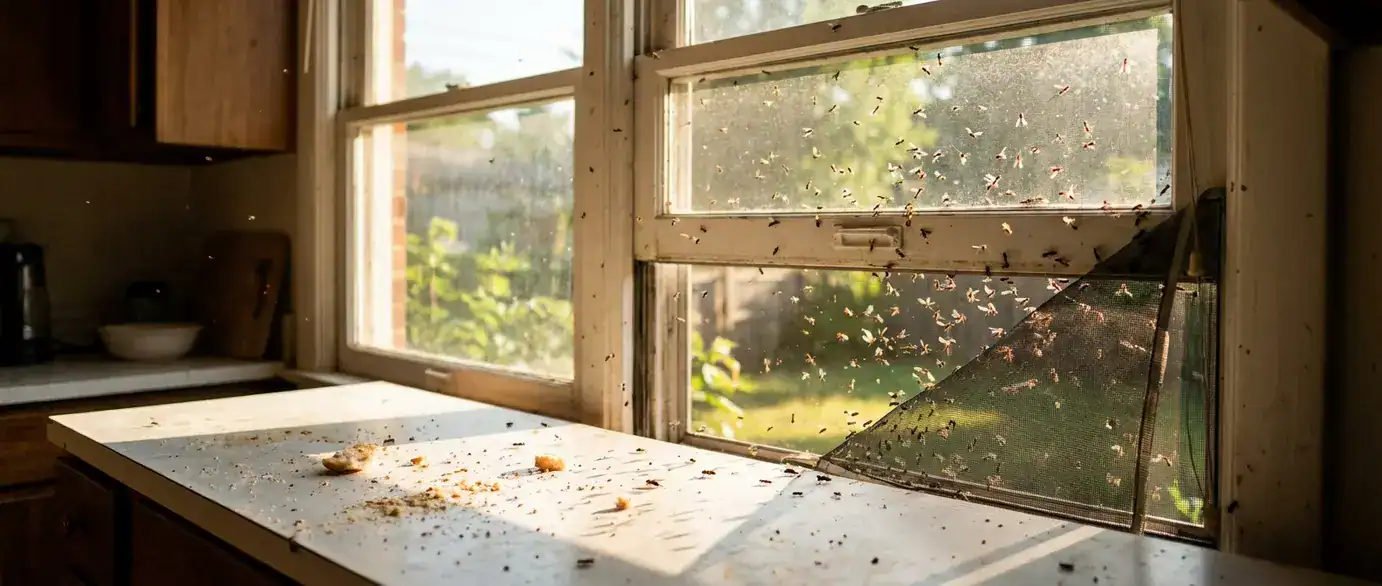
It’s a warm, sunny afternoon, and you notice one or two clumsy, winged insects buzzing near your kitchen window. Annoying, but not alarming. Then you see another, and another, until a sudden, disconcerting flying ants swarm materializes, seemingly from nowhere. This sudden appearance of flying ants in house settings is a common problem that sends homeowners scrambling for answers, wondering if they’re facing a minor nuisance or a sign of a much larger insect infestation.
Why are there suddenly flying ants in my house?
Flying ants, known as alates, appear indoors when a mature ant colony nearby is ready to reproduce. This swarm, or “nuptial flight,” is triggered by warm, humid weather, typically during summer. Seeing them inside means either a nest is located within your home’s structure or an outdoor colony has found an easy entry point.
The Critical First Step: Flying Ants vs. Termites Identification
Before you reach for the vacuum or a can of bug spray, the single most important action is to correctly identify your unwelcome guests. A misidentification between flying ants vs. termites can be a costly mistake, as termites cause significant structural damage that ants do not. While they look similar at a glance, a few distinct features will tell you exactly what you’re dealing with.
This clear identification is the foundation of effective pest management. Because termites require immediate professional intervention, knowing the difference can save you thousands of dollars in potential repairs.
| Feature | Flying Ants (Alates) | Termites (Swarmers) |
| Antennae | Bent or “elbowed” antennae. They have a distinct 90-degree angle. | Straight, bead-like antennae. They look like a string of tiny pearls. |
| Waist | A very narrow, pinched waist (a “pedicel”) connecting the thorax and abdomen. | A broad, thick waist. The body appears as one continuous segment. |
| Wings | Two pairs of wings of UNEQUAL length. The front wings are much larger than the hind wings. | Two pairs of wings of EQUAL length. All four wings are the same size and shape. |
| Body Color | Typically dark, often black or reddish-brown. | Usually black or brown, but can be lighter in color. |
Why Are Flying Ants in My House? Uncovering the Root Causes
Seeing a flying ant infestation inside your home is a clear signal. These winged ants aren’t just random visitors; their presence tells a specific story about a mature ant colony. Understanding what attracts flying ants to your house is key to solving the problem for good.
The Nuptial Flight: Nature’s Call
The primary reason you see a swarm is due to a biological event called the nuptial flight. Flying ants are not a separate species; they are the fertile males and future queens (alates) of an existing ant colony. When a colony reaches a certain size and maturity (typically after several years), it produces these reproductives.
Triggered by specific environmental cues–usually a combination of high humidity and warm temperatures after a recent rain-—these alates emerge from the nest in a synchronized swarm to mate. The males die shortly after, while the newly fertilized queens shed their wings and search for a suitable location to start a new colony. Consequently, if this swarm originates from a nest inside your walls, they will emerge into your living space.
An Invitation from Inside: The Real Problem
While an outdoor swarm might accidentally find its way inside through an open window, a persistent presence of winged ants in the home almost always points to a bigger issue.
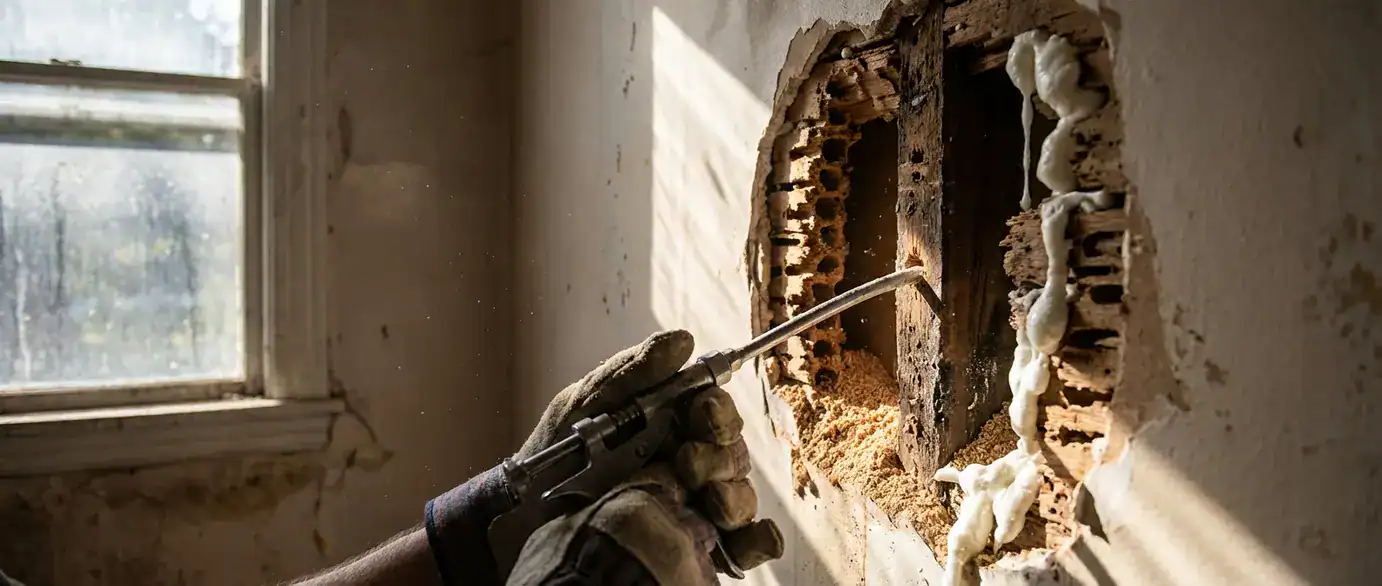
- An Established Indoor Nest: The most concerning reason is a mature colony living within your home’s structure. Carpenter ants are a primary culprit. They excavate galleries in wood, particularly wood that is damp or has been damaged by moisture. A swarm emerging from a vent, light fixture, or crack in the wall is a definitive sign of an indoor nest.
- Easy Access Points: An outdoor colony may have established itself very close to your foundation. Cracks in the foundation, gaps around utility lines, or poorly sealed windows and doors provide a superhighway for ants to enter. The swarm emerges outdoors but quickly finds its way inside while searching for mates and light sources.
- Attractive Conditions: Ants are drawn to moisture and food. Leaky pipes under a sink, a damp crawlspace, or poor drainage around your foundation create the perfect environment for an ant colony to thrive. Additionally, crumbs, spills, and unsecured food provide a reliable food source, encouraging a colony to set up nearby.
The Swarming Season: When to Expect the Buzz
Ant swarming behavior is highly seasonal and predictable. While a stray flying ant might appear at other times, the massive, coordinated swarms are tied directly to the weather. The phenomenon is so regular in some regions that it’s unofficially dubbed “Flying Ant Day.”
For most of North America and Europe, the primary ant swarming season occurs during the hot summer months. Research shows that 90% of nuptial flights happen in July, with June and August also being active months. The specific timing depends on the ant species and local climate.
The perfect trigger is a period of warm, humid weather that follows a rainstorm. This combination ensures the ground is soft, making it easier for new queens to dig their nests. Because of the “heat island” effect, urban areas often experience swarms a week or more before surrounding rural areas. Climate change and rising global temperatures are also causing these events to occur earlier in the year, extending the breeding times for many insect pests.
Are Flying Ants Dangerous? Separating Nuisance from Nightmare
For most people, the immediate question is, are flying ants dangerous? The answer depends on the species and the context.
Do Flying Ants Bite or Sting?
Generally, the common flying ants you see swarming are not aggressive. They are preoccupied with mating and are not interested in you. However, some ant species that produce alates can bite or sting if they feel threatened. For instance, the reproductives of fire ant colonies can still sting, though it’s uncommon during a nuptial flight. Most homeowners are unlikely to be bitten by the typical winged ants found indoors. The primary risk is not physical harm to people but potential harm to your property.
The Real Threat: Carpenter Ants and Structural Damage
The most significant danger associated with flying ants in house settings comes from carpenter ants. If the swarmers you see are carpenter ant alates, it means you have a mature colony that has been excavating and weakening wooden structures in your home for years.
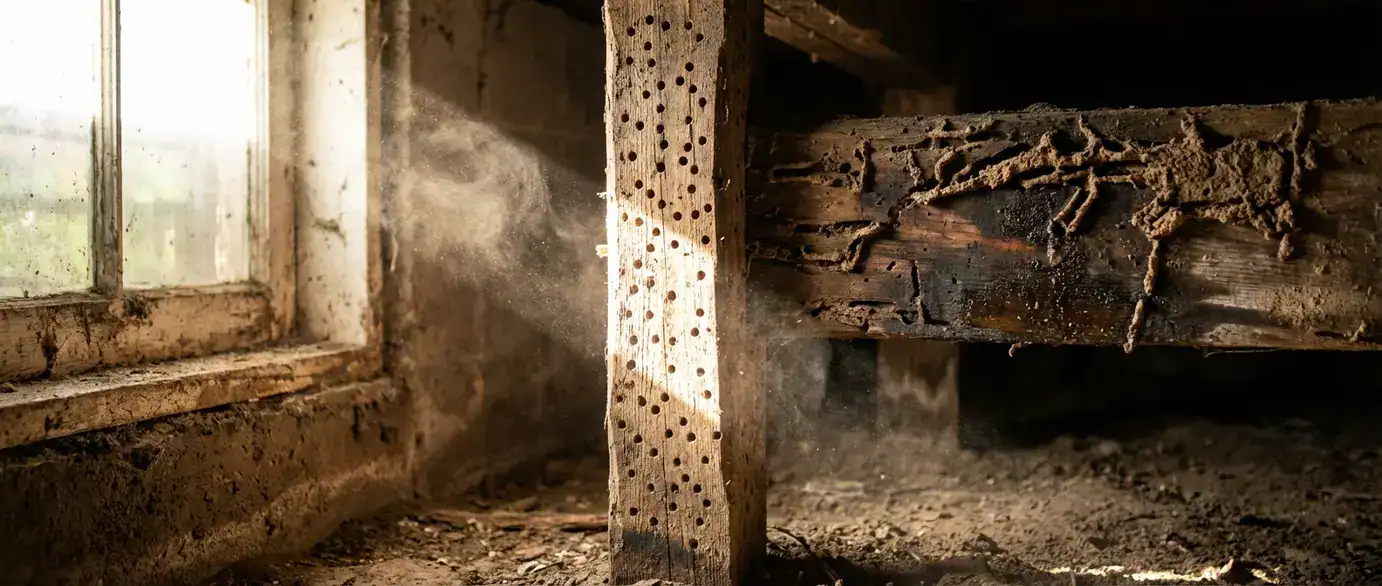
Unlike termites, carpenter ants don’t eat wood. They chew through it to create smooth tunnels and galleries for their nests. They prefer damp or decaying wood, making areas around windows, sinks, roofs, and in basements prime targets. Over time, this excavation can compromise the structural integrity of beams, studs, and joists.
Signs of a carpenter ant infestation include:
- Finding piles of “frass,” which looks like fine sawdust, near baseboards or in crawlspaces.
- Hearing faint rustling or crunching sounds within walls.
- Discovering swarmers emerging from cracks indoors.
Ignoring a carpenter ant problem can lead to repairs costing anywhere from a few hundred to several thousand dollars.
How to Get Rid of Flying Ants: A Two-Pronged Approach
When faced with a swarm, your goal is twofold: deal with the immediate swarmers and then address the source colony to prevent a recurrence. This requires a combination of immediate action and strategic flying ant pest control.
DIY Methods for Immediate Relief
For the swarmers currently in your home, several effective home remedies for flying ants can provide quick results. These methods are excellent for controlling the visible pests but will not eliminate the nest.
- The Vacuum Cleaner: This is the fastest, cleanest, and most effective way to remove a swarm indoors. Simply vacuum up the ants and dispose of the bag or empty the canister outside immediately to prevent any survivors from crawling back out.
- Soap and Water Spray: A simple mixture of dish soap and water is a powerful contact killer. The soap breaks down the ants’ exoskeletons, causing them to dehydrate and die. Mix one part dish soap with two parts water in a spray bottle. This solution kills on contact with an 80-90% success rate but has no residual effect.
- Diatomaceous Earth (DE): This fine powder, made from fossilized aquatic organisms, is a natural desiccant. Sprinkle a light layer of food-grade DE in areas where you see ants, such as along baseboards, in cracks, or around entry points. It works by absorbing the oils from their exoskeletons but takes time to be effective.
- Pheromone Trail Disruption: Ants use invisible chemical trails to navigate. Wiping down surfaces where you’ve seen ants with a 1:1 solution of white vinegar and water can help erase these trails, confusing them and disrupting their patterns.
Professional Pest Control: When to Make the Call
DIY methods are great for a few stray ants, but if you’re facing a large swarm originating from inside, it’s time for professional pest control for ants. This is especially true if you suspect carpenter ants.
A professional exterminator will:
- Identify the Species: Confirm whether you’re dealing with harmless pavement ants or destructive carpenter ants.
- Locate the Nest: Use specialized techniques, like tracing trails at night when carpenter ants are most active, to find the main colony and any satellite nests.
- Implement Targeted Treatment: Apply professional-grade baits, dusts, or non-repellent insecticides that worker ants will carry back to the colony, eliminating the queen and the entire nest.
The cost comparisons between DIY pest control and hiring exterminators are stark. A DIY approach might cost $20-$50 for sprays and baits. Professional ant treatment typically ranges from $150-$500. However, if carpenter ants are involved, the cost can be $300-$1,000+, but this is a small price compared to the potential thousands in structural repairs from an untreated infestation.
Long-Term Prevention Strategies to Keep Your Home Ant-Free
Once you’ve dealt with the current invasion, the focus must shift to prevention. The goal is to make your home as unappealing and inaccessible to ants as possible. Adopting these long-term prevention strategies to keep your home ant-free is the most effective way to avoid future swarms.
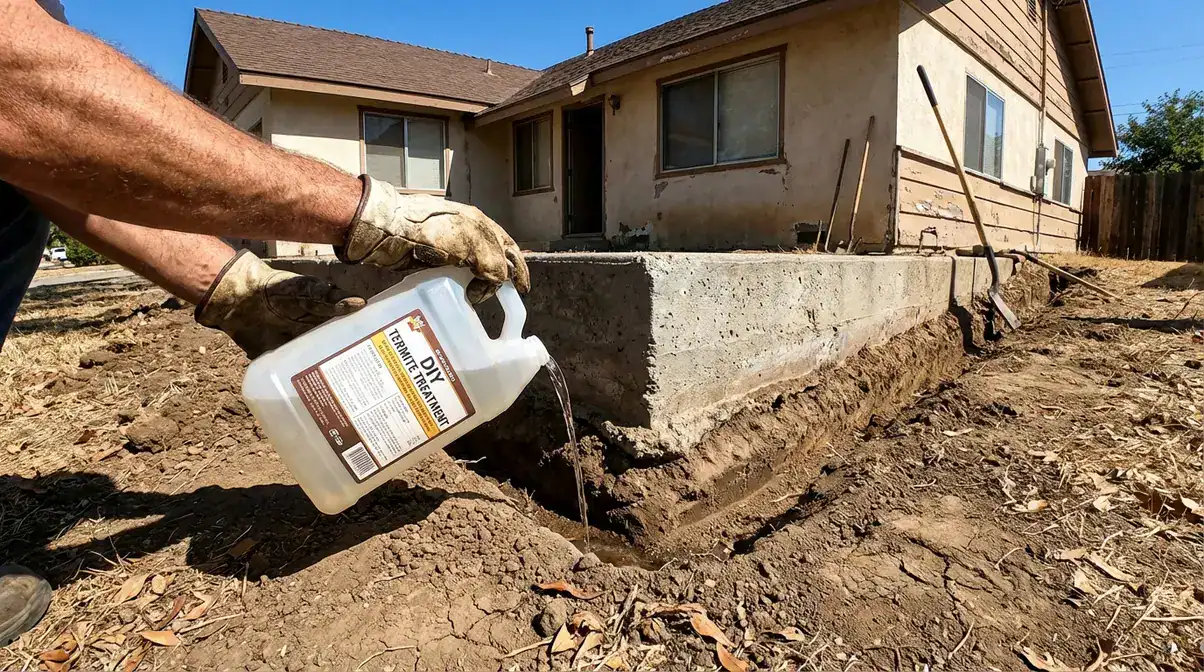
- Seal All Entry Points: This is the number one way to prevent flying ants in house settings. Conduct a thorough inspection of your home’s exterior and seal any cracks or gaps with caulk. Pay close attention to areas where utility pipes and wires enter the house, as well as gaps in the foundation and around window and door frames. A simple caulk seal can reduce entry by up to 70%.
- Eliminate Moisture Sources: Ants, especially carpenter ants, need moisture to survive. Fix leaky pipes, repair roof leaks, and ensure your gutters are clean and directing water away from your foundation. Use dehumidifiers in damp basements or crawlspaces.
- Manage Vegetation: Trim tree branches and shrubs so they don’t touch your house. Vegetation acts as a bridge for ants to bypass ground-level defenses and access your roof and walls. Aim for an 18 to 24-inch gap between plants and your home’s exterior.
- Practice Good Sanitation: Don’t give ants a reason to come inside. Clean up food spills and crumbs immediately, store food (especially sweets and proteins) in airtight containers, and take out the trash regularly.
- Store Firewood Properly: If you use firewood, store it well away from your house and elevated off the ground. Firewood piles are prime real estate for carpenter ant colonies.
Understanding the Life Cycle of Flying Ants
To truly master ant control, you need to understand the enemy. The flying ants life cycle explains why you see swarms and why targeting the nest is so critical.
- Egg: The queen lays tiny eggs in the heart of the colony.
- Larva: The eggs hatch into legless, grub-like larvae, which are cared for and fed by worker ants.
- Pupa: After molting several times, the larvae spin a cocoon and become pupae, a non-feeding transitional stage.
- Adult: Adult ants emerge from the pupal stage. Most become sterile female worker ants. However, in a mature colony, some larvae are given extra food and develop into reproductives-—the winged alates (males and new queens).
- Nuptial Flight: When conditions are right, these alates leave the nest to swarm and mate, starting the cycle anew. The queen sheds her wings after finding a nesting site.
The swarmers you see live for only a few days post-flight. Killing them provides temporary relief, but the colony that produced them, containing thousands of worker ants and the egg-laying queen, remains untouched. This is why effective control must always focus on eliminating the source colony.
Common Questions About Flying Ants in the House: Why Swarmers Mean Trouble
Why do flying ants suddenly appear after rain?
Flying ants often appear after rain because the combination of high humidity and moist soil creates perfect conditions for their nuptial flight. The soft ground makes it easy for a newly mated queen to dig a chamber and start a new colony, so mature colonies are biologically programmed to release their swarmers at this optimal time.
How long do flying ants live inside a house?
Individual flying ants have a very short lifespan, typically living for only a few hours to a few days. Their sole purpose is to mate. Once indoors, they cannot complete this cycle properly. They will soon die on their own, often found on windowsills as they are attracted to light. However, their presence signals a much larger, long-lived colony nearby.
Can you have flying ants without an infestation?
It is possible to have a few flying ants indoors without a full-blown infestation if they entered through an open door or window from a nearby outdoor swarm. However, if you see more than a handful, or if you see them emerging from vents, cracks in walls, or light fixtures, it is a very strong indicator that you have an active ant colony nesting inside your home’s structure.
Do flying ants mean I have carpenter ants?
Not necessarily, but it is a strong possibility, as carpenter ants are one of the most common flying ant species found indoors. About 70% of indoor flying ant service calls are related to carpenter ants. Look for other signs like frass (sawdust piles) or faint rustling sounds in walls. Proper identification is crucial to assess the risk to your home.
What is the fastest way to get rid of a flying ant swarm?
The absolute fastest and most efficient way to remove a swarm of flying ants that is already inside your house is to use a vacuum cleaner. This method instantly contains them without the use of chemicals. For ongoing control and to prevent more from entering, sealing entry points and using a soap-and-water spray on any stragglers are effective next steps.
References & Expert Sources
To provide the most accurate and authoritative information, we consulted a range of expert sources from the pest control industry, entomology research, and homeowner reports.
- NPMA Ant Survey Executive Summary – PestWorld.org
- Swarming Insects Near Windows or Lights – Rentokil NA (LinkedIn post with pest insights)
- National Flying Ant Day 2026 – Awareness Days (references NHM/Royal Society predictions)
- Control Fire Ant Invasions with TERRO® Fire Ant Bait – TERRO
- Different Types of Flying Ants & Their Habits – Bug Out NC
- Carpenter Ant Control & Prevention – Adam’s Pest Control
- Integrated Pest Management (IPM) Principles – EPA
- Flying Ant Day predictions – Royal Society of Biology (via awareness site above)
- r/pestcontrol on Reddit – First-hand homeowner experiences and community advice.
Final Thoughts: Taking Control of Your Home
Discovering flying ants in house settings can be alarming, transforming a peaceful day into a stressful pest control mission. While the swarm itself is a short-lived event, it serves as a critical warning sign of a deeper problem. The winged insects are messengers from a hidden colony, one that could be silently damaging your home if it’s a carpenter ant species.
By arming yourself with knowledge–learning to distinguish ants from termites, understanding their life cycle, and implementing both immediate and long-term control strategies-—you can move from a reactive panic to a proactive defense. Seal the cracks, manage moisture, and don’t hesitate to call a professional when the signs point to an indoor nest. Taking decisive action today is the best way to ensure your home remains a comfortable, ant-free sanctuary for years to come.