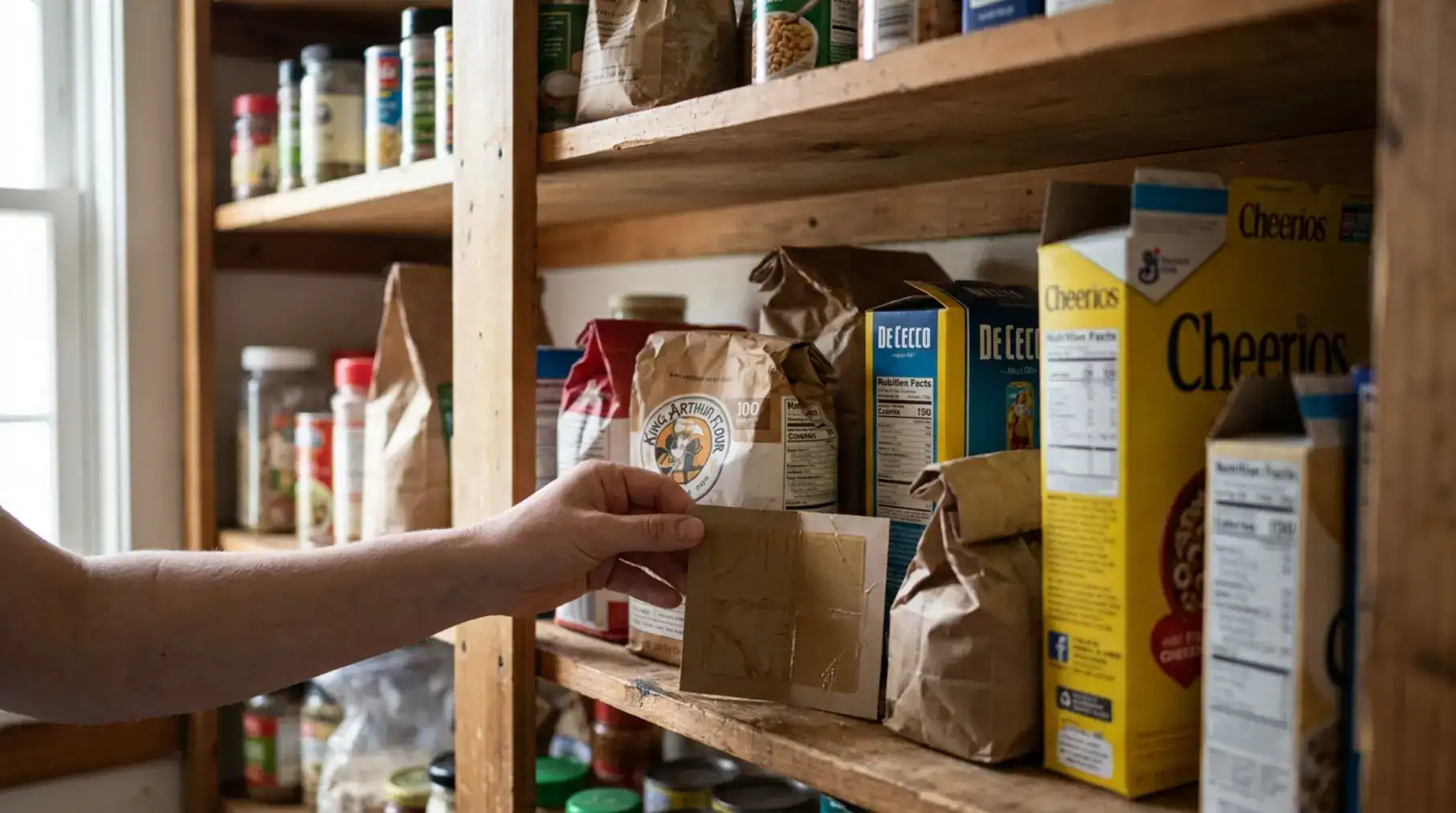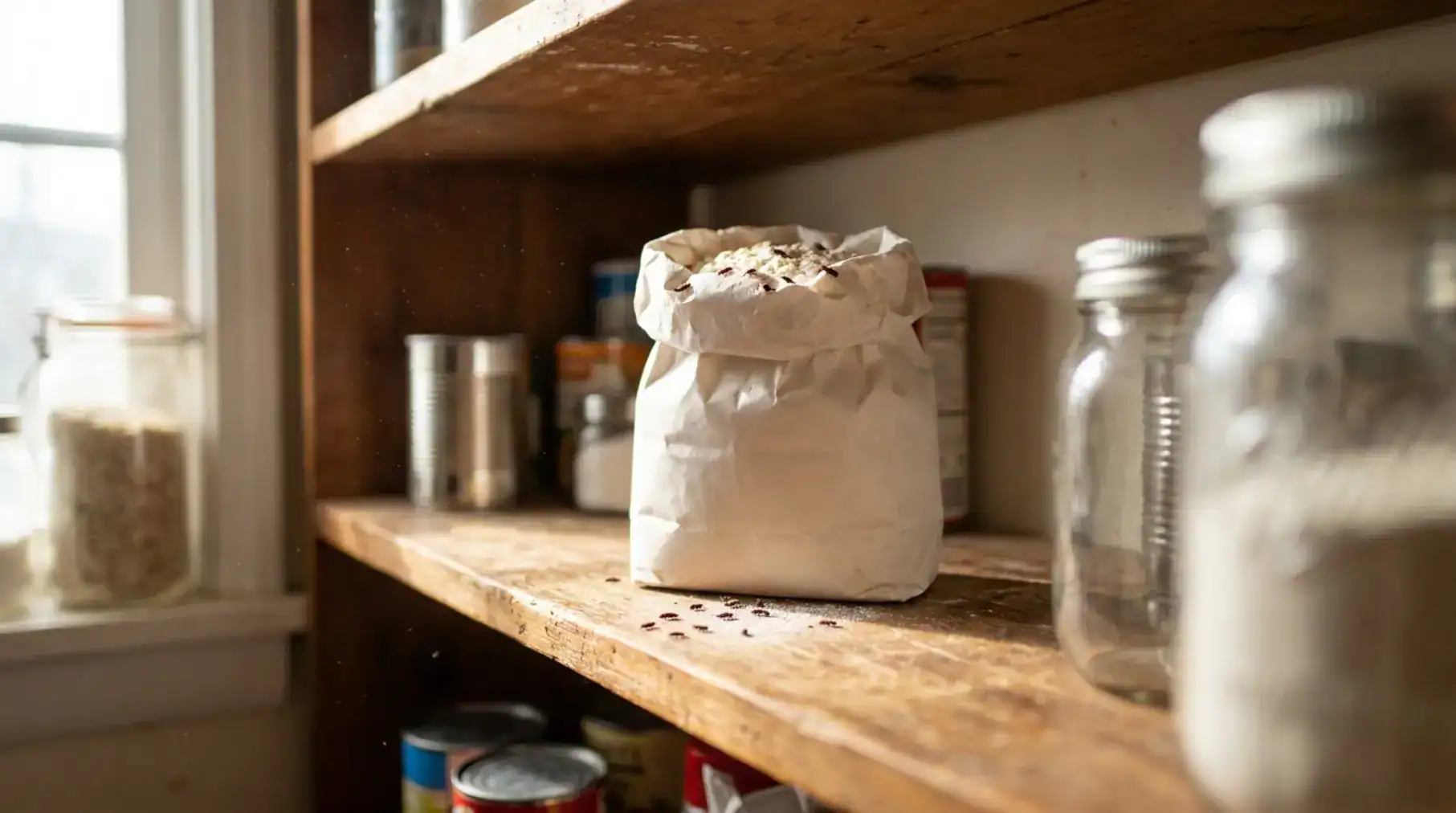
Opened your pantry to find tiny brown bugs crawling in your baking supplies? Finding weevils in flour is incredibly common and rarely a sign of a dirty kitchen. You are definitely not alone. Specifically, these pests usually arrive concealed inside standard grocery store bags. As a result, they remain completely invisible on the shelf until they multiply inside your cabinets. Today, you will learn exactly how to identify the culprits, eliminate them safely, and secure your food storage permanently.
What Are Weevils in Flour? Understanding Your Enemy
To stop an infestation, you must first identify exactly what insect is invading your pantry space.
Most people use the wrong terminology for these bugs. Actually, the tiny insects you see in milled baking products are rarely true weevils. Instead, they are usually flour beetles. Sitophilus granarius is defined as a true weevil characterized by an elongated proboscis. These snout-nosed bugs require intact kernels to lay their eggs. For instance, wheat weevils and rice weevils thrive inside whole, unmilled grains.
In contrast, flat-bodied beetles eat heavily processed grain dust. Tribolium castaneum, scientifically known as the red flour beetle, targets fine baking supplies. Additionally, you might encounter Indian meal moths. These winged food storage pests leave tiny, sticky webs behind. Consequently, understanding the entomology of weevils saves you time when treating the issue. Proper flour weevils identification helps you apply the correct eradication method.
| Feature | True Weevils | Flour Beetles |
|---|---|---|
| Appearance | Elongated snout (proboscis) | Flat, oval body, no snout |
| Diet | Whole grains, wheat berries, corn | Milled baking powder, cake mixes |
| Mobility | Often crawl (rice varieties fly) | Crawl quickly, rarely fly |
| Key Damage | Holes drilled into grain kernels | Foul odor, discoloration, clumping |
Early Signs of Weevils in Flour and Detection Methods
Catching an infestation early requires looking beyond obvious crawling bugs to spot microscopic eggs and chemical odors.
Invisible eggs hatch completely unnoticed. Therefore, the absence of visible bugs does not mean your groceries are safe. How do you know if your items are compromised? First, look for physical evidence. You might see small brown insects crawling. You might notice heavy clumping. Specifically, flour pests often leave behind frass, which looks like extra fine, discolored dust. Look for the “shot hole” appearance on whole grains. This means a bug chewed its way out.
Does flour have weevils right off the supermarket shelf? Yes, it often does. Because of this, fulfilling your early identification needs stops the cycle. Try the water float test. Pour a small amount of suspect powder into a glass of water. Naturally, the bugs float to the surface while the good product sinks.
Recent update 2025: Scientists discovered volatile organic compounds (VOCs) that signal early infestations. According to recent agricultural studies, infested grains emit specific chemical markers like hexadecenoic acid. . As a result, home smell tests may soon become standard practice.
Think of it like a Trojan Horse. The enemy enters hidden inside the very supply lines you trust. Early detection of flour contamination prevents them from spreading.
Is It Safe to Eat Flour with Weevils? Health Concerns and FDA Guidelines
Consuming bug-infested baking products poses minimal physical risk, but understanding the chemical changes helps you decide whether to bake or discard.
Many bakers panic when they spot bugs. Your safety comes first, but you need not panic. These insects are non-toxic. They do not bite. They carry no diseases transmissible to humans or pets. Still, discovering insect infestations in food raises valid health concerns for many families.
Safety Note: If you suffer from severe respiratory allergies, you must discard heavily infested products immediately.
Beetles produce benzoquinones. Benzoquinones are defined as chemical defense compounds that cause musty odors and alter the taste of food. Consequently, highly contaminated products taste terrible. Can you still use it? Legally, yes. According to the FDA Defect Levels Handbook, the government allows up to 75 insect fragments per 50 grams of wheat flour. .
While some homesteaders recommend sifting the bugs out, industry experts suggest tossing heavily compromised bags. Fully cooking the product kills any remaining bacteria. Because of this, accidentally eating baked bread made with lightly affected ingredients will not harm you. Ultimately, managing these pests is a flavor and quality issue, not a poison risk.
How to Get Rid of Weevils in Flour Using Safe Methods
Eradicating pantry pests requires a strict combination of temperature control, quarantine, and non-toxic cleaning methods.
You need an immediate action plan. Knowing exactly how to get rid of weevils in flour stops them from spreading to your pasta and cereals. Follow these precise steps for complete flour pest control.
- Isolate and quarantine all suspected bags immediately outside your kitchen.
- Freeze the items in sealed bags at 0°F (-18°C) for at least 72 hours.
- Heat-treat bulk whole grains in the oven at 120°F (49°C) for exactly one hour.
- Vacuum all cabinet cracks and crevices to remove hidden microscopic eggs.
- Wipe down empty shelves with a white vinegar solution to destroy pheromone trails.
Effective disposal matters. Disposing of weevils in flour responsibly prevents re-infestation. For small purchases under five pounds, toss the bag directly into an outside bin. For large bulk buckets, use the heat or freeze methods mentioned above.
Never apply chemical pesticides inside your cabinets. Instead, use food-grade Diatomaceous Earth. This natural powder works mechanically. It pierces the exoskeleton of wandering bugs, leading to rapid dehydration. .
Preventing Weevils in Flour with Elite Storage Solutions
Long-term prevention relies on airtight physical barriers and disrupting the pest life cycle before it begins.
The best offense is a strong defense. Preventing weevils in flour starts the moment you walk through the door. First, implement a mandatory quarantine protocol. Freeze all new baking supplies for three days. This kills any existing eggs. Next, upgrade your containers.
An airtight seal is defined as a closure that completely blocks air and moisture exchange. Bugs chew right through paper, cardboard, and thin plastic. Because of this, you need high-density polyethylene (HDPE) or thick polycarbonate. Examples include Cambro containers, OXO Good Grips POP jars, and five-gallon buckets with gamma seal lids. . These storage solutions block outside invaders completely.
Additionally, practice the FIFO rotation system. FIFO stands for First In, First Out. Use older ingredients before opening new ones. This stops eggs from incubating. Finally, use natural deterrents. Dried bay leaves, cloves, and eucalyptus oil mask the starchy scent. Consequently, these preventative measures keep your pantry secure. These are the best practices for flour storage.
Managing the Emotional Stress of Pantry Pests
Dealing with insect invasions often triggers deep anxiety and guilt, but reframing the issue reduces the emotional toll.
A weevil infestation in pantry cabinets feels like a personal failure. Actually, it is completely normal. Social media analysis reveals massive emotional stress among home cooks. People express disgust, food waste anxiety, and frustration over the labor-intensive cleaning process. You are not alone in feeling overwhelmed.
Modern pest management in food storage focuses on the supply chain. Grocery stores carry microscopic eggs. Therefore, you did not cause this mess. Reframing the problem helps you cope. View the invasion as a manageable nuisance. Use science-based checklists to regain control of your kitchen.
If you feel guilty about throwing away expensive ingredients, consider composting them. Sifting the product creates excellent, nitrogen-rich compost for your garden. This sustainable approach reduces waste anxiety. .
Common Questions About Weevils in Flour: Identification and Disposal
Quick, factual answers to the most common queries help you eliminate pantry pests efficiently.
What do weevils in flour look like?
True snout beetles have elongated noses, while flour beetles appear as tiny, flat, reddish-brown ovals about 2-3 mm long. Flour weevils identification is easy if you look closely at the shape of the insect body.
Is it safe to eat flour with weevils?
Yes, it is biologically safe. These bugs do not carry human diseases or pathogens. While the thought causes emotional stress, consuming fully baked items made from lightly affected ingredients will not harm your stomach.
How long does it take to freeze flour to kill bugs?
Freezing the product at 0°F (-18°C) for at least 72 hours reliably eradicates all life stages, including eggs. Because of this, freezing is the most effective preventative measure you can take at home.
Can weevils chew through Ziploc bags?
Yes, they can chew through thin plastic, foil, and cardboard very easily. For true protection against food storage pests, you need heavy-duty storage solutions made of glass, metal, or thick polycarbonate.
Do bay leaves keep flour weevils away?
Bay leaves naturally repel these insects by masking the scent of the starch. However, they will not kill an active infestation. They only act as a mild deterrent for preventing weevils in flour.
Are exterminators needed for pantry pests?
Professional exterminators are rarely needed for basic pantry moths or beetles. You can achieve total flour pest control using proper cleaning, temperature treatments, and airtight jars.
References and Expert Sources
The methods detailed in this guide rely on data from agricultural entomologists, federal safety regulations, and modern pest control standards.
- FDA Defect Levels Handbook (2026 Guidelines)
- Penn State Extension: Pantry Pests and Stored Grain Insects
- EPA Guidelines on Food-Grade Diatomaceous Earth
- Moxie Pest Control: Identifying Pantry Invaders
- ETC Journal: Freezing Protocols for Whole Wheat Flour
- USDA Agricultural Research Service: Biology of Sitophilus granarius
- WebMD: Health Risks of Consuming Pantry Pests
- The Kitchn: Best Practices for Pantry Organization
- WHO Fact Sheet: Household Pests and Disease Transmission
- Reddit Communities: Anecdotal Evidence on Infestation Stress
Final Thoughts
Finding bugs in your baking supplies disrupts your day, but it does not have to ruin your kitchen. You now have the exact blueprint for identifying, treating, and preventing these annoying invaders. By understanding the biology of the bugs and employing strict temperature controls, you can protect your expensive ingredients from future damage.
Getting rid of weevils in flour permanently takes a little effort upfront, but the peace of mind is worth it. Remember to freeze your new groceries immediately upon returning home. Invest in high-quality, airtight polycarbonate jars. Discard heavily compromised items to avoid bad-tasting food. Stop blaming yourself for supply chain issues, and start building an impenetrable pantry today.