You clean your kitchen daily, yet the tiny swarms keep returning. It feels incredibly frustrating to maintain a spotless home only to find nuisance insects hovering over your sink or trash bin. Are you inadvertently feeding the enemy without knowing it? In reality, your standard cleaning habits might actually be protecting the hidden source of your bug problem. Understanding the specific differences between a fruit fly vs drain fly is the only way to stop the breeding cycle permanently.
Proper Fruit Fly Identification and Drain Fly Identification
Proper pest control always begins with accurate identification, since treating a plumbing issue with vinegar traps will inevitably fail. You must clearly identify the tiny wings invading your space.
A fruit fly is defined as Drosophila melanogaster, a small flying insect roughly three millimeters long. Fruit fly identification relies heavily on visual cues. They typically feature light tan or yellow bodies. They possess smooth, translucent wings. Most notably, they have bright red eyes that look like tiny cherries under a magnifying glass. They are diurnal, meaning they remain highly active during the daylight hours. Their flight pattern is erratic and fast. They dart around your kitchen counters looking for sugary sustenance.
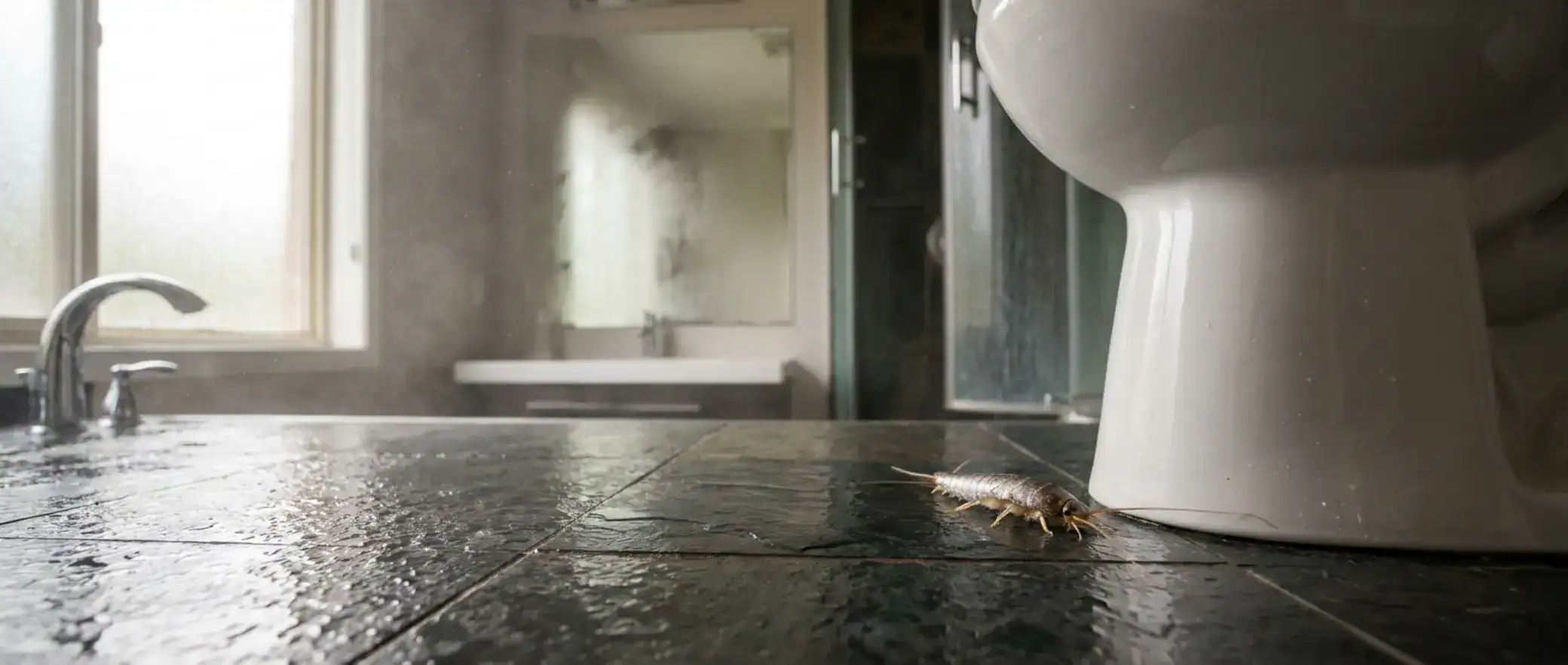
A drain fly is defined as belonging to the Psychodidae family. Drain fly identification reveals a completely different profile. They are slightly smaller, usually measuring between two and three millimeters. They look like tiny, dark gray or black moths. They are incredibly fuzzy. Their wings are covered in tiny hairs and fold like a tent over their bodies when resting. They are predominantly nocturnal. They exhibit a sluggish, hopping flight pattern. They rarely travel far from the sink or shower where they hatched.
Think of a fruit fly like a miniature fighter jet darting around your fruit bowl. Imagine a drain fly as a tiny, slow-moving moth resting quietly on your bathroom tiles.
The Hidden Breeding Grounds for Fruit Flies and Drain Flies
Eradicating bathroom flies or kitchen swarms requires finding the hidden locations where they lay eggs. Both species seek out organic sludge, but they require entirely different menus.
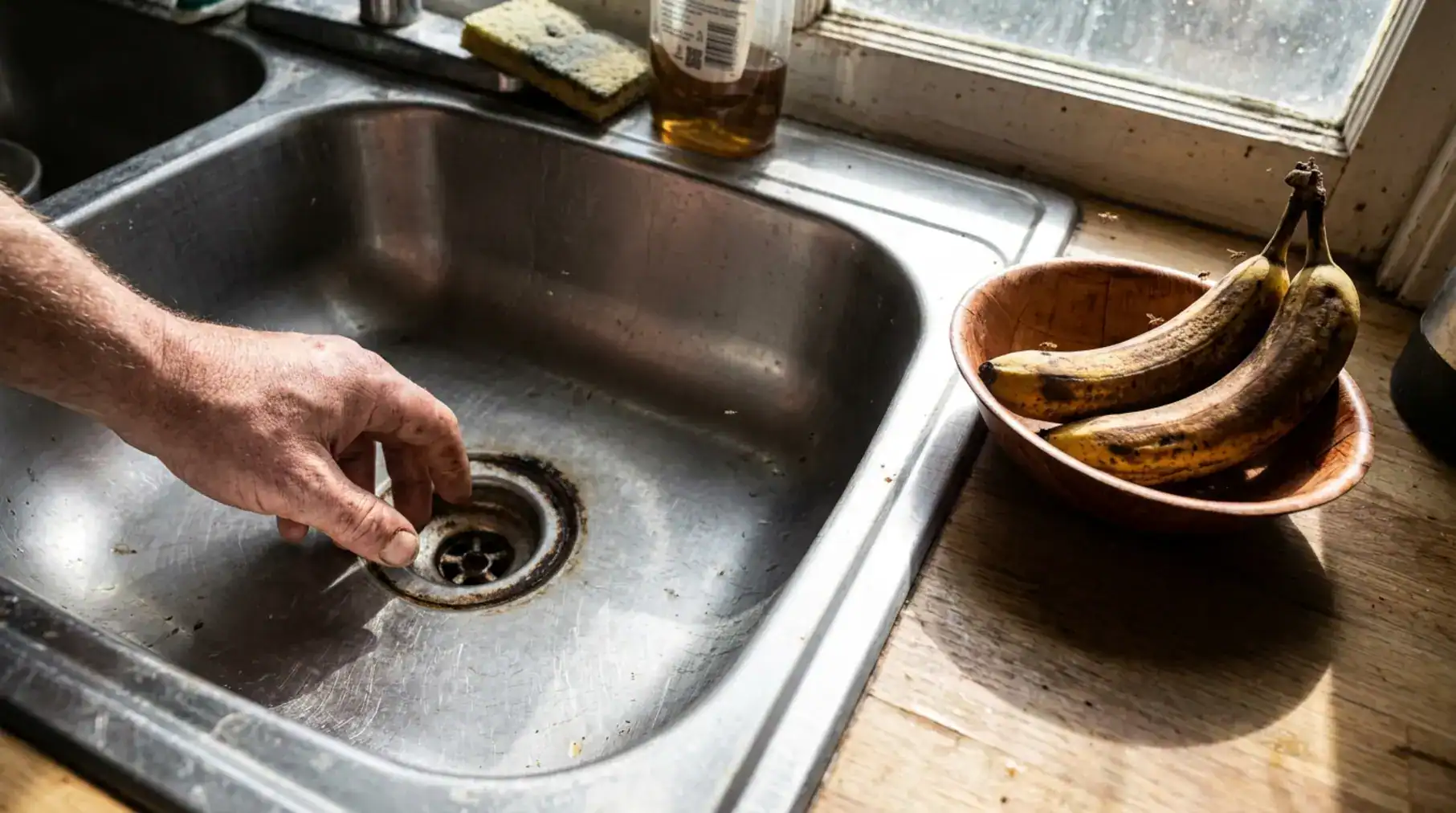
What do fruit flies eat? They crave fermenting sugars and carbohydrates. The primary causes of fruit flies include overripe bananas, forgotten potatoes in the pantry, and spilled wine or beer. They will also lay eggs in sour mops or unsealed garbage bins. Interestingly, can fruit flies live in drains? Yes. If your garbage disposal contains unground fruit peels or carbohydrate residue, fruit flies will happily reproduce in your kitchen sink.
What do drain flies eat? They consume decomposing organic matter trapped in plumbing lines. The primary causes of drain flies include stagnant water and gelatinous biofilm. Biofilm is a thick, jelly-like layer of bacteria, soap scum, and hair that coats the inside of your pipes. The breeding grounds for drain flies are strictly limited to these wet, slimy environments. They thrive in P-traps, basement floor drains, and the overflow holes of bathroom sinks.
The Life Cycle of Both Pests: Understanding Reproduction for Effective Control
Both of these common household pests multiply at an alarming rate, making an understanding of their reproductive habits critical. Treating only the adults you see flying around is a waste of time. Adults make up just five percent of the total population. The other ninety-five percent remains hidden as eggs or larvae.
The fruit fly life cycle operates with terrifying speed. A single female can lay up to 500 eggs in her short lifespan. These eggs hatch into tiny maggots in as little as 24 to 30 hours at room temperature. The larvae burrow into rotting produce to feed. They pupate and emerge as fully formed adults within roughly eight to ten days. .
The drain fly life cycle takes slightly longer but is equally resilient. Females deposit clusters of 30 to 100 eggs directly into the protective slime layer of your pipes. The eggs hatch within 48 hours. The larvae live entirely submerged in the muck for nine to 15 days. They breathe through tiny tubes called siphons that poke through the surface of the slime. After a brief pupal stage, the adults emerge.
Climate dictates everything. The impact of climate on fly reproduction rates is massive. While wild populations peak during late summer, modern central heating allows these pests to breed continuously indoors year-round. Understanding fly behavior for effective control means recognizing that your warm, cozy kitchen is an artificial summer for these insects.
How to Tell If You Have Fruit Flies or Drain Flies Correctly
You can confirm the differences between fruit flies and drain flies definitively by running a simple diagnostic test overnight. Do not guess based on blurry visuals. Identifying the source of infestations requires hard proof.
You must perform the Tape Test. This simple forensic stakeout will reveal exactly what species is coming up from your plumbing.
- Dry the area around your sink drain completely before going to bed.
- Place a piece of clear packing tape flat across the center of the drain opening.
- Poke three small holes in the tape to allow airflow, which encourages the bugs to fly up.
- Leave the tape undisturbed overnight while the room is dark.
- Inspect the sticky side of the tape the following morning.
If you find fuzzy, moth-like bugs stuck to the tape, you have positively identified a drain fly infestation. If the tape is clean, but you still see red-eyed bugs flying near your trash, you are dealing with a fruit fly infestation. This distinction is the most critical step in insect pest control.
How to Get Rid of Fruit Flies in Your Home Fast
To get rid of fruit flies in your home, you must combine strict sanitation with targeted trapping. You cannot poison them out of existence; you must starve them.
Fruit fly prevention methods start with source elimination. Throw away any overripe fruit. Take out the trash daily. Rinse all beer, wine, and soda cans before putting them in the recycling bin. Wipe down your countertops with a basic household cleaner to remove sticky carbohydrate residue.
Once the food source is gone, you must capture the remaining adults before they lay more eggs. This is where fruit fly traps come into play. A simple home remedy involves filling a small bowl with apple cider vinegar and a single drop of liquid dish soap. The vinegar mimics the smell of fermenting fruit. The soap breaks the surface tension of the liquid. When the flies land to drink, they sink and drown instantly.
For severe cases, biological control of flies is an option. Some commercial greenhouses use predatory wasps, but for residential kitchens, sticky ribbon traps coated in methyl eugenol work best. A comparison of effectiveness between different types of traps shows that liquid vinegar traps catch more females, while bright yellow sticky traps catch more males. You need both to break the breeding cycle.
The Best Way to Eliminate Drain Flies Safely
The best way to eliminate drain flies safely involves mechanical scrubbing and biological digestion. You must destroy the biofilm. If you leave the slime, the bugs will return.
Safety Note: You must never pour boiling water down your sink to kill bugs. Standard household PVC pipes are rated for a maximum temperature of 140 degrees Fahrenheit. Boiling water reaches 212 degrees Fahrenheit. Pouring it down the drain can melt the PVC cement, causing catastrophic leaks inside your walls. .
Additionally, do not use bleach or traditional chemical drain clearers. Bleach is highly toxic, yet it fails to penetrate the thick gelatinous slime where the eggs reside.
Follow this safe, mechanical protocol instead:
- Scrub the inside of your drain pipe using a stiff metal wire pipe brush to break up the sludge physically.
- Flush the drain with warm water to wash away the loosened debris.
- Apply a high-quality bio-enzymatic drain cleaner directly into the pipe.
- Let the enzyme gel sit overnight without running any water.
- Repeat the enzyme treatment for five consecutive nights.
Enzyme cleaners use natural bacteria to eat the organic sludge, turning it into water and carbon dioxide. Once the biofilm is digested, the drain fly traps become unnecessary because the breeding ground no longer exists.
Home Remedies vs Professional Pest Control for Flies
Deciding between home remedies vs professional pest control for flies depends on the severity of the infestation and the integrity of your plumbing.
DIY treatments are highly cost-effective for minor issues. A bottle of apple cider vinegar costs under three dollars. A jug of bio-enzymatic drain cleaner typically runs between 15 and 35 dollars. For early-stage infestations, these home remedies are often entirely sufficient.
However, a chronic problem requires expert intervention. Interestingly, calling an exterminator is not always the correct first step. Here is a breakdown of professional interventions:
Type of Professional When to Call Estimated Cost
Licensed Plumber When the P-trap is dry, broken, or heavily clogged with immovable sludge. $150 – $300
Pest Control Expert When adult flies number in the hundreds and require professional growth regulators. $175 – $260
Pest control for fruit flies usually involves exterminators applying localized insect growth regulators (IGRs) to baseboards and trash areas. Pest control for drain flies, however, is often a plumbing issue in disguise. If a pipe breaks under your foundation, raw sewage leaks into the soil. This creates an infinite breeding ground for sewage flies that no amount of bug spray will fix. In these cases, a plumber is your actual exterminator.
Proactive Measures to Prevent Future Infestations
Long-term success relies heavily on the importance of sanitation in preventing fly infestations. You must change the environmental conditions of your home so these pests cannot gain a foothold.
Drain fly prevention methods focus heavily on moisture control. Ensure all sinks in your home are used regularly. Guest bathrooms and basement drains that sit unused for weeks allow the water seal in the P-trap to evaporate. When the P-trap goes dry, sewer gases and flies can float directly up from the municipal sewer line into your home. Run water in unused sinks for sixty seconds every week to keep the trap full.
Proactive measures to prevent future infestations also involve kitchen maintenance. Clean your garbage disposal weekly. Toss a cup of ice cubes and a handful of coarse salt down the disposal and run it. The ice safely scours the blades and knocks fermenting debris off the grinding chamber walls.
Store fresh produce in the refrigerator rather than on the counter. Keep your trash bins tightly sealed. Wash your mop heads in hot, soapy water and hang them to dry completely. A sour mop sitting in a bucket of dirty water is a massive magnet for maggot flies.
Monitoring seasonal trends in fruit and drain fly occurrences will keep you ahead of the curve. Expect a massive surge in pest pressure late in the summer when local agricultural crops begin to ferment outdoors. Prepare your traps before September begins.
Common Questions About Fruit Flies vs. Drain Flies: Finding the Source
What is the primary fruit fly vs drain fly difference?
The main difference is their appearance and preferred habitat. Fruit flies feature bright red eyes and breed in fermenting sugars, while drain flies look like tiny fuzzy moths and breed exclusively in plumbing biofilm. You must correctly identify them to choose the right treatment.
Does bleach kill drain flies effectively?
No. Bleach is highly ineffective against these pests. A thick, water-resistant layer of gelatinous slime in your pipes protects the larvae. The bleach simply washes over the slime without penetrating the nest.
Why do I have fruit flies in my bathroom?
While uncommon, a fruit fly infestation in a bathroom usually points to fermenting hygiene products or dirty trash cans. If a garbage can holds rotting apple cores or sticky wrappers, the pests will swarm there. Check your bathroom trash first.
How do I get rid of drain flies naturally?
The best way to eliminate drain flies naturally is through mechanical cleaning. Scrub the inside of your pipes vigorously with a wire brush to destroy the biofilm. Follow up with a natural bio-enzymatic drain cleaner to digest any remaining organic sludge.
Can a plumber fix my drain fly problem?
Yes. Often, a plumber is more effective than an exterminator for these specific pests. If you have broken pipes, collapsed sewer lines, or dried-out P-traps, a plumber will fix the structural defect that is allowing sewage flies into your home.
Are gnats the same as these tiny household flies?
No. The term “gnat” is a generic, unscientific term often misused for fungus gnats. Fungus gnats breed in the overwatered soil of indoor houseplants. They are an entirely different species requiring different treatment protocols than bathroom flies.
References and Expert Sources
- Environmental Protection Agency (EPA) Guidelines on Safe Household Pest Control
- National Pest Management Association Identification Guide
- University of California Statewide Integrated Pest Management Program
- American Society of Plumbing Engineers Pipe Safety Standards
- Entomological Society of America Research on Drosophila Lifecycle
- Journal of Economic Entomology Study on Biofilm Resistance
- World Health Organization Report on Nuisance Insects and Sanitation
- The Homeowner’s Guide to Enzyme Drain Cleaners
- Comparison of Sticky Traps for Household Flies
- Understanding P-Traps and Sewer Gases
Final Thoughts
Battling a swarm of tiny insects in your home does not have to be an endless, frustrating chore. When you properly understand the biological distinction of a fruit fly vs drain fly, you hold the exact key to breaking their reproductive cycle. You must pivot away from merely swatting at adult bugs and focus your energy strictly on source elimination. Remove the fermenting produce from your counters, scrub the slimy biofilm out of your plumbing, and use natural enzyme cleaners to keep your pipes pristine. Take action tonight by setting up the diagnostic tape test over your sink, and take back control of your kitchen by tomorrow morning.