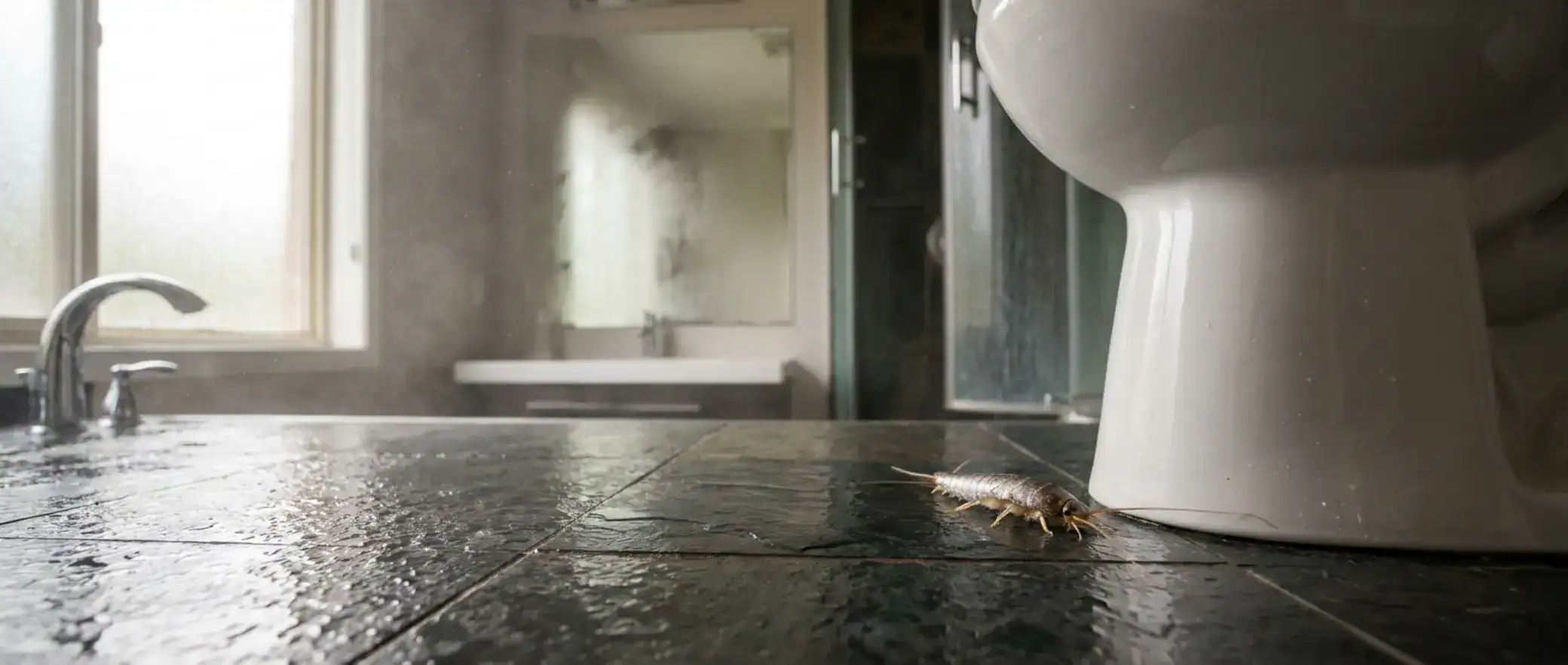
Imagine stepping out of a warm shower, only to spot a shiny, fast-moving insect darting across your damp floor tiles. This sudden encounter usually triggers instant panic for homeowners. While these prehistoric pests do not bite, their presence proves your bathroom is hiding a serious moisture problem. If you want to get rid of silverfish for good, you need to understand exactly why they chose your home.
The Silent Menace in Your Bathroom
Silverfish infestations thrive silently in your bathroom’s high humidity, making moisture control the absolute best weapon against them.
Despite your regular cleaning routines, these pests will keep coming back if the environment remains damp. Bathrooms provide the perfect microclimate for them to multiply rapidly. Whether you live in humid coastal regions or colder northern climates, central heating and hot showers create an indoor oasis. As a result, silverfish in bathrooms pest control requires much more than just a quick chemical spray.
Many homeowners mistakenly assume a dirty bathroom attracts bugs. Actually, these insects seek out specific environmental conditions. They absorb moisture directly from the air to survive. Because of this biological trait, indoor humidity reduction becomes your primary line of defense. Drying surface water alone is never enough to stop them.
Recent update 2026: The pest industry noted an unexpected winter surge in indoor silverfish activity across the southeastern United States PMPs share market data on pest pressure. Modern homes are sealed tightly and insulated better than ever. Central heating maintains temperatures between 72ºF and 81ºF year-round. Specifically, this is their absolute ideal breeding range. Effective silverfish pest management requires changing this microclimate entirely.
Myth-Busting: Why Scents and Drains Do Not Solve Your Silverfish Problem
Common myths suggest silverfish live in drains or can be eradicated with essential oils, but these insects are simply seeking ambient moisture.
A pervasive rumor claims that silverfish crawl up from your plumbing. In reality, silverfish do not come from drains. They fall into sinks and slippery tubs while searching for water droplets. Unfortunately, they lack the anatomical grip to climb back up slick porcelain. Pouring bleach or harsh chemicals down your drain is completely ineffective for household insect control.
Home remedies for silverfish control often sound incredibly appealing online. Natural oils like peppermint and cedarwood are frequently recommended by DIY blogs. However, these natural scents only act as temporary repellents. They do not kill the bugs at all. Sorry, your scattered citrus peels will not save the day alone.
You cannot rely solely on scents without controlling the ambient climate. Effective silverfish removal tips must focus on their real biological attractants. They feed on very specific bathroom materials. Their diet includes dead skin cells, shampoo label glue, toilet paper, and toothpaste residue. Consequently, you must target both the air quality and these hidden food sources.
Silverfish Anatomy and Behavior: The Hidden Biology Behind Bathroom Infestations
Silverfish are prehistoric insects that survive by absorbing airborne moisture through their rectums and feeding on cellulose-rich bathroom items.
Lepisma saccharina is defined as the scientific name for the common household silverfish. This 12-millimeter long nocturnal insect has survived on Earth for over 400 million years. They actually predated the dinosaurs by 100 million years. The word “saccharina” highlights their dietary need for polysaccharides, which are complex carbohydrates and sugars.
Their feeding habits align perfectly with standard bathroom items. They happily consume starch-based foods, wallpaper glue, fabric fibers, and human dandruff. Understanding silverfish anatomy and behavior helps you locate their hidden nesting areas. Because they are flat, they easily hide inside tight grout lines, behind baseboards, and inside exhaust fan casings.
One fascinating biological fact dictates their entire survival strategy. They absorb ambient moisture directly through their rectums . This unique physical trait means they never need to drink standing water. This fact alone proves why air dehumidification is mandatory for effective silverfish treatments.
Silverfish breeding conditions require constant warmth and extreme dampness. A female can lay up to 100 eggs in her lifetime. Eggs usually take 20 to 60 days to hatch into nymphs. Adults live remarkably long lives for insects, averaging two to eight years in favorable conditions.
What are the signs of silverfish in bathrooms? Look closely for small black droppings that resemble ground pepper. Additionally, you will see shed scales, molted exoskeletons, and notched edges on toilet paper rolls.
The Humidity Connection: Why You Must Keep Your Bathroom Dry to Win
To successfully eradicate silverfish, you must drop your bathroom’s relative humidity below 50 percent using targeted ventilation and dehumidifiers.
These insects require a minimum relative humidity (RH) of 75 percent to thrive and reproduce. Their absolute ideal humidity range falls between 75 and 97 percent. To effectively suffocate and dehydrate them, bathroom humidity must be brought below 50 percent. Moisture control for pest prevention is scientifically proven to halt their life cycle.
Bathrooms easily hit these extreme moisture levels immediately post-shower. Condensation on mirrors, leaky vanity faucets, and poor exhaust fans trap water vapor indoors. Wet towels left on the floor raise local humidity by 15 percent for several hours. This creates an isolated microclimate where pests can breed freely.
Relative humidity is defined as the amount of water vapor present in air expressed as a percentage of the amount needed for saturation. To reduce humidity to deter silverfish, you have to measure and control this percentage accurately.
Running your exhaust fan for at least 20 to 30 minutes after turning off the shower can reduce RH by 40 percent. According to industry experts, failing to run the fan long enough is the absolute top cause of bathroom pest problems. The relationship between humidity levels and pests cannot be ignored.
What humidity level deters silverfish completely? You should aim for a sustained 30 to 50 percent RH. Silverfish rapidly dehydrate and die in conditions under 30 percent RH within 72 hours 2026 State of the Industry: PMP Optimism Outlook. Therefore, effective humidity reduction acts as an invisible exterminator.
Actionable Bathroom Humidity Control Strategies: The 3-Phase Approach
Eliminating an infestation requires a layered approach combining immediate trapping, strict climate control, and physical exclusion methods.
Effective humidity management in bathrooms demands strict consistency. Relying on just one tactic will inevitably result in failure. You must execute multiple silverfish control methods simultaneously.
Phase 1: Immediate Trapping and Eradication
You need immediate relief to get rid of silverfish actively roaming your floors at night. Set up sticky glue traps securely along baseboards and behind toilets. These tools serve as excellent monitoring devices to gauge the population size. The best silverfish traps combine physical stickiness with a starch-based bait.
Diatomaceous earth (DE) is a highly effective, physical killer. This fossilized algae powder fundamentally destroys their waxy exoskeleton. Apply food-grade DE directly into cracked grout lines, under sinks, and behind the toilet base — see our diatomaceous earth safety guide for how to use it correctly around pets and kids.
Safety Note: You must wear a dust mask when applying diatomaceous earth or boric acid to prevent lung irritation. Keep boric acid powder strictly away from pets and barefoot children.
Dekko Silverfish Paks utilize boric acid hidden inside a starchy paper shell. These are highly effective commercial bait stations. However, traps alone will never solve the core climate issue.
Phase 2: Climate Control
The true foundation of any silverfish infestation solutions plan is continuous airflow. Run your bathroom exhaust fan for 20 to 30 minutes after every single shower.
Invest immediately in a small bathroom dehumidifier. Models like the Midea 20-pint unit are highly effective for residential bathrooms. A mini unit actively pulls moisture from the air continuously. Think of it like a mechanical sponge for your room.
Use a smart hygrometer to track your climate progress daily. The Govee Bluetooth hygrometer accurately measures moisture levels in real-time. It sends an alert straight to your phone when humidity spikes above 60 percent.
Always wipe down wet counters immediately after washing your hands. Hang wet towels outside the bathroom to dry properly. Scheduled dehumidifier runs post-shower keep the ambient air entirely hostile to pests.
Phase 3: Structural and Behavioral Fixes
Physical barriers physically stop new pests from entering your freshly dried space. Seal small cracks, gaps, and wooden baseboards with waterproof silicone caulk. Pay special attention to plumbing entry points hidden under the vanity sink. These are common entry highways for bugs.
Common household items that attract silverfish include cardboard storage boxes and bulk paper goods. Store your extra toilet paper and toiletries in airtight plastic bins instead. Leaving a cardboard box under a leaking vanity creates an all-you-can-eat buffet.
Declutter your bathroom cabinets on a regular schedule. Vacuum the bathroom floor weekly to remove dead skin cells and loose hair clippings. Fix leaky faucets without delay. A known case study in Leavenworth, Kansas, showed that fixing a slow sink drip and running a dehumidifier eliminated a severe infestation in just seven days NPMA releases 2026 Spring and Summer Bug Barometer. Physical silverfish prevention techniques heavily rely on these behavioral shifts.
Monitoring and Maintenance: Keeping Bathrooms Silverfish-Free
Long-term prevention strategies for keeping bathrooms silverfish-free require continuous real-time monitoring and consistent environmental maintenance.
How often should I check for silverfish? You should perform a quick visual inspection on a weekly basis. Look closely for black pepper-like droppings hidden along baseboards. Managing silverfish populations requires constant vigilance.
Use your smart hygrometer daily to monitor the environment. The impact of high humidity on silverfish infestation rates is immediate and severe. If your RH creeps back above 65 percent, dormant eggs hidden in tile grout will hatch rapidly.
Create a daily habit checklist for your household. Immediately after a shower, wipe down the glass and tile surfaces with a squeegee. Remove wet bathmats from the floor entirely. The importance of regular cleaning and maintenance cannot be overstated here.
Seasonal changes and their effects on silverfish activity require strategy adjustments throughout the year. During winter, central heating heavily dries out the rest of your house. Consequently, pests will naturally migrate to the one room with water – your bathroom. You must increase your exhaust fan runtime significantly during these colder months.
If you consistently spot more than ten bugs a week despite controlling the climate, it is time for professional help. Silverfish extermination experts utilize specialized thermal imaging to find deep structural leaks you might have missed entirely.
Comparing Natural and Chemical Silverfish Treatments: What Works Best in Bathrooms
Choosing the right treatment involves weighing the immediate kill power of chemicals against the pet-safe properties of natural dehydrating powders.
There is a fierce debate online regarding natural vs. chemical treatments for silverfish. Many users strongly prefer non-toxic solutions near their toothbrushes and bare skin.
Diatomaceous earth is widely considered the best natural powder available. It physically dehydrates the insect upon contact. However, you must reapply DE every single time you mop the floor. How do I eliminate silverfish naturally? You combine DE with a high-powered dehumidifier.
Treatment Type Effectiveness Safety Profile
Diatomaceous Earth High Safe for pets
Boric Acid Powder Very High Toxic if ingested
Essential Oils Low Safe for skin
Pyrethrin Sprays High Requires ventilation
Are there specific products for silverfish control that use synthetic chemicals? Yes. Boric acid is highly lethal to bristletails. A microscopic dose of just one to two milligrams will reliably kill a silverfish. Pyrethrin sprays are botanical insecticides frequently used by professionals for fast knockdown.
While essential oils like lavender and cedarwood repel pests temporarily, they do not kill them. Vinegar only deters them for a few brief hours. DIY solutions for silverfish removal will always fail if you ignore the climate.
The Role of Bathroom Design and Renovations in Silverfish Prevention
Upgrading bathroom materials and improving ventilation layouts can permanently eliminate the damp microclimates that attract household insects.
The relationship between bathroom design and pest issues is undeniable in modern construction. Older bathrooms often use standard porous cement grout. Specifically, this material retains moisture twice as long as surrounding porcelain tiles.
Moisture-resistant epoxy tile grout is a vastly superior choice. It completely seals out water. Using moisture-resistant paint on the ceiling also prevents steam from penetrating the drywall above.
Never use traditional wallpaper in a bathroom environment. Silverfish love moisture and actively eat the cellulose paste hidden behind wallpaper.
Insulating cold water pipes reduces condensation by roughly 50 percent NPMA releases 2026 Spring and Summer Bug Barometer. Sweaty pipes hidden directly under a vanity provide enough ambient water for an entire breeding colony.
Ensure your vent duct routes directly outside the house. An underpowered exhaust fan will leave heavy steam trapped indoors. You absolutely need a fan with a minimum of 50 CFM for a standard 100-square-foot bathroom. New technologies, like automatic humidity-sensing exhaust fans, will launch widely in late 2026. These smart devices activate automatically when room moisture spikes unexpectedly.
Cost Analysis and ROI: Investing in Humidity Control vs Extermination
Cost-effective solutions for silverfish control focus on upfront investments in dehumidification rather than repeated, expensive chemical applications.
Proactively controlling moisture saves significant money over time. You must weigh the upfront equipment costs against recurring pest control visits.
The national average cost for professional extermination in 2026 is $400 NPMA releases 2026 Spring and Summer Bug Barometer. Low-end targeted room treatments generally cost between $150 and $350. If you completely ignore the problem, repairing vintage wallpaper or books destroyed by these pests can easily run into thousands of dollars.
In contrast, targeted climate control is highly affordable.
- A high-quality Midea 20-pint dehumidifier costs roughly $150.
- A Govee smart Bluetooth hygrometer costs around $20.
- A large bag of food-grade diatomaceous earth costs just $13.
- A high-efficiency Panasonic Whisper fan costs roughly $185.
Investing in integrated prevention pays off very quickly. A modern mini dehumidifier runs on just $5 to $10 of electricity per month. This proactive approach avoids costly structural repairs and repeated toxic chemical treatments.
A completely dry bathroom also prevents severe mold damage. Because of this, humidity control adds massive value to your property and actively protects your respiratory health.
Common Questions About Silverfish Control: Reducing Humidity in Bathrooms
Readers frequently ask specific questions about silverfish behavior, bites, and the exact humidity levels required to eradicate them safely.
What attracts silverfish to my home?
Silverfish are drawn to warm, incredibly humid environments that offer abundant cellulose-based food sources. They actively seek out damp basements, leaking bathroom sinks, and areas storing old cardboard boxes or bulk paper goods.
Do silverfish bite humans or pets?
No, silverfish do not bite humans or pets at all. They have extremely weak jaws designed specifically for scraping soft cellulose materials, making them completely harmless to your physical body. However, their discarded molted exoskeletons can trigger allergic asthma reactions in highly sensitive individuals.
How can I prevent silverfish from entering my bathroom?
You can prevent silverfish by meticulously sealing all baseboard cracks with silicone caulk and keeping relative humidity well below 50 percent. Fix all plumbing drips immediately. Removing cardboard storage boxes from under your vanity also directly eliminates their primary food source.
How do I know if I have a silverfish infestation?
You likely have an infestation if you spot more than one silverfish per week darting across your floor. Look for black pepper-like droppings, shed skin scales, or see yellowish stains on your bathroom wallpaper.
What are the signs of silverfish in bathrooms?
The most obvious signs include live nocturnal sightings when you turn on the bathroom light late at night. Additionally, you might notice notched edges on your toilet paper rolls, tiny fecal smears in the tub, and fine dust trails along your baseboards.
Natural remedies for silverfish: do they work?
Natural remedies only work when strategically combined with strict humidity control. Essential oils like cedarwood simply repel them temporarily. To permanently kill them naturally, you must drop the ambient humidity below 50 percent and apply dehydrating diatomaceous earth.
Are there specific products for silverfish control?
Yes, there are several dedicated retail products available. Boric acid powders, Pyrethrin-based botanical sprays, and targeted commercial baits are highly effective. However, the best long-term product strategy always involves purchasing a dedicated bathroom dehumidifier.
References and Expert Sources
- Pest Management Professional Winter Activity Report
- Entomological Society of America Study on Lepisma
- Environmental Pest Control Research 2025
- Midwest Pest Management Localized Case Study
- Home Improvement HVAC Efficiency Metrics
- HomeAdvisor Pest Control Pricing Index 2026
- Terminix Silverfish Prevention Guidelines
- Orkin Pest Identification Database
- Panasonic Whisper Fan Specifications
- Govee Smart Home Sensor Data
Final Thoughts
Regaining control of your indoor environment is entirely possible once you understand the science behind pest behavior. You do not have to live with the anxiety of finding nocturnal bugs darting across your floor every night. By strategically targeting their biological need for airborne moisture, you can reliably get rid of silverfish and prevent future generations from hatching.
The path to a clean, pest-free home relies on strict environmental maintenance rather than toxic chemical reliance. Start by repairing hidden plumbing leaks, sealing baseboard cracks, and storing paper goods in airtight plastic containers. Track your progress daily with a smart hygrometer to ensure your efforts are actually working.
Take immediate action today by upgrading your ventilation habits. Run that exhaust fan for at least 30 minutes after your next shower, invest in a dedicated bathroom dehumidifier, and lightly dust your grout lines with diatomaceous earth. Once you successfully drop your humidity below 50 percent, your bathroom will remain permanently hostile to these prehistoric invaders.