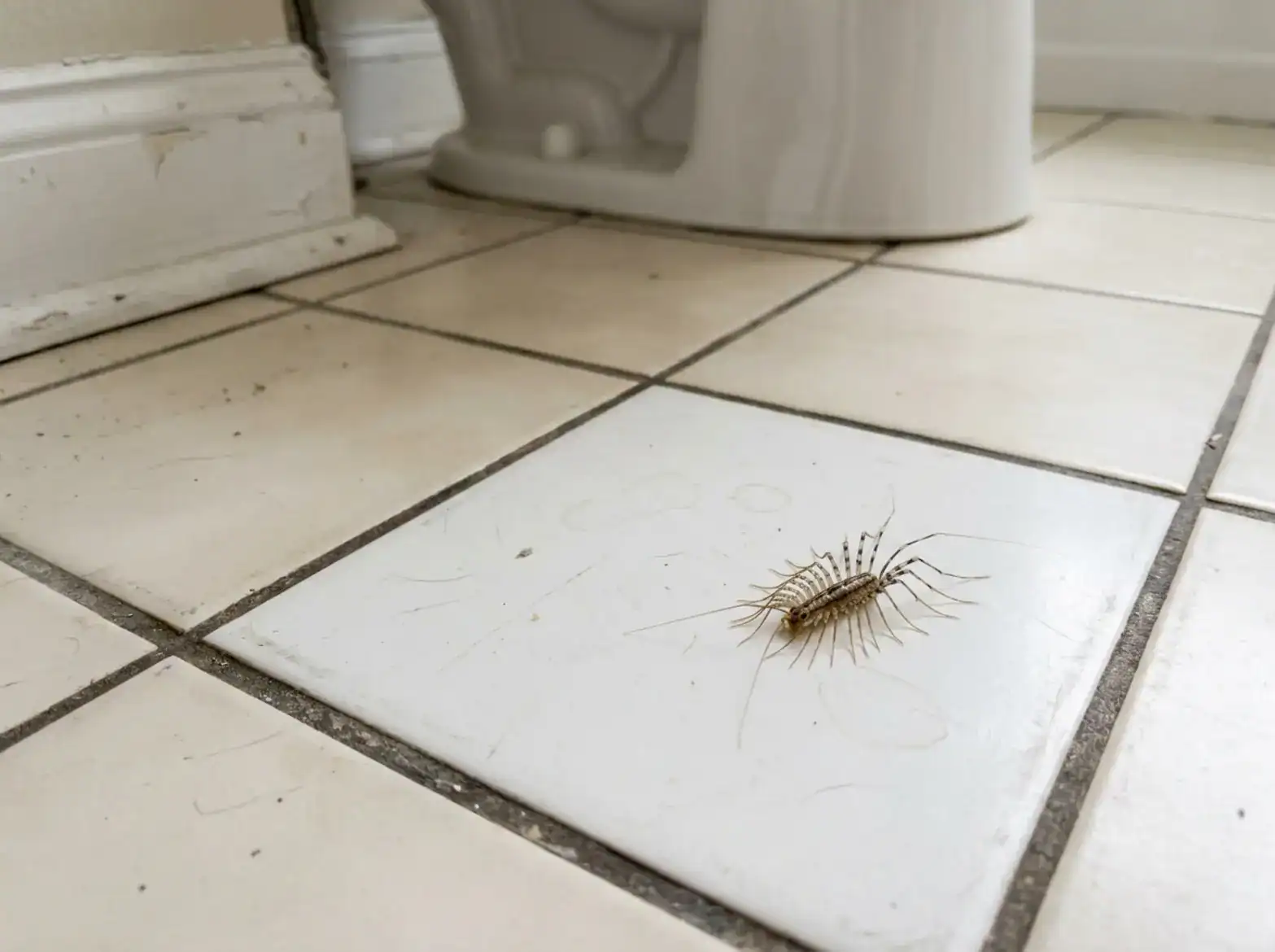
The light flicks on, and a 30-legged, alien-looking creature darts across your damp bathroom floor. Your immediate reaction is probably pure panic, leaving you wondering if a sudden influx of house centipedes bad news for your family. Put the shoe down for a second. That terrifying eyelash monster scurrying under the baseboard might actually be the hardest-working, unpaid exterminator you never knew you hired. Instead of reaching for a chemical spray, taking a moment to understand this misunderstood predator can completely change how you view indoor pest control.
Are house centipedes bad for your home?
No, house centipedes are highly beneficial indoor predators. They are entirely harmless to humans and do not damage property, carry diseases, or build nests. Instead, they actively hunt and consume destructive household pests like cockroaches, termites, bed bugs, and silverfish, acting as natural, chemical-free exterminators.
What Are House Centipedes? Anatomy and Biology
House centipedes are agile, nocturnal arthropods recognizable by their 15 pairs of long legs and well-developed compound eyes. They are biological pest controllers uniquely adapted to hunt smaller insects indoors.
Scientifically known as Scutigera coleoptrata, the house centipede is defined as a myriapod native to the Mediterranean region that has successfully adapted to human dwellings worldwide. Unlike subterranean centipedes that are blind, house centipedes possess prominent faceted compound eyes with up to 200 optical units . This gives them exceptional vision to track movement in low light.
When observing house centipede behavior and habits, their speed is the most startling feature. They can run up to 1.3 feet per second. Think of them like tiny, hyperactive ninjas with millisecond reflexes. They also utilize a fascinating evolutionary trick. Automimicry is defined as an adaptation where one body part mimics another to confuse predators. The house centipede’s back legs are nearly twice the length of its body and look exactly like its front antennae, making it difficult to tell which end is the head.
If you are learning how to identify house centipedes, look for their yellowish-grey bodies with three dark dorsal stripes. They always have an odd number of leg pairs.
Are House Centipedes Dangerous to Humans?
Despite their terrifying appearance, house centipedes pose virtually no danger to humans or pets. Their venom is designed strictly for small insects, and bites on humans are exceedingly rare and medically insignificant.
It is incredibly common to ask, are house centipedes harmful? The short answer is no. House centipedes do not have fangs. Instead, they possess forcipules, which are modified front legs situated near their mouths used to inject venom into prey. Because these pincers are relatively weak, they struggle to pierce human skin .
If you are wondering, do house centipedes bite? They only attempt to pinch if they are severely threatened – like being crushed against bare skin inside a shoe. Even then, the reaction is typically milder than a weak bee sting.
Safety Note: While the venom is harmless, individuals with severe insect sting allergies should always monitor any unusual reactions if accidentally pinched.
According to pest management professionals, it is highly important to distinguish between harmless indoor species and dangerous outdoor varieties. When reviewing types of centipedes and their roles, you must separate the house centipede from the Scolopendra genus, such as the Giant Desert Centipede found in the American Southwest. The latter is large, thick-bodied, and carries highly painful venom. House centipedes, by contrast, are strictly beneficial.
What Do House Centipedes Eat Inside Your Home?
The house centipede diet consists entirely of other household bugs, making them an apex indoor predator. They actively hunt and kill roaches, termites, bed bugs, silverfish, and spiders using a unique leg-lassoing technique.
To understand why house centipedes are helpful, you only need to look at their menu. What do house centipedes eat? Their primary targets are the exact insectivorous pests that homeowners spend thousands of dollars trying to eradicate. The house centipedes impact on household pests is significant because they hunt aggressively every single night.
Imagine you are a slow-moving silverfish; the house centipede is a terrifying, inescapable net. They use a method called “lassoing” to capture prey. Because they have 30 legs, they can leap onto a target, wrap multiple legs around it to prevent escape, and simultaneously use their forcipules to deliver venom . They are even known to hold multiple smaller bugs in their legs while eating another.
“I used to smash every centipede I saw in my basement. Then I noticed an uptick in cockroaches. Once I learned they were eating the roaches, I stopped killing them. Within two months, the roaches were entirely gone.” – Homeowner pest management anecdote
Using house centipedes in home pest control is completely passive. They do not eat wood. They do not consume fabric. They have zero interest in your pantry staples.
The Life Cycle of House Centipedes and Its Implications for Control Strategies
Understanding the lifespan and reproductive cycle of house centipedes reveals why they are such persistent, long-term allies. They can live for several years indoors, developing gradually through multiple molting stages while continuing to hunt.
When looking at the life cycle of house centipedes and its implications for control strategies, their longevity stands out. How long do house centipedes live? Unlike most household bugs that die off in a few weeks, house centipedes boast a lifespan of three to six years, occasionally reaching up to seven years indoors .
The house centipede lifespan and reproduction cycle begins in the spring. A single adult female can lay up to 150 eggs in damp, hidden areas like unexcavated crawl spaces or behind rotting baseboards.
- Eggs hatch into larvae with only four pairs of legs.
- They progress through six larval molts.
- They undergo four post-larval molts, gaining new legs each time.
- They finally reach adulthood with exactly 15 pairs of legs.
Because they grow slowly, their population rarely explodes into a swarming infestation. They manage their own numbers based on the available food supply.
Why Do I Have House Centipedes in My Home?
House centipedes enter homes seeking two specific things: high moisture levels and an abundant food supply. Their presence is usually an early warning sign of a hidden water leak paired with a primary pest infestation.
If you are frantically Googling “why do I have house centipedes in my home,” the answer usually lies in your plumbing or foundation. House centipedes have a biological fatal flaw. Their respiratory systems – called spiracles – cannot close, and they lack the moisture-retaining waxy cuticle found on other insects. This makes them highly susceptible to fatal dehydration. Consequently, they require environments with 70% to 90% relative humidity.
Preventing house centipede infestations in households requires treating them as an environmental indicator. Their presence tells you that you have a moisture issue.
Common harborage points include:
✓ Uncapped cement block walls
✓ Floor drains without water traps
✓ Leaking sump pumps
✓ Damp cardboard boxes stored directly on concrete slabs
There is a false sanitary assumption that seeing these bugs means your home is filthy. You can have a spotless house, but if a micro-leak behind your drywall is attracting moisture-loving pests, the centipedes will follow the food.
Are House Centipedes Good or Bad for Your Indoor Ecosystem?
When weighing their ecological impact, house centipedes are overwhelmingly good for maintaining a balanced indoor ecosystem. They provide free, non-toxic pest suppression without causing the structural damage associated with the prey they hunt.
Many homeowners find themselves asking if a sudden sighting of house centipedes bad for their property value or hygiene. The reality is quite the opposite. When determining if house centipedes good or bad, you must weigh the minor psychological discomfort against massive structural protection.
The ecological benefits of having house centipedes indoors are widely recognized by entomologists. They are nature’s pest controllers. As household beneficial insects, they provide a service that would otherwise require toxic synthetic chemicals.
Are house centipedes good for the environment? Absolutely. By relying on biological control, you prevent pesticide runoff from entering local water systems. Furthermore, evaluating the impact of house centipedes on home hygiene proves they are remarkably clean. They spend large portions of their day grooming their legs to keep them sensitive to vibrations.
Here is why you should tolerate them:
- They hunt disease-carrying roaches.
- They consume wood-destroying termites.
- They kill fabric-eating carpet beetle larvae.
- They require zero maintenance or feeding.
Controlling House Centipedes Naturally: A Chemical-Free Guide
The most effective way to manage centipede populations is through environmental modification, specifically by reducing indoor humidity. Chemical treatments are largely ineffective against them and disrupt the natural biological control they provide.
If the visual fear is simply too much and you want to know how can I get rid of house centipedes, you should avoid broad-spectrum pesticides. Integrated Pest Management (IPM) is defined as an ecosystem-based strategy focusing on long-term prevention of pests through habitat manipulation. According to the EPA, IPM is the gold standard for indoor pest management .
When comparing natural remedies versus chemical treatments for pest control, chemicals fail spectacularly here. Because a centipede’s long legs hold its abdomen high off the ground, standard baseboard chemical sprays rarely make contact with its body.
Controlling house centipedes naturally focuses entirely on dehydration and starvation. Effective methods for managing house centipede populations include:
- Install a high-capacity dehumidifier in your basement to drop humidity below 50%.
- Seal expansion cracks in concrete slabs with silicone caulk.
- Repair leaking pipes or dripping HVAC condensate lines immediately.
- Run bathroom exhaust fans for 30 minutes after showering.
Centipede pest control is really just moisture control. Additionally, domestic cats are apex predators to centipedes. Felines view their darting movements as interactive toys and will aggressively hunt them out of the house.
House Centipedes vs Other Pests: The Ultimate Breakdown
Comparing the house centipede to common structural and sanitary pests highlights exactly why this many-legged predator deserves a pass. Unlike roaches or termites, centipedes do not spread disease, contaminate food, or destroy building materials.
When you analyze house centipedes vs other pests, the contrast is staggering. Understanding the role of house centipedes in pest management allows you to see them as the police force of the bug world. They are the ultimate form of natural pest prevention.
| Pest Type | Primary Home Threat | Centipede Interaction |
|---|---|---|
| Cockroaches | Spread bacteria, trigger asthma | Actively hunted and consumed |
| Termites | Cause severe structural wood damage | Hunted aggressively near foundations |
| Bed Bugs | Bite humans, cause skin infections | Eaten when found in floor crevices |
| House Centipedes | Visual fear, startle reflex | Provide free pest eradication |
The benefits of house centipedes far outweigh the momentary jump-scare they cause. They are not interested in your food. They do not chew on your electrical wires. They simply want to eat the bugs that actually cost you money.
Misconceptions About House Centipedes and Fear of Pests
Entomophobia often drives a kill-on-sight reaction, but most fears surrounding the house centipede are based on myths. Dispelling these misconceptions allows homeowners to appreciate their role in natural pest management.
Misconceptions about house centipedes and fear of pests go hand in hand. The most prevalent myth is that seeing one means your house is infested with them. In reality, because they are apex predators, their population remains relatively small compared to their prey. If you see one centipede, it means there are likely hundreds of hidden prey insects you cannot see.
Another misconception is that they are actively trying to attack you when they sprint across the floor. House centipedes are incredibly shy. When the bathroom light flicks on, their compound eyes detect the sudden change, and they sprint blindly toward the nearest dark shadow to hide – which sometimes happens to be your foot. They are fleeing, not charging.
Common Questions About House Centipedes: Why They Are Actually “Good Guys”
Are house centipedes dangerous to humans?
No, they pose no medical threat to humans. While they possess venom to subdue small insects, their pincers are too weak to easily break human skin, and they are generally afraid of people.
What do house centipedes eat inside a home?
They are strictly carnivorous predators that eat cockroaches, silverfish, termites, bed bugs, ants, and spiders. They act as natural pest prevention by hunting the insects that actually damage your property.
How to identify house centipedes compared to other bugs?
Pest identification house centipedes relies on spotting their 15 pairs of long legs, yellowish-grey segmented bodies, and rapid, darting movements. Unlike millipedes, which curl up when touched and move slowly, house centipedes sprint away instantly.
Why do I have house centipedes in my bathroom?
Bathrooms provide the high humidity they require to survive. Because their bodies lack a moisture-retaining cuticle, they are constantly seeking out damp environments like showers and sinks to prevent fatal dehydration.
Do house centipedes bite dogs or cats?
No, their forcipules are generally too weak to penetrate thick pet fur and skin. In fact, many domestic cats view house centipedes as interactive toys and will actively hunt them without sustaining any injuries.
References and Expert Sources
- University entomology extension morphological data on Scutigera coleoptrata 2024
- Cooperative Extension field report on centipede bite statistics 2025
- Biological behavioral study on Scutigeromorpha hunting tactics 2023
- Academic research on myriapod longevity and indoor survival 2024
- Environmental Protection Agency IPM guidelines for residential pest control 2025
- Arrow Exterminators Pest Library Data
- Forsyth County Agricultural and Natural Resources Field Video 2024
- Western Exterminator Guide to Biological Control Agents
- Realtor Home Maintenance Moisture Indicators 2025
- WebMD Medical Assessment of Centipede Venom and Human Reactions
Final Thoughts
Making peace with the erratic, multi-legged sprinter in your basement is not easy, but it is undoubtedly the smartest move for your home’s ecosystem. By reframing them as biological allies rather than terrifying invaders, you harness a natural defense system against the truly destructive pests lurking in your walls. You do not need to love them, but tolerating their presence saves you from relying on toxic chemicals.
If you are still deciding whether an encounter with house centipedes bad for your home, remember that they are simply a mirror reflecting your property’s underlying moisture and pest levels. Lower the humidity, seal the cracks, and let these natural predators handle the heavy lifting of indoor pest management. The next time you spot one darting across the floor, simply give your unpaid exterminator a nod of respect and let it get back to work.