


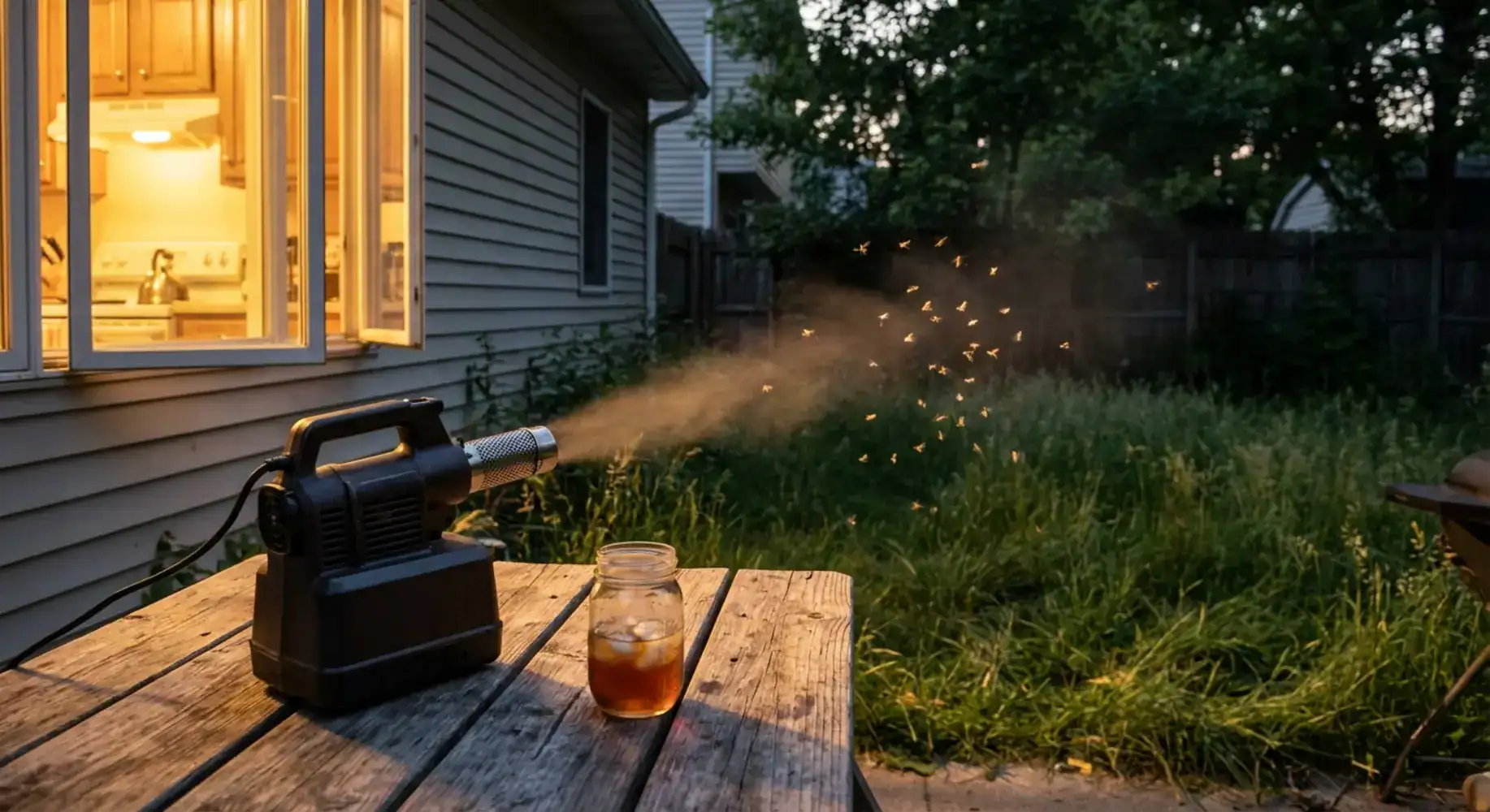
Nothing ruins a backyard barbecue faster than the high pitched whine of a mosquito near your ear. As climate patterns shift and humidity levels rise, these pest populations are surging, making the debate over a thermal vs cold fogger a top priority for homeowners who want their patios back. You need more than a simple citronella candle when your yard becomes a breeding ground for West Nile or Zika vectors.
Which is better: A thermal or cold fogger?
The thermal vs cold fogger choice depends on your specific environment. Thermal foggers use heat to create a dense, visible smoke that is best for large outdoor areas and deep foliage penetration. Cold (ULV) foggers use high pressure to create an invisible mist, making them safer, eco-friendly, and more effective for applying residual pesticide barriers.
Understanding the Mechanics of Yard Fogging
Fogging is not just about spraying chemicals. It is a calculated delivery system designed to break the life cycle of pests. Standard pump sprayers produce large droplets that fall straight to the ground. In contrast, foggers atomize liquid into microscopic particles measured in microns. For context, a human hair is about 70 microns thick. Foggers operate in the 0.5 to 50 micron range.
Because these particles are so light, they defy gravity for extended periods. This “hang time” allows the insecticide to drift into the spaces where mosquitoes hide – the undersides of leaves, deep inside cedar hedges, and within the crevices of your deck. To choose between equipment types, you must first understand how they achieve this atomization.
Actually, the science is quite simple. A thermal fogger uses a heating coil or a pulse jet engine to vaporize an oil based carrier. When the hot vapor hits the cooler outside air, it condenses into a thick white cloud. A cold fogger, often called a ULV (Ultra Low Volume) machine, uses high speed air or a specialized nozzle to shear the liquid into fine droplets without any heat involved.
The Massive Showdown: Thermal vs Cold Fogger Comparison
Choosing the wrong machine can lead to wasted chemical, ruined equipment, or even fire hazards. Use the data below to see how these two technologies stack up in real world conditions.
| Feature | Thermal Foggers (The Bazookas) | Cold Foggers/ULV (The Snipers) |
| Primary Mechanism | Heat/Vaporization (Propane or Gas) | High Speed Air/Centrifugal Pressure |
| Droplet Size | 0.5 to 10 Microns (Ultra Fine) | 5 to 50 Microns (Adjustable) |
| Visibility | Thick white smoke (High visibility) | Nearly invisible mist |
| Chemical Base | Oil or Petroleum based carriers | Water based or Special oil formulations |
| Best For | Instant knockdown in massive yards | Residual barriers and indoor/outdoor use |
| Fire Risk | High (Internal temperatures >1000°F) | Zero (No heat source) |
| Noise Level | Very Loud (Pulse jet sounds like a jet) | Moderate (Electric or small gas engine) |
The Benefits of Thermal Foggers in Outdoor Pest Control
Thermal fogging is the “nuclear option” of mosquito control. If you have a wedding in four hours and the yard is swarming, this is the tool you grab. The primary advantage of thermal foggers is their ability to penetrate dense vegetation. Because the particles are so small (often under 5 microns), they behave like a gas. They move around obstacles rather than hitting them and stopping.
- Instant Knockdown Power: Thermal fogging clears the air of adult mosquitoes almost immediately.
- Visual Tracking: You can see exactly where the fog is going. If the wind carries it toward your neighbor’s pool, you can adjust your path instantly.
- Deep Foliage Penetration: In thick brush or woodpiles, the smoke rolls into every gap, reaching pests that invisible mists might miss.
- Efficiency in Coverage: A high end thermal unit can cover an acre of land in less than 10 minutes.
However, there is a catch. The high heat of a thermal unit can actually degrade some of the active ingredients in your pesticide. If the machine runs too hot, it “burns off” the very chemical you paid for. This is why thermal fogging is generally considered a short term solution. It kills what is in the air now but rarely leaves a lasting residue on the leaves.
The Advantages of Cold Fogging and ULV Technology
Cold foggers represent the modern era of pest management. They are the preferred choice for professionals who want to establish a “mosquito barrier.” Instead of just clearing the air for an hour, cold fogging coats the surfaces where mosquitoes rest during the day.
- Precision Droplet Control: Most ULV machines allow you to adjust the nozzle. You can set it to a larger micron size (30-50 microns) so the droplets settle onto leaf surfaces rather than drifting away.
- Chemical Versatility: You can use water based insecticides like Bifen I/T. These are generally safer for your plants and leave less oily residue on your patio furniture.
- Eco-Friendliness: Because there is no combustion and less chemical drift, cold foggers are often viewed as a more responsible choice for residential areas.
- Indoor Safe: You can use an electric ULV fogger to treat a garage or basement for spiders or silverfish without the risk of carbon monoxide or fire.
To be fair, the biggest downside of cold fogging is that the mist is invisible. You have to be very disciplined in your walking pattern to ensure you haven’t missed a section of your perimeter.
Environmental Impact: Assessing Safety and Efficacy
In April 2025, the EPA released its final “Insecticide Strategy.” This update places a heavy emphasis on reducing chemical drift to protect local pollinators and endangered species. This has changed the way we look at thermal vs cold fogger usage.
Thermal foggers are prone to “thermal inversion.” This happens when the warm fog hits a layer of cold air and stays suspended high above the ground. If a breeze picks up, that fog can travel hundreds of yards, potentially landing in a neighbor’s koi pond or a local bee colony.
Cold foggers, particularly when set to a larger micron size, have a more predictable fall rate. This makes it easier to comply with buffer zone regulations. Furthermore, the industry is moving toward “Dusk Only” protocols. By fogging only after the sun begins to set, you minimize contact with honeybees, which are active during the day.
The “Secret Sauce” Chemical Lab
A fogger is just a delivery vehicle. The real work is done by the “ammo” you put in the tank. Most beginners make the mistake of buying generic “fogging juice” at a big box store. If you want professional results, you need a specific recipe.
For Cold Foggers (ULV Barrier Treatment):
- Pesticide: 1 oz of Bifen I/T (Bifenthrin). This provides the kill power.
- Growth Regulator: 1 oz of Tekko Pro or Archer IGR. This is the “birth control” for mosquitoes, preventing larvae from becoming biting adults.
- Surfactant: 1 tsp of Alligare 90. This acts as a “sticker,” making the chemical rain proof once it dries on the leaves.
For Thermal Foggers (Instant Knockdown):
- Use an oil based pyrethroid like Riptide or a carrier like Black Flag Fogging Insecticide.
- Warning: Never put water based chemicals in a thermal fogger unless it has a specialized water conversion kit. It will simply boil and “spit” hot water instead of creating fog.
User Experiences: Voices from the Field
The internet is full of “clogged coil” horror stories. Thermal foggers, especially the budget propane models, are notorious for dying after a single season. This usually happens because the user didn’t flush the machine.
Another common pitfall is the fire hazard. There are several documented cases on pest control forums where users tried to fog a crawlspace or garage with a gasoline powered thermal unit. If the fog reaches the pilot light of a water heater, the entire structure can ignite. This is why cold foggers are the mandatory choice for any enclosed space.
On the other hand, users with massive properties (5+ acres) swear by gas powered backpack thermal foggers like the Invatech Italia 915. For them, the ability to walk at a brisk pace and fill a woodlot with dense fog is the only way to manage the sheer volume of pests.
How to Choose the Right Fogger for Your Yard
Selection should be based on your “Mission Profile.” Answer these questions to determine your needs:
- How big is the area? If you have a small suburban lot, a cordless electric ULV fogger is perfect. If you have several acres of woods, a gas backpack thermal unit is better.
- What is the goal? For a “Wedding Saver” protocol (killing air bugs right now), go thermal. For a “Barrier Strategy” (21 days of protection), go cold/ULV.
- Who is nearby? If you have neighbors with sensitive gardens or pools, the drift from a thermal fogger might cause a legal headache.
- Budget? You can get a propane thermal fogger for under $100, but a professional grade ULV machine will cost $300 to $800.
The Decision Matrix Checklist
- If you need to treat indoors: Choose Cold Fogger.
- If you want to see the fog clearly: Choose Thermal Fogger.
- If you want the longest lasting residual: Choose Cold Fogger.
- If you are fogging in a breeze: Choose Thermal Fogger (for better penetration).
- If you want a quiet operation: Choose Electric ULV.
Maintenance: Keeping Your Fogger in Top Shape
The “Clog of Death” is the number one killer of fogging equipment. Pesticide concentrates are sticky and acidic. If they sit in the lines, they will harden into a plastic-like gunk.
- The Flush Rule: Never leave chemical in the tank for more than 24 hours. The seals will swell and leak.
- Cleaning Thermal Coils: After every use, run a tank of plain water or a specialized cleaning solution (like a mix of water and white vinegar) through the machine while it is hot. This “steams” the residue out of the copper coil.
- ULV Nozzle Care: Use a guitar string or a very fine wire to clear the tiny holes in the nozzle head of a cold fogger.
- Battery Health: If using a cordless ULV unit, store the batteries in a climate controlled area. Cold winter garages kill lithium-ion cells.
Common Questions About Yard Fogging: Thermal vs. Cold Foggers Explained
Can I use Bifen I/T in my propane thermal fogger?
No, you should not use water based products like Bifen I/T in a standard thermal fogger. The extreme heat will boil the water before it can atomize, causing the machine to “spit” liquid instead of creating fog. This can also damage the internal coils of your equipment.
How long does a fogging treatment last?
A thermal fogging treatment usually provides relief for 24 to 48 hours because it primarily targets adult insects in the air. A cold fogger (ULV) treatment using a residual pesticide and an IGR can last for 21 to 30 days, as it coats the foliage where pests rest.
Is fogging safe for my pets and children?
Yes, provided you follow the label instructions. Most fogging chemicals require you to keep pets and children out of the treated area until the product has completely dried (usually 1 to 2 hours). Once dry, the risk of transfer is minimal.
Why is my thermal fogger producing yellow flames instead of fog?
This is a sign of “carbonizing.” Either your coil is clogged with old chemical residue, or you are using the wrong fuel to air ratio. Shut the machine down immediately and clean the coil with a vinegar solution or a commercial coil cleaner.
Does fogging kill bees and butterflies?
If done during the day, yes. Fogging is a broad spectrum application. To protect pollinators, you must fog at dusk when bees have returned to their hives. This is also when mosquitoes are most active, making the treatment more effective.
References & Expert Sources
- EPA Final Insecticide Strategy 2025
- University of Florida: Mosquito Control Equipment
- “Success in Mosquito Control: An Integrated Approach” – US EPA (developed jointly with CDC)
- “Cold Foggers (ULV) vs Thermal Foggers: Which One to Choose?” – Entech Systems
- “Thermal Foggers vs. ULV Cold Foggers” – Sylvane
- World Health Organization: Equipment for Vector Control
- “Homeowner Tips” – Pasco County Mosquito Control District
- PNAS: Impact of Climate Change on Vector Habitats
- “Mosquitoes and their Control: Integrated Pest Management for the Homeowner” – UF/IFAS (ENY‑753/IN1045)
Final Thoughts
Making the right choice in the thermal vs cold fogger debate comes down to your personal priorities. If you value visibility, speed, and immediate “party ready” results, the thermal fogger remains the king of the yard. However, for the modern homeowner who wants a scientifically backed, long lasting, and eco-conscious solution, the cold ULV fogger is the superior tool. By combining a high quality ULV machine with a mix of Bifenthrin and an Insect Growth Regulator, you can transform your backyard from a mosquito sanctuary into a functional outdoor living space. Take the time to maintain your equipment and always time your applications at dusk to protect the beneficial insects that help your garden thrive. Ready to reclaim your summer? Start by evaluating your yard size and choosing the machine that matches your mission today.



4 thoughts on “Thermal vs Cold Fogger: Which One Will Save Your Summer?”