You stepped into your backyard for a five-minute walk to the mailbox, and now your ankles are on fire. Those tiny, invisible red specks have turned your summer afternoon into a week-long nightmare of relentless itching and angry red welts. If you’re struggling to reclaim your property from these microscopic arachnids, learning how to get rid of chiggers is the only way to enjoy your lawn again — without fear.
How do you get rid of chiggers in your lawn?
To effectively get rid of chiggers, you must combine habitat management with targeted treatments. Mow your grass short to reduce humidity, remove leaf litter, and clear brush. Use the black cardboard test to identify hot spots. Treat these areas with bifenthrin-based liquid sprays (1 oz per gallon) or food-grade Diatomaceous Earth for a natural approach that desiccates the larvae.
Understanding Chiggers: The Basics
Chiggers are not actually insects. They are the larval stage of mites belonging to the Trombiculidae family. Many people call them red bugs or harvest mites, but they’re actually arachnids — more closely related to spiders and ticks than to ants or beetles.
The life cycle of a chigger is a fascinating, albeit frustrating, process. The adults overwinter in the soil. When soil temperatures reach between 77°F and 86°F, the females lay up to 15 eggs per day. These eggs hatch into the six-legged larvae that cause all the trouble.
These larvae don’t fly and they aren’t particularly fast. Instead, they climb to the tips of tall grass or low-hanging leaves and wait. They sense the carbon dioxide you exhale and the vibrations of your footsteps. Once you brush past, they hitch a ride on your shoes or skin.
Adult chiggers, importantly, do not bite humans. They spend their time in the soil eating insect eggs and plant matter. Only the microscopic, six-legged larvae are parasitic. Understanding chigger behavior and life cycle is the first step toward a successful eradication strategy.
Identifying Signs of Chigger Infestation
Because chiggers measure roughly 0.15 to 0.3 mm in length, you usually cannot see them with the naked eye until they have clustered together. They look like tiny, moving orange or red dots.
You won’t find chiggers spread evenly across your yard. They are highly social and congregate in localized hot spots. These areas typically offer high humidity (above 80%) and protection from direct sunlight. Think of shaded fence lines, the edges of wooded areas, and patches of dense, overgrown weeds.
If you are wondering if your yard is infested, look for these physical indicators:
- Clusters of red welts on your ankles, waistline, or behind your knees.
- Small red specks on your shoes or socks after walking through tall grass.
- High concentrations of small rodents or birds in your yard, which serve as natural hosts.
Recognizing Chigger Bites and Debunking Myths
Before you can tackle the lawn, you need to understand what is happening to your skin. There is a massive amount of misinformation regarding chigger bites.
The most common myth is that chiggers burrow under your skin. They do not. They also do not drink your blood. Instead, the chigger larva attaches to a hair follicle or skin pore and injects a digestive enzyme.
This enzyme liquefies your skin cells. Your body reacts by hardening the surrounding tissue into a straw-like tube called a stylostome. The chigger then uses this tube to drink the “skin smoothie” it just created.
The intense itching usually starts three to six hours after the initial bite. By the time you start scratching, the chigger has often already fallen off or brushed away on its own. This is why “suffocating” the bug with clear nail polish is a useless treatment — the bug is already gone. You’re simply reacting to the enzyme and the stylostome it left behind.
Chigger Bite Prevention Tips for Families
Preventing the bite is often easier than treating the yard. If you must enter an area where you suspect chiggers are active, follow these protocols:
- Wear long pants and tuck them into your socks. This creates a physical barrier that forces the chiggers to travel further to find skin.
- Use a repellent containing DEET. This is the gold standard for skin application.
- Treat your clothing with Permethrin. Brands like Sawyer offer sprays that last through six washings and kill chiggers on contact with the fabric.
- Shower immediately after coming indoors. Use a washcloth and plenty of soap to physically scrub any hitchhiking larvae off your skin.
For pet owners, keeping your dogs and cats on a regular flea and tick preventative often provides secondary protection against chiggers. However, always consult your veterinarian before applying any new products to your animals.
The Black Cardboard Test: Finding the Enemy
Don’t waste money treating your entire two-acre property if the chiggers are only living in a ten-foot stretch of bushes. You can use the black cardboard test to find exactly where to spray.
- Cut a piece of black cardboard or stiff cardstock into a six-inch square.
- Head out to the yard during a warm, sunny afternoon.
- Place the cardboard vertically in the grass near a suspected hot spot.
- Wait about two minutes.
- Inspect the top edge of the cardboard.
If chiggers are present, they will perceive the dark object as a potential host and climb to the top. They will appear as tiny, yellowish-red or bright red dots moving across the black surface. This allows you to map out your chigger infestation and target your chigger control methods with surgical precision.
Chemical Warfare: Best Chigger Control Products
If the infestation is severe, chemical intervention is often the most reliable way to eliminate chiggers in the yard. The most effective active ingredient available to homeowners is Bifenthrin.
Bifenthrin (Bifen IT or Talstar P)
Bifenthrin is a synthetic pyrethroid that provides a long-lasting residual barrier. It is the same product many professional pest control companies use.
- Mix Ratio: Use 1 fluid ounce of Bifen IT concentrate per 1 gallon of water.
- Coverage: One gallon of this mixture treats approximately 1,000 square feet.
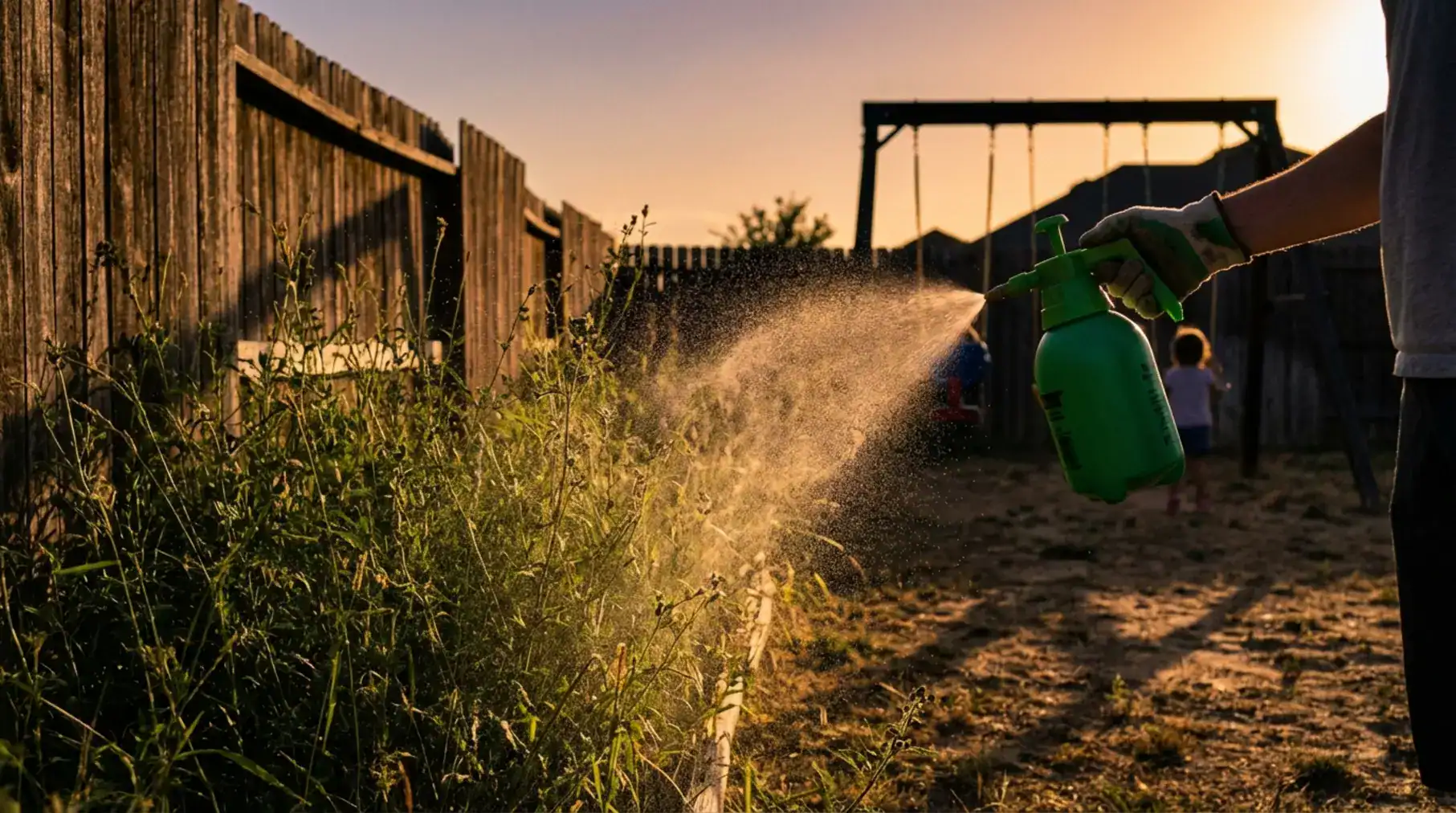
- Application: Use a pump sprayer or a backpack sprayer. Focus on the perimeter of your lawn, the base of shrubs, and any areas that failed the cardboard test.
- Timing: Apply in late spring or early summer when larvae first emerge.
Granular Solutions (Sevin or Bifen LP)
Granular treatments are excellent for deep penetration into the thatch layer of your grass. Products like Sevin Insect Killer Granules can provide up to three months of protection.
- Application: Use a standard broadcast spreader.
- Post-App Care: Most granular products require “watering in” to activate the chemicals. Check the label to see if you need to run your sprinklers for 15 minutes after application.
- Cost: A 20-pound bag typically costs between $20 and $40 and covers up to 10,000 square feet.
Natural Remedies for Chiggers
If you prefer to avoid synthetic chemicals due to concerns about pollinators or pets, there are effective natural chigger repellent options for lawns.
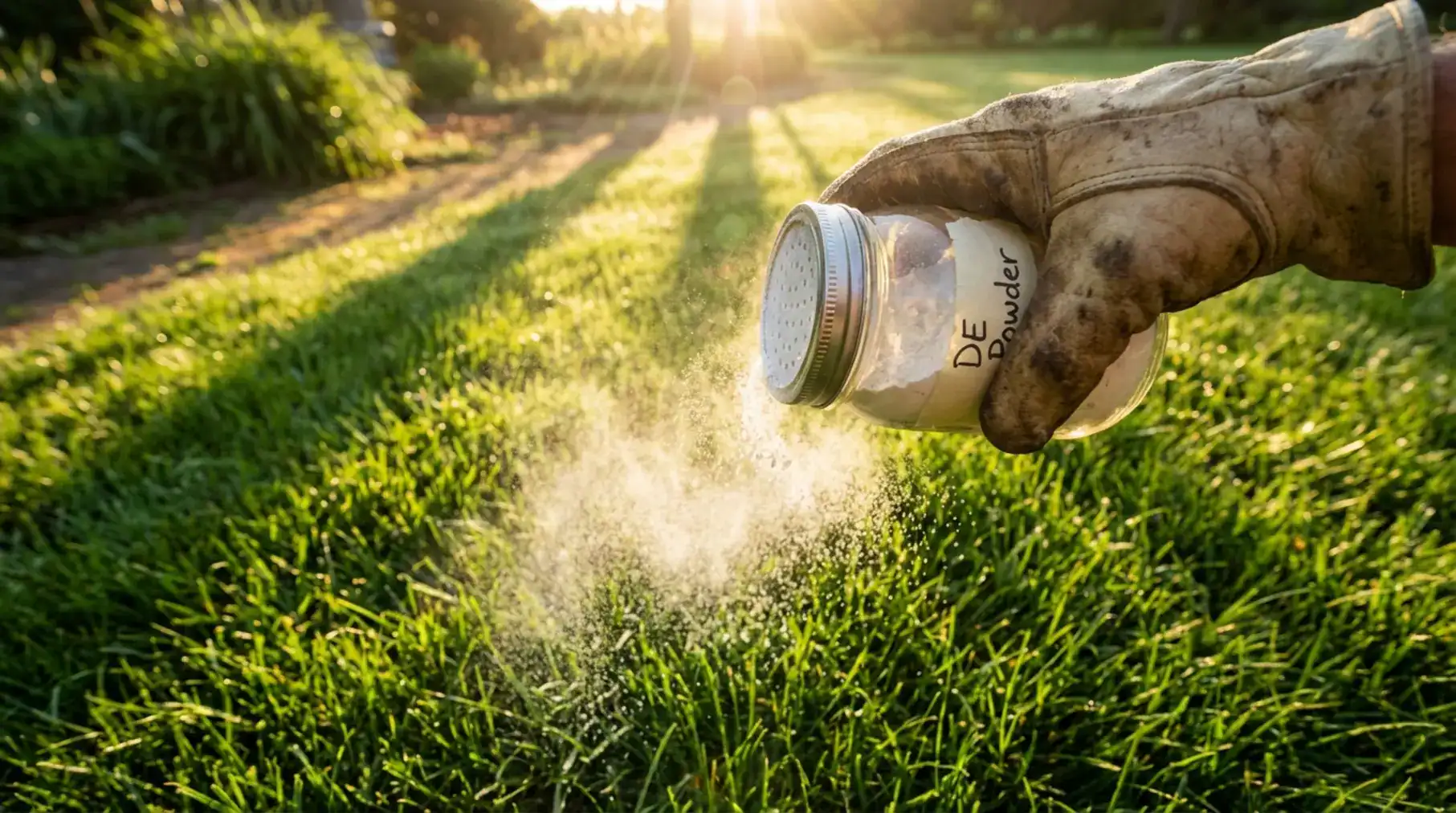
Food-Grade Diatomaceous Earth (DE)
Diatomaceous Earth is a powder made from the fossilized remains of tiny aquatic organisms called diatoms. To a human, it feels like flour. To a chigger, it is like walking over broken glass.
The microscopic shards in DE slice through the chigger’s exoskeleton, causing them to dehydrate and die.
- Application Rate: Use approximately 5 pounds of DE per 1,000 square feet.
- Limitation: DE is only effective when dry. If it rains or there is a heavy morning dew, you must reapply the powder.
The “Sulfur Sock” Hack
This is an old-school homesteading trick that remains incredibly effective. Purchase a bag of agricultural sulfur powder. Fill an old tube sock with the powder and tie a knot at the end.
Before heading into the yard, whack the sock against your shoes, socks, and pant legs. It leaves a fine dust of sulfur that chiggers absolutely loathe. It is a cheap, effective way to manage chiggers on a personal level while you wait for yard treatments to work.
Long-Term Strategies to Prevent Chiggers in Lawns
Eradication is only half the battle. You must change the environment to ensure they don’t come back. Chiggers thrive in moisture and tall vegetation. If you remove these, you remove their home.
The Role of Mowing and Lawn Maintenance
Mowing the lawn is one of the most effective chigger removal techniques. Keep your grass cut to a height of 2 to 3 inches. Short grass allows sunlight to reach the soil surface, which dries out the environment and kills the heat-sensitive larvae.
Habitat Management Checklist
✓ Remove all piles of leaves, grass clippings, and brush.
✓ Prune low-hanging tree branches to increase airflow and sunlight.
✓ Edge your lawn frequently to remove tall grass along sidewalks and fences.
✓ Aerate your soil to improve drainage and reduce standing moisture.
Safety Measures When Treating for Chiggers
Whether you choose chemical or organic treatments, safety should be your priority.
- Protecting Pets and Children: When using liquid sprays like Bifenthrin, keep everyone off the grass until the product is completely dry. This usually takes 2 to 4 hours. Once dry, the product is generally safe for contact.
- Environmental Considerations: Avoid spraying near creeks, ponds, or flowering plants where bees are active. Bifenthrin is highly toxic to fish and aquatic life.
- Personal Protective Equipment (PPE): Always wear gloves, long sleeves, and a mask when applying sulfur or Diatomaceous Earth to avoid inhaling the fine dust.
Comparing Chemical vs. Organic Chigger Treatments
| Treatment Method | Pros | Cons | Residual Life |
|---|---|---|---|
| Bifenthrin Spray | Highly effective; kills on contact. | Toxic to beneficial insects. | 4-6 weeks |
| Diatomaceous Earth | Non-toxic; safe for pets. | Useless after rain or dew. | Until wet |
| Sevin Granules | Easy to apply; deep reach. | Requires watering in. | Up to 3 months |
| Sulfur Powder | Inexpensive; natural repellent. | Strong odor; stains skin. | 1-3 days |
Troubleshooting: Why Your Chigger Treatment Failed
If you have sprayed and are still getting bites, it is likely due to one of three common errors:
- Misapplication: You might have missed the “hot spots.” Chiggers don’t live in the middle of a sun-baked lawn. If you didn’t spray the shaded edges and brush lines, the population survived.
- Climate Conditions: Heavy rain immediately after a liquid application can wash away the residual barrier before it has time to bond with the vegetation.
- Seasonal Timing: If you wait until August to treat, the population has already peaked. The best times for chigger treatment application are in early spring (March to May) to catch the first hatch.
Differences Between Chiggers and Other Outdoor Pests
It is easy to confuse chigger bites with those from fleas or ticks, but the symptoms are distinct.
- Ticks: Usually attach and stay for days. The bite is generally painless initially.
- Fleas: Bites are usually found in clusters on the lower legs but don’t result in the same hardened “stylostome” welt that chiggers produce.
- Chiggers: Intense itching that peaks 24 to 48 hours after exposure. The bites are most common where clothing fits tightly against the skin (sock lines and waistbands).
Common Questions About How to Get Rid of Chiggers in Your Lawn
What kills chiggers in the yard instantly?
Liquid bifenthrin sprays are the fastest way to kill chiggers on contact. Specifically, using a concentrate like Bifen IT mixed at 1 ounce per gallon provides an immediate knockdown of the larval population while leaving a residual barrier that continues to work for several weeks.
Does mowing the lawn get rid of chiggers?
Yes, regular mowing is a primary method of chigger control. By keeping your grass short (around 2 inches), you eliminate the tall vegetation chiggers use to climb onto hosts and allow sunlight to hit the soil. This heat and lack of humidity creates an environment where chiggers cannot survive.
Can you see chiggers on your skin?
Most people cannot see individual chiggers because they are roughly 1/150th of an inch in size. However, you might see them if they cluster together, appearing as tiny, moving red or orange specks. By the time you feel the itch, the chiggers have usually already detached.
Will Diatomaceous Earth kill chiggers in the grass?
Food-grade Diatomaceous Earth is an effective organic treatment for chiggers. It works by physically cutting into the chigger’s exoskeleton, leading to rapid dehydration. However, it only works when completely dry, so it must be reapplied after any rain or heavy dew.
Does clear nail polish help with chigger bites?
No, clear nail polish does not help with chigger bites and is a medically debunked myth. Chiggers do not burrow into the skin, so there is nothing to suffocate. The itch is caused by a digestive enzyme, and the best treatments are anti-itch creams like hydrocortisone or calamine lotion.
When is the best time to spray for chiggers?
The best time to treat your lawn is in early to mid-spring. You want to apply your first round of treatment as soil temperatures approach 77°F, which is when the overwintering eggs begin to hatch into biting larvae.
References & Expert Sources
- Texas A&M AgriLife Extension: Chiggers
- University of Missouri Extension: Chiggers
- CDC: Ticks and Mites Overview
- University of Kentucky Entomology: Chiggers
- EPA: Integrated Pest Management Principles
- Mayo Clinic: Insect Bites and Stings
- LawnStarter: Chigger Control Guide
- Bob Vila: How to Get Rid of Chiggers
- The Spruce: Chigger Eradication Tips
- WebMD: Prevent Chigger Bites
Final Thoughts
Taking back your yard requires a shift from reactive scratching to proactive management. If you want to get rid of chiggers permanently, you cannot rely on a single spray or a “miracle” repellent. You must be diligent about keeping your lawn short, removing debris, and identifying the specific hot spots where these mites thrive. Whether you choose the industrial strength of Bifenthrin or the natural desiccation of Diatomaceous Earth, the key is consistency. By removing the shaded, humid environments they crave, you make your property a place where you can finally walk barefoot again. Remember to start your treatments early in the spring, before the first generation gets going. Do that, and a chigger-free summer is well within reach. Reach out to your local extension office if you need help identifying pests or choosing products safe for your specific region’s ecosystem. Management is a marathon, not a sprint, but your skin will thank you for the effort. Reclaiming your lawn from chiggers is the ultimate reward for a well-maintained yard.