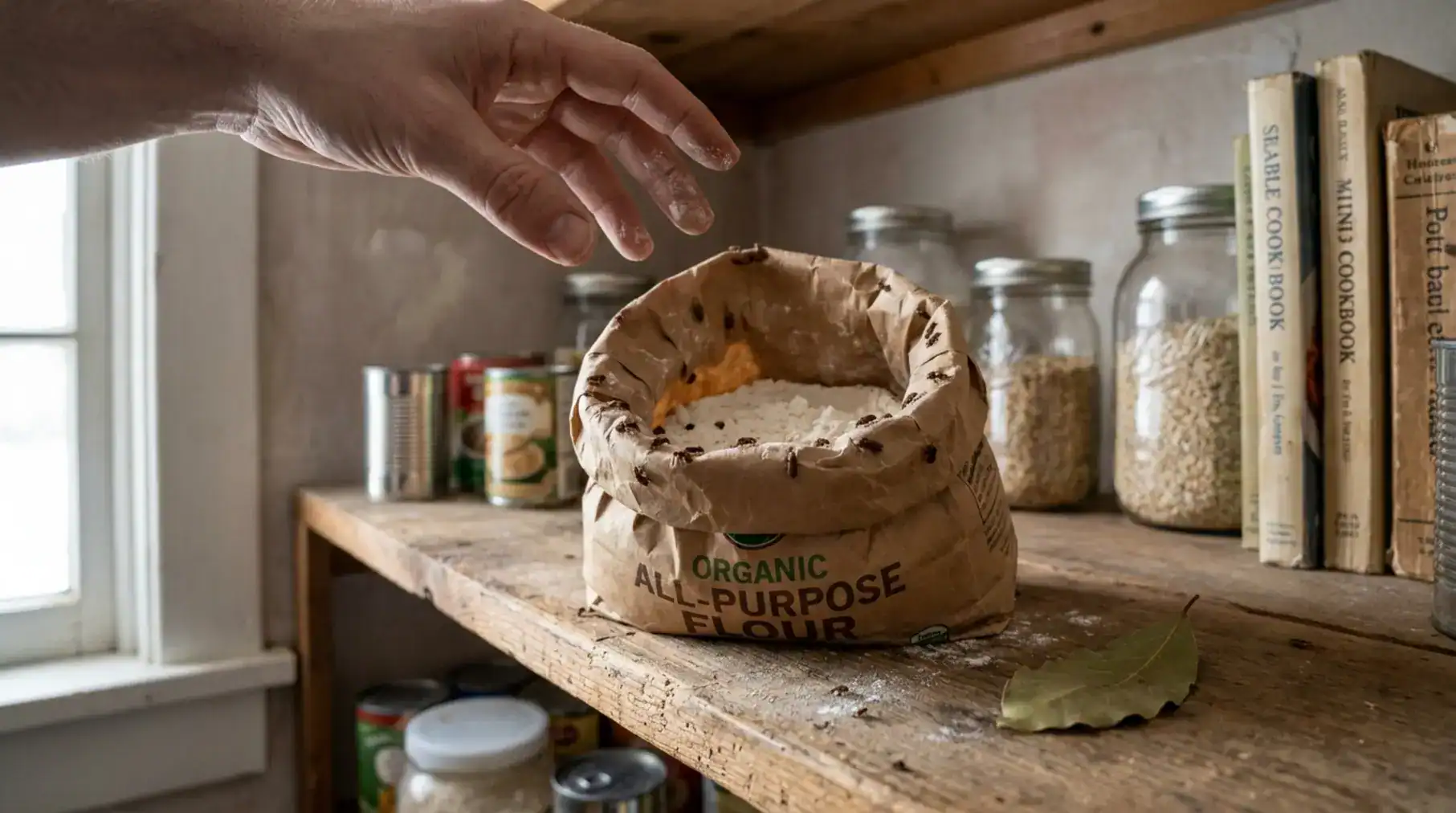
You pull open your freshly bought bag of organic flour, squint at the tiny brown specks moving inside, and wonder why the dried leaf you taped to the lid failed so completely. It is an incredibly frustrating moment for any home cook. For decades, generations have relied on a single botanical leaf as the ultimate shield for dry goods. But when it comes to natural pantry pest control, that aromatic leaf is often more folklore than functional defense. We need to separate botanical chemistry from old kitchen myths.
Understanding Common Pantry Pests and Invasion Tactics
Understanding common pantry pests requires identifying the specific insects that invade food storage and recognizing that most infestations originate from eggs hidden inside grocery packaging. You cannot defend your kitchen if you do not know the enemy.
The harsh reality of pantry insect prevention is that insects rarely fly through your open window to find your flour. Instead, they operate as a Trojan horse. Pests enter your home inside factory-sealed bags of rice, pasta, and baking mixes. Because of this, traditional exterior deterrents completely miss the mark. Plodia interpunctella is defined as the Indian meal moth, a notorious insect that spins web-like silk inside grain products. These moths are notoriously difficult to eliminate once they reach adulthood.
Additionally, weevils present a formidable challenge. Sitophilus oryzae is defined as the rice weevil, an arthropod capable of chewing directly through thin plastic packaging. Learning how to recognize signs of pantry pest infestations early — see our guide to weevils in flour — is your best defense against widespread contamination. Look for clumped flour, webbing in corners of boxes, or tiny holes in plastic grocery bags.
| Pest Classification | Primary Target Foods | Key Identification Marks |
|---|---|---|
| Sitophilus oryzae (Rice Weevil) | Whole grains, rice, corn | 2-3mm long, distinct snout, red spots |
| Plodia interpunctella (Meal Moth) | Flour, cereal, dry pet food | Webbing inside packages, erratic flying |
| Tribolium castaneum (Flour Beetle) | Milled grains, cake mixes | Reddish-brown shell, extremely fast moving |
The Science Behind Bay Leaves Pest Deterrent Chemistry
The science of using a bay leaves pest deterrent relies heavily on volatile organic compounds that confuse insect olfaction, acting purely as a mild repellent rather than a lethal insecticide. Understanding this chemical mechanism explains why dried leaves rarely stop a massive infestation.
Consumers frequently search for the bay leaf benefits for pest control. The primary benefit lies in its chemical makeup. Bay leaves contain eucalyptol, linalool, and pinene. Eucalyptol acts as a neuro-inhibitor for certain arthropods. Think of eucalyptol like a blast of overwhelming perfume in a tiny elevator. It scrambles the delicate chemoreceptors on an insect’s antennae. Consequently, the bug cannot smell the food source and simply walks the other way.
However, repellency is not toxicity. According to recent entomology studies, botanical deterrents lack the lethal knockdown power of chemical sprays Bay leaf fumigant study on Cadra cautella. When assessing the effectiveness of herbs compared to chemical insecticides, the distinction is massive. Synthetic chemicals destroy the nervous system on contact. Botanicals merely create an unpleasant scent barrier. If hungry pests are trapped inside a sealed jar with a bay leaf, they will simply adapt to the smell and continue feeding.
Why Traditional Pest Control With Dried Leaves Fails
Relying solely on using bay leaves for pest control often fails because dried leaves possess a highly limited scent radius and rapidly lose their active volatile compounds when exposed to ambient air. Uncovering the myths vs. facts about natural pest deterrents saves you both time and ruined groceries.
A major problem with traditional pest control methods is the decay rate of botanical oils. When a bay leaf dries out completely, its volatile organic compounds evaporate. Within one to two weeks of sitting on an open shelf, a standard supermarket bay leaf becomes entirely useless. Natural methods to repel pantry pests demand highly concentrated scents to overwhelm bug receptors. A crumbling, six-month-old leaf offers zero protection.
Furthermore, consumers mistakenly trust the leaf to cure an active outbreak. This false sense of security leads to catastrophic cross-contamination. If you place a leaf in a bag of infested oats, the larvae will not die. They will simply mature, hatch, and chew their way into your neighboring sugar supply. Because they only offer a perimeter defense, botanical leaves must be part of a larger, integrated system.
The 72-Hour Natural Pantry Pest Control Protocol
Executing a comprehensive natural pantry pest control protocol requires a 72-hour deep freeze of new groceries, followed by aggressive sanitation, and finalizing with airtight storage. You must treat your kitchen like a biological clean room to break the insect reproductive cycle.
If you want a highly effective step-by-step guide to using bay leaves for pest prevention, you must follow this exact methodology. Tossing herbs onto a dusty shelf will not work.
Step 1: The Deep Freeze Eradication
Every bag of grain, flour, or rice brought home from the supermarket must go directly into the freezer. You must freeze the products at 0 degrees Fahrenheit for a minimum of 72 hours. This extreme temperature safely destroys microscopic eggs and dormant larvae hidden deep inside the grain FAO food safety temperature control. You cannot skip this step. Freezing is the only non-toxic way to guarantee your food is completely sterile before it hits your pantry shelf.
Step 2: Vinegar Purge and Pheromone Removal
Empty your entire cupboard. You must wash every shelf, corner, and bracket using equal parts hot water and white vinegar. Indian meal moths leave behind invisible pheromone trails that attract other male moths to the location. Vinegar naturally breaks down these chemical trails. Thorough sanitation is one of the most critical pantry pest prevention tips available today.
Step 3: Deployment of Airtight Storage
Discard all cardboard boxes and thin plastic retail bags. You must transfer your sterile food into thick, locking acrylic or heavy glass containers. Weevils possess strong mandibles that easily slice through standard grocery store packaging. (Our pest-proof food storage guide breaks down which containers actually hold up.) Airtight locking seals serve as an impenetrable physical barrier. Without this physical blockade, no amount of herbal defense will matter.
Step 4: Activating Herbal Pantry Pest Repellents
Only after the food is sterile and sealed should you deploy botanical defenses. Tape a fresh, highly aromatic bay leaf to the underside of the airtight container lid. Alternatively, scatter fresh leaves along the clean shelves. These leaves now act as a secondary olfactory shield, creating an environment that repels external scouts from investigating the area.
Alternative Culinary Herbs for Pest Prevention
Exploring alternative culinary herbs for pest prevention reveals that potent botanical extracts like clove and spearmint offer statistically higher repellency rates than standard dried bay leaves. Expanding your botanical arsenal guarantees better protection.
The global shift toward organic pest management has driven massive research into plant-based deterrents. The European Union recently mandated reductions in synthetic pesticides, prompting a surge in biological control studies . Consequently, entomologists discovered that several common household herbs dramatically outperform bay leaves in laboratory settings.
Spearmint and Carvone Extracts
Spearmint is an aggressive, highly effective deterrent. Carvone is defined as the primary active terpene in spearmint oil, and it acts as a severe irritant to crawling insects. Placing spearmint tea bags or applying a few drops of spearmint oil to cotton balls in your cupboard corners provides a much stronger scent barrier than a standard bay leaf.
Clove Oil and Eugenol Disruption
Clove represents the absolute heavy artillery of pest-repelling herbs. Eugenol is defined as the dominant chemical compound in cloves, possessing mild contact-toxicity for small insects. When testing effective pantry pest deterrents, researchers consistently rank clove essential oil at the top of the list. However, pure essential oils evaporate rapidly. You must reapply them to your cotton balls every two weeks to maintain an effective barrier.
Safety Rules and Non-Toxic Pest Deterrents
Implementing non-toxic pest deterrents requires careful handling of highly concentrated essential oils and strict adherence to food-safe container hygiene to prevent accidental cross-contamination. Natural does not always mean entirely harmless.
While searching for food-safe pest control methods, many people mistakenly believe that essential oils can be poured directly into flour. This is a massive safety hazard. Concentrated essential oils can cause severe gastric distress and permanently ruin the flavor profile of your food.
Safety Note: You must never allow pure botanical essential oils to touch your consumable food or plastic storage containers directly, as highly concentrated terpenes can melt certain plastics and cause surface irritation on human skin.
Instead, rely on safe eco-friendly solutions for tackling pantry pests by utilizing scent sachets. You can build DIY natural pest control recipes with herbs by blending dried cloves, fresh spearmint, and cracked bay leaves inside small muslin bags. Hang these bags from your shelf brackets. This keeps the active compounds safely isolated away from your grains while still broadcasting the necessary repellent odors throughout the confined space.
User Experiences and Reviews on Herbal Pest Control Effectively
Analyzing user experiences and reviews on herbal pest control effectively demonstrates that consumers who pair botanical repellents with strict storage habits achieve the best long-term results. Community feedback heavily validates the scientific data.
Across popular cooking and cleaning forums, home remedies for pantry pests remain a fiercely debated topic. Many consumers express anger when a bay leaf fails to stop an active infestation. Conversely, users who understand the limitations of kitchen pest remedies praise botanical deterrents. They view the herbs correctly: as a perimeter alarm system rather than a bug bomb.
Creating long-term maintenance strategies to avoid reinfestation is the ultimate goal. Experienced homeowners suggest rotating your herbal sachets at the start of every new month. Furthermore, they utilize food-grade diatomaceous earth. Diatomaceous earth is defined as a naturally occurring, soft sedimentary rock crumbled into a fine powder that physically desiccates crawling insects. Sweeping a tiny dusting of this powder into the deep corners of your pantry floor provides a fatal backup measure for any beetles that ignore the herbal smells.
Best Practices for Storing Food to Prevent Pest Infestations
Establishing best practices for storing food to prevent pest infestations means treating your dry goods with the same strict hygiene protocols you apply to raw meat and dairy. Complacency is the primary cause of insect outbreaks.
Proper natural pest prevention relies on the first-in, first-out rule. Never pour newly purchased flour on top of old flour inside a storage bin. If the new batch contains dormant eggs, you will instantly contaminate the older, safe supply. You must completely empty, wash, and thoroughly dry the acrylic container before refilling it with a freshly frozen batch of grains.
Additionally, you should inspect your herbal defenses frequently. Look closely at the bay leaves taped to your lids. If the leaf lacks a sharp, pungent odor when you scratch its surface gently with your fingernail, it is chemically dead. Replace it immediately. Staying vigilant with your natural pest control solutions for food storage ensures your kitchen remains a hostile environment for unwanted invaders.
Common Questions About Using Bay Leaves and Herbs: Deterrent Myths
Do bay leaves actually kill weevils in flour?
No, bay leaves absolutely do not kill weevils or their larvae. They lack the lethal chemical toxicity required to destroy insect nervous systems. They function entirely as an olfactory repellent, meaning they emit a smell that insects prefer to avoid.
What is the most effective natural deterrent for pantry moths?
A combination of thorough sanitation, airtight glass containers, and clove essential oil is highly effective. Clove contains eugenol, which disrupts moth pheromone tracking better than standard bay leaves. Utilizing these combined natural methods to repel pantry pests ensures maximum protection.
How often should I replace bay leaves in my kitchen cabinets?
You must replace whole dried leaves every two to three weeks if they are exposed to open air. In a perfectly sealed container, a fresh leaf might retain its volatile oils for up to two months. If you cannot smell the leaf, the bugs cannot smell it either.
Will using fresh bay leaves work better than dried ones?
Yes. Fresh leaves retain a significantly higher concentration of eucalyptol and essential moisture. Consequently, fresh leaves emit a much stronger scent radius, making them vastly superior culinary herbs for pest prevention compared to brittle, store-bought alternatives.
Can pests chew through Ziploc plastic bags?
Yes, standard plastic sandwich bags and thin retail packaging provide zero protection. Adult rice weevils and flour beetles possess sharp mandibles designed to crack hard grain shells, allowing them to slice through thin plastic effortlessly.
Is diatomaceous earth safe to use near food storage?
Yes, provided you purchase “food-grade” diatomaceous earth. This specific grade is non-toxic to mammals but lethal to insects because it physically scratches their exoskeletons, causing fatal dehydration. It is one of the most effective non-toxic pest deterrents available.
References and Expert Sources
- Global Agricultural Food Storage Temperature Guidelines 2024
- EU Farm to Fork Pesticide Reduction Mandate 2030
- Biology Insights: Eucalyptol Repellency Limits
- PubMed: Botanical Extracts Against Tribolium Castaneum
- PestWorld: Identifying Indian Meal Moths
- Community Feedback: Herbal Pest Deterrent Forums
- Fortune Business Insights: Biological Control Market 2025
- Environmental Protection Agency: Minimum Risk Pesticides
- Research and Markets: Global Insect Pest Control Data
- University of Kentucky Entomology: Pantry Pest Management
Final Thoughts
Relying on a single dried leaf to protect your food investment is a gamble you will eventually lose. While botanicals offer genuine chemical properties that disrupt insect behavior, they simply cannot act as standalone saviors. True natural pantry pest control is a comprehensive lifestyle adjustment, blending modern storage technology with traditional botanical wisdom.
By executing the 72-hour freeze protocol, transitioning strictly to locking acrylic containers, and utilizing potent extracts like clove and spearmint, you build an impenetrable fortress around your dry goods. You must view herbs as the final, fragrant layer of a much larger defense system. Throw out your brittle, expired leaves and commit to proper sanitation. Protect your kitchen proactively, and stop letting microscopic invaders steal your expensive groceries.