Is Taurus SC as good as Termidor SC?
Yes, Taurus SC is just as effective as Termidor SC because both products contain the exact same active ingredient, Fipronil, at an identical 9.1% concentration. Taurus SC provides the same 10-year protection and colony elimination capabilities as Termidor SC but at a significantly lower cost, making it the superior value choice for DIY applications.
Understanding the Contenders: Termidor SC and Taurus SC
At the heart of this comparison are two powerful, non-repellent termiticides designed to create a lethal, undetectable barrier around your home. While one carries a legacy brand name and the other champions value, their core chemistry is indistinguishable. Understanding this fundamental similarity is the first step in making an informed decision for your pest control needs.
What are Termidor SC and Taurus SC?
Termidor SC, manufactured by the chemical giant BASF, is the industry’s gold standard for termite treatment. Launched in 2002, it has protected over 10 million homes in the U.S. and is the preferred choice for a vast majority of professional pest control operators due to its long-standing reputation for reliability and extensive research backing.
Taurus SC, manufactured by Control Solutions Inc. (CSI), is the leading generic equivalent to Termidor SC. It entered the market as a cost-effective alternative, offering the same 9.1% Fipronil active ingredient in a suspension concentrate (SC) formula. Primarily marketed towards the savvy DIY homeowner, Taurus SC delivers professional-grade results without the professional-grade price tag.
The key takeaway is simple: when you look at the label, the chemical composition of Fipronil is identical. Both are designed for post-construction exterior perimeter treatments to stop subterranean termites before they can cause costly damage.
Why Fipronil is the Chemical of Choice
Termites are notoriously destructive, causing billions of dollars in property damage annually. The effectiveness of any termite treatment hinges on the power of its active ingredient. Fipronil revolutionized the industry because it is a non-repellent insecticide.
Here’s why that matters:
- Older, repellent-style termiticides created a chemical wall that termites could detect. Consequently, they would simply find a gap in the barrier and continue their path to your home’s foundation.
- Fipronil is undetectable. Termites pass through the treated zone without realizing they are coming into contact with a lethal substance. This is the foundation of its superior efficacy.
This non-repellent quality is crucial for what’s known as the “transfer effect,” the secret weapon behind both Termidor SC and Taurus SC.
Comparing Effectiveness: The Identical Knockout Punch
When you’re comparing two products with the same core engine, performance should be nearly identical. For Termidor SC and Taurus SC, lab studies and real-world user reviews confirm that the efficacy of termite products with 9.1% Fipronil is consistently high, regardless of the brand on the bottle.
The Undetectable “Transfer Effect”
The true power of Fipronil lies in its ability to turn termites into carriers of their own demise. This process, known as the transfer effect, works like a virus spreading through the colony.
- Initial Contact: Foraging termites pass through the treated soil around your foundation, picking up microscopic amounts of Fipronil on their bodies.
- Delayed Action: The chemical does not kill them instantly. This gives the infected termites ample time to return to the nest.
- Colony Contamination: Back in the colony, the termites engage in normal social behaviors like grooming and feeding one another. Through this contact, they unknowingly transfer the Fipronil to dozens of other termites, including the queen.
- Colony Collapse: This chain reaction continues, leading to 100% colony elimination, typically within three months.
Because both Termidor SC and Taurus SC use the exact same concentration of Fipronil, they both leverage this powerful social killing mechanism. There is no scientific evidence to suggest that Termidor SC’s “inert” ingredients create a superior transfer effect compared to Taurus SC.
Real User Experiences and Reviews
Community discussions on platforms like Reddit and YouTube are filled with testimonials from homeowners who have successfully used both products. The consensus is overwhelmingly positive for both, but the conversation often centers on cost versus brand loyalty.
Negative reviews for either product almost always stem from the same root cause: user error in application. Incorrect dilution, shallow trenching, or incomplete coverage will cause any termiticide to fail, regardless of its brand name. This highlights that the method is just as important as the material.
Application Methods: Where DIY Success and Failure Diverge
The single biggest factor determining the long-term effectiveness of termite treatments is proper application. While professionals have the training and specialized equipment for this task, a dedicated DIYer can achieve the same level of protection by following the label instructions precisely. Failure to do so is the most common pitfall in DIY pest control solutions.
The Critical Steps for Applying Termidor SC and Taurus SC
Whether you choose the brand name or the generic, the application process is identical. The goal is to create a continuous, unbroken chemical barrier in the soil around your home’s foundation.
- Calculate Your Needs: First, measure the linear feet around your home’s perimeter. The standard application rate is 4 gallons of finished solution per 10 linear feet.
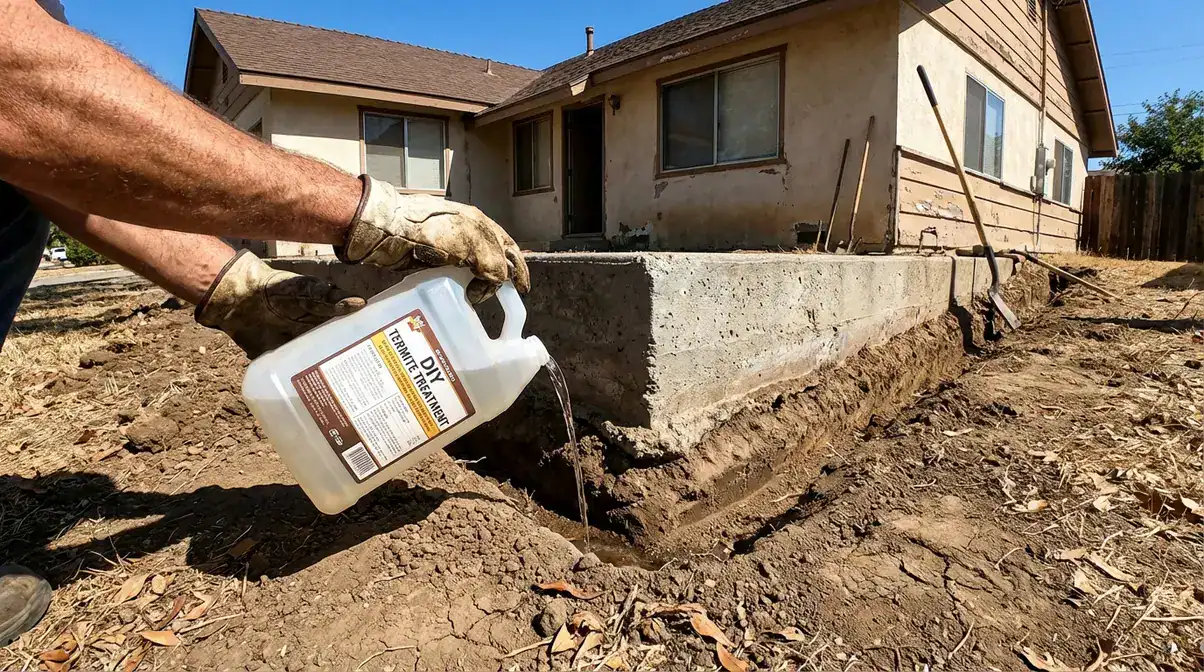
- Dig the Trench: Using a shovel or pickaxe, dig a trench 6 inches wide and 6 inches deep directly against the foundation. This is non-negotiable. A shallow trench is the #1 cause of DIY failure.
- Mix the Solution: The standard dilution rate for both products is 0.8 fl oz of concentrate per 1 gallon of water. This creates a 0.06% Fipronil solution. For a typical 4-gallon backpack sprayer, you would add 3.2 fl oz of concentrate. Always add water to the sprayer first, then the chemical, and agitate thoroughly.
- Apply the Termiticide: Apply the 4 gallons of mixed solution evenly along each 10-foot section of the trench. Let it soak into the soil.
- Backfill and Treat Again: Push the soil you removed back into the trench. As you do, apply more solution to ensure all the soil is treated. The goal is saturation.
For areas covered by concrete, like patios or driveways, professionals use a hammer drill and a long rod to inject the solution underneath the slab-a process known as sub-slab injection. While possible for advanced DIYers, this is often where hiring a professional is a safer bet.
DIY vs. Professional Application: The Warranty Debate
This is where the brand difference becomes most apparent. When a licensed pest management professional (PMP) applies Termidor SC, the treatment often comes with a warranty. If termites reappear, the company will return to retreat the affected area at no additional cost. This peace of mind is part of what you pay for.
If you use Taurus SC as a DIY treatment, you are your own warranty. While you save a significant amount of money, you also assume all the risk. If the treatment fails due to improper application, the cost of re-treatment and any subsequent damage falls on you. This is a crucial factor when deciding which path to take.
Cost Analysis: The Unmistakable Price Advantage of Taurus SC
For budget-conscious homeowners, the price comparison between Termidor SC and Taurus SC is the most compelling part of the story. The generic option provides an identical chemical solution for a fraction of the cost, freeing up funds that can be invested in proper application tools.
Side-by-Side Pricing Breakdown
The cost-effectiveness of pest control products is a major factor. While prices fluctuate, Taurus SC consistently maintains a significant price advantage over Termidor SC.
| Metric | Termidor SC | Taurus SC |
| Manufacturer | BASF | Control Solutions Inc. (CSI) |
| Average Price (20 oz Bottle) | $65 – $80 | $45 – $55 |
| Yield (at 0.06% rate) | ~25 gallons | ~25 gallons |
| Average Cost per Gallon | ~$2.80 | ~$2.00 |
A 20 oz bottle of either concentrate will make approximately 25 gallons of finished solution, enough to treat about 60 linear feet of foundation. For larger homes, CSI also offers a 78 oz bulk bottle of Taurus SC, which provides an even greater cost-per-gallon savings and is one of the best termite control methods for large-scale DIY projects.
Long-Term Cost Effectiveness
The upfront savings with Taurus SC are clear. A DIY treatment for a 200-linear-foot home might require four 20 oz bottles.
- Termidor SC Cost: ~$280
- Taurus SC Cost: ~$200
- Professional Treatment Cost: $1,200 – $2,500+
While the $80 savings may seem modest, it represents a nearly 30% reduction in material cost. Over the 10-year longevity of the treatment, the value is undeniable, provided the application is done correctly. The long-term effectiveness of termite treatments depends more on the applicator’s diligence than the brand name on the bottle.
Safety and Environmental Concerns
When handling any insecticide, safety must be the top priority. Fipronil is a powerful chemical, and understanding the risks is essential for protecting yourself, your family, your pets, and the environment. There are no significant differences in the comparison of safety between brand and generic products; both require the same precautions.
Safety Considerations for Fipronil
The most common Termidor SC side effects are minor and typically result from direct contact, such as skin irritation. To mitigate risks, always follow these safety protocols:
- Wear Personal Protective Equipment (PPE): This includes long sleeves, pants, chemical-resistant gloves, and safety glasses.
- Mind the Wind: Never spray on a windy day to prevent drift into non-target areas.
- Keep Pets and Children Away: Do not allow pets or children into the treated area until the spray has completely dried, which usually takes several hours. The question, “Is Termidor SC safe for pets?” has a clear answer: it is safe once dried, as the chemical binds to the soil and is not easily transferable.
Environmental Impact of Fipronil
Fipronil is highly toxic to fish, aquatic invertebrates, and pollinators like bees. This is a primary driver of the environmental impact of chemical treatments.
- Never apply near wells, cisterns, or bodies of water.
- Do not apply in a way that allows for runoff into storm drains.
- Fipronil is banned for use on crops in the European Union and certain other regions due to its effect on pollinators. While its use for structural pest control is permitted in the U.S., it is vital to apply it responsibly.
Proper disposal of unused product is also critical. Never pour concentrate down the drain. Follow the disposal instructions on the product label and adhere to local regulations.
Common Questions About Termidor SC vs. Generic Fipronil: Is the Brand Worth It?
Is Taurus SC really as good as Termidor SC?
Yes, it is. The Termidor SC effectiveness comes from its 9.1% Fipronil concentration, which is identical in Taurus SC. Both products offer a 10+ year soil barrier and achieve colony elimination through the same transfer effect. From a chemical and performance standpoint, they are equals.
How long does Termidor SC and Taurus SC last in the ground?
When applied correctly according to label directions, both Termidor SC and Taurus SC create a protective barrier in the soil that lasts for at least 10 years. The EPA requires extensive multi-year studies before registering a product with such a long-lasting claim, and both have met this high standard.
What is the main difference between Termidor SC and Taurus SC?
The only significant difference is the manufacturer and the price. Termidor SC is the original brand-name product from BASF, carrying a higher price tag and the trust of the professional industry. Taurus SC is the generic version from Control Solutions Inc., offering the same performance for about 30% less, making it ideal for DIY pest control solutions.
Can I use Taurus SC as a DIY treatment for pests other than termites?
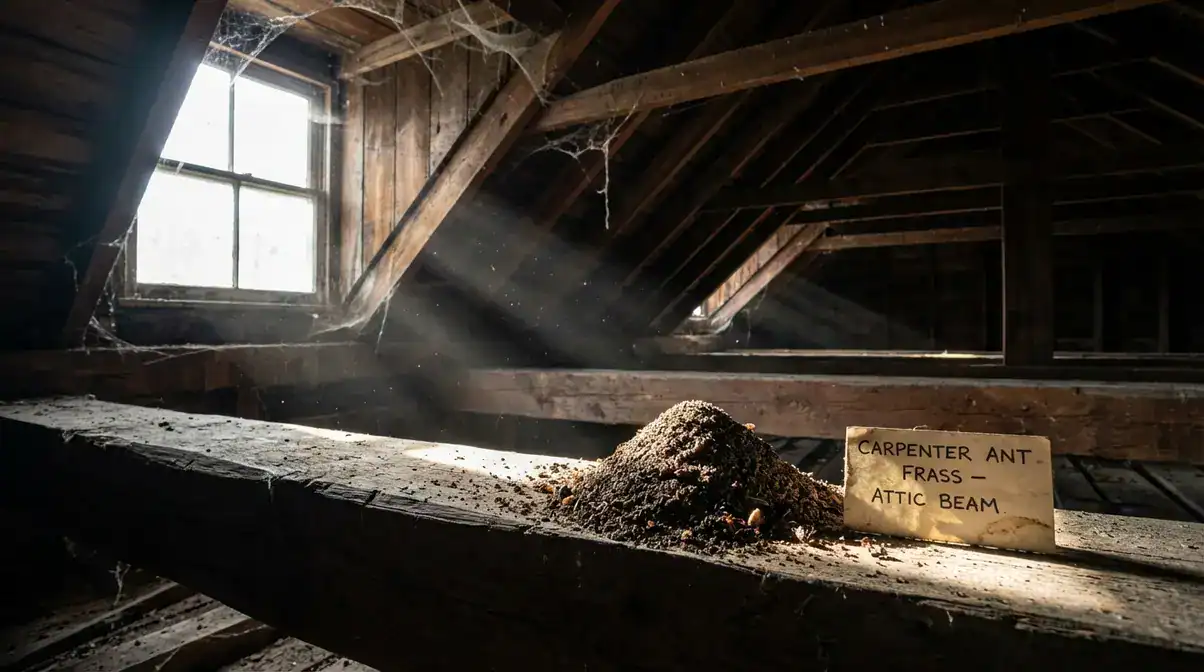
Yes. Like Termidor SC, Taurus SC is also labeled for use as an exterior perimeter spray to control a wide range of pests, including ants (Carpenter, Argentine, Crazy, etc.), cockroaches, spiders, centipedes, and millipedes. For general pest control, a lower dilution rate is often used, and reapplication may be needed every few months.
Are there any user error in application of termite treatments I should avoid?
The most common and critical user errors are: 1) not digging the trench deep enough (it must be 6×6 inches), 2) mixing the dilution incorrectly (always use the 0.06% rate for termites), and 3) not applying enough volume (4 gallons per 10 linear feet). Skimping on any of these steps will create a weak spot in the barrier that termites will exploit.
References & Expert Sources
- EPA termite identification and control methods
- Fipronil Fact Sheet – NPIC
- Reddit – r/pestcontrol Discussion on Termidor vs. Taurus for Ants
- Reddit – r/DIY Discussion on Generic Termiticide Efficacy
- Termidor SC vs Taurus SC Comparison
- DoMyOwn.com – Termidor SC Product Page and Q&A
- YouTube – Generic Termidor SC Taurus SC Comparison by Solutions Pest & Lawn
- Pest Control Technology (PCT) Online – Industry News and Best Practices
- Control Solutions Inc. Taurus SC Product Page
- BASF Termidor SC Product Information
Final Thoughts: Making the Right Choice for Your Home
So, is the brand worth it? The final verdict on the Termidor SC vs Taurus SC showdown depends entirely on your priorities.
If you are a homeowner who values peace of mind, prefers to have a professional warranty backing the treatment, and is not constrained by a tight budget, then hiring a licensed professional to apply Termidor SC is an excellent choice. You are paying for the chemical, the expert labor, and the assurance that the job is done right.
However, if you are a diligent, budget-conscious DIYer who is willing to invest the time and physical effort to follow the application instructions to the letter, Taurus SC is the unequivocally smarter financial decision. You get the same industry-leading chemical protection and colony-destroying power for significantly less money. The savings on materials are substantial, and the satisfaction of protecting your own home is priceless. Ultimately, both paths lead to a termite-free home; you just have to choose the one that best fits your wallet and your willingness to get your hands dirty.