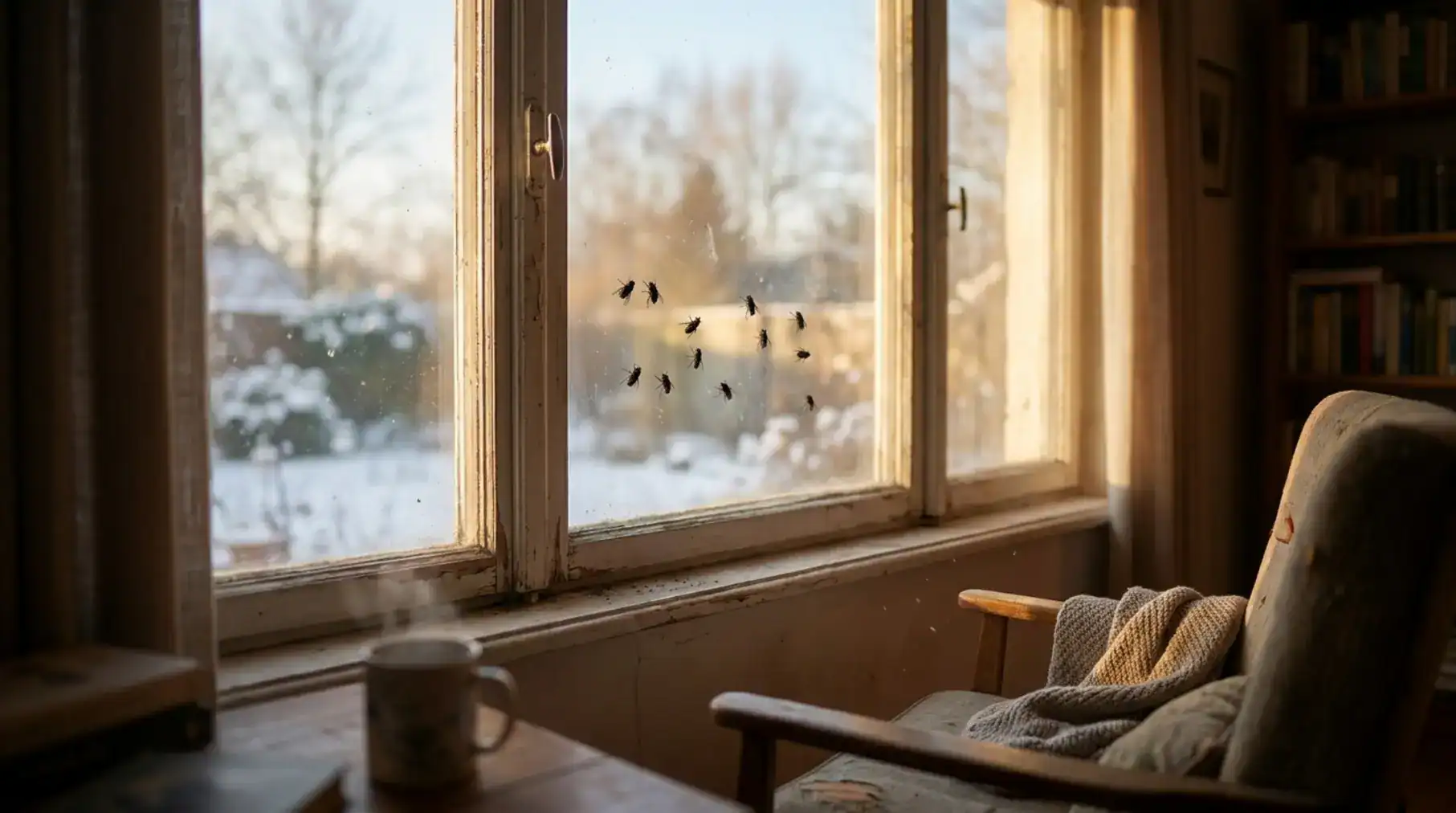
Imagine lighting your wood stove on a crisp January afternoon, looking for comfort from the cold. Suddenly, your glass is swarming with giant, sluggish insects, and you are left wondering why you have cluster flies windows in the dead of winter. It feels like a horror movie. You might panic, assuming your house is dirty or a rodent died in the walls. Here is the reassuring truth. Your home is perfectly clean. These nuisance insects are simply confused by the heat.
What Are Cluster Flies? Identification and Physical Traits
Cluster flies are large, slow-moving winter insects that seek shelter inside homes during autumn to survive the cold. Identifying them correctly is the critical first step before attempting any pest control for cluster flies.
Pollenia rudis is defined as the primary scientific species of cluster fly found in North America, though recent entomological data notes there are up to six related species that overwinter together. These insects are notably larger than common house flies. Adult cluster flies measure between 7 and 10 millimeters in length. They feature a dark, checkered abdomen and are covered in distinct, crinkly yellow or golden hairs on their thorax. These golden hairs can rub off as the fly ages, but they remain a key identifier.
Understanding the identification of cluster flies requires looking at their behavior indoors. They are clumsy. They fly at a remarkably sluggish pace and frequently spin on their backs or sides on window sills. Additionally, they carry a distinct scent. When a homeowner crushes a cluster fly or sucks hundreds of them into a vacuum cleaner, the insects emit a sweet odor widely described as smelling like buckwheat honey.
According to Cluster Flies and other Winter Flies resource, these structural pests do not bite, sting, or cause structural damage. However, recognizing their unique physical traits is essential for effective removal. If you misidentify them, you risk using the wrong seasonal pests strategy.
Differences Between Cluster Flies and Other Household Flies
Knowing the differences between cluster flies and other household flies prevents you from using ineffective treatments designed for filth flies. Cluster flies are larger, slower, and hold their wings like closed scissors when resting.
It is easy to confuse autumn flies with other common indoor pests. House flies and blowflies behave very differently and require entirely different eradication methods. Cluster flies vs house flies is a comparison of biology and behavior. House flies breed in rotting organic matter. Blowflies are attracted to decaying meat. In contrast, cluster flies are strictly tied to outdoor soil environments.
Here is a quick reference guide to tell them apart:
| Feature | Cluster Flies | House Flies |
|---|---|---|
| Size | 7 to 10 millimeters | Roughly 6 millimeters |
| Wing Posture | Overlapped like closed scissors | Splayed out in a ‘V’ shape |
| Flight Speed | Sluggish, slow, clumsy | Fast, erratic, darting |
| Odor | Sweet, buckwheat honey smell | No distinct odor |
Correctly assessing the cluster fly characteristics guides your treatment path. If you have house flies in January, you likely have a sanitation issue. If you have cluster flies, you simply have a structural breach in your wall voids.
The Earthworm Connection: Understanding the Cluster Fly Life Cycle
The cluster fly life cycle and habits rely entirely on outdoor earthworm populations, meaning these pests physically cannot breed or lay eggs inside your home. A lush, healthy lawn actually increases your risk of a cluster fly infestation.
Understanding the life cycle of cluster flies requires looking at their strange parasitic nature. Female adults lay their eggs in soil cracks during the spring and summer. They specifically target soil near earthworm burrows. Regions with highly irrigated lawns, such as the Treasure Valley in Idaho or the silty soils east of the Blue Ridge Mountains, experience massive fly populations. Once the eggs hatch, the larvae tunnel into the earthworms to feed and develop.
Diapause is defined as a state of suspended biological development that insects enter to survive harsh winter conditions. As daylight hours shorten in late summer, adult flies stop reproducing. Their metabolism slows down. They seek out structural refuge to begin their dormancy.
Because their entire reproductive cycle requires living earthworms, they do not reproduce indoors. Any fly you see in your house during the winter is a fully grown adult that entered your home months prior.
The False Spring: Why Do Cluster Flies Appear in Winter?
Understanding why do cluster flies appear in winter comes down to architectural thermal gain and micro-climates inside your walls. When indoor temperatures hit specific triggers, dormant insects wake up and swarm toward natural light.
The role of weather in cluster fly activity is profound. These insects possess a biological thermometer. Throughout the deep freeze, they remain safely tucked behind your baseboards, in your attic, or inside wall voids. However, they are highly sensitive to thermal shifts. If a sunny afternoon warms the exterior siding of your house, the temperature inside the wall void rises.
When the micro-climate hits exactly 54°F (12°C), the flies awaken. They believe spring has arrived. Because of thigmotaxis – a biological response causing them to seek out physical contact and light – they squeeze through tiny crevices around sash window cords and unsealed exhaust vents. Think of it like a biological alarm clock going off months too early.
Why do cluster flies invade homes mostly on specific sides of a building? Solar heat gain. In multi-story homes, infestations are almost always heavily concentrated on the upper two floors of the south-facing and west-facing walls. These sides receive the most direct sunlight during the winter months. Furthermore, indoor heating sources like central air or wood stoves routinely push wall void temperatures above the 54°F activation threshold.
Is Your Home Invaded? Signs of a Cluster Fly Infestation to Watch For
Identifying the early signs of cluster flies in home environments helps you act before a minor nuisance becomes a buzzing swarm. Look for sluggish insects, sweet odors, and dead flies piled on window sills.
The signs of a cluster fly infestation to watch for are highly distinct. You will rarely see a single fly. True to their name, they gather in massive aggregations. Finding one sluggish fly usually means hundreds more are trapped nearby.
Watch for these primary indicators of an active winter infestation:
- Dozens of dead or dying flies scattered across window tracks after a sunny day.
- A persistent, loud buzzing sound coming from behind curtains or suspended ceilings.
- Small dark stains on glasspanes caused by fly excreta.
- A sickly sweet, buckwheat odor in rooms that remain closed off or unused.
- Sluggish flies spinning on their backs near recessed lighting fixtures.
The impact of cluster flies on indoor comfort can be severe, especially for homeowners dealing with hundreds of daily intruders. Yet, noticing these signs early confirms your problem is structural rather than sanitation-based.
Effective DIY Solutions for Cluster Fly Control
The best indoor removal of cluster flies from windows relies on physical trapping and vacuuming rather than chemical sprays. Using aerosol bug bombs in your attic can trigger secondary pest infestations that destroy your home.
When desperate homeowners ask how to get rid of cluster flies mid-winter, they often make terrible mistakes. Reaching for a chemical fogger is the worst possible choice. Effective DIY solutions for cluster fly control prioritize exclusion and physical removal over toxic indoor sprays.
Safety Note: You must never use bug bombs or aerosol foggers in attics or wall voids to kill overwintering flies. Killing thousands of flies inside enclosed walls creates a massive food source for Dermestid beetles. This leads to a severe carpet beetle infestation the following spring.
To manage indoor flies in winter safely, follow this practical routine:
- Vacuum the window tracks thoroughly using a hose attachment every afternoon.
- Empty the vacuum canister immediately into an outdoor trash bin to prevent odors and secondary pests.
- Apply Cluster Busters – specially designed powder traps – directly to the glass corners.
- Set up UV light traps in dark attics to passively catch flies before they reach living spaces.
- Wipe down window frames with soapy water to remove the pheromone trails left behind.
If you are wondering what insect repellent works on cluster flies, traditional chemical repellents offer poor results indoors. Some homesteaders report moderate success using Maxforce Fly Spot Fly Bait applied to disposable cards near entry points, though physical trapping remains vastly superior. By managing cluster flies in homes through vacuuming, you bypass the catastrophic risks associated with hidden chemical treatments.
Long-Term Strategies for Preventing Cluster Fly Invasions
Preventing cluster flies requires sealing the exterior of your home precisely between mid-August and early September before daylight hours shorten. Once the insects enter your wall voids in late autumn, external exclusion efforts are no longer effective.
Because winter treatments are largely reactive, true pest control for cluster flies is entirely seasonal. Long-term strategies for preventing cluster fly invasions focus on keeping them out before the autumn equinox triggers their migration. According to US Structural Pest Control market grew 6%, missing this critical exterior sealing window guarantees another winter of indoor buzzing.
Your cluster flies prevention tips checklist must include:
- Applying a residual insecticide spray to the exterior south and west-facing walls precisely between August 15 and August 30.
- Caulking all exterior cracks around window frames using a high-quality silicone-latex blend.
- Sealing gaps around utility pipes, air bricks, and fascia boards with expanding foam.
- Replacing damaged weatherstripping on all exterior doors and attic hatches.
- Reducing lawn irrigation immediately near the foundation to lower local earthworm densities.
How can I prevent cluster flies if I live in a log cabin? Log homes require meticulous chinking maintenance. The natural settling of wood creates hundreds of micro-gaps perfect for overwintering pests. Additionally, what attracts cluster flies to my house is often the sheer thermal mass of dark-colored siding. By creating a physical barrier in late summer, you block the insects from ever reaching your interior walls.
Common Myths About Cluster Flies and Pest Control
Falling for common myths about cluster flies and pest control leads homeowners to waste money on useless chemical treatments. These winter insects are not attracted to garbage, and their presence does not indicate a dead animal in your walls.
Misinformation drives unnecessary panic. Are cluster flies harmful to humans? No. They do not carry diseases, they do not bite pets, and they do not contaminate food sources the way traditional filth flies do. Correcting these misconceptions provides immense peace of mind.
One persistent myth claims that massive fly swarms indicate a dead rat in the attic. This confuses cluster flies with blowflies. Cluster flies seek warmth, not carrion. Therefore, ripping open your drywall to find a carcass is a futile, expensive mistake.
Another widespread fallacy is that indoor heating kills them. Actually, turning up your thermostat simply accelerates their false spring awakening. They do not die from the warmth. They become highly active, drain their energy reserves, and eventually die on your windowsills because they cannot find a way back outside. Relying on accurate seasonal behavior patterns of cluster flies saves you from useless DIY folklore.
When to Call Pest Control for Cluster Flies
Hiring professional pest control for cluster flies is highly effective for exterior autumn prevention, but mid-winter eradication is often limited to trapping. Expect to pay between $225 and $450 for targeted sealing and residual treatments.
Sometimes a cluster fly infestation becomes too overwhelming for a standard vacuum cleaner. If your home features massive vaulted ceilings, inaccessible attic crawlspaces, or high cathedral windows, calling a professional is the smartest move.
However, you must manage your expectations. A reputable exterminator will confirm that spraying chemicals inside sealed walls during January is a waste of money. Instead, professionals focus on installing commercial-grade UV light traps in loft spaces. They will also map out a strict exclusion plan for the upcoming autumn.
According to US Pest Control Industry Shows Remarkable Resilience, standard winter consultations range from $50 to $100. Comprehensive exterior residual treatments applied the following August typically run between $225 and $450. When interviewing pros, ask specifically about their protocol for overwintering parasitoids. If an exterminator promises to bug-bomb your house to fix the problem today, decline their services immediately.
Common Questions About Cluster Flies: Why They Appear in Winter
How do you identify cluster flies?
You identify them by their larger size (7 to 10 millimeters), their sluggish flight, and the distinct golden hairs on their thorax. Unlike fast-moving house flies, they overlap their wings like closed scissors when resting. Because of their slow speed, they are remarkably easy to swat or vacuum.
When do cluster flies stop being a problem?
These insects naturally exit your home during the genuine spring warming, typically between April and May. Once the outdoor soil thaws, the surviving adults fly outside to find earthworms for breeding. They will not return indoors until the following autumn.
What is the impact of cluster flies on indoor comfort?
While completely harmless to human health, their sheer numbers cause massive psychological distress. The constant buzzing, the accumulation of dead carcasses on window tracks, and the sweet buckwheat odor severely degrade the comfort of living spaces. In severe cases, they can stain curtains and wallpaper with dark excrement spots.
Do cluster flies breed indoors?
No, they physically cannot breed inside a home. Their larvae require live earthworms to survive and develop. Every single fly buzzing around your reading lamp in February is an adult that flew into your wall voids late last summer.
Are cluster flies the same as attic flies?
Yes, “attic flies” is simply a colloquial term for them. Because heat rises, these insects predominantly gather in the highest, warmest points of a home. Attics, loft spaces, and second-story bedrooms are their preferred overwintering habitats.
References and Expert Sources
- Colorado State University Extension Fact Sheet on Overwintering Insects
- National Pest Management Association average service pricing
- Pest Management Professional industry data 2024
- University of Maryland Extension Pest Control Advice
Final Thoughts
Dealing with cluster flies windows during the dead of winter is a frustrating, confusing experience for any homeowner. The sudden appearance of massive, buzzing insects feels like an invasion. However, by understanding their thermal triggers and their absolute reliance on outdoor earthworms, you can stop fighting a losing battle indoors. Put down the toxic bug bombs. Vacuum up the current intruders, clean your sills, and mark your calendar for the middle of August. True victory over these pests happens long before the snow falls, so prepare your caulking gun now to ensure a fly-free home next year.