You’ve tried the sprays, the traps, and the endless cleaning, yet the roaches keep coming back, seemingly stronger than before. If your current cockroach control methods are failing, you aren’t just unlucky; you’re likely facing a super-evolved enemy that has outsmarted your chemical arsenal, which is why a strategic cockroach bait rotation is no longer optional- it’s your most powerful weapon. These pests evolve faster than your Netflix queue, and using the same bait repeatedly is like giving them a workout instead of a knockout blow.
What is cockroach bait rotation and why is it essential?
Cockroach bait rotation is the strategic practice of switching between different gel baits with unique active ingredients and food matrices every 90 to 120 days. This essential tactic prevents cockroaches from developing physiological resistance to the poison and behavioral aversion to the bait, ensuring long-term pest control solutions.
Understanding Chemical Resistance: The Cockroach Superpower
Chemical resistance in cockroaches isn’t science fiction; it’s rapid, real-world evolution happening under your sink. When you apply the same roach gel bait over and over, you’re unintentionally running a survival-of-the-fittest contest. A small number of roaches in any population have natural genetic variations that allow them to survive a poison dose that kills their peers. These survivors then reproduce, passing their resistant genes to hundreds of offspring. After just a few generations- which for German cockroaches is about 100 days- you can have a whole population that simply shrugs off your bait.
This problem has two main components:
- Physiological Resistance: This is a metabolic change where the roach’s body learns to break down and neutralize the poison (the active ingredient) before it can do harm. They literally become immune.
- Behavioral Aversion: This is even trickier. Roaches can develop an aversion to the bait’s food source (the food matrix). They learn that the tasty gel is a trap and will avoid it entirely, even if the active ingredient would still be effective. They simply refuse to eat it.
Without understanding and combating these two factors, you are fighting a losing battle. This is why the importance of bait rotation is a core principle in modern insecticide resistance management.
The 100-Day Clock: Why Your Rotation Schedule is Critical
The German cockroach, your most common and formidable indoor foe, has a life cycle of approximately 100 days from egg to reproducing adult. This biological clock is the key to an effective bait rotation strategy. If you don’t switch your bait’s active ingredient within this timeframe, you are giving a resistant generation enough time to mature and create a new, even more resistant population.
A staggering 81% of Pest Management Professionals (PMPs) rotate baits as a standard practice because they know this secret. However, their frequency varies, and that detail matters. Industry data shows:
- 46% rotate baits quarterly (every 3 months).
- 18% rotate more frequently, such as bi-monthly.
- 25% rotate semi-annually (every 6 months).
For severe infestations, waiting six months is far too long. A quarterly (90-day) rotation is the gold standard for preventing cockroach infestations with bait. It directly disrupts their breeding cycle before resistance can take hold.
The Professional-Grade Cockroach Bait Rotation Strategy
Learning how to rotate cockroach bait isn’t just about buying a different brand; it’s about systematically changing the chemical class of the active ingredient. The Insecticide Resistance Action Committee (IRAC) classifies insecticides by their Mode of Action (MOA)- how they attack the pest. Your goal is to switch between different IRAC groups.
Here is a proven, three-phase approach modeled after professional protocols:
- Phase 1: The Clean-Out (Days 1-90): Start with a fast-acting, highly palatable bait. The goal here is a rapid knockdown of the existing population. Apply the bait according to the label, focusing on hot spots.
- Phase 2: The Rotation (Days 91-180): This is the critical step. Switch to a bait from a completely different IRAC group. For example, if your first bait was an oxadiazine (IRAC Group 22A), your second should be something like a glutamate-gated chloride channel allosteric modulator (IRAC Group 6). You should also choose a bait with a different food matrix if possible.
- Phase 3: The Maintenance (Days 181+): You can now rotate back to your first bait or introduce a third from yet another IRAC group. For ongoing prevention, continue rotating every 90-120 days.
To supercharge this strategy, always pair your gel bait with an Insect Growth Regulator (IGR) like NyGuard. IGRs are birth control for roaches. They don’t kill adults but prevent nymphs (babies) from developing into reproductive adults, effectively sterilizing the next generation. This provides an “insurance policy” against any survivors.
Top Roach Gel Baits for an Unbeatable Rotation
Choosing the best roach bait for resistance prevention means building a diverse arsenal. You need at least two, preferably three, products with different active ingredients and MOAs. Here is a comparison of top-tier products trusted by professionals.
| Product | Active Ingredient | IRAC Group | Best For |
|---|---|---|---|
| Syngenta Advion Evolution | Indoxacarb | 22A (Oxadiazines) | Phase 1 Clean-Out. Highly attractive and fast-acting against multiple species. |
| Syngenta Optigard Gel | Emamectin benzoate | 6 (Avermectins) | Phase 2 Rotation. Excellent for populations resistant to other classes. Dual-action MOA. |
| Envu Maxforce Impact | Clothianidin | 4A (Neonicotinoids) | Phase 2 or 3 Rotation. Features a proprietary food matrix called BlueBead that remains effective even when roaches are bait-averse. |
| MGK Vendetta Nitro | Clothianidin + Pyriproxyfen | 4A (Neonicotinoids) + 7C (IGR) | All-in-one solution. Combines a potent active ingredient with a built-in IGR, simplifying treatment. |
| MGK Vendetta 360 | Abamectin B1 | 6 (Avermectins) | Rotation for picky eaters. Features a novel food matrix to combat bait aversion. Excellent companion to the Vendetta family. |
A sample rotation plan could look like this:
- Months 1-3: Use Advion Evolution (IRAC 22A).
- Months 4-6: Switch to Maxforce Impact (IRAC 4A).
- Months 7-9: Rotate to Optigard Gel (IRAC 6).
- Months 10-12: You can now safely return to Advion Evolution.
Mastering Roach Bait Application Techniques
Even the best bait will fail if applied incorrectly. The difference between success and failure often lies in placement. Because baits have a short attraction range, you need to place them where roaches live, travel, and feed.
Key Placement Zones (“Hot Spots”)
Think like a roach: they crave darkness, warmth, and moisture. Focus on cracks and crevices in these areas:
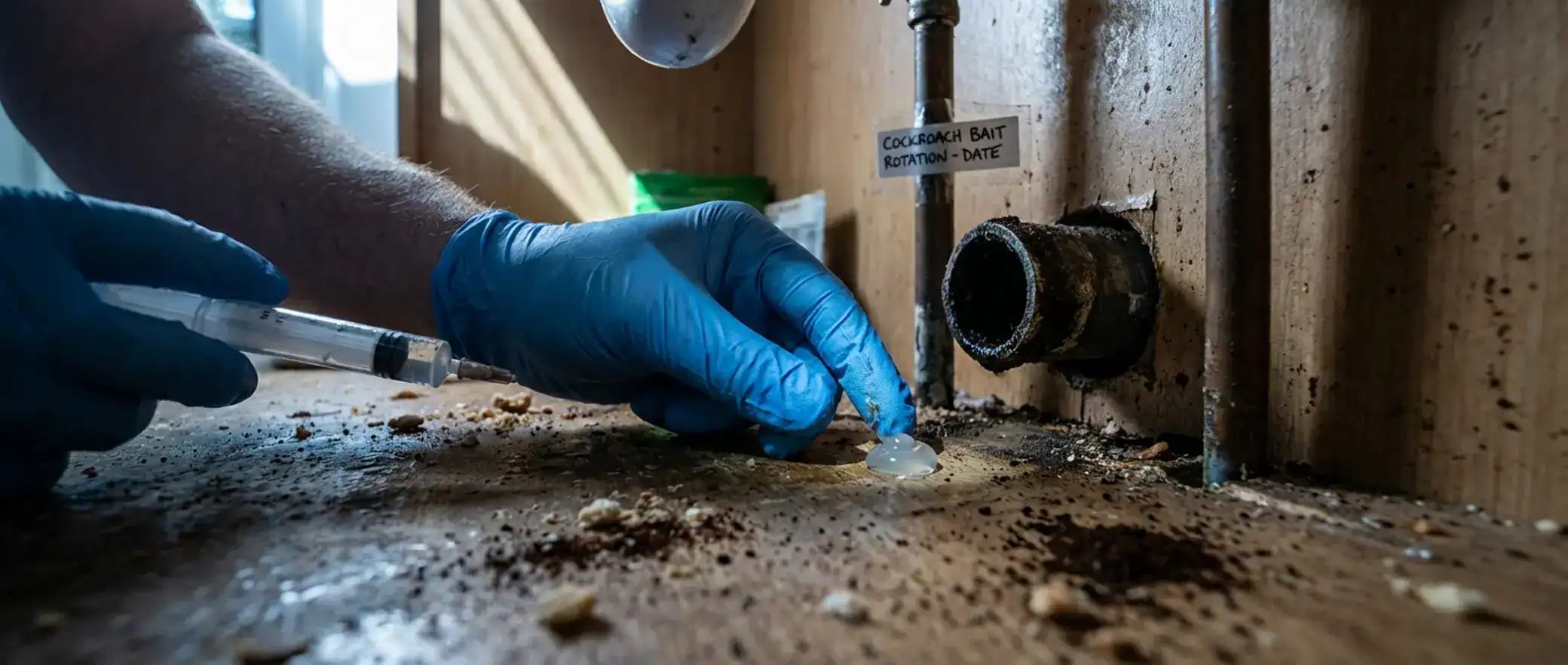
- Kitchen: Under sinks, behind the refrigerator (especially near the motor), inside and under cabinets, corners of drawers, behind the microwave, and where pipes enter the wall.
- Bathroom: Under the sink, behind the toilet, around the base of the bathtub, and in medicine cabinets.
- Electronics: Roaches love the warmth from electronics. Check behind TVs, computer towers, and gaming consoles.
- General Areas: In corners of closets, along baseboards, and in door hinges.
Application Best Practices
- Size Matters: Apply small dots of gel (about the size of a pea) every 10-12 inches in target areas. For heavy infestations, place them closer together. Don’t apply long, continuous lines of bait; multiple small placements are more effective.
- Clean First: Before applying bait, clean the area of food crumbs and grease. You don’t want your bait competing with other food sources.
- Don’t Contaminate: Never spray insecticides or cleaning products on or near the bait placements. This will repel roaches and render the bait useless.
- Monitor and Reapply: Check your bait spots after a week. If the bait is gone, the roaches are eating it- which is good! Replenish the bait as needed to ensure the entire population has a chance to feed.
Seasonal Factors Affecting Cockroach Bait Efficacy
Cockroach behavior changes with the seasons, and your bait rotation strategies should adapt accordingly.
- Spring & Summer (High Activity): As temperatures rise, roaches breed much faster. Their metabolism speeds up, and they consume more food. During these months, you must be extra vigilant. Check and replenish your bait placements more frequently, perhaps every 2-3 weeks. This is the most critical time for your quarterly rotation to prevent a population explosion.
- Fall & Winter (Lower Activity): As it gets colder, roaches slow down and seek warmth and shelter indoors. While their activity might decrease, this is a perfect opportunity for a decisive strike. They are concentrated in specific warm areas (like behind appliances), making targeted baiting highly effective. Do not skip your winter rotation; it’s essential for preventing a rebound in the spring.
Beyond Gels: Integrated Pest Management for Cockroaches
While rotating gel baits for roaches is a cornerstone of control, it’s most effective as part of a larger strategy called Integrated Pest Management (IPM). IPM is a holistic approach that combines multiple tactics for sustainable, long-term pest control solutions.
Key components of an IPM program include:
- Sanitation: This is non-negotiable. Keep your kitchen spotless, store food in airtight containers, empty trash daily, and eliminate clutter where roaches can hide.
- Exclusion: Seal cracks and crevices in walls, floors, and around pipes with caulk. Install door sweeps and repair window screens to block entry points.
- Eliminating Water Sources: Fix leaky pipes and faucets immediately. Don’t leave pet water bowls out overnight. Roaches can survive for a month without food but only a week without water.
- Monitoring: Use sticky traps (glue boards) placed in suspected hot spots. These traps won’t solve an infestation, but they are excellent tools for monitoring population size and identifying where roaches are most active.
Some people also explore natural methods to control cockroaches, such as diatomaceous earth or boric acid. While these can be helpful supplements, they are typically slower-acting and less effective for eliminating an established infestation compared to a professional-grade gel bait rotation.
Case Study: Reclaiming a Kitchen from Resistant Roaches
The infestation was back and worse than ever. This is a classic case of both physiological resistance and bait aversion.A professional was called in. They started by cleaning the area and applying Advion Evolution (IRAC 22A) in pea-sized dots. Within two weeks, the population crashed by an estimated 80%. Critically, they also applied NyGuard IGR to stop the reproductive cycle.
At the 90-day mark, they returned and switched to Maxforce Impact (IRAC 4A), which has a completely different food matrix and active ingredient. This move targeted any survivors who were resistant to or averse to the first bait.
After another month of monitoring and a final clean-up, the kitchen was completely clear. This is a perfect example of successful case studies of effective cockroach bait rotation.
Common Questions About Roach Gel Bait Rotation: Preventing Chemical Resistance
How often should I rotate cockroach baits?
You should rotate your cockroach gel bait every 90 days. This timeline is specifically designed to be shorter than the 100-day life cycle of the German cockroach, which prevents a resistant generation from maturing and breeding. For less common species or very light infestations, rotating every 120 days can also be effective.
What are the first signs of cockroach infestations?
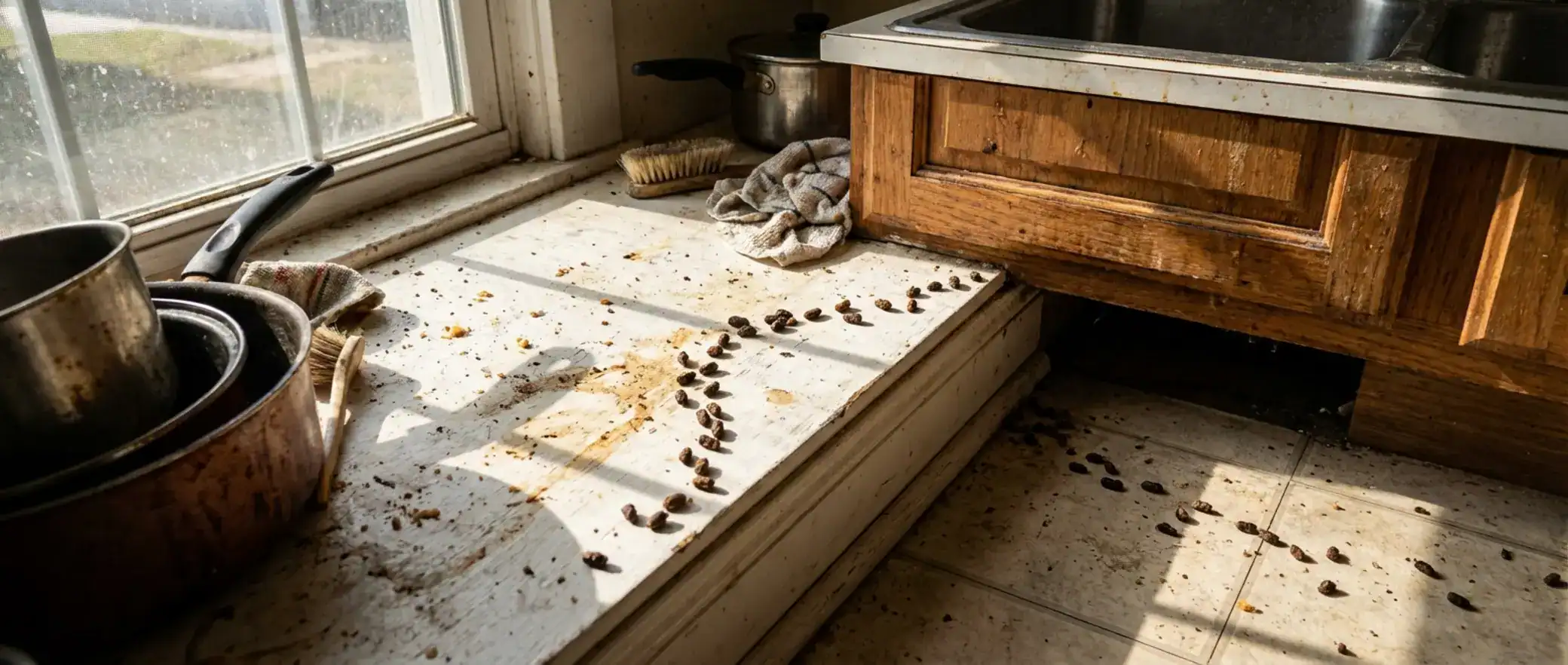
The earliest signs of cockroach infestations are often subtle. Look for droppings that resemble black pepper or coffee grounds in corners, drawers, and under appliances. You might also find shed skins (casings), egg capsules (oothecae), or notice a musty, oily odor in severe cases. Of course, seeing a live roach during the day is a sure sign of a significant problem.
Can I just switch brands of roach bait?
No, simply switching brands is not enough. Many different brands use the same active ingredient. You must read the label and ensure you are switching to a bait with a different active ingredient and, ideally, one that belongs to a different IRAC Group (Mode of Action). For example, switching from one indoxacarb-based bait to another will not prevent resistance.
Is roach bait gel safe for pets and children?
When applied correctly according to the label, roach bait safety is high. The gel should be placed in cracks, crevices, and other inaccessible areas where pets and children cannot reach it. The amount of active ingredient in a single placement is very small. However, it is always best practice to apply baits in hidden areas and store all pest control products securely out of reach.
What happens if roaches don’t eat the bait?
If roaches are ignoring your bait, you are likely dealing with bait aversion. This is a clear signal that you need to rotate immediately to a product with a different food matrix and active ingredient. Products like Maxforce Impact or Vendetta 360 were specifically designed to overcome this “picky eater” problem.
References & Expert Sources
- Insecticide Resistance Action Committee (IRAC): The global public-private authority on insecticide resistance. Their website provides the official MOA classifications critical for proper rotation. irac-online.org
- PCT Magazine Survey on Bait Rotation: Data and insights from Pest Management Professionals on rotation practices and frequency. pctonline.com
- MGK Technical Bulletin on Vendetta 360: Product information detailing the novel food matrix designed to combat bait aversion. mgk.com
- Envu (Bayer) Maxforce Rotation Strategy: Official documentation outlining the “Clean Out, Rotate, Maintain” protocol for professionals. envu.com
- Syngenta Professional Pest Management: Resources on Advion and Optigard products, highlighting their active ingredients and role in resistance management. syngentapmp.com
- National Pest Management Association (NPMA): Industry best practices and resources on Integrated Pest Management for cockroaches. npmapestworld.org
- University of Florida IFAS Extension: Research and educational materials on German cockroach biology and control. edis.ifas.ufl.edu
- Purdue University Department of Entomology: Studies on insecticide resistance mechanisms in urban pests. extension.entm.purdue.edu
- Journal of Economic Entomology: Peer-reviewed research on the efficacy of different bait active ingredients and rotation schedules. academic.oup.com
- BASF Pest Control Solutions: Information on products like Alpine, which are also used in professional rotation plans. pestcontrol.basf.us
Final Thoughts
The battle against cockroaches is a battle of wits and strategy, not just brute force. By abandoning the ineffective single-product approach and embracing a disciplined cockroach bait rotation, you can outsmart their rapid evolution. Aligning your treatment with their 100-day life cycle, switching between different IRAC groups, and integrating your efforts into a broader IPM plan are the keys to achieving lasting control. Don’t wait for your current bait to fail; take proactive steps today to implement a rotation strategy and ensure your home remains a no-roach zone for good.