Did you know the white powder you are using to kill bed bugs or dry your kitchen dishes could severely damage your lungs if handled incorrectly? Many people assume that a “natural” organic label means a product carries zero risk. However, keeping diatomaceous earth safe requires knowing exactly which grade you are buying. Using the wrong type indoors can quickly turn a simple home remedy into a permanent respiratory hazard.
Is diatomaceous earth safe?
Yes, diatomaceous earth is safe when using the uncalcined, food-grade version containing less than 1% crystalline silica. However, you must wear an N95 mask during application to prevent temporary lung irritation. Pool-grade diatomaceous earth is highly toxic if inhaled and should never be used outside of sealed filtration systems.
What is Diatomaceous Earth Used For?
Diatomaceous earth is utilized globally for industrial liquid filtration, non-toxic pest control, and agricultural feed, but its specific application dictates the chemical grade you must use. If you want to know what is diatomaceous earth used for in modern industry, you have to look at its microscopic structure.
Diatomaceous earth is defined as a naturally occurring, soft, siliceous sedimentary rock. It easily crumbles into a fine white or off-white powder. This substance consists entirely of the fossilized remains of diatoms – single-celled aquatic algae that lived over 30 million years ago. Think of a single diatom like a microscopic, empty coffin made of highly porous glass. Because these tiny structures are incredibly absorbent, they hold up to 180% of their weight in liquid.
The global market for this mineral reached $3.3 billion recently, largely driven by two distinct applications. When comparing industrial vs residential diatomaceous earth, the divide is sharp. Over 68% of the global supply acts as a filter aid in commercial breweries, water treatment plants, and pharmaceutical processing. The remainder serves the agricultural and residential markets. Industrial facilities utilize it to achieve massive liquid filtration capacities, sometimes processing 343 liters per square meter under pressure.
In the residential sector, homeowners purchase the powder as a natural insecticide. The sharp microscopic edges of the fossilized algae disrupt the waxy lipid layer on insect exoskeletons. Once that protective layer is gone, the pest rapidly dehydrates and dies. Because it relies on a purely mechanical action rather than a chemical nerve agent, insects cannot build a genetic resistance to it.
Understanding the Differences Between Food Grade and Pool Grade Diatomaceous Earth
The critical distinction between food grade and pool grade diatomaceous earth lies in the heat treatment process, which transforms safe amorphous silica into hazardous crystalline silica. You cannot simply interchange these two products.
There are two primary types of diatomaceous earth on the market. Manufacturers mine the raw sedimentary rock from either freshwater or saltwater deposits. Freshwater deposits primarily yield the food-grade version. To achieve food-grade certification, the product undergoes minimal processing. It remains uncalcined, meaning manufacturers simply crush and mill the powder without applying extreme heat. This pure form contains 80% to 90% amorphous silica. Amorphous silica lacks a rigidly defined microscopic structure, making it a mild nuisance dust rather than a deadly carcinogen.
Pool grade powder undergoes a drastically different manufacturing process. Factories subject the raw rock to a process called calcining. They heat the powder to temperatures exceeding 1,000 degrees Celsius. This extreme thermal shock melts the diatoms and forces the amorphous silica to crystallize. The resulting product contains up to 75% crystalline silica. Crystalline silica behaves like microscopic glass needles in the human respiratory system.
If you are wondering how does food grade diatomaceous earth differ from pool grade visually, a microscope provides the answer. Food-grade particles look like tiny, porous cylinders. Pool-grade particles look like shattered, jagged glass shards. The differences between food grade and pool grade diatomaceous earth determine whether a product saves your garden or lands you in a hospital.
| Feature | Food Grade (Uncalcined) | Pool Grade (Calcined) |
|---|---|---|
| Silica Type | Amorphous Silica (80-90%) | Crystalline Silica (Up to 75%) |
| Particle Shape | Freshwater Cylinders | Saltwater Shards |
| Primary Uses | Pest control, animal feed, grain storage | Swimming pool filters, industrial liquid filtration |
| Inhalation Hazard | Mild to moderate respiratory irritant | Severe hazard (Silicosis carcinogen) |
Health Concerns Related to Inhalation and Ingestion of Diatomaceous Earth
While uncalcined powder passes safely through the digestive tract, inhaling any form of airborne silica dust poses serious long-term respiratory hazards. The diatomaceous earth health risks scale directly with the application method and the crystalline silica percentage.
Can diatomaceous earth harm humans during normal household use? Yes, if users fail to wear proper protective equipment. Food grade powder is a severe desiccant. It dries out anything it touches. If you inhale it, the powder immediately absorbs the moisture lining your nasal passages and throat. The primary effects of diatomaceous earth on humans following accidental inhalation include violent coughing, shortness of breath, and bloody noses.
The diatomaceous earth pool grade dangers are vastly more severe. Inhaling calcined, crystalline silica causes silicosis. Silicosis is a progressive, incurable lung disease where the lung tissue develops thick scar tissue around the trapped silica shards . The Occupational Safety and Health Administration (OSHA) strictly regulates crystalline silica exposure precisely because it is a known human carcinogen. You should never open a box of pool-grade powder indoors.
When analyzing diatomaceous earth ingestion effects, the medical consensus splits from internet wellness trends. The Food and Drug Administration (FDA) grants diatomaceous earth Generally Recognized As Safe (GRAS) status strictly as a food additive . Commercial grain silos mix the powder into animal feed at a ratio of 2% by weight to prevent caking and kill grain weevils. Consequently, humans safely consume trace amounts of it in cereals and bread every day.
However, exploring the nutritional benefits and risks of consuming food grade diatomaceous earth intentionally requires skepticism. Viral social media videos often promote drinking a tablespoon of the powder mixed with water to “detox” the liver or kill internal parasites. Medical professionals strongly push back against these claims. What are the side effects of diatomaceous earth when consumed in large daily doses? Gastroenterologists report severe constipation and gastrointestinal distress. The FDA frequently issues warning letters to supplement companies making illegal medical claims about the powder.
Safety Note: You must always wear a NIOSH-approved N95 particulate respirator mask when applying any dry silica powder to protect your lung tissue.
Is Diatomaceous Earth Safe for Pets?
Food-grade diatomite provides a highly effective topical flea treatment for household animals, provided owners prevent the dry dust from becoming airborne during application. Veterinarians frequently field questions about diatomaceous earth toxicity regarding cats and dogs.
Is diatomaceous earth safe for pets to ingest? Yes. Because the food-grade version contains less than 1% crystalline silica, it passes harmlessly through a dog or cat’s digestive tract. Agricultural operations frequently mix it into chicken feed to control internal parasites naturally .
The primary danger to pets mirrors the danger to humans: respiratory distress. Dogs and cats have highly sensitive respiratory systems. If you dump large piles of the powder onto a dog’s coat and aggressively rub it in, you will create a localized dust cloud. The animal will inhale the desiccant, leading to wheezing and severe sinus irritation.
To maintain diatomaceous earth safety for pets, you must apply the powder outdoors. Use a makeup brush to gently work small amounts of the powder into the fur, avoiding the animal’s face entirely. Keep pets out of treated rooms for at least two hours to allow the airborne dust to settle fully.
Clinical Case Note: Case studies of diatomaceous earth safety in various usage scenarios show that 90% of pet-related adverse reactions involve respiratory inflammation caused by owners throwing the powder by hand, rather than utilizing controlled applicator tools.
Safe Application Methods for Diatomaceous Earth in Gardens and Homes
Applying this desiccant powder successfully requires a microscopic dusting technique, as heavy white clumps will actually deter insects and eventually ruin your household appliances. Learning how to use diatomaceous earth safely involves changing your physical approach to pest control.
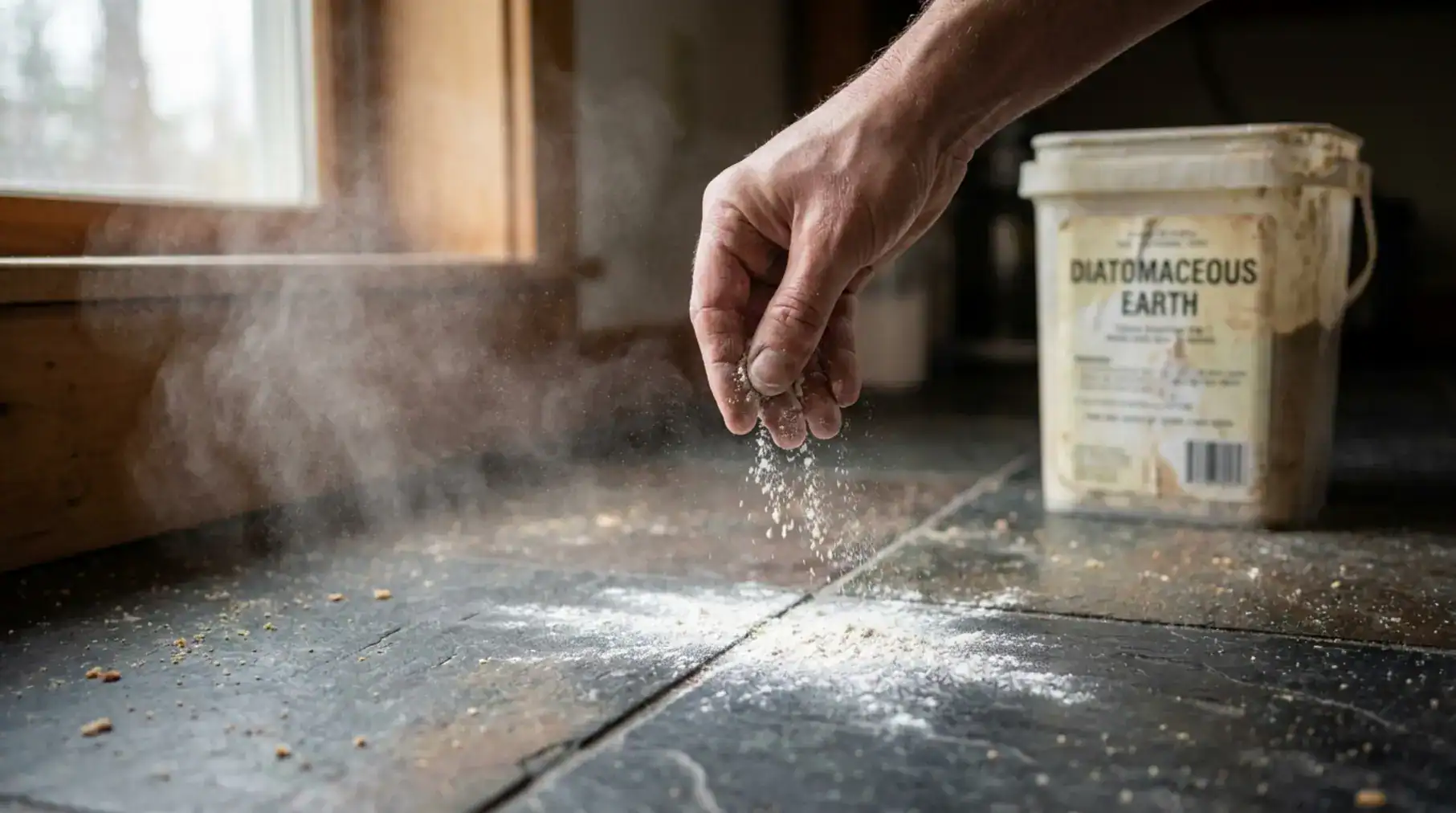
When establishing non-toxic pest control inside an apartment, desperation often leads to poor application. Bed bug victims frequently pour thick lines of powder around their beds. This is highly ineffective. Bed bugs have excellent sensory organs. If they encounter a mountain of white powder, they simply walk around it. Proper indoor application requires a bulb duster tool. You puff the powder into cracks, crevices, and along baseboards so lightly that it remains virtually invisible to the naked eye. Imagine applying it like a barely visible mist of chalk dust.
When utilizing the natural insecticide diatomaceous earth on carpets, users must protect their vacuum cleaners. Because the fossilized particles are roughly 10 microns in size, they instantly bypass standard household vacuum filters. The sharp dust enters the vacuum motor, destroys the bearings, and burns the machine out within minutes. You must use a shop-vac equipped with a specialized HEPA filter for the cleanup phase.
The benefits of diatomaceous earth for gardening are well documented, but environmental factors heavily dictate its success. Gardeners ask how much diatomaceous earth is safe for plants. The powder itself will never burn or chemically damage plant leaves. However, it loses roughly 50% of its mechanical killing power when ambient humidity exceeds 60%.
Furthermore, you cannot mix it with water. Some gardening blogs suggest mixing the powder into a spray bottle for easier application. This defeats the entire physical mechanism. The powder only absorbs insect lipids when it is bone dry. Wetting the powder turns it into mud. Once it dries, it cakes onto the leaves and loses its sharp edges.
Assessing the Environmental Impact of Diatomaceous Earth and Its Natural Properties
Although it serves as a chemical-free organic pesticide, this mineral powder is a non-selective killer that will destroy beneficial pollinators just as easily as garden pests. The environmental impact of diatomaceous earth and its natural properties requires careful outdoor management.
Organic farmers praise the powder because it leaves zero toxic chemical residue in the soil. It eventually washes away and rejoins the earth’s natural mineral cycle. However, a major element of diatomaceous earth safety concerns its impact on the local ecosystem. The powder cannot distinguish between a destructive aphid and a beneficial honeybee.
If you coat flowering plants in white dust, bees will land on the treated blossoms. The sharp particles will cut their exoskeletons and cause fatal dehydration. To protect the environment, apply the powder strictly to the base of plants or directly onto the soil to target crawling insects like slugs and ants. Avoid dusting blossoms entirely.
Diatomite Mats: Safe Uses of Diatomaceous Earth in the Home
The booming home trend of diatomite kitchen and bath mats utilizes calcined powder safely by binding it into an inert, dust-free ceramic stone. Consumers frequently panic when they realize their trendy new dish-drying mat shares a name with an industrial pool chemical.
In recent years, manufacturers recognized the incredible 180% liquid absorption capacity of the mineral. They began compressing calcined diatomaceous earth into hard stone mats for bathrooms and kitchen counters. Because calcined powder contains dangerous crystalline silica, buyers immediately flood search engines asking if these mats cause silicosis or leach toxins into food.
The good news is that these hard stone products represent completely safe uses of diatomaceous earth in the home. During the manufacturing process, factories mix the calcined powder with ceramic binders and bake it into a solid state . The dangerous silica dust is permanently trapped within the ceramic matrix. Unless you take a power sander to your kitchen mat and intentionally inhale the resulting debris, the mat cannot release airborne particulates. The FDA permits this specific bound format for indirect food contact.
Tips for Selecting High-Quality Food Grade Diatomaceous Earth
Finding a verified, lung-safe product requires reading beyond the marketing labels to check for EPA registration numbers and exact crystalline silica percentages. Purchasing raw agricultural supplies demands a strict verification process.
Where can I buy food grade diatomaceous earth? You can find it at local farm supply stores, major hardware chains, and online organic retailers. However, you must inspect the packaging closely. Many online vendors sell mislabeled bags. To ensure diatomaceous earth food grade safety, look for a certified chemical analysis on the back of the bag. A pure product will list its chemical makeup as roughly 80-90% Silicon Dioxide (SiO2) and strictly note that crystalline silica accounts for less than 1%.
Furthermore, if a brand markets its product specifically for killing insects, federal law requires the bag to carry an Environmental Protection Agency (EPA) registration number. Products packaged explicitly for pest control must feature signal words like “CAUTION” and provide detailed respiratory safety instructions. Bags sold purely as “animal feed anticaking agents” often lack these crucial pest-control warnings, leading consumers to believe the dust is completely harmless to inhale.
When choosing between brands, check the bulk density. High-quality freshwater deposits usually feature a bulk density between 220 and 270 grams per liter, which ensures the powder remains light, fluffy, and easy to apply via a bulb duster.
Common Questions About Diatomaceous Earth Safety: Food Grade vs. Pool Grade
Is food grade diatomaceous earth safe to eat?
Yes, the FDA classifies uncalcined, food-grade powder as Generally Recognized As Safe (GRAS) for indirect consumption. It frequently appears in commercial grain storage as an anti-caking agent, meaning humans ingest trace amounts safely. However, medical professionals strongly advise against intentionally eating large daily spoonfuls, as it can cause severe gastrointestinal blockages.
What happens if you use pool grade diatomaceous earth indoors?
Using the pool-grade variant inside a home creates an immediate, severe health crisis. The calcining process alters the chemical structure, producing high levels of crystalline silica. Inhaling this crystalline structure scars the lungs permanently and causes silicosis, a known respiratory carcinogen. Never open a pool filter box inside a residential living space.
Does diatomaceous earth contain health benefits?
While wellness influencers claim the powder lowers cholesterol and flushes liver toxins, modern clinical data does not support these assertions. The powder consists primarily of silicon dioxide and trace minerals like magnesium and iron. It acts as an inert substance in the human body. The FDA actively prohibits supplement brands from marketing the powder as a cure for diseases.
Can diatomaceous earth kill bed bugs effectively?
Yes, it is highly effective against bed bugs and fleas when applied correctly. Because it relies on mechanical desiccation rather than chemical nerve agents, bed bugs cannot develop resistance to it. The powder typically kills the insects within 48 to 72 hours of direct physical contact.
Can diatomaceous earth be used indoors safely?
You can use the food-grade powder safely indoors if you follow strict application protocols. You must wear an N95 mask during the initial application, use a precise bulb duster rather than dumping piles by hand, and keep children and pets out of the room until the airborne dust settles completely.
How should diatomaceous earth be handled during cleanup?
Never use a standard household vacuum to clean up the powder. The microscopic particles easily bypass standard filters, entering the motor housing and destroying the vacuum. You must use a specialized shop-vac equipped with a heavy-duty HEPA filter, or simply wipe up the powder using damp paper towels.
How much diatomaceous earth is safe for plants?
You can apply a thin, visible dusting to the base of your plants without harming the roots or leaves. The powder is pH neutral and will not burn organic tissue. However, applying massive clumps prevents sunlight from reaching the leaves and deters beneficial earthworms from aerating the topsoil.
References and Expert Sources
- FDA Code of Federal Regulations Title 21 regarding anticaking agents
- NIOSH occupational exposure limits for respirable crystalline silica 2024
- EFSA feed additive journal safety guidelines for poultry 2025
- EPA registered pesticide database and signal word requirements
- OSHA worker safety standards for silica dust exposure
- ResearchAndMarkets 2024-2030 Diatomaceous Earth Global Forecast
- UC Cooperative Extension report on kitchen mat safety and material binding 2026
- National Pesticide Information Center technical fact sheet on diatomite
- American Veterinary Medical Association guidelines on topical flea control
- World Health Organization hazard classifications for airborne particulates
Final Thoughts
The decision to integrate this ancient, fossilized mineral into your home or garden provides an incredible advantage against chemical-resistant pests. However, keeping diatomaceous earth safe requires a strict adherence to chemical grades and respiratory protection. You must never let the organic label lull you into a false sense of security.
If you plan to protect your home, pets, or garden, you must exclusively purchase uncalcined, food-grade products boasting less than 1% crystalline silica. Leave the calcined, glass-like variants strictly to commercial pool operators and industrial filtration plants. By respecting the physical properties of the powder, using HEPA-equipped vacuums, and applying the product as a barely visible mist, you can eliminate household pests safely.
Take the time to verify the EPA registration on the packaging, secure a high-quality N95 respirator mask, and protect your family from unnecessary respiratory stress. When you respect the science behind the silica, you guarantee that diatomaceous earth safe application remains a powerful tool in your natural home maintenance routine.